One of the topics discussed at the Princeton Town Council this past Monday was roundabouts. The Council wants to install one at the corner of Terhune and Harrison, I believe it was. I don’t like roundabouts, and hope they don’t build this one, but I have to admit that the issue is more complicated and more interesting than my personal preferences, so I thought I’d lay out the structure of the problem involved.
Continue readingTag Archives: Aristotle
Aristotle vs. Institutional Neutrality
A bunch of us had a contentious discussion the other day about institutional neutrality, apropos of my then-upcoming talk about it at the Heterodox Academy conference. One topic that came up was how institutional neutrality relates to curricular decisions. Is there an institutionally neutral way of deciding, say, whether a given topic or discipline merits inclusion within the curriculum of a given institution of higher education? Or a neutral way of deciding whether a program, department, division, school, or university itself ought to set aside the resources to make something a formal subject of study? Since not everything can be studied, decisions have to be made about what gets included and what doesn’t. Can those decisions be made “neutrally”? Continue reading
I Think They Call This Fascism
They say, you know when you know
So let’s face it, you had me at hello
Hesitation never helps
How could this be anything, anything else?
–Elvis, in a slightly different context
Are we living under fascism? Are we on our way to it? It’s natural to ask these questions, but hard to answer them, mostly because it’s hard to know what they’re asking. To know whether we’re living under or en route to fascism, we need a workable definition of “fascism,” but strangely enough, decades after the defeat of the worst of the fascist regimes of the twentieth century, that’s what we seem to lack. We know that fascism was defeated, but still don’t know what it was. In what follows, I simply want to canvass some of the problems involved in answering my opening question, not so much to provide a conclusive answer to it, as to figure out why it’s so hard to come up with one. Continue reading
Days of Future Past: Another One from the Vaults
A few years ago I posted my 1992 Ph.D. dissertation on my website; but I was recently asked to post my 1985 undergraduate thesis as well. Happily, this document was one I knew the location of and could easily access and scan (unlike so much of my stuff packed away in boxes).
So here’s a blast from the past about the status of the future – and a glimpse of your humble correspondent at age 21. (I vaguely recall seeing an interview with later Billy Joel looking at footage of early Billy Joel and chuckling, “that young punk!” Yeah, feels kinda like that.)
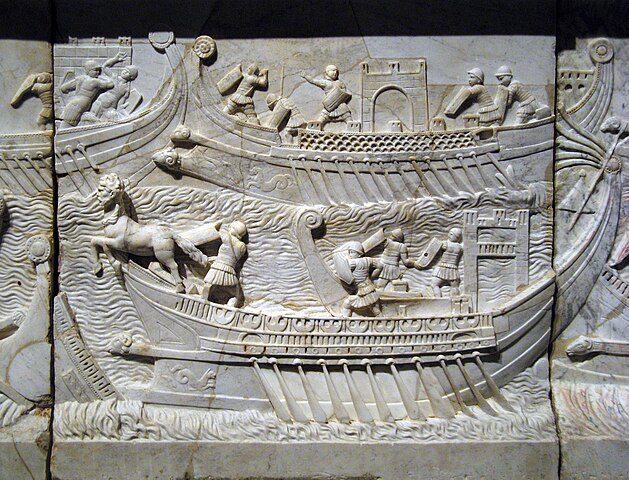
Incidentally, I remember vividly the moment when I was first introduced to the so-called “sea battle problem.” I was already interested in theories of time generally, and Aristotle’s theory of time in particular, but my exploration of the latter had been confined mainly to the Physics and Metaphysics; I hadn’t yet found my way to On Interpretation 9. Well, one day during a school break I was parked at the dock in Hull MA, waiting to pick up my mother from the commuter ferry (we were living in Hull, but she was working in downtown Boston), and while I was waiting for the boat I was reading a green and white paperback anthology titled Problems of Space and Time, edited by J. J. C. Smart, which I’d picked up in some used bookstore in Cambridge. (Alas, there were many more of them then.) The chapter I read on that occasion was Elizabeth Anscombe’s article “Aristotle and the Sea Battle.” I wasn’t convinced by Anscombe’s solution, but I became obsessed with the problem (along with her delightful line “I won’t say,” which has become a perhaps dubious part of my vocabulary). And so here we are. (But those who are hip to the relevant signs and stigmata will also recognise traces of Randian influence throughout.)
I’ve now reread the thesis enough to get a serious nostalgia wave from it, but not enough to judge how far I would still agree with all of it. Bear in mind that this thesis, unlike my later dissertation, was written when I had not yet studied Greek in anything more than the most minimal way; so all my arguments about the details of Aristotle’s wording in various passages would need to be revisited while consulting the Greek texts. Which, ha, not today, mate.
I notice that in the Introduction I describe my method as having “a somewhat dialectical character, weighing reciprocal determinations.” I certainly was starting as I meant to go on! (But y’know, if you’d asked me recently when it was that I first got into the whole reciprocal-determination thing, I would have said the mid-1990s. Obviously not.)
Greeks 4 Geeks! Geeks 4 Greeks!
Announcing a virtual reading group on Greek philosophy that Cory Massimino and I will be starting up later this month:
For more details, and an application form, see:
https://docs.google.com/forms/d/1RcOJ5pkvsOaKQKQ1e36F75T8_XinSGLr-zM824pK4OM/viewform?fbclid=IwZXh0bgNhZW0CMTAAAR3Vp6gGE9ikCUK9D4cpfq3fl6CvPaUdnyJZW6R_7YbuaPCRzKuhLa8tK7U_aem_ZmFrZWR1bW15MTZieXRlcw&edit_requested=true
“Neo-Aristotelian Ethical Naturalism: Philippa Foot and Ayn Rand”
The latest issue of Reason Papers is out, vol. 43:2/Fall 2023, featuring a symposium on “Neo-Aristotelian Ethical Naturalism: Philippa Foot and Ayn Rand.” Participants include Aeon Skoble (Bridgewater State University). Douglas Rasmussen (Emeritus, St. John’s University), Douglas Den Uyl (Liberty Fund), Tristan de Liège, and Timothy Sandefur (Goldwater Institute). The issue also includes the latest installment of Gary Jason’s series on political films, discussing D.W. Griffith’s “The Birth of a Nation.”
The symposium topic is particularly timely, given the recent publication of three books on closely related themes: Benjamin Lipscomb’s The Women Are Up to Something (discussing Foot alongside Elizabeth Anscombe, Iris Murdoch, and Mary Midgely), Claire Mac Cumhail and Rachael Wiseman’s Metaphysical Animals (discussing the same four philosophers), and Wolfram Eilenberger’s The Visionaries (discussing Rand alongside Hannah Arendt, Simone de Beauvoir, and Simone Weil). No Foot-Rand comparisons there, however. As it happens, the Foot-Rand parallel hit me during my first week of graduate school about three decades ago; I wrote my first paper in grad school on Foot and Rand on morality as a system of hypothetical imperatives. Mercifully, the paper has long since been lost. I’m glad that competent philosophers are now pursuing the topic.
Hats off to editor Shawn Klein (Arizona State) for his hard work on the issue.
Reason Papers 43:1, JARS 23: Bromance, Romance, Scholarship
I’m very happy to announce the publication of Reason Papers 43:1 (Spring 2023), and the final, double issue of the Journal of Ayn Rand Studies (JARS) 23:1-2. There are a bunch of interconnections between these two journals, and connections back to PoT. Being the gossip hag that I am, I’m going to give you the juicy back story (romance, bromance, and all), so hold on to your hat.
The main piece of backstory here is that both journals bear a connection to Ayn Rand and the (American) Objectivist movement. (The preceding links go to Wikipedia, which was founded by Jimmy Wales, who was also a member of the Objectivist movement. You can’t make this shit up.) Reason Papers was founded in 1974 by Tibor Machan, a fervent Randian; JARS was founded in 1999 by Chris Sciabarra, a fervent Rand scholar. Many of the people associated with Policy of Truth were once Randians, associated in some way with one or both journals and/or the Objectivist movement. Whatever our proximity to or distance from Rand and Objectivism at this point, many of us still a bear a close relation to one another, and so, still find ourselves arguing about Rand and related topics (Aristotelianism, libertarianism, aesthetic Romanticism, etc.), whether as impartial scholars, as Rand-sympathizers, or as critics or even antagonists of Objectivism. Continue reading
John M. Cooper, RIP
I note with sadness the passing of John M. Cooper, the Henry Putnam University Professor of Philosophy at Princeton University, and one of the pre-eminent scholars of ancient philosophy of the last several decades.
A Puzzle in Aristotle: Why Must There Be an Unmoved Mover?
A well-known doctrine of Aristotle’s is that of the unmoved mover, the first cause of the eternal motion of the universe. Aristotle’s key argument for the necessity of an unmoved mover is presented in Physics, Book VIII, chapters 4–5, where he argues, first, that everything that is in motion must be moved by something (ch. 4) and, second, that a thing cannot move itself (ch. 5). I have long been puzzled by this argument, and lately I have come to think it’s not just my ignorance—there really is something wrong with the argument. My aim here is to explain what it is.
Continue readingDesert and Merit (4)
In a previous post, I criticized George Sher’s view that merit-based desert is based on (the recognition of) existing conventions of merit. In these cases, the existing rules are already fashioned to reward merit in a justified way, so that justice (in the sense of rewarding desert) consists simply in acknowledging that a given person satisfies the criteria of merit, and acknowledging that in accepting the convention, we accept the further implication that the person deserves what the rules say they deserve. Continue reading
 Policy of Truth