I get home, look at my mail, and find a solicitation to vote for Adrian O. Mapp, Democratic candidate for Congress in the 12th Congressional District. Mapp is “proudly endorsed” by Newark Mayor Ras Baraka, a person I respect. What does Mapp stand for? He tells us:
- Housing: he’ll expand affordable housing and protect working families from rising housing costs.
- Healthcare: he’ll protect access to affordable, quality healthcare for families, seniors, and those most in need.
- Education: he’ll open doors to opportunity through education, job training, and relief from crushing debt.
- Immigration: he’ll support fair, humane, immigration reform rooted in dignity, security, and common sense.
- Taxes: he’ll fight for tax fairness and relief for New Jersey homeowners and middle-class families.
There’s not a word here or on his website about foreign policy. It’s as though Mapp had never heard of Haiti, Mexico, Cuba, Venezuela, Greenland, Ukraine, Russia, Israel, Palestine, Yemen, Lebanon, Syria, Pakistan, Iran, Taiwan, or China, and had no idea whatsoever of their significance to American politics. Whether we annex Cuba or Greenland or not, or continue the war in Ukraine or not, or continue arming Israel or not, or continue our war with Iran or not, or have a war with China, seems not to be of any importance to him.
It should strain credulity that a man could somehow bring himself to run for Congress but fail to mention that his country was at war, that it had started the war, that the war was going badly, that peace talks were faltering for lack of the wisdom or initiative to keep them going, and that the consequences of failing to get a settlement could be catastrophic. Apparently, none of that matters to Mapp. What matters is repeating the age-old clichés of the Democratic Party: “Vote for me so that I can give you nice things.” Nice things: like mass death, refugee crises, environmental degradation, and the twin threats of nuclear war and global depression. As long as grandpa gets his free dentures, and Junior’s college debts are written off, we’re all good. People forget that the Third Reich was a welfare state.

Riverside Church, New York (photo credit: John06, Wikipedia)
I would have thought that Martin Luther King, Jr. settled this back in 1967, with his speech on Vietnam at Riverside Church. Has Mapp read it? I was going to quote it here, but no quote will suffice. It’s a seamless whole, and it has to be read, if at all, as a whole.
The wars we’re in are not minor affairs. They involve aggressions and dangers hard to imagine or conceptualize. Their injustice and destructiveness should be sufficient reason to oppose them, and provide sufficient reason to say so out loud.
But it makes things worse that America’s wars, and in particular the Iran War, will adversely affect every one of the economic goals Mapp claims to be fighting for. The downstream effects of the closure of the Strait of Hormuz have yet to be felt in the United States in any real way beyond gas and diesel prices. But they eventually will, and when they do, housing, healthcare, and education prices will shoot through the roof, as will taxes. The intensification of economic hardship will, in turn, exacerbate immigration problems. So Mapp’s glittering economic daydream is unlikely to happen as scripted.
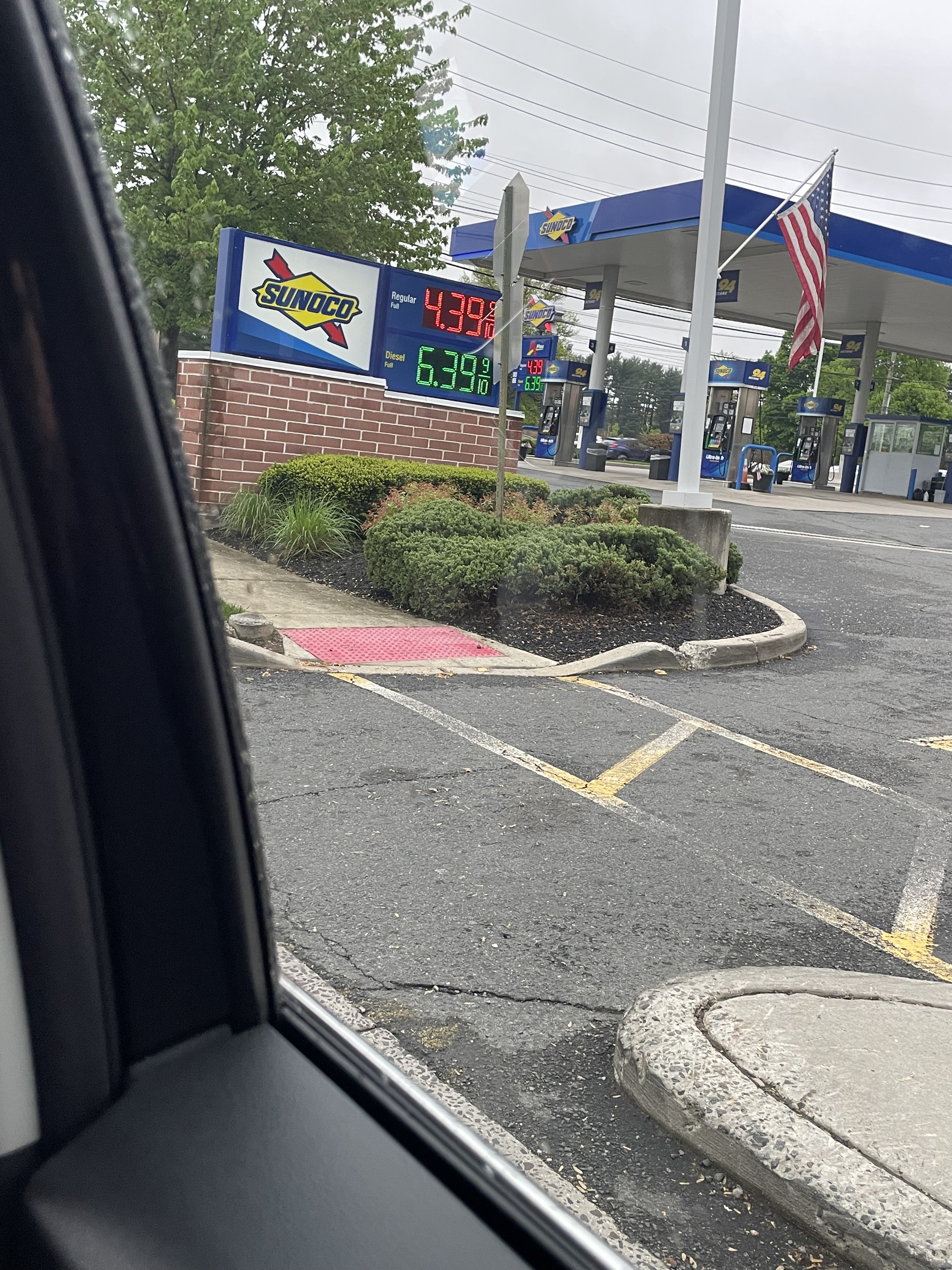
Climbing gas and diesel prices on Route 1 in West Windsor, New Jersey
Even aside from the Strait of Hormuz, it should be obvious enough that war has problematic consequences for everything Mapp claims to be “fighting for” anyway: wars are costly in themselves, and produce downstream costs for healthcare and education just in terms of veterans’ benefits alone. We currently spend $130 billion annually on veterans’ health care, and over $10 billion a year on veterans’ educational benefits. It’s worth adding that war kills people, and that even if you don’t care about death or people per se, the economic value of a statistical life is estimated at $10 million. Roughly 2,500 American soldiers died in Afghanistan (along with 4,000 contractors), and 4,400 in Iraq. So that’s a chunk of change down the drain right there. And forget the burial costs.
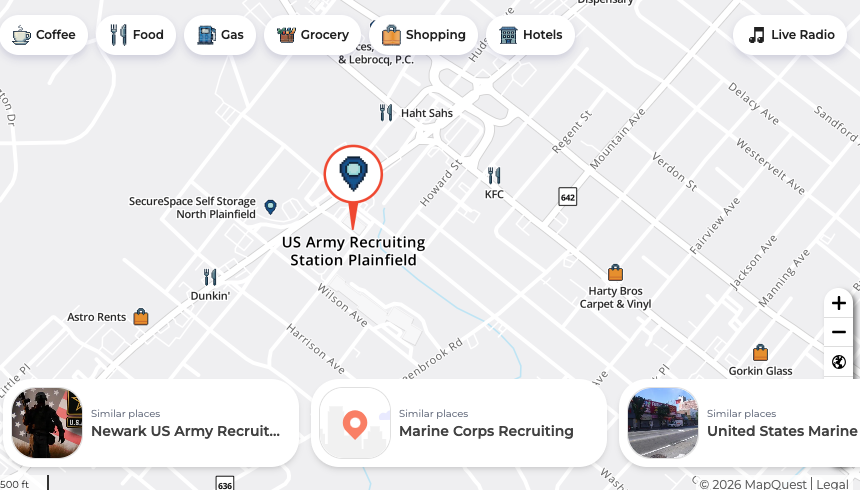
The U.S. Army Recruiting Station in Mapp’s hometown of Plainfield, New Jersey, shielded by Dunkin Donuts and KFC
Of course, you probably wouldn’t want to talk out loud in such callous economic terms about your veterans, whether dead or alive. Those veterans will, after all, be or have been your constituents, the kids groomed for war by the JROTC and ROTC programs in your district, along with all the military recruiters you allowed into your schools and malls. You wouldn’t want to sound too obviously as though their lives were just numbers to you. But maybe if you speak long enough as if their lives matter or mattered, it might at last occur to you that they do or did.
What will it take for Americans to figure out that wars really take place, and have real effects on real people? As long as wars are treated as “foreign affairs,” Americans are happy to keep them going: Korea, Vietnam, Lebanon, Somalia, Afghanistan, Iraq, Libya, Syria, Iran–it’s all a blur: foreign names, foreign lands, foreign corpses. Nothing that can’t be fixed with the usual combination of amnesia and evasion garnished with bread and circuses.
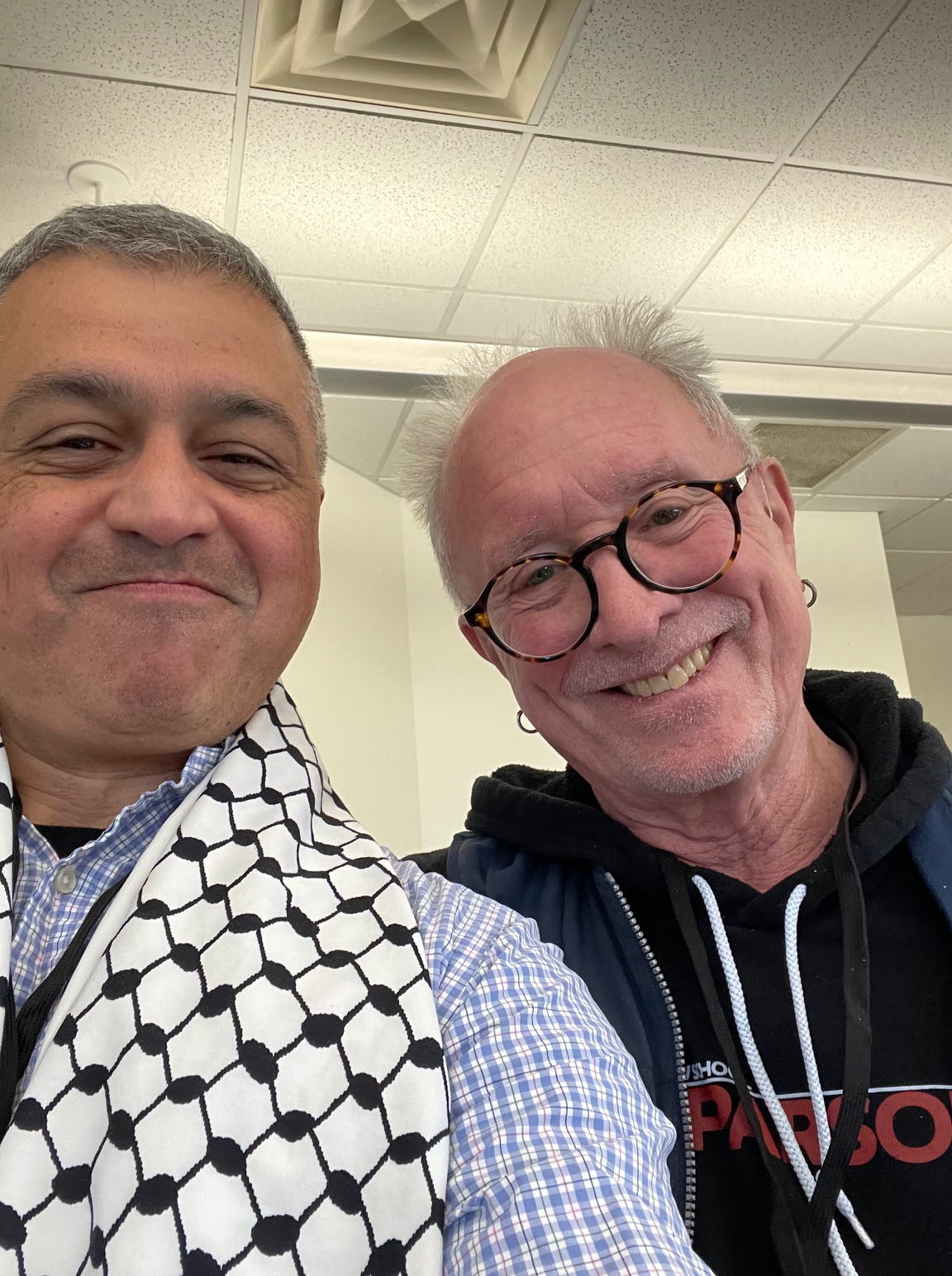
Bad company: me and Bill Ayers, Niagara University, Niagara, New York (Oct 2024)
People wonder why the Weather Underground “brought the war home.” This is why. If you don’t bring it home, it never ends. And it has to fucking end. The real remedy is to avoid both Democrats and Republicans like the political disease vectors they are. But if you’re going to vote for mainstream candidates, at least subject them to one test: ask whether the issue of warfare is central to their platform or not. If not, drop them. Which is what I’m doing with Adrian O. Mapp and every candidate like him.


Pingback: NJ-12: The Trance Is the Motion | Policy of Truth