“If You Can Make It Here…” Thoughts on Life in “The City”

I saw the Op-Ed below in The New York Times the other day, arguing that those who “deserted” New York City during the pandemic, and now wish to return, ought to be “punished” by having to pay a resettlement tax. The author writes as though he suffered some great, distinctive hardship, and/or enacted some great act of social justice or virtue by staying in New York when others left.

I’m not really sure what he’s talking about, or what he thinks he’s talking about. Judging from what he writes, he did nothing of significance but stay in Brooklyn, suffering nothing more significant than what most New Yorkers suffer for living where they do. How it is that departure from such a place should mark one out for punishment is nowhere explained in the article–mostly, I suspect, because there is no explanation to be given. If people followed the author’s “advice,” immigration from the developing world would end tomorrow. We would all stay in the shitholes in which we found ourselves. That the author is content to do so is his problem, no one else’s. Someone ought to tell him.

Continue reading →

Alison Bowles (1963-2021), RIP

I’ve revised the biographical blurb for Alison Bowles at PoT’s “About the Blog and Bloggers” page. I apologize to anyone learning belatedly of her tragic death in this fashion. I myself learned of her passing on the morning of March 10, but believe it took place a few days earlier. [I’ve since learned that it likely took place between March 2 and March 4.]

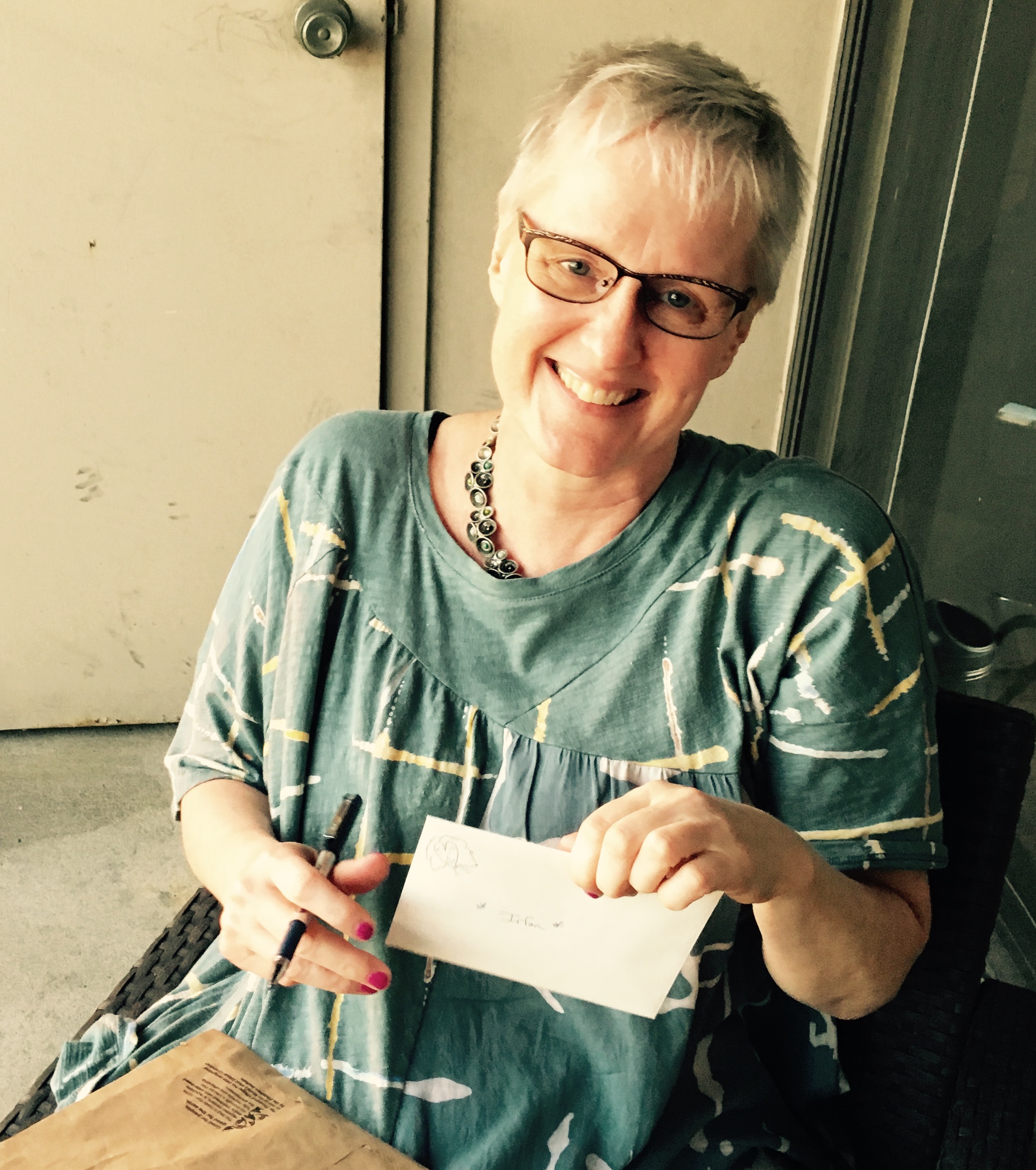
Alison in Alexandria, Virginia, February 2017

Alison Bowles (“ridiculous2017”) was, until her untimely death in March 2021, a licensed mental health counselor in private practice, with offices in Whitehouse Station, New Jersey, and New York City. On moving to Toronto in the summer of 2020, she became a frequent guest on Business Talk Radio, discussing various issues in the theory and practice of mental health counseling. Her first broadcast was on July 6, 2020 and her last was (I believe) on February 19, 2021. She maintained a personal blog housing some of her writing, and in her last days had created a Facebook page where her very last public thoughts may be found. Here’s an interview she did in 2019 on telemental health, and here is a brief biographical statement. (–IK, March 12, 2021).

(PS, July 22, 2021: I intend to write a proper memorial essay at some point in the near future.)

In the Teeth of Tragedy

Having recently experienced a terrible tragedy–the untimely death of my estranged wife by suicide–I can’t suppress a passing literary thought: Is there any major work of tragic literature,  broadly conceived, that is more preposterous, more wildly inapposite to the subject matter, than the Book of Job?

The Book of Job is one of the literary masterpieces of all time, and provides a profound discussion on the suffering of a just man.

No, it fucking isn’t–and no it fucking doesn’t. Continue reading →

Racist Dreams: Revisiting Hursthouse on the Repentant Racist (1 of 2)

In a post I wrote here back in 2016, I sketched an idea for a paper (as yet un-written) challenging Rosalind Hursthouse’s views on virtue, moral luck, and racism as expressed in chapter 5 of her book, On Virtue Ethics (2001). Hursthouse’s overall view is that ascriptions of virtue and vice are sensitive to moral luck. In other words, ascriptions to S of virtue or vice–claims of the form “S is virtuous or vicious”–can depend in part on circumstances beyond S’s control. This is as true of ascriptions of racism as of other ascriptions of vice. The implication is that S can truth-aptly be described as a racist even for behavior or traits whose existence is beyond S‘s control.

Consider what Hursthouse calls “the repentant racist,” someone brought up as a racist, and who (for a time) internalizes that racism, but who (over time) comes to see the error of his upbringing, rejects racism, and does his best to rid himself of it. Such a person might, despite his best efforts, continue to have racist thoughts and feelings after regarding himself (and in some sense being) fully repentant or fully reformed. Suppose (ex hypothesi) that his having such thoughts and feelings is entirely out of his control–a deterministic outcome of his upbringing, caused by psychological facts out of his control. Continue reading →

Paul Krugman on Masks and Public Urination

I agree with Paul Krugman about masking, but he’s wrong about public urination, and wrong to use the laws against it as an analogue of the laws requiring masking in the COVID-19 pandemic:

Relieving yourself in public is illegal in every state. I assume that few readers are surprised to hear this; I also assume that many readers wonder why I feel the need to bring up this distasteful subject. But bear with me: There’s a moral here, and it’s one that has disturbing implications for our nation’s future.

Although we take these restrictions for granted, they can sometimes be inconvenient, as anyone out and about after having had too many cups of coffee can attest. But the inconvenience is trivial, and the case for such rules is compelling, both in terms of protecting public health and as a way to avoid causing public offense. And as far as I know there aren’t angry political activists, let alone armed protesters, demanding the right to do their business wherever they want.

Laws against public urination do not impose a merely trivial inconvenience. If someone has a medical condition that involves urinary frequency or urgency, and there are no public bathrooms available (as often there aren’t), discreet “public” urination becomes unavoidable. Likewise if someone is homeless. Continue reading →

Cancel Neera Tanden

The problem with Neera Tanden is not, as is now widely being asserted by Republicans, that she’s “partisan,” “divisive,” or “mean.” Nor is her great virtue, as a lot of centrist Democrats seem to believe, that she’s some kind of persecuted truth teller. The problem with Neera Tanden is that she’s full of shit–a lying windbag and reckless big mouth who’s mastered the art of invective without being able to argue her way out of a paper bag on any substantive issue.

Continue reading →

Thoughts on a Traffic Stop (3): Do’s and Don’ts

Here’s the third part of my series, “Thoughts on a Traffic Stop.” Here’s Part 1, which is the backstory to the stop. Here’s Part 2, on fighting bureaucracy.

Lesson 2: Drivers should rehearse in advance how they’ll handle a stop.

Cops stop people every day. The average driver never stops anyone, and is not stopped all that often. It takes practice to do a good job at stopping someone or being stopped.  Since cops have the opportunity to practice everyday, they tend on average to be pretty good at conducting traffic stops (relative to their aims in conducting one). By contrast, the average person tends to be flustered even by the most mundane stop. Since stops are an inherently adversarial event, one imposed involuntarily on you, you should want to prevail against your adversary. You can’t prevail without practicing the strategy and tactics you intend to use against that adversary (or worse, without having either strategy or tactics). So you ought to practice. Rehearsing for traffic stops may seem paranoid or weird, but it’s not. If stops are predictable, consequential, and adversarial, there’s no excuse for no practicing how you’d handle one (or a series of different ones). In my view, no one should drive without know exactly how they’d handle a stop within the next five minutes. Continue reading →

Thoughts on a Traffic Stop (2): Fighting Bureaucracy without Dropping Dead

In my last post, on the backstory to my recent traffic stop, I mentioned that I didn’t think I’d get stopped for my not-suspended license and registration, but prepared for it anyway, and did get stopped. What happened next? In a certain sense, not much. I was stopped by Connor F. Gallagher of the Raritan Township Police Department. Gallagher asked for my license, registration, and proof of insurance, asked me whose car I was driving, and asked whether I had canceled my insurance policy recently.

I gave him the documents, answered that the car was validly registered, admitted that I had canceled my insurance policy, but told him that I’d worked the issue out with NJMVC, and had the documentation to prove it. I handed over the documentation, which he read aloud for his body cam; he then took the documents back to his car, processed the information for awhile, came back, gave me his card, and gave me a CAD incident number I could use if I was stopped in the future. By entering the number, the next officer could verify that I had cooperated with Officer Gallagher. After maybe fifteen minutes, I was on my way. Continue reading →

Thoughts on a Traffic Stop (1): Backstory

I got stopped the other day in Raritan, New Jersey by the local police department, my first traffic stop in awhile. I regard every interaction with the police as a learning experience, and this one was no exception, so I thought I’d write up what happened, and what I learned from it.

Until recently, I owned two cars, call them Silver and Blue, both insured by Geico, an insurance company for your car and other associated headaches. I generally tended to drive Silver rather than Blue. In July, Blue was driven to Canada by another driver and, in August, was totaled by that driver in an accident in Toronto; it was then towed from the accident scene and taken to a Geico-affiliated inspection site near Toronto, where it sits to this day, awaiting judgment from Geico as to an insurance payout. Recall that the Canadian border is closed due to the pandemic,* so I couldn’t have retrieved the car even if it was drivable, and even if I could have afforded the time and expense of the trip. At any rate, the car isn’t drivable, and I can’t afford the trip. So there we go–three strikes against driving up there, putting the car in my backpack, and bringing it home. Continue reading →

The Strastnoy of Ayn Rand

Ayn Rand’s Red Pawn, written in the 1930s, takes place on the imaginary Strastnoy (“Passion,” in the Christian theological sense) Island, in “the Arctic waters off the Siberian coast,” where a Christian monastery has been converted into a Soviet prison camp.

In real life there actually was, during the 1920s and 30s, a Christian monastery that had been converted into a Soviet prison camp, on a remote island in Arctic waters – though on the western side of Russia, not the eastern, Siberian side – namely Solovki Prison on Solovetzky Island, which was actually the nucleus of the entire Gulag system. (Appropriately enough, the Gulag Archipelago began on a literal archipelago.)

Solovki Prison is not as forbidding-looking as the one described in Rand’s story (Rand’s version has a bit more the flavour of the Château d’If), but I still suspect it influenced the tale. (During World War II, Solovki became a military base. Today it is a monastery again.) (There was also a Strastnoy monastery in Moscow that was demolished by the Soviets, and might have influenced Rand’s choice of name.)

Would Rand have been aware of Solovki Prison? I think likely yes, since two books had been published on it in the west during the 1920s, by former inmates – S. A. Malsagoff’s An Island Hell: A Soviet Prison in the Far North, and Youri Bezsonov’s Mes vingt-six prisons et mon évasion de Solovki.