A few years ago I posted my 1992 Ph.D. dissertation on my website; but I was recently asked to post my 1985 undergraduate thesis as well. Happily, this document was one I knew the location of and could easily access and scan (unlike so much of my stuff packed away in boxes).
So here’s a blast from the past about the status of the future – and a glimpse of your humble correspondent at age 21. (I vaguely recall seeing an interview with later Billy Joel looking at footage of early Billy Joel and chuckling, “that young punk!” Yeah, feels kinda like that.)
“WITH PARTICULARS THAT ARE GOING TO BE IT IS DIFFERENT”:
Aristotle and the Problem of Future Contingents
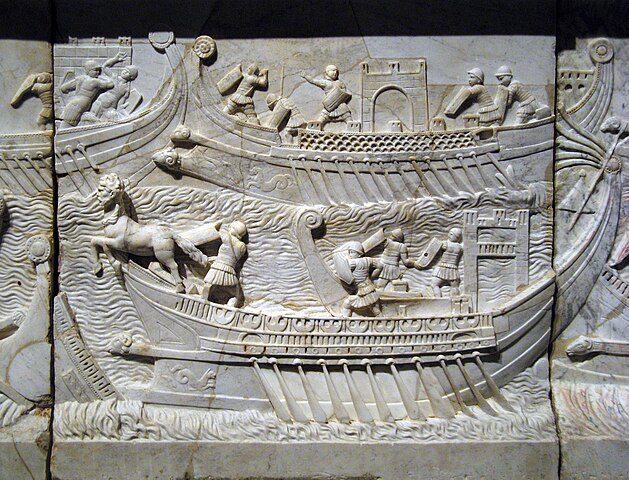
Incidentally, I remember vividly the moment when I was first introduced to the so-called “sea battle problem.” I was already interested in theories of time generally, and Aristotle’s theory of time in particular, but my exploration of the latter had been confined mainly to the Physics and Metaphysics; I hadn’t yet found my way to On Interpretation 9. Well, one day during a school break I was parked at the dock in Hull MA, waiting to pick up my mother from the commuter ferry (we were living in Hull, but she was working in downtown Boston), and while I was waiting for the boat I was reading a green and white paperback anthology titled Problems of Space and Time, edited by J. J. C. Smart, which I’d picked up in some used bookstore in Cambridge. (Alas, there were many more of them then.) The chapter I read on that occasion was Elizabeth Anscombe’s article “Aristotle and the Sea Battle.” I wasn’t convinced by Anscombe’s solution, but I became obsessed with the problem (along with her delightful line “I won’t say,” which has become a perhaps dubious part of my vocabulary). And so here we are. (But those who are hip to the relevant signs and stigmata will also recognise traces of Randian influence throughout.)
I’ve now reread the thesis enough to get a serious nostalgia wave from it, but not enough to judge how far I would still agree with all of it. Bear in mind that this thesis, unlike my later dissertation, was written when I had not yet studied Greek in anything more than the most minimal way; so all my arguments about the details of Aristotle’s wording in various passages would need to be revisited while consulting the Greek texts. Which, ha, not today, mate.
I notice that in the Introduction I describe my method as having “a somewhat dialectical character, weighing reciprocal determinations.” I certainly was starting as I meant to go on! (But y’know, if you’d asked me recently when it was that I first got into the whole reciprocal-determination thing, I would have said the mid-1990s. Obviously not.)
 Policy of Truth