In 2021, on the twentieth anniversary of 9/11, NJ.com asked its readers how they intended to “commemorate the 20th anniversary.” Here’s the answer I gave. I’d forgotten it until Facebook called it up today as a “memory.” I think it holds good today, about 9/11, about 10/7, and about much else that for lack of a better word, we “commemorate.” Continue reading
Philip Pettit’s Republicanism: A Series (2/6)
For part 1 of this series, go here.
2. Republicanism and/vs. liberalism
Central to Pettit’s book is a contrast between republicanism and liberalism. The contrast is useful, but complicated by several terminological complexities. In colloquial American parlance, we often contrast the ideology of the Republican Party with that of liberalism, itself associated with the Democratic Party. So it may tempting at first to think that Pettit is defending the former against the latter. In fact, the preceding contrast has almost nothing to do with the way the terminology of “republicanism” and “liberalism” is used in political philosophy, and nothing to do with the topic of Pettit’s book. So set it aside. Continue reading
Philip Pettit’s Republicanism: A Series (1/6)
- Introduction
We’ve been discussing Philip Pettit’s Republicanism in our online discussion group since March of this year. Our July 21 meeting focused on Chapter 5, “Republican Aims and Policies”: “what a state ought to achieve, and what form it ought to assume, in the modern world” (Republicanism, p. 129). Chapter 5 is the first of four in the book that explicitly ties the book’s theoretical claims to political practice, concretizing what would otherwise be a rather abstract set of theses.
I’ve had some conflicted thoughts about Pettit’s republicanism from the beginning of our discussions, crystallized by his account in Chapter 5 of a pet topic of mine, at-will employment. Having recently finished the book, I sat down over the last few weekends to put my thoughts in order. I have no idea whether these thoughts are of general interest, but in any case, I’ve written up a series of five longish blog posts on Republicanism (five excluding this one), and sketched out a bunch of shorter digressions that were originally footnotes but ended up taking on a life of their own. Starting tomorrow, I’ll post the first of the five posts here, followed by one post per week. I haven’t yet written up the digressions, so there’s no telling when (or if) they’ll appear. But they’re digressions, after all. They can wait. So can you. Continue reading
Hell Is Empty and All the Administrators Are Here
Cass Sunstein has a Guest Essay in today’s New York Times that argues that the First Amendment is the key to the norms that govern free speech on campus: “Only the First Amendment Can Protect Students, Campuses, and Speech.” His point is that universities should either adhere to First Amendment jurisprudence or legislate and enforce some functional equivalent of it. The First Amendment is (on this reading) supposed to be a content-neutral protector of free speech, with exceptions that Sunstein duly enumerates in the latter half of the essay.
Some of what he says seems fine, and some of it seems wrongheaded, but I was struck by the insouciant sloppiness of this particular sentence:
In a class on Shakespeare, students and professors can be instructed by administrators to discuss Shakespeare, not the presidential election.
No, they can’t. That’s not how academic freedom works, not how Shakespeare works, and not how pedagogy works. Continue reading
Defiance and Compliance in Princeton (1)
Here’s the text of a letter I sent yesterday to Town Topics, the local paper here in Princeton. The Daily Princetonian is the campus newspaper of Princeton University. Town Topics comes out every Wednesday, so I don’t know whether the letter will be printed or not. Continue reading
No Rest Until Divest

Rally at McCosh Courtyard: Tuesday, September 3, 5 pm, Princeton University
The “disruptions” will continue as long as the complicity does. If you want quiet, try cleaning house.
Days of Future Past: Another One from the Vaults
A few years ago I posted my 1992 Ph.D. dissertation on my website; but I was recently asked to post my 1985 undergraduate thesis as well. Happily, this document was one I knew the location of and could easily access and scan (unlike so much of my stuff packed away in boxes).
So here’s a blast from the past about the status of the future – and a glimpse of your humble correspondent at age 21. (I vaguely recall seeing an interview with later Billy Joel looking at footage of early Billy Joel and chuckling, “that young punk!” Yeah, feels kinda like that.)
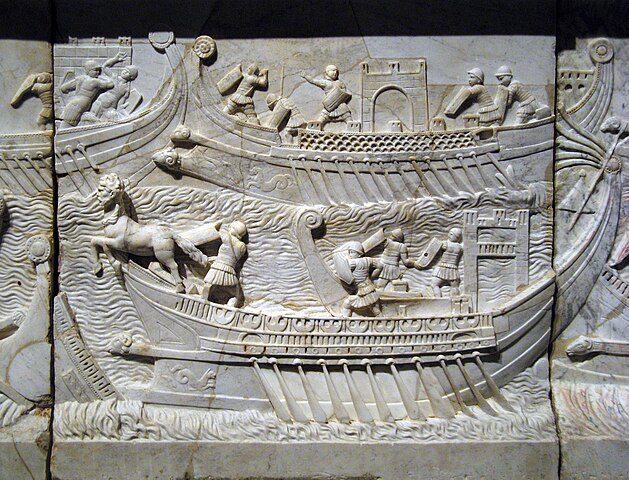
Incidentally, I remember vividly the moment when I was first introduced to the so-called “sea battle problem.” I was already interested in theories of time generally, and Aristotle’s theory of time in particular, but my exploration of the latter had been confined mainly to the Physics and Metaphysics; I hadn’t yet found my way to On Interpretation 9. Well, one day during a school break I was parked at the dock in Hull MA, waiting to pick up my mother from the commuter ferry (we were living in Hull, but she was working in downtown Boston), and while I was waiting for the boat I was reading a green and white paperback anthology titled Problems of Space and Time, edited by J. J. C. Smart, which I’d picked up in some used bookstore in Cambridge. (Alas, there were many more of them then.) The chapter I read on that occasion was Elizabeth Anscombe’s article “Aristotle and the Sea Battle.” I wasn’t convinced by Anscombe’s solution, but I became obsessed with the problem (along with her delightful line “I won’t say,” which has become a perhaps dubious part of my vocabulary). And so here we are. (But those who are hip to the relevant signs and stigmata will also recognise traces of Randian influence throughout.)
I’ve now reread the thesis enough to get a serious nostalgia wave from it, but not enough to judge how far I would still agree with all of it. Bear in mind that this thesis, unlike my later dissertation, was written when I had not yet studied Greek in anything more than the most minimal way; so all my arguments about the details of Aristotle’s wording in various passages would need to be revisited while consulting the Greek texts. Which, ha, not today, mate.
I notice that in the Introduction I describe my method as having “a somewhat dialectical character, weighing reciprocal determinations.” I certainly was starting as I meant to go on! (But y’know, if you’d asked me recently when it was that I first got into the whole reciprocal-determination thing, I would have said the mid-1990s. Obviously not.)
Why Don’t They All Just Fade Away?
I missed this earlier, but the indefatigable John Davenport had an Op-Ed published in the August 15 issue of the Star-Ledger (Newark, New Jersey): “Americans do not want a gerontocracy.” Following the argument of his Democracy Amendments, John makes the case for a constitutional amendment for age limits for office:
It is thus a safe bet that at least three-quarters of American adults would support a constitutional amendment to set a 75 as a maximum age, even if some would prefer a lower number. That could be enough to get such an amendment ratified if it ever reached state capitols or state ratifying conventions. It would mean that no president could be inaugurated later than a day shy of their 72nd birthday.
Markets with and without Limits
Some more bragging to compensate for the free-riding modesty of PoT’s bloggers: Roderick Long has an article out on the dispute over markets with and without limits: “The Limits of Anti-Anti-Commodification Arguments: James Stacey Taylor in Markets with Limits versus Jason Brennan and Peter Jaworski in Markets without Limits,” International Journal of Applied Philosophy, vol. 37:2 (Fall 2023), pp. 1-10. The publication date is given as 2023, but the issue just came out. Continue reading
Machiavelli and the Weather Underground
Anyone in the vicinity of Niagara, New York this October is hereby invited to the 2024 Conference of the Peace and Justice Studies Association, where, if you manage to brave the somewhat aggressive registration fee, you’ll be able to take in a bit of Machiavelli and the Weather Underground, among other interesting things. The conference runs October 24-27, at Niagara University near Buffalo. Continue reading
 Policy of Truth