Limits in Chicago!

In addition to its usual Eastern symposium, the Molinari Society will be holding its first-ever Central Symposium in conjunction with the Central Division of the American Philosophical Association in Chicago, 18-21 February 2026.

Here’s the schedule info:

Molinari Society symposium: The Limits of Markets

G10E. Thursday, 19 February 2026, 7:00-9:50pm [that’s how long we have the room for; we’re unlikely to run that long], Palmer House Hilton, 17 E. Monroe St., Chicago IL 60603, room TBA.

chair: Roderick T. Long (Auburn University)

speakers:
James Stacey Taylor (The College of New Jersey) and Amy E. White (Ohio University), “Why Some Things Should (Typically) Not Be For Sale”

commentators:
Jason Lee Byas (Georgetown Institute for the Study of Markets and Ethics)
Ryan Davis (Brigham Young University)

Anarchy in Baltimore!

EDITED to change the order of presenters:

The Molinari Society will be holding its mostly-annual Eastern Symposium in conjunction with the Eastern Division of the American Philosophical Association in Baltimore, 7-10 January 2026.

Our symposium comprises two back-to-back sessions on Wednesday afternoon (both in the same room, we hope!). Here’s the schedule info:

Molinari Society symposium: Topics in Radical Liberalism

Session 1:
G2D. Wednesday, 7 December, 2:00-3:50 p.m., Baltimore Marriott Waterfront, 700 Aliceanna St., Baltimore MD 21202.

chair: Roderick T. Long (Auburn University)

speakers:
Irfan Khawaja (Independent Scholar), “Academia’s Complicit Executioners: A Critique of the Kalven Committee Report”
Zachary Woodman (Western Michigan University), “Extended Cognition as Property Acquisition”

Session 2:
G3D. Wednesday, 7 December, 4:00-5:50 p.m., Baltimore Marriott Waterfront, 700 Aliceanna St., Baltimore MD 21202.

chair: Roderick T. Long (Auburn University)

speakers:
Cory Massimino (Center for a Stateless Society), “A Liberal Socialism Must Also Be Left Market Anarchist”
Jason Lee Byas (Georgetown Institute for the Study of Markets and Ethics) “Distributed Justice: Can We Make Sense of Justice Outside the State?”

Thierry Rides Again

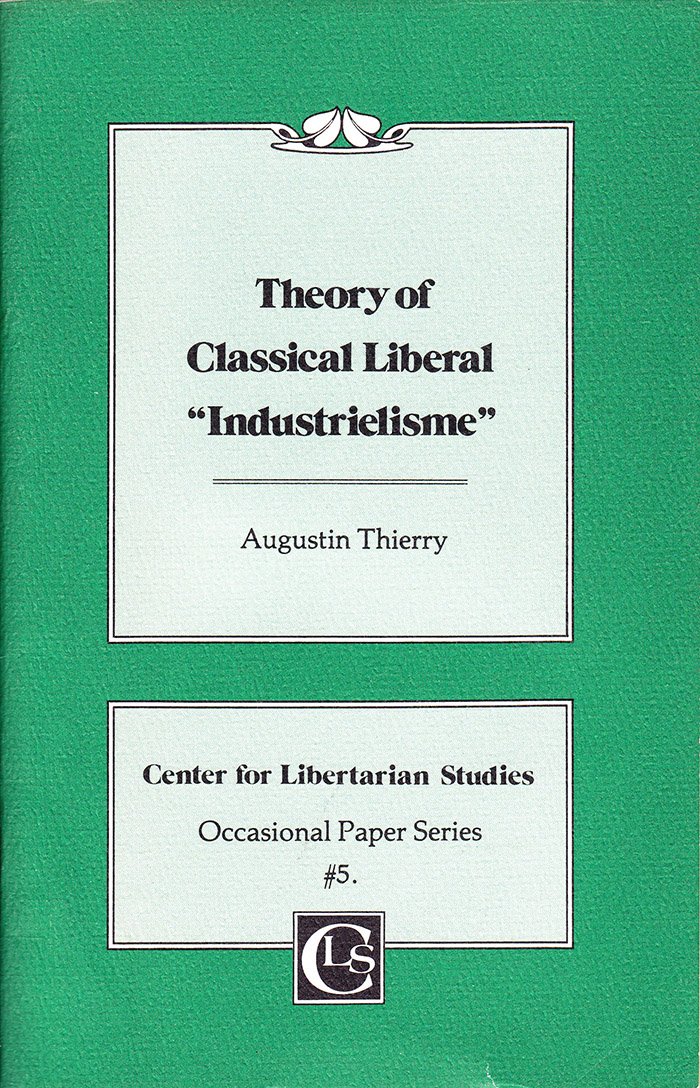
With Mark Weinburg’s kind permission, I have posted on the Molinari site his hard-to-find 1977-78 translation of Augustin Thierry’s 1818 review of Destutt de Tracy’s 1806 commentary on Montesquieu’s 1748 Spirit of the Laws

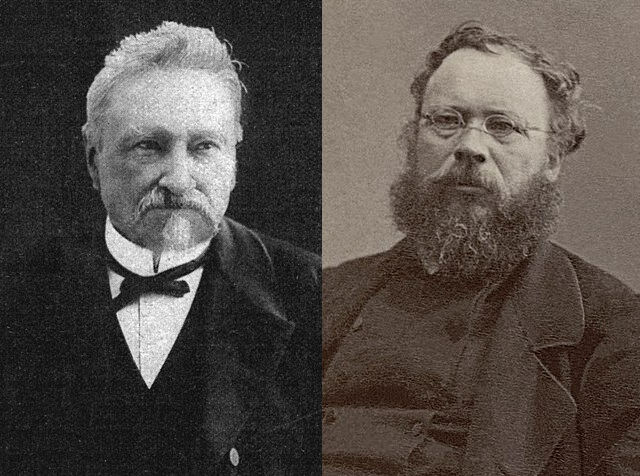
Tracy was a philosopher and free-market economist, and a friend of Thomas Jefferson (who translated and published several of Tracy’s writings, including the one Thierry is discussing here).  Thierry, primarily a historian, was one of the radical liberal triumvirate who (along with Charles Comte and Charles Dunoyer) developed an important version of liberal class theory in their journal Le Censeur Européen; Karl Marx would later refer to Thierry as “the father of the ‘class struggle’ in French historiography.”  Montesquieu was a massively influential social and legal theorist, broadly liberal but not quite radical enough for Tracy and Thierry.  Like many of Thierry’s book reviews, this one is in large part a springboard for Thierry to talk (particularly in the second half – which Weinburg makes the first half) about his own developing views in ways that don’t necessarily have all that much to do with either Tracy or Montesquieu.

This piece is especially famous for Thierry’s inspiring (but, in the event, unduly optimistic) prediction of what the coming century would bring:

“Federations will replace states.  The despotism of men and of the law will be replaced by the loose but indissoluble bonds of interest.  The inclination towards government, the first passion of the human race, will yield to the free community, the real need of civilized men.  The era of empires has ended.  The era of association is beginning.”

I am working on my own translation of Thierry’s article (as part of an exciting larger project about which you will learn more later), but in the meantime, enjoy!

In Your Darkness, We Shall See the Darkness

Columbia’s Capitulation
In Lumine Tuo Videbimus Lumen
–“In Your Light, We Shall See the Light,” Columbia University’s motto

Of all the pathetic abdications of moral responsibility and expressions of cowardice I managed to see during the quarter century I spent in academia, few approximate Columbia University’s abject surrender to the Trump Administration the other day. I won’t bother belaboring the details, which you can read almost anywhere. As former Columbia law professor Katherine Franke aptly put it, this is a case in which the victim of a ransom note has not just capitulated to the demands of the ransomers but given them what they hadn’t asked for, in return for less than nothing. But if you stand back from the welter of detail, there are a few lessons here worth learning, and worth articulating. Continue reading

Epistolary Sprouts in Brussels

The glorious ongoing Institut Coppet online collection of Gustave de Molinari’s Complete Works has brought to light some correspondence between Molinari and Proudhon from their years of Brussels exile during Napoléon III’s regime in France.  The letters are few in number and are not ideologically substantive, but they are nonetheless interesting.  So I’ve translated them.  Enjoy! 

“False Alternatives in the Politics of Knowledge”

Just a reminder to anyone attending the APA Eastern in New York this January: the Molinari Society is hosting a session on “False Alternatives in the Politics of Knowledge,” Wednesday, Jan. 8, 2025, 4-5:50 pm, room TBA. Cory Massimino and I will be giving papers, with Roderick Long moderating and commenting. Cory’s paper is “Between Convergency and Conspiracy.” Mine is “Between Indoctrination and False Neutrality,” a defense of an advocacy-based conception of pedagogy, using the teaching I did under the Israeli occupation as a case study. For more details, click here.

Secure Your Own Homeland

ICE showed up at my workplace today–or rather, ICE in the guise of DHS, “The Department of Homeland Security.” The agent flashed a badge and started asking about some people with Spanish names. Did I know anything about them? I had nothing to say.

The only thing I have for ICE or DHS–the only product I can promise–is wholehearted, undying hostility. I doubt they want to hear me talk about that. So there’s nothing to say. In any case, the Homeland they’re securing isn’t mine to worry about, and the land that I live in isn’t theirs to secure. Not a promising basis for a meeting of minds–the only kind that interests me.

I opened the door this time because I didn’t know who was ringing. Next time, as far as I’m concerned, they can stand there for as long as it takes to induce someone else to open the door. I’m not the doorman. So it won’t be me.

The Hard Domination of Everyday Life

In a bunch of recent posts (here, here, and here), I’ve been piling on employment-at-will, mostly from the perspective of the aggrieved employee. Employment-at-will, I’ve argued, has problematic consequences for employees who are terminated at will, without cause. Terminations-without-cause incentivize arbitrary, unaccountable exercises of power in the labor market of the sort aptly described as “dominations” by Philip Pettit in his account of republican freedom.

Continue reading

Whether, How, and Why I Plan to Vote

To the best of my recollection, I haven’t voted since 2004. I’d been a reliable LP voter since 1988, but the LP’s nomination of Bob Barr and Wayne Allyn Root in 2008 soured me on the LP; and though the LP has had better candidates since (particularly in 2020 with Jo Jorgensen), by the time those campaigns came around I was no longer enamoured of electoral politics and was committed to non-electoral strategies for political and social change. (I even have a video on my YouTube channel from 2020 that blathers on for a mind-numbing 45 minutes about my non-voting policy; I’m not sure why I needed more than ten.) I expect I’ll most likely continue to be a non-voter in future elections. But I’m planning to vote in this one – though perhaps not for the reasons you may imagine.

Continue reading

“False Alternatives in the Politics of Knowledge”

Just a quick announcement for anyone inclined to attend the APA Eastern Division meeting this year. The Molinari Society is organizing a session, care of Roderick Long (Auburn University), on “False Alternatives in the Politics of Knowledge.” The session is G3A, on Wednesday, January 8, 2025, 4-5:50 pm (room TBA) with presentations by Cory Massimino (Center for a Stateless Society) and myself. The meeting is being held at the Sheraton New York Times Square, 811 7th Ave at 53rd St. Attendance, as usual, requires registration and payment of the registration fee. Cory’s presentation is called “Between Convergence and Conspiracy.” Mine is “Between Indoctrination and False Neutrality: Pedagogy Under Occupation,” a now unrecognizable version of this post from nine years ago. Roderick will be commenting. Continue reading