The Executive Board of the North American Society for Social Philosophy (NASSP), recently asked its membership (of which I’m one) for nominations of keynote speakers for its Forty-Fourth Annual Conference in mid-July 2027. The keynote at an academic conference is usually given by a well-known, distinguished professional in the field, and is usually focused on the theme selected that year for the conference. The theme at next year’s NASSP conference will be “Situated Stories: Belonging, Erasure, Replacement.”
I nominated Nancy Fraser “for her work on the erasure of Gaza and its replacement with whatever the Board of Peace decides for it. Fraser’s Habermas connection is particularly poignant in this respect, given that Habermas is now paradoxically a theorist of both belonging and erasure.” Habermas seems to me symptomatic of the contemporary liberal predicament: a theorist of belonging in the sense that he theorizes liberalism as an attempt to broaden the moral community, but also as a theorist of erasure insofar as he effectively erases Gaza from the moral community. (For an excellent discussion, see Irfan Ahmad’s “Habermas as an Ethnic Thinker Par Excellence,” Teaching in Higher Education: Critical Perspectives, Feb. 2025).
My nomination of Fraser is one among many; I have no idea if it’ll be the one accepted. Other candidates that came to mind were Noura Erakat (Rutgers) and Muhammad Ali Khalidi (CUNY), but I went with Fraser mostly because I thought she had the highest chance of being selected. Erakat is a legal scholar rather than a philosopher, and Khalidi is better known for his work on the ontology of natural kinds than social or political philosophy. Fraser works directly in social philosophy, so she seemed the best bet.
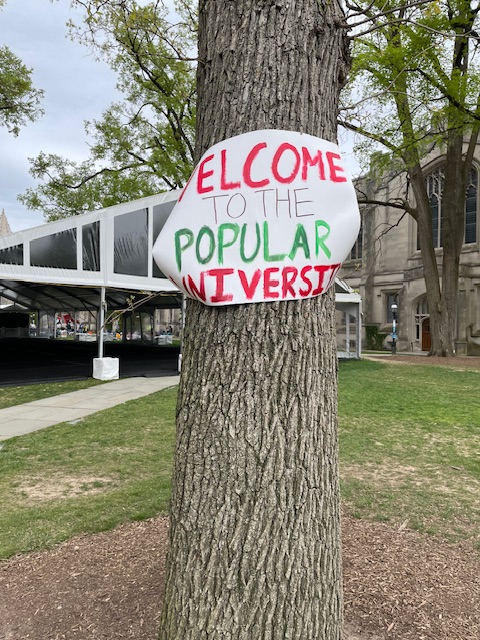
Gaza Solidarity Encampment, Princeton, April 2024 (photo: Irfan Khawaja)
Fraser’s “Gaza as World Event” (New Left Review, March/April 2026) is a major contribution to the growing scholarly literature on Gaza, and put simply, a major contribution to the life of the mind. The first two paragraphs:
The meanings of Gaza continue to unfold. Eloquent, well-documented reports like those of the UN Special Rapporteur for the Occupied Territories; acclaimed cinematic works like The Voice of Hind Rajab (2025); poetry such as Refaat Alareer’s If I Must Die (2024); analysis by Palestinian historians such as Rashid Khalidi and jurists like Rabea Eghbariah—all these and many more have addressed the import of Israel’s scorched-earth assault, its repeated attacks on aid-distribution sites and ‘safe zones’, its tactics of siege and starvation, its displacement of millions of Palestinians into those ‘unthinkable wastelands of rubble, sewage and decomposing bodies’ described by the UN Rapporteur.
Here, I want to examine a different aspect of Israel’s genocidal onslaught on Gaza: its significance as a ‘world event’, an epochal turning point that also serves to reveal, and so to signify, the nature of the times. I aim to do so in a register that will range between the political, the social, the philosophical and the personal. I argue that ‘Gaza’ signifies a crisis for the moral order that has held sway across much of the West for the past half century. Installed in the United States from the 1970s onward, and serving to justify its global hegemony along with Israeli expansionism, that order was centred on the Nazi Judeocide as the ultimate emblem of ‘radical evil’, delimiting the horizon within which wrong and its rectification could be thought. Today, however, Auschwitz itself is invoked as justification for a new genocide. The effect is to leave the Holocaust-centred Western moral order in tatters, no longer able to conceal or contain the glaring crimes committed by the Israeli state and its American backer. In the current period, ‘Gaza’ bids to replace ‘Auschwitz’ as symbol for the worst human atrocities of our time.
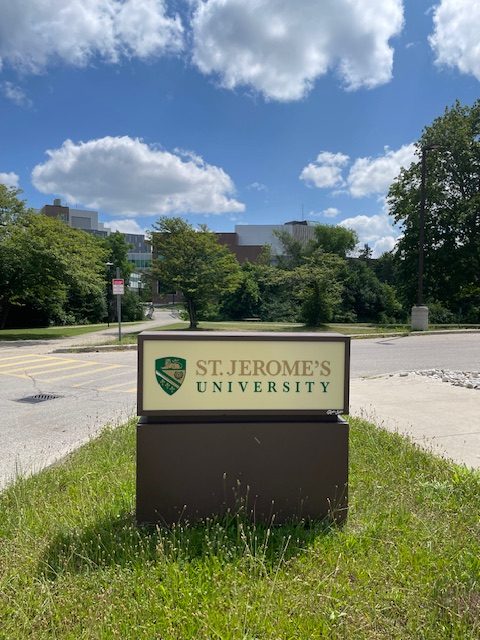
St Jerome’s University, Waterloo, Canada, site of the 2026 NASSP Conference (photo: Irfan Khawaja)
“Auschwitz itself is invoked as justification for a new genocide.” You’d think that an event described that way by a major political philosopher might by now have left its mark on academic philosophy, but it hasn’t. I’ve been to maybe a dozen academic conferences since October 2023. Gaza has, to be sure, been discussed at some of them, even been part of a panel discussion at one, but it hasn’t been central to any of them, and most academics I encounter go out of their way to ignore it. Academic philosophers seem content to whistle past Palestine in the way that motorists whistle past a car wreck. Bring it up, and your social cues will tell you to drop it as soon as you did.
I mention this not so much to complain as to make what strikes me as a fairly obvious observation. For more than a decade now, academia’s critics have told us that higher education is “woke.” For the last three years, we’ve also been told that Palestine is a “woke” issue, merely the woke cause du jour. All of this is now widely accepted as common wisdom. But it strikes me as less-than-obvious: how is it supposed to be reconciled with the fact that Palestine has been rendered virtually invisible in academic philosophy, and frankly, in higher education as such?
How is it, for instance, that I’m the only member nominating a Gaza-oriented keynote for a major academic conference, and that I’ve never encountered a Gaza-oriented keynote at any conference I’ve attended in the last three years (or the three years before that, or three before that…)? How can the President of a major university hold an hours-long PR event at a swanky hotel in Manhattan, and neither mention the encampments that arose on his campus, nor face a single question about how he handled them?
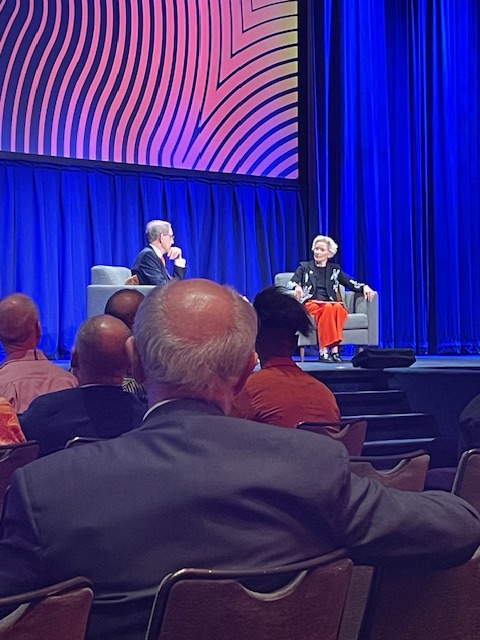
Princeton University President Christopher Eisgruber in conversation with Louise Sams, Chair of Princeton’s Board of Trustees, New York Marriott Marquis, April 16, 2026 (photo: Irfan Khawaja)
How is it that I can sit through focus groups at my alma mater for a proposed conference designed for “Asian American alumni,” and that I’m literally the only person out of a hundred participants in two focus groups who mentions Gaza? Why for that matter does the conversation come to a dead halt when I do, and then quickly move on, as though I hadn’t spoken the taboo word? Is Gaza not in Asia? Is an Asian American focus group not supposed to focus on the 125-year-long legacy of American warfare in Asia? How is it that we spend more time at these focus groups–by a factor of ten or even twenty–talking about sushi and samosas than genocide and mass starvation?
In short, if academia’s so woke, and Palestine’s so woke, why is interest in Palestine practically comatose in American higher education? If “the Holocaust-centered Western moral order is in tatters,” how is it that the self-appointed guardians of that order have missed it?

The grounds of Palmer House, Princeton University’s full service guesthouse (photo: Irfan Khawaja)
There’s a simple answer to these questions: Academia isn’t all that woke, and never was. To whatever extent it was, the supposed wokeness in question always excluded Palestine.
If the alleged wokeness was either illusory or exaggerated or paper thin, and almost entirely excluded Palestine, we have the perfect explanation for why Palestine is “now” invisible: invisibility is the statistical norm for all things Palestinian, and in time, most trends, including Gaza, revert to the statistical norm. Woke or not, Palestine was never all that visible in the first place. It achieved a brief moment of visibility during the solidarity encampments of 2024. But that brief moment of visibility was soon found intolerable by academic elites who desperately wanted the focus directed elsewhere. So every effort was made to submerge the issue in obscurity while people talked up a big, idle, irrelevant, and basically confabulated storm about “wokeness.” And so it disappeared.
Distracted by phantoms of their own creation, and happy to frighten themselves with ghost stories about them, American academics (and American intellectuals generally) were able to bury Gaza under the mental rubble of their own distractions. That’s why, as Erakat so astutely points out in a major piece of her own, we–we Americans, I mean–have managed to take final responsibility for the destruction and burial of Gaza even as we pretend that it has nothing to do with us. Israel’s genocide has become our mass grave. Israel’s killing fields have become our final solution. The difference, though, is that while Israelis are manically awake, Americans are basically asleep. We’re sleepwalking, shovel in hand, to the task of burying the crimes we facilitated from afar.
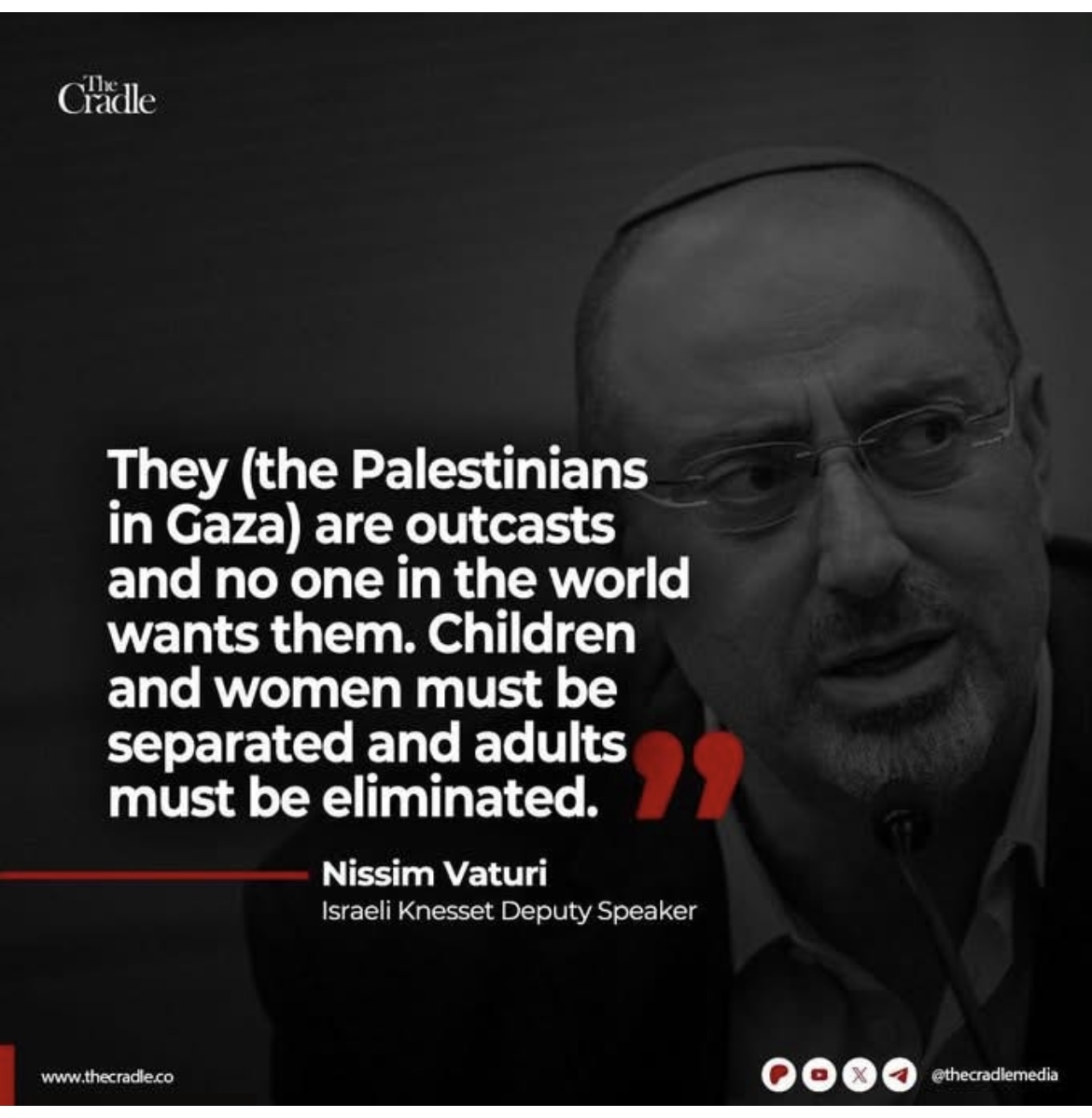
‘Gaza’, Fraser writes in New Left Review,
signals many things, but not least the crisis of the West’s moral order. If it now bids to replace ‘Auschwitz’ as the reigning symbol for human atrocity, might ‘Gaza’ also contain the principle of hope—of solidarity and social justice, self-determination and reconstruction, repair and care for the planet?
“What may I hope?” is my least favorite Kantian question. “What can I know?” and “What ought I to do?” are straightforward enough, but talk of hope always seems to lead to a metaphysical dead end of some kind. And Gaza seems less a “principle of hope” than a dead end in the fairly literal sense.
And yet while I find it hard to agree that “Gaza” contains a principle of hope, I also find it hard to dispense with hope altogether. So Fraser’s question somehow manages to get both a “yes” and a “no”: call it an Antimony of Atrocity-Entangled Reason. All I can really hope for, I think, is that Fraser shows up at NASSP next July, and answers her question in a way I can live with. A modest hope, to be sure, but better than none. No point getting my hopes up beyond that. Not after Gaza.

