As I’ve mentioned here a few times, I split my time between Princeton and West Orange, New Jersey. So I pay attention to local politics in both places, and engage in activism in both.
Since the fall of 2025, I’ve written seven or eight posts here describing the effort to persuade West Orange’s municipal government to take a stand in favor of migrant rights and against ICE. In 2025, the effort focused on getting West Orange Council to pass a resolution in favor of the Immigrant Trust Act. In 2026, it’s focused on getting the Council to pass what’s commonly called ICE-Free legislation.
The first effort failed, but the latter effort–a joint effort by many parties–finally came to fruition about three weeks ago, on August 13, when West Orange Mayor Susan McCartney signed Executive Order 26-02-81326, “establishing a clear, uniform Township policy governing the use of municipal property, personnel, records, equipment, vehicles, and facilities in connection with federal civil immigration enforcement.”
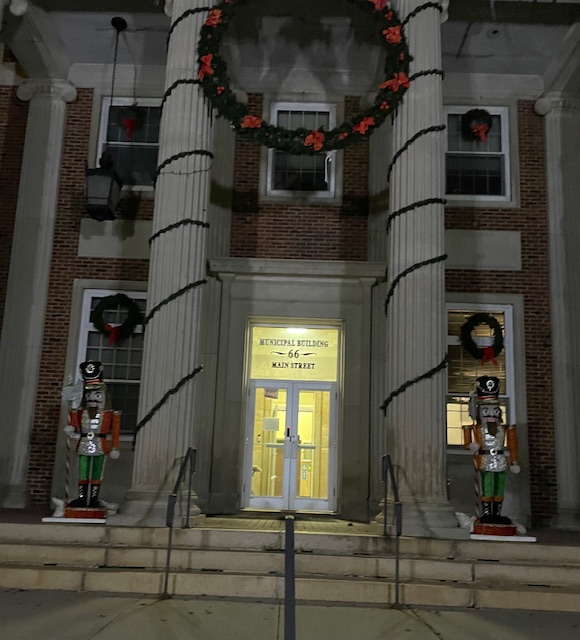
West Orange Municipal Building
Quoting from the Mayor’s press release of August 14, 2026:
The Order confirms that Township resources will not be voluntarily used to support civil immigration enforcement operations—including staging, detentions, interviews, or access to Township records—unless required by a valid judicial warrant, court order, or applicable federal law. …
West Orange will not voluntarily involve Township resources in civil immigration enforcement without a judicial warrant. Whereby, nothing will change for residents accessing Township services.
In other words, the Executive Order gets us the closest approximation to an ICE-Free West Orange as we’re likely to get. I’m grateful to Mayor McCartney and to those on the Council (Joyce Rudin, Tammy Williams) who supported the idea. But while issuance of the order is a positive outcome, the process leading up to it has been a cautionary tale. What follows in this post is an account of the relevant history; I’ll devote a separate post to what can be learned from it.
Start with the campaign for an ITA Resolution in 2025. The Immigrant Trust Act was proposed to the state legislature in September 2024, but was quickly pushed into committee, where it stalled, more or less by design. The governor at the time, Phil Murphy, was a Democrat, and the legislature itself was controlled by Democrats, so the blame here has to fall as squarely on Democrats as Republicans.
By December 2024, a number of municipalities (to be fair, largely Democratic ones) got the idea of passing local resolutions urging passage of the Act. A bunch of resolutions passed that December, and another bunch around March 2025; Princeton passed one in August 2025, and a spate of other towns and counties soon followed. By December 2025, thirty municipalities and seven counties had passed ITA resolutions, including Essex County, where West Orange is located, along with many of the towns and cities neighboring West Orange (Bloomfield, Clifton, Montclair, Orange, South Orange, Newark, and Maplewood, among others). West Orange itself went AWOL for the duration.
To the best of my knowledge, the campaign for an ITA resolution in West Orange began in April 2025 through the efforts of a local activist group called West Orange for Humanity (WOH). WOH managed to put the ITA resolution on the agenda of the Council’s April 22, 2025 meeting, but was voted down by Council members who regarded the idea of an ITA resolution as somehow beyond the purview of a municipal council. Councilwoman Sue Scarpa summed up the consensus: “We have to focus on the business of our town, and we have a lot of work.” Apparently, migrant defense issues were not “the business of our town,” and were crowded out by the more important “work” that the Council had on its plate. No argument was ever offered for this claim, no matter how many times it was repeated across the next year.
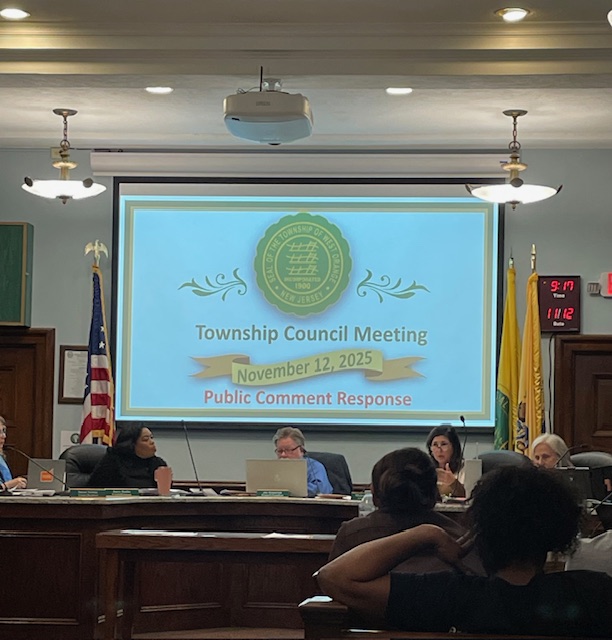
West Orange Council Public Comment Response
I wasn’t part of that initial activist effort, but following WOH’s lead, made a last-ditch effort to revive the ITA resolution in West Orange Council in mid-November 2025. That effort was once again rejected by the Council, which repeated, more or less verbatim, the same not-our-business dogmas as before. The two exceptions were Councilwoman Joyce Rudin, who publicly endorsed the idea of a resolution, and Mayor McCartney, who told me at the time that she was considering language for a model resolution. Nonetheless, the idea of an ITA resolution seemed to die a slow death of neglect.
About three weeks after that, on December 9, 2025, the inevitable happened: federal immigration officers entered a West Orange neighborhood in what local residents call “the Valley,” forcibly seized someone out of his idling car, and carted him away. TapInto West Orange’s headline was bluntly apt:
ICE Drags Man Out of His Vehicle on Virginia Ave. in West Orange, Shoves Him into Their Car & Drives Away
An eyewitness account:
Neighbors frantically ran to the front of their homes to find out what was happening. My mother’s next-door neighbor was taken. He left his home to go to work, and ICE agents waited outside and forcefully removed him from his car, leaving the car on and abandoned with glass shattered everywhere.
He was never heard from again, to use the proverbial expression. To this day, it’s unclear who was taken, where, why, or by whom. It’s likewise unclear where the target is now, or what ever happened to him. The general consensus at the time was that the event was fait accompli, and was to be shrugged off as just another day of random abductions in West Orange. A few zealots online expressed gratification that ICE was doing its job, and hoped that it detained and deported even more “illegals.” Further ICE seizures in West Orange–and there were several–got the same treatment. No evil was seen, heard, or spoken of. So, it was inferred, none had happened.
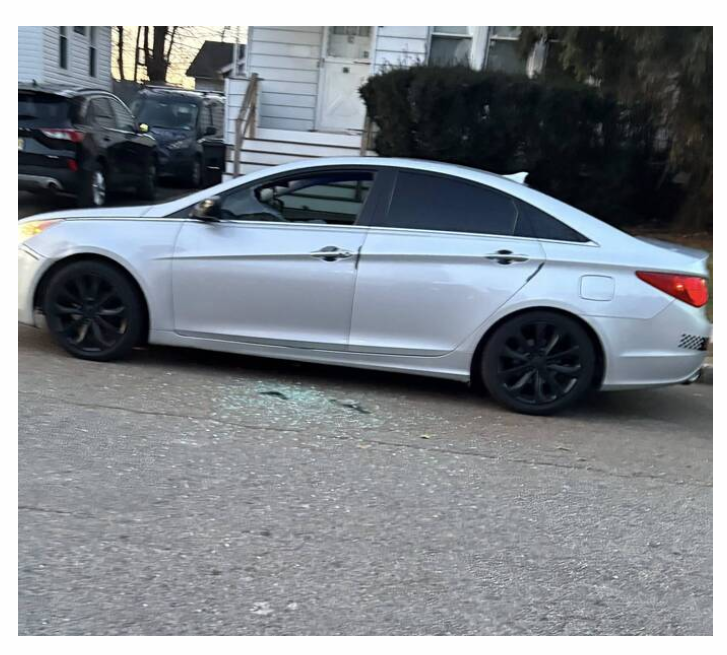
The scene of the crime: shattered glass at the December 9 ICE abduction, Virginia Ave, West Orange (photo credit: unidentified Virginia Ave resident)
Councilwoman Rudin aside, the Council seemed largely unmoved by this episode. Apparently, a legally questionable abduction on Virginia Ave wasn’t Township business, failing even to rise to the level of say, the routine items in the Consent Agenda. Neither for that matter was the shattered glass littering the street, the abandoned car, or the indefinite idling that came in the wake of the car’s abandonment.
If I had smashed up a car, then abandoned it while leaving it on, I’d be in violation of a whole slew of local ordinances: littering violates West Orange Revised Ordinance 4-1; idling violates 4-36; and vehicle abandonment violates 4-15. But I don’t work for ICE. Only ICE gets away with moves like that while winning the obeisance of an otherwise touchy, mouthy, and self-important Council. Abducting people off the street isn’t considered “local business,” and neither are littering, idling, or car abandonment, when done by ICE. It’d be interesting to know who cleaned the glass shards off the street, and who impounded and stored the car, at whose expense, and on whose liability. But none of that was considered sufficiently newsworthy to get coverage. Yet it was central to the ICE-Free issue. Why should West Orange be obliged to clean up the mess the feds had made?
Then came January 2026, and the shootings of Renee Good and Alex Pretti. The national mood changed, and within a week or so of the second shooting, the New Jersey State Legislature passed a revised version of the Immigrant Trust Act. With the legislation successfully passed, the issue of a municipal resolution urging passage of the Act obviously became moot. The passage of the Immigrant Trust legislation normalized the idea of local resistance to ICE, as did the Governor’s Executive Order 12 and copy-cat resolutions by a few county councils and municipalities. Given that, starting in February 2026, activists took the opportunity to press the issue of ICE-Free legislation for West Orange.
I made the case both in private communication with the Mayor and Council, and in several blog posts here (1, 2, 3). The case was made in a more sustained and immediate way by West Orange Aiding Neighbors (WOAN), a local activist group. By mid February, WOAN had taken to organizing recurring protests on Sunday afternoons in front of South Mountain Recreational Complex, a local tourist spot, and had laid out a detailed blueprint for an ICE-Free resolution.
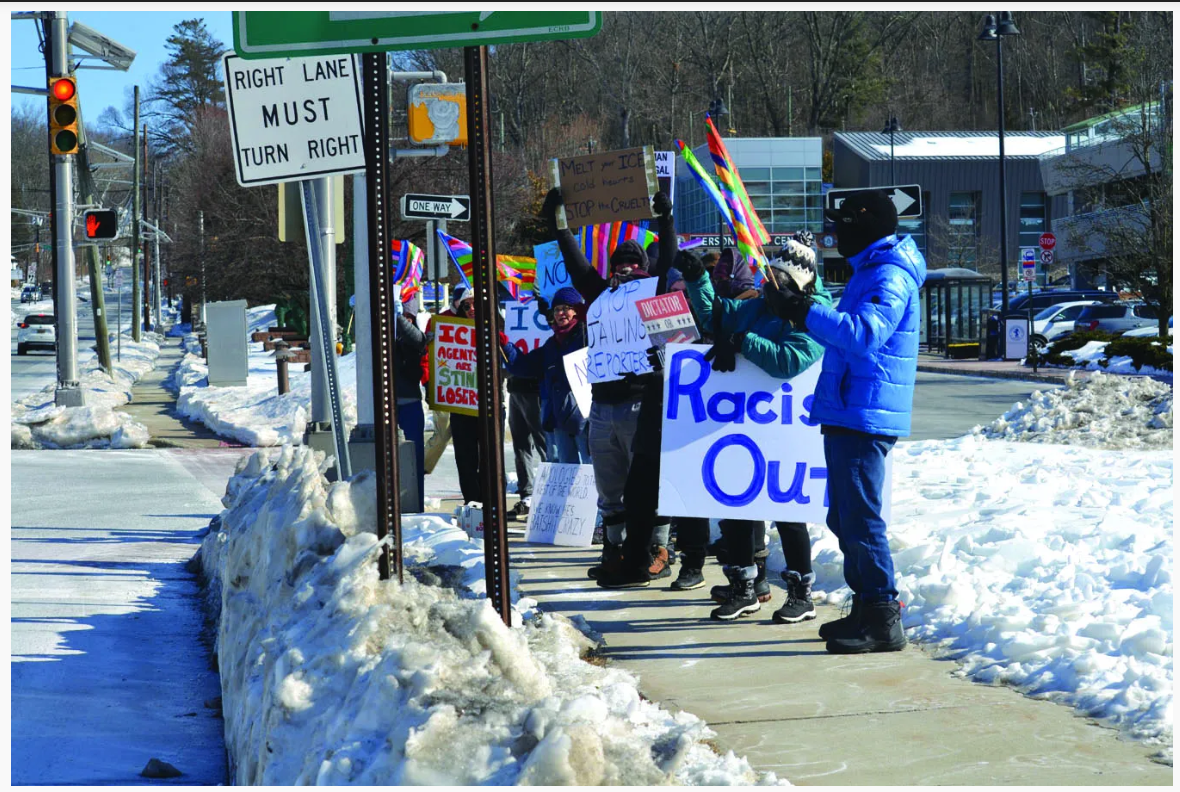
Anti-ICE protest, South Mountain Recreational Complex, West Orange, Feb. 11, 2026 (photo credit: Joe Ungaro, Essex News Daily)
It helped that there was also fairly consistent press coverage of this and related issues all spring and into the summer. Delaney Hall, just a few miles east of West Orange, was a constant in local and national news coverage. It also happened, coincidentally, to be the likely destination for anyone arrested by ICE in West Orange. Rabbi Elliot Tepperman, a well-known West Orange activist, was a consistent and visible presence at Delaney Hall, as was LaMonica McIver, the local congressional representative.
Though coverage of Delaney Hall peaked in late May 2026, it had actually begun the year prior, and continued sporadically across the ensuing year. No morally sensitive person could consume news coverage of Delaney Hall without being given pause about the fate of the people being detained around them. And no one given such pause would want to contribute to ICE’s efforts if he could avoid it. ICE-Free legislation seemed an obvious response.
It also helped that a federal challenge to New Jersey’s so-called “sanctuary” policies was decided in New Jersey’s favor in June 2026: U.S. District Court judge Evelyn Padin dismissed the Trump Administration’s challenge to migrant defense policies in four Jersey cities (Newark, Paterson, Hoboken, and Jersey City), reinforcing the case for local resistance to ICE.
By coincidence, 2026 also happened (happens) to be an election year in West Orange. The candidates seemed more sensitive to migrant defense issues than most of the sitting members of the Council, and so, many of them joined the ICE-Free chorus. Almost all of the candidates, whether incumbents or challengers, had pledged to support some version of ICE Free legislation, and had said so publicly.
Among mayoral candidates, incumbent Susan McCartney and challengers Joyce Rudin, Tammy Williams, Brian Rock, and Phil Orphanidis are all in favor. Among candidates for Council, Jackie Hendy told me on her Facebook account that she “wholeheartedly” endorsed the ICE-Free idea. The one clear exception is mayoral candidate Joe Krakoviak, who has (with the majority of the rest of Council) consistently opposed migrant defense efforts. (This isn’t an exhaustive list of all of the candidates; I’m not certain where the others stand.)
All in all, then, the prospects for passage of an ICE-Free resolution seemed fairly good: increasing urgency, favorable legislation, favorable legal rulings, favorable press coverage, and solid activist pressure from the beginning of 2026 through the spring until mid-summer.
But that was an illusion. Once again, Joyce Rudin voiced approval of the idea at an April 14 Council meeting, and, with the approval of Councilwoman Tammy Williams, introduced an ICE-Free resolution. As usual, it failed. Once again, the Council adopted a version of the same tired claim it had made so many times before: abductions by ICE in the streets of West Orange, however regrettable, simply weren’t municipal business. The Township, we were led to believe, was utterly helpless in the face of a federal agency, and had no choice but to put its resources at the service of DHS, mass detention, mass incarceration, and mass deportation. Impatient with the Council’s inaction, Mayor McCartney eventually bypassed it and issued her Executive Order, which brings us up to date.
It’s tempting to treat McCartney’s issuance of the Executive Order as good news, and leave the matter there. Migrant defense activists got what they wanted; what more could they demand?
The answer is that we got what we wanted in policy terms, but not as a matter of principle. The through-line here should be of concern to anyone. For almost a year and a half, West Orange Council held up two migrant defense measures by repeating the same dogma over and over: immigration enforcement is a federal matter, we were told; the task of constraining ICE is at best a matter for the governor or the state legislature, not local government. West Orange is a municipality tasked exclusively with municipal matters, the Council continued. It therefore lacks the authority to deal with ICE or to defend migrant rights; all such matters are outside of its proper scope, and must be kept that way.
Given this (the Council seemed to be saying) activists who demand action of the Council with respect to ICE misunderstand the Council’s role, and are distracting it from its pressing business and actual responsibilities. The issues they raise may be important, but are not municipal matters. Immigration enforcement issues should therefore be referred to the state or federal governments, where they properly belong.
I’ve put the preceding argument in the Council’s mouth to bolster the plausibility of what they themselves have presented as an unargued dogma. But every element of the argument is wrong. Immigration enforcement is a federal matter, but it doesn’t follow, and isn’t true, that the task of constraining ICE is a federal or state matter exclusive of local government. The very principle that allows state government to constrain ICE–more precisely, to limit cooperation with ICE–allows local government to do so.
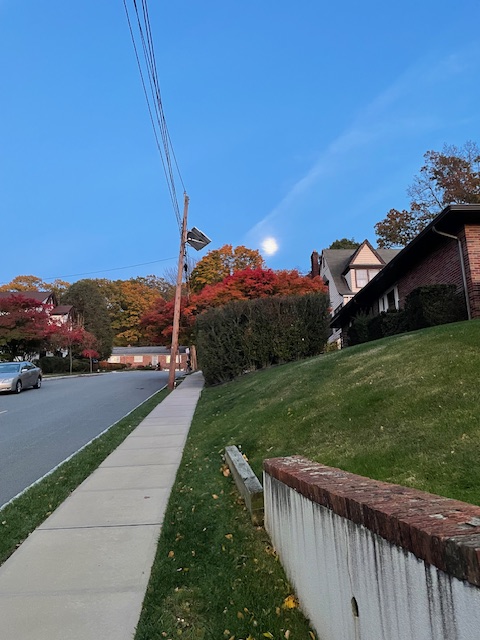
Always an uphill climb: Masson Place, West Orange, October 2025
Local governments may lack the authority to regulate ICE directly, but they unquestionably have the authority to issue resolutions condemning ICE, or resolutions that influence the structure and content of state-level legislation about law enforcement matters. The ITA resolutions, in other words, were entirely within the scope of municipal government. Further, local government also has the authority to decline cooperation with and withhold local resources from federal immigration enforcement. ICE-Free legislation, in other words, is obviously within the scope of municipal government. A local government that lacked control over its own budget wouldn’t be a local government. It would be an appendage of some other government agency.
The activists demanding action of the Council are not distracting it from its proper business, but demanding a re-configuration of priorities well within the scope of the Council’s proper business. Contrary to the Council’s insinuations, no migrant defense activist has ever asked West Orange Council to do anything outside of its jurisdiction or proper scope. What we’ve asked is that it acknowledge and exercise the powers it unquestionably has to defend migrant rights.
And contrary to the members of West Orange Council, migrant defense is a municipal matter. It is, to be blunt, more obviously a municipal matter than many of the trivialities with which the Council has concerned itself in recent times and which it has tendentiously re-described as its primary “business.” In re-hashing the “not-our-business” mantra, the Council has systematically misrepresented the political situation we face, misrepresented the stakes involved, misrepresented the law, and misrepresented its own responsibilities to act. I’ll explain why in a forthcoming post.
I edited this post about twelve hours after its initial posting, tightening up some of the wording, and adding some references.


Pingback: The Strange Case of Justin Goldsman | Policy of Truth
Pingback: ICE-Free Zone for Princeton (2) | Policy of Truth
Pingback: Where Does Joe Krakoviak Stand on an ICE-Free West Orange? | Policy of Truth