I subscribe to an email list owned by a group called Princetonians for Free Speech (PFS), which just today put out an open letter to Christopher Eisgruber, President of Princeton University, in advance of tomorrow’s speech by Yechiel Leiter, Israel’s ambassador to the United States. I don’t ordinarily feel the need to respond to statements by PFS, but in this case, a brief comment is in order. Continue reading
Tag Archives: politics
We Won’t Stop
The New York Times has yet another article on the Trump Administration’s attacks on higher education. As a former academic, I feel bad for higher education, but as an activist right now, I feel fine. Here’s my unapologetic comment in the comments section of the article:
When campus activists called for divestment, we were mocked. Now, as Defense Dept contracts are being canceled at those very universities, invoking our activism as a pretext, it’s our turn to mock. Don’t expect sympathy. It’s not forthcoming. You wanted us in jail. We want you broke. May the antagonist with the greatest moral endurance win.
My comment elicited a rejoinder from someone named Al Orin from New York City: Continue reading
Those Corpses in Yemen
Just to state the painfully obvious: The “Signalgate” controversy broke this past Monday, March 24th. It’s now Friday, so five full days have gone by since it began. In five days, I think it’s safe to say that 99.44% of mainstream discussion on this controversy has focused on the Trump Administration’s inappropriately having used Signal to discuss war plans, stupidly having mistakenly put Jeffrey Goldberg on the chat, and then immorally having lied about it. Not even 1% of the remainder has focused on any deeper question of moral substance: Why are we bombing Yemen? Is it justifiable to do so? Continue reading
Hegseth and the Houthis
As usual in American politics, everyone’s talking the Hegseth and the Houthis story to death, but almost no one’s focused on the right part of it. The story, of course, is that Hegseth and Co had planned to bomb Yemen, and did. They discussed their war plans on the Signal app, but accidentally put Jeffrey Goldberg, the editor of The Atlantic, on the chat. That was a gigantic breach of protocol, but Hegseth et al didn’t notice Goldberg’s presence. A big national controversy has now arisen about what to do. Investigate Hegseth? Force him to resign? Prosecute him? Continue reading
Gaza: Tod Macht Frei
Some friends of mine associated with Jewish Voice for Peace of North Jersey (along with Peace Action and Pax Christi) have taken out a paid ad in the Star-Ledger this morning (Newark, New Jersey), condemning Israel’s violation of the ceasefire agreement signed January 17th (see below, under the fold). You might not, by reading legacy (“mainstream”) media, have grasped the blatantly obvious fact that Israel had violated the ceasefire, but if you hadn’t, here’s a primer by Jonah Valdez at The Intercept. Continue reading
In Defense of Mahmoud Khalil
Letter from a Palestinian Political Prisoner in Louisiana March 18, 2025
My name is Mahmoud Khalil and I am a political prisoner. I am writing to you from a detention facility in Louisiana where I wake to cold mornings and spend long days bearing witness to the quiet injustices underway against a great many people precluded from the protections of the law. Continue reading
Let Them Eat Each Other
A couple of weeks ago, I wrote a post here called “Academic Hiring and Genocide,” in which I argued that genocidaires should, at the very least, be excluded from academic life, but ideally should be excluded from gainful employment itself. Whatever anyone thought of the argument, readers might have wondered about its practical relevance. “So Khawaja’s calling for the on-campus cancellation of ‘genocidaires’. Interesting vendetta, but how many genocidaires are there, anyway? And how many are actively seeking employment right now, including academic employment?” The New York Times reports that the “Defense Department [Is] to Cut Over 5,000” workers due to the Musk-Trump rampage against the “Deep State.” Could I possibly have meant them? Take a wild guess. Continue reading
Stirring the POT (1)
February 2025
Here’s a bunch of announcements I’ve been meaning to post for awhile. Going forward, I’m going to try to post a collection of these each month, ideally toward the beginning of the month. Yet another New Year’s Resolution for 2025–let’s see how long it lasts. I’ve already missed January! Continue reading
The “Ceasefire” Fraud
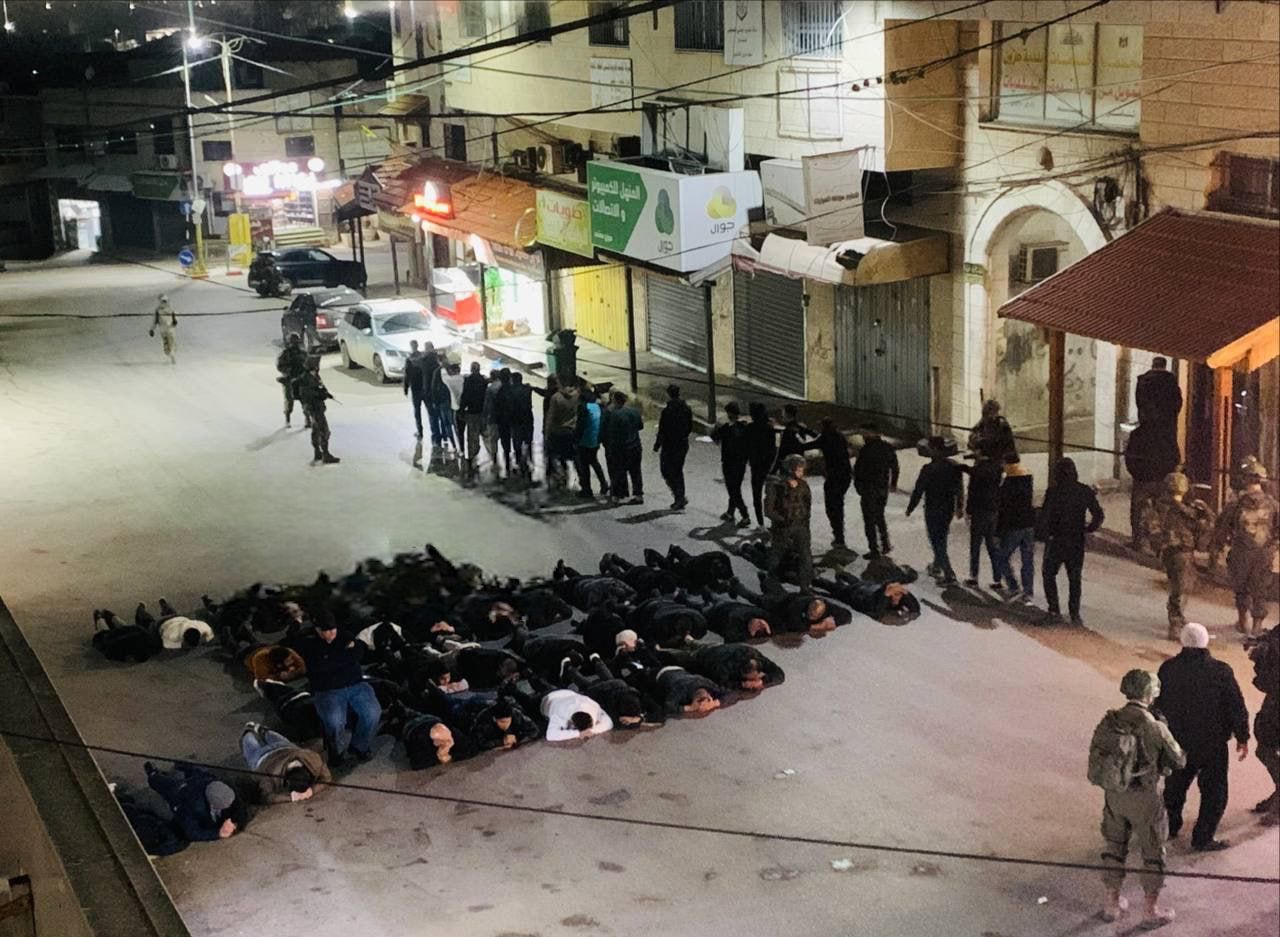
This is what the vaunted “ceasefire” actually looks like in the West Bank: disarm the population, box them in, round them up, incarcerate them en masse. The occupation has quietly swept dozens into jail, and settlers have set fire to the village of Sinjil. Not a shot fired, though.
Continue readingEngels on Social Murder
“Social murder” is a form of homicide that takes place through relatively invisible social processes involving collective rather than individual responsibility. The concept is controversial because it attributes murder to “society” while relying on an unconventional conception of murder: society intends murder, and society kills, where society is identified with a ruling class that controls the political system. What’s controversial here is that social murder kills mostly by omission rather than commission, and is perpetrated by a class rather than by individuals. Both assumptions flout the conventional understanding of the intentionality and causality of murder. Continue reading

