“Life After Privacy”: Thoughts on Big Data (1)

A couple of months ago, while attending a conference on social philosophy, a participant mentioned in passing that she needed to recruit panelists for an Author-Meets-Critics session for a book on the ethico-political ramifications of Big Data. The book was Firmin DeBrabander’s Life After Privacy: Reclaiming Democracy in a Surveillance Society (Cambridge, 2020); the session was to take place at the APA Central Division meeting this February

As an (erstwhile?) philosopher who now works in Big Data, I thought it’d be interesting to give it a shot, so I volunteered. So for the next couple of posts, I’m going to subject you to my thoughts on Big Data (privacy, etc.), thoughts I’ve been piecing together for the eighteen months or so that I’ve spent in the industry. I thought I’d begin in this post with a neutral summary of DeBrabander’s book, move in later posts to some criticisms, and maybe offer some thoughts on what one learns while working in the industry that can’t be learned as a spectator.

Continue reading

“Sovereignties, World Orders, and the Federalist Option”

I wanted to draw attention, however belatedly, to Sovereignties, World Orders, and the Federalist Option: Reviving Libertarian Foreign Policy, an issue of Cosmos and Taxis, Studies in Emergent Order and Organization (10:9-12) edited by my friend Brandon Christensen. Brandon is editor of the blog “Notes on Liberty” (now at a new location on Substack), and a long-time friend of PoT. The issue looks great, and I’m happy to see libertarians thinking in innovative ways about this much-neglected set of topics. Contents below the fold, with clickable hyperlinks. Continue reading

“Cities After COVID”

For your interest: a mini-symposium on “Cities After COVID” in TPM: The Philosophers’ Magazine. Yours truly has a bite-sized contribution about two-thirds of the way down, “The Pedestrian Death Crisis at the Intersection”: hyper-applied philosophy offered pro bono publicum. Thanks to Ian Olasov for putting the symposium together, and to everyone who’s had to endure the traffic/pedestrian safety rants that led to my essay. But don’t stop at that particular intersection; drive through and check out the whole thing.

“Pedagogy Under Occupation” Revisited

I’m mentioning this mostly pro forma, given the cost of registration, but I thought I’d announce that I’ll be giving a paper at the forthcoming conference of the Peace and Justice Studies Association. The paper is called “Between Indoctrination and False Neutrality: Pedagogy Under Occupation,” and is a re-conceived 18-minute version of this post from way back in 2015. The conference takes place October 13-16 at the University of Mount Union in Alliance, Ohio, but for financial-logistical reasons, I’ve had to drop my plans to attend the on-ground conference, and opted to do one of the Zoom sessions instead. My presentation will be in the Sunday, 11 am session (Panel 8A). (Conference schedule in the first link above.) Continue reading

Atlas Tugged

Eight years ago, every sophisticated critic had the same sophisticated criticism to make of (the admittedly terrible) Atlas Shrugged movie: how absurdly anachronistic it was to think that a modern economy could depend on something as coarsely physical as railroads. OMG. SMH. According to the wisdom du jour, then as now, the future is digital–a condition that renders the world of crudely physical things dispensable.

Here we are, eight years later:

Union Pacific, a major rail carrier, also expressed relief at the deal. “We look forward to the unions ratifying these agreements and working with employees as we focus on restoring supply chain fluidity,” the company said in a statement.

Mr. Walsh wrote on Twitter that the agreement “balances the needs of workers, businesses, and our nation’s economy.”

“Our rail system is integral to our supply chain,” he said in a follow-up tweet, “and a disruption would have had catastrophic impacts on industries, travelers and families across the country.”

Curious Soul Workshop on Alienation

My friend Monica Vilhauer, founder and owner of Curious Soul Philosophy, an independent philosophy organization, is running a series of workshops this fall on alienation. I’d attend myself, but I’m on a bit of a hiatus from things nowadays, so I can’t. That said, I would if I could, so I highly recommend giving it a shot: I can vouch, personally, for Monica’s acumen and skills as a philosophical interlocutor. Whether you want to re-live your long-lost glory days in grad school, or just figure out why alienation seems to be a ubiquitous fixture of our lives–or both–I think you’ll get more than your money’s worth. Information below, and via this this link to Monica’s website.

Even if you happen to miss this particular workshop, take a look around at CSP’s other offerings–there’s a bit of something for everyone. Incidentally, I asked Monica if she’d consider doing a workshop on Gadamer (her AOS, and the subject of her book, Gadamer’s Ethics of Play), and she said she would if I could get a handful of people to sign on with me. In other words, For a fee/She’s happy to be/Our Gadamer Girl. That’s where you guys come in, PoT heads. So get your truth and method on, and let’s take a ride down Continental Lane one of these days (but yeah, you’re going to have to wait until I’m back from my Exile in Hiatusville). Continue reading

An Exponential Corporate Tax Based on Market Share

Apologies that my posts are much shorter than Irfan’s. But sometimes I have only the nugget of an idea that still seems worth developing enough to warrant sharing at a preliminary stage. I’ve done a lot of reflecting in recent years on the growing problems of oligopoly and monopoly in American commerce — having taught about this in an interdisciplinary course on Market Failures and Public Goods. It is not a ‘sexy’ issue that draws a lot of attention like culture wars material. And that’s a shame, because it is a far bigger part of “structural injustice” than many of the things discussed in the culture wars (imho). And, because most people finish high school without even 10 minutes on what public goods are and what kinds of problems prevent markets from working optimally, less than maybe 2% of Americans understand why big tech companies like Microsoft, Apple, Amazon, Google, Facebook etc. now have so much power and are driving up economic inequality by buying up every competitor or driving them out of business via unfair advantages. The root cause is what’s known as a network externality in which the goods being sold are not merely non-rival, but even anti-rival: because they become a “standard,” the more people use them, the more valuable they become. They are also get a critical edge in visibility, and no competitors can get over the threshold to compete well enough with them. The result is a so-called “long tail” distribution in which one company in a sector may get 50% of the profits, the next-strongest getting 10%, the third strongest getting 3%, and so on down through thousands each getting much less than 1%.

Continue reading

Poet of the Sociopath

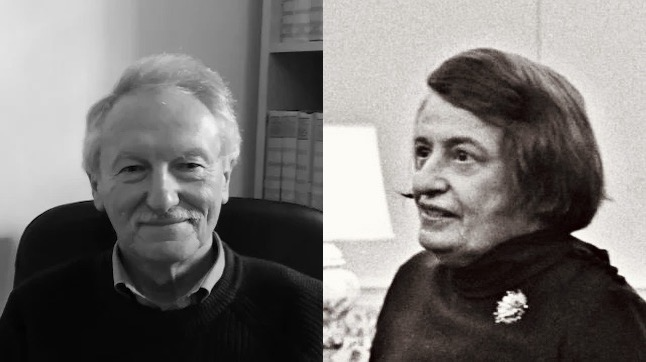
Rand “is the cold, stony advocate of self-interest, the poet of the sociopath.” That quotation is from the book AYN RAND AND THE RUSSIAN INTELLIGENTSIA (2022) by Derek Offord. He goes straight to Rand’s various representations and condemnations of altruism and collectivism and to her holding high ethical egoism and attendant inversions of traditional virtues, such as the displacement of humility with pride. He sees the audacity of Rand’s vision of a guilt-free human life.

The author sticks to the clashes between Rand’s ethics and the traditional, altruistic ones, secular or religious. He takes no notice of continuities of the old and the new and ways in which the latter took up the old with redefinition and placement in an orderly account of value per se. By sticking to only the stark clashes and by ignoring facets of the psychology of Rand’s protagonists—indeed conjecturing that such things as empathy and concern for others are entirely absent in those characters (and in their creator)— Offord makes it easy on himself to slide from Rand being the poet for personalities asocial, to antisocial, to sociopathical. Even the asocial is in full truth not fitting of Rand’s protagonists.

This book is another distortion and smear of Rand’s philosophy. It is a smart one, by someone who actually has read Rand’s novels and The Virtue of Selfishness. He is of independent mind, not one repeating old critical reviews by others.

https://www.bloomsbury.com/uk/ayn-rand-and-the-russian-intelligentsia-9781350283947/

a thought or two prompted by reading chapter one of Gaus’ “The Tyranny of the Ideal”

Suppose that, for a certain type of cooperative endeavor in a certain type of circumstance, the only appropriate fairness-pattern (in the distribution of benefits and burdens) is equal shares of what is produced (as long as a certain minimum effort, of a certain minimal quality, is put forth). So, we do the thing, everyone crosses the effort/quality threshold, and we distribute the fruits of our labor equally. Is the distribution perfectly or completely fair or just?

Not necessarily. Maybe my contribution involved my unfairly acquiring something (say, wood for a fire that needed to be fed) from someone. Or maybe, though I traded fairly to get my wood, the person I got it from obtained it from some other person unfairly. The general pattern here (that need not involve anything like a chain of transactions a la Nozickian procedural justice) is: (social state of affairs) that-P is just only relative to the justice of (relevant social circumstance) that-Q; but it might be that, if that-Q is just, it is just only relative to the justice of (further relevant social circumstance) that-R; etc. Though there is no reason why this explanatory chain has to be super-long or super-complicated in all scenarios, at the level of evaluating whole societies and the complex interactions, norms and institutions that compose them, some considerable number of salient justice-evaluable circumstances and some considerable complexity should be expected. But that pushes us toward the idea that ideals of perfect or complete justice are unmanageable and quixotic. 

Continue reading