Hell Is Empty and All the Administrators Are Here

Cass Sunstein has a Guest Essay in today’s New York Times that argues that the First Amendment is the key to the norms that govern free speech on campus: “Only the First Amendment Can Protect Students, Campuses, and Speech.” His point is that universities should either adhere to First Amendment jurisprudence or legislate and enforce some functional equivalent of it. The First Amendment is (on this reading) supposed to be a content-neutral protector of free speech, with exceptions that Sunstein duly enumerates in the latter half of the essay.

Some of what he says seems fine, and some of it seems wrongheaded, but I was struck by the insouciant sloppiness of this particular sentence: 

In a class on Shakespeare, students and professors can be instructed by administrators to discuss Shakespeare, not the presidential election.

No, they can’t. That’s not how academic freedom works, not how Shakespeare works, and not how pedagogy works. Continue reading

Days of Future Past:  Another One from the Vaults

A few years ago I posted my 1992 Ph.D. dissertation on my website; but I was recently asked to post my 1985 undergraduate thesis as well.  Happily, this document was one I knew the location of and could easily access and scan (unlike so much of my stuff packed away in boxes). 

So here’s a blast from the past about the status of the future – and a glimpse of your humble correspondent at age 21.  (I vaguely recall seeing an interview with later Billy Joel looking at footage of early Billy Joel and chuckling, “that young punk!”  Yeah, feels kinda like that.)

“WITH PARTICULARS THAT ARE GOING TO BE IT IS DIFFERENT”:
Aristotle and the Problem of Future Contingents
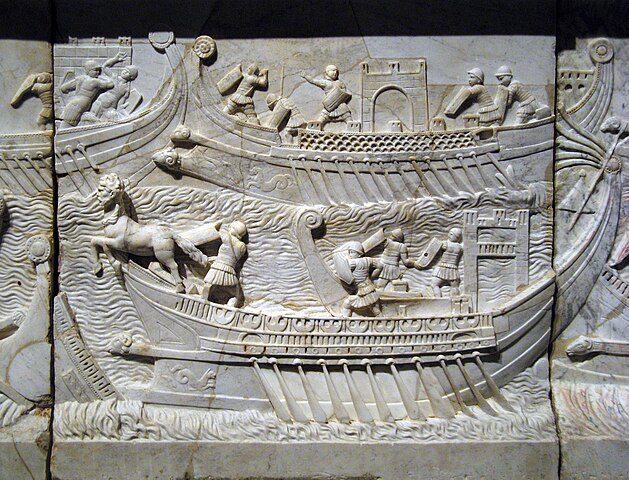
Incidentally, I remember vividly the moment when I was first introduced to the so-called “sea battle problem.”  I was already interested in theories of time generally, and Aristotle’s theory of time in particular, but my exploration of the latter had been confined mainly to the Physics and Metaphysics; I hadn’t yet found my way to On Interpretation 9.  Well, one day during a school break I was parked at the dock in Hull MA, waiting to pick up my mother from the commuter ferry (we were living in Hull, but she was working in downtown Boston), and while I was waiting for the boat I was reading a green and white paperback anthology titled Problems of Space and Time, edited by J. J. C. Smart, which I’d picked up in some used bookstore in Cambridge.  (Alas, there were many more of them then.)  The chapter I read on that occasion was Elizabeth Anscombe’s article “Aristotle and the Sea Battle.”  I wasn’t convinced by Anscombe’s solution, but I became obsessed with the problem (along with her delightful line “I won’t say,” which has become a perhaps dubious part of my vocabulary).   And so here we are.  (But those who are hip to the relevant signs and stigmata will also recognise traces of Randian influence throughout.)

I’ve now reread the thesis enough to get a serious nostalgia wave from it, but not enough to judge how far I would still agree with all of it.  Bear in mind that this thesis, unlike my later dissertation, was written when I had not yet studied Greek in anything more than the most minimal way; so all my arguments about the details of Aristotle’s wording in various passages would need to be revisited while consulting the Greek texts.  Which, ha, not today, mate.

I notice that in the Introduction I describe my method as having “a somewhat dialectical character, weighing reciprocal determinations.”  I certainly was starting as I meant to go on!  (But y’know, if you’d asked me recently when it was that I first got into the whole reciprocal-determination thing, I would have said the mid-1990s.  Obviously not.)

Why Don’t They All Just Fade Away?

I missed this earlier, but the indefatigable John Davenport had an Op-Ed published in the August 15 issue of the Star-Ledger (Newark, New Jersey): “Americans do not want a gerontocracy.” Following the argument of his Democracy Amendments, John makes the case for a constitutional amendment for age limits for office:

It is thus a safe bet that at least three-quarters of American adults would support a constitutional amendment to set a 75 as a maximum age, even if some would prefer a lower number. That could be enough to get such an amendment ratified if it ever reached state capitols or state ratifying conventions. It would mean that no president could be inaugurated later than a day shy of their 72nd birthday.

Continue reading

Markets with and without Limits

Some more bragging to compensate for the free-riding modesty of PoT’s bloggers: Roderick Long has an article out on the dispute over markets with and without limits: “The Limits of Anti-Anti-Commodification Arguments: James Stacey Taylor in Markets with Limits versus Jason Brennan and Peter Jaworski in Markets without Limits,” International Journal of Applied Philosophy, vol. 37:2 (Fall 2023), pp. 1-10. The publication date is given as 2023, but the issue just came out. Continue reading

Machiavelli and the Weather Underground

Anyone in the vicinity of Niagara, New York this October is hereby invited to the 2024 Conference of the Peace and Justice Studies Association, where, if you manage to brave the somewhat aggressive registration fee, you’ll be able to take in a bit of Machiavelli and the Weather Underground, among other interesting things. The conference runs October 24-27, at Niagara University near Buffalo. Continue reading

“Justice by Means of Democracy”

Modesty is supposed to be a virtue. Freeriding is an expression of vice. So how could modesty lead to freeriding? Well, suppose you have bloggers so modest that they refuse to advertise their own publications. Then it’s left to me to do it for them.

With that preface: PoT blogger and freerider John Davenport has a review in Notre Dame Philosophical Reviews of Danielle Allen’s Justice by Means of Democracy. First paragraph: Continue reading

License to Kill: Israel in Tuk’u

I’m writing this at 10-11 pm Eastern time on Monday, August 12th. I’ve just received word from a friend in the West Bank village of Tuk’u (Arab Teqoa) to the effect that the Israeli military has entered the village in force, distributing leaflets that order the expulsion of the village’s population, and threatening to kill those who remain.  Direct quote commenting on a video that he sent me: “It’s 4 in the morning, the soldier is spreading papers that says [sic]: [if] you leave your house, you live, if you stay you die.” (To be precise, it was 4:30 am his time when he wrote that.) The video is available as a pinned post on my Facebook feed. Unfortunately, I couldn’t directly upload it here. Continue reading

Stand Up and Shout

The New York Times, making its journalistic contribution to the national circle jerk over Kamala Harris:

When protesters first interrupted Vice President Kamala Harris at a rally in Detroit on Wednesday evening, she smiled, with a gentle corrective. “I am speaking now.”

But as the disruption continued, her patience ran thin. “You know what?” Ms. Harris said, with the sudden force and resolve of a parent in the driver’s seat who has had it. “If you want Donald Trump to win, then say that. Otherwise, I’m speaking.”

As the crowd roared, Ms. Harris stayed silent, jaw set, eyes fixed.

We’ve listened to these people in respectful silence for long enough. We no longer owe criminals like Kamala Harris, Joe Biden, Donald Trump, or JD Vance any duty of civility, respect, or obeisance. We owe ourselves the self-respect that comes from active resistance to the evil they represent. Continue reading