The Weaponization of Anti-Semitism

Here’s an informative podcast interview with my friend Steve Shalom, a political scientist at William Paterson University (Wayne, New Jersey), and an active member of Jewish Voice for Peace of Northern New Jersey. You have to scroll down a few clicks past the bio and the Banksy visual for the podcast itself.

What Steve says in the interview about anti-Semitism strikes me as one instance of many of the over-emphasis on race in American political discourse–not only to the exclusion of other sorts of identity, like gender and class, but to the exclusion of a straightforward focus on ethico-political issues as such. In other words, we not only have a tendency to focus on race above all other things, but to use our focus on race to distract attention from equally important things. It becomes easy to forget that sometimes an issue is just an issue. Continue reading

“It’s What We Do”: Film Screening and Pot Luck Dinner

For the many, of whom each individual is but an ordinary person, when they meet together may very likely be better than the few good, if regarded not individually but collectively, just as a feast to which many contribute is better than a dinner provided out of a single purse, especially if one of the many is bringing biryani and naan from Nirala’s of Elmwood Park.  –Aristotle, Politics, III.11

Continue reading

Reason Papers Vol. 40:2 Out

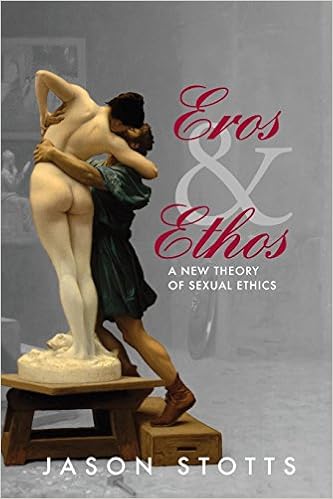
The Winter 2018 issue of Reason Papers is now out, care of Shawn Klein and Carrie-Ann Biondi. Contents include Part II of a symposium on Stoicism, yet another hair-raisingly frightening/deeply counter-intuitive paper by Steve Kershnar, and some book reviews, including a longish one on sexual ethics by my friend Ray Raad.

Stoicism, atrocities, sex: in short, something for everyone. Check it out.

Continue reading

Forthcoming Anthology on Dialectical Libertarianism

Check out Chris Matthew Sciabarra’s announcement for his forthcoming anthology Dialectics of Liberty: Exploring the Context of Human Freedom (edited by Sciabarra, Roger Bissell, and Edward Younkins) here, and the abstracts of chapters here.

Contributors include Jason Lee Byas, Robert Campbell, Troy Camplin, Kevin Carson, Gary Chartier, Billy Christmas, Douglas Den Uyl, Nathan Goodman, Robert Higgs, Steven Horwitz, Stephan Kinsella, Deirdre McCloskey, David Prychitko, Douglas Rasmussen, John Welsh, the editors themselves (Sciabarra, Bissell, and Younkins), and your humble correspondent. (You’ll notice several of my fellow Molinari/C4SS and BHL folks on that list.)

In Sciabarra’s words: “These essays explore ways that liberty can be better defended using a dialectical approach, a mode of analysis that grasps the full context of philosophical, cultural, and social factors requisite to the sustenance of human freedom.” Sciabarra notes that while “some of the authors associated with the volume may very well not associate themselves with the views of other authors herein represented,” a “context-sensitive dialectical approach” is “living research program” that “will necessarily generate a variety of perspectives, united only in their ideological commitment to freedom and their methodological commitment to a dialectical sensibility.”

Sciabarra has devoted his career to exploring such an approach, most notably in his “Dialectics and Liberty” trilogy Marx, Hayek, and Utopia; Ayn Rand: The Russian Radical; and Total Freedom: Toward a Dialectical Libertarianism.

I Won’t Drive The Roundabout

A couple of days ago, my Facebook friend Gary Chartier posted this article from USA Today on increasing speed limits on American highways. As it happens, I’m at work on a paper on a traffic-related blog post I wrote here a few months ago, to the effect that police tailgating ought to be regarded as a form of legal entrapment. To that end, I’ve been reading a lot about cars, roads, road safety, traffic, tailgating, police chases, and entrapment. Research aside, I happen to be an unapologetic traffic-ethics bigot inclined to the view that when it comes to driving, it’s my way or the highway. So naturally, I leapt at the chance to pontificate on Gary’s post.

I think higher speed limits have a paradoxical effect. The higher the speed limit, the greater the generalized fear of driving; the greater the generalized fear, the greater the vigilance with which people drive; the greater the vigilance, the fewer fatal (high speed) accidents. (The general pattern has been statistically demonstrated.) Unfortunately, when there are accidents at that speed, they’re more likely than usual to be fatal. In New Jersey, higher speed limits have led to fewer fatalities. That said, I don’t think higher speed limits are a legitimate way of reducing fatalities; I call it “regulation by terror-induced vigilance.” It’s like reducing crime rates through extremely aggressive methods of deterrence.

Incredibly, Nathan Byrd, another of Gary’s FB friends, had the audacity to question my claims right there on Facebook. Continue reading

Racism in an Elevator

I went stark raving mad after seeing this video posted in a module of my Ethics course at Felician University covering multicultural counseling. Irfan and I have long talks about how upside down things are not only in the media, but in the social sciences where the truth of what one has to say appears to relate more to the color of their skin than what the person actually says.

The effect of the type of “reasoning” engaged in not only in the two paragraphs below, but in the video as well as the article on “white privilege” (just click on the link to see that article) was going to send me to the psych ward on suspicion of homicidal ideation if I did not speak up. So, I felt it best to do so in the interests of everyone’s safety. I didn’t have a lot of time to write this response so it’s rough, but it makes the points I wanted to make in essence. I think Irfan will follow-up with more to say. Continue reading

Public reason as solving a fundamental disagreement problem

One strand in the “public reason” approach to political justification, stated in a very general form, might go something like this: in the context of disagreement about which shared, public norms to codify and enforce, when actual consensus is not present, the obvious or evident nature of important, relevant objective reasons, the recognition of which would rationally tend to lead to consensus (this situation constituting a certain kind of hypothetical consensus) suffices to make for permission to enforce.  One way to characterize this general approach is by saying that there is a “disagreement problem” specific to the relevant context that is “solved” by taking steps toward consensus (with enough truth in it) on the matter as against simply seeking the truth. Here is a specific proposal along these lines, a first shot in the right direction with this kind of approach, to play with and evaluate: Continue reading

Justice as Fairness

I’m wondering what readers think of this case:

A judge has sided with a New Jersey teenager accused of cheating on the ACT exams, saying a clause test-takers must sign giving up their rights to sue the testing company is “unconscionable” and “void as against public policy.”

The ruling from Somerset County Judge Michael Rogers means Readington Township teenager Brendan Clare can seek damages from ACT Inc., the company that runs the test and threatened to invalidate his scores. It also opens the door for teenagers across the country to attempt to sue the testing company citing Rogers’ ruling.

A somewhat more informative article from Inside Higher Ed.

The contract in question strikes me as substantively unfair, but I wonder about the use of unconscionability to void it. For purposes of this post, set aside the possibility of fraud, and focus just on the issue of unconscionability. It seems to me that the use of unconscionability here raises the following problem. Continue reading

Drivin’ and Cryin’: Bumps on the Road to Pot Legalization

I’m all in favor of the decriminalization of marijuana, indeed for the eventual legalization of recreational pot use, but the closer we come to achieving that goal, the greater the number of practical quasi-dilemmas we’ll have to face that we’d never had to consider before. These quasi-dilemmas may not be conclusive considerations against full legalization, but they can’t be minimized, either.

It’s common for advocates of legalization to compare pot with alcohol: if we accept recreational alcohol consumption, why not accept recreational consumption of pot? In many ways (it’s plausibly argued), alcohol is worse than pot. If we overlook the problems with alcohol and allow recreational alcohol consumption anyway, it seems inconsistent to fixate on the similar problems with pot in order to ban the recreational use of pot. Continue reading