Islamic Wine-Goblets and Christian Adultery

Wine and the nectar of the beloved’s mouth entail no sin or crime
Except for heretics who have swerved from our (rightful) creed.
— Ibn Rāfi’ Ra’sah (early Islamic poet; quoted in J. A. Abu-Haidar, “The Muwashshahāt and the Kharjas Tell their Own Story,” p. 57; Al-Qantara 26.1 (2005): 43-98)

Avicenna was fond of wine, and, on being reproached for his defiance of the Koran, replied: “Wine is forbidden because it excites quarrels and bad passions, but I, being preserved from excesses by my philosophy, drink wine to sharpen my wits.”
— George Henry Lewes, The History of Philosophy From Thales to Comte, vol. 2 (1867)

The Mahommedan and Christian Arabs of Asyut get on admirably together. They smile at the mistaken (as they suppose) opinions of each other; and the educated Arab smiles at both. But there is no intolerance, no ill-will, no anathematising. I remember offering a glass of wine to an Arab at Tunis, chiefly with the mischievous object of seeing how he would refuse it. Quaffing it off, to my surprise, he drank my health. “I thought,” said I, “that wine was forbidden by your religion?” “Drunkenness, not drink, is what is meant,” he replied with a smile.
— Wordsworth Donisthorpe [yes, that Wordsworth Donisthorpe], Down the Stream of Civilization (1898)

Some years ago, I attended a dinner at Princeton University where I witnessed a revealing exchange between an eminent European philosopher who was visiting from Cambridge, and a Muslim scholar who was seated next to him. The Muslim colleague was indulging in a glass of wine. Evidently troubled by this, the distinguished don eventually asked his dining companion if he might be so bold as to venture a personal question. “Do you consider yourself a Muslim?” “Yes,” came the reply. “How come, then, you are drinking wine?” The Muslim colleague smiled gently. “My family have been Muslims for a thousand years,” he said, “during which time we have always been drinking wine.” An expression of distress appeared on the learned logician’s pale countenance, prompting the further clarification: “You see, we are Muslim wine-drinkers.”
— Shahab Ahmed, What Is Islam? The Importance of Being Islamic (2015)

That of which a large amount intoxicates, a small amount is forbidden.
— The Prophet Muhammad, Hadith, quoted in Ahmed, op. cit.

Reference to an ‘Islamic wine goblet’ makes about as much sense as talk of ‘Christian adultery.’
— Thomas Bauer, quoted in Ahmed, op. cit.
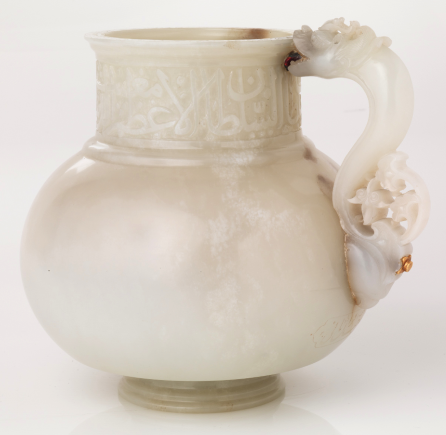
Islamic wine goblet (Uzbekistan, 15th century)

Drink Wine and Look at the Moon

I recently finished reading What Is Islam? (available on Amazon here, and free to read online or download here) by the late Shahab Ahmed (note: not to be confused with the Australian murderer of the same name!). I wasn’t convinced by all of it, or by the author’s slightly postmodern frame of reference (while Ahmed pokes fun, in a footnote, at another scholar’s prose style as “unnecessarily complicated and none-too-transparent,” I fear the same charge could be brought against much of Ahmed’s own book too), but I think it’s nonetheless a terrific book that makes a persuasive case, backed up by a wealth of historical detail, for, at the very least, the following important claims:
Continue reading

Pete Buttigieg, Iowa, and Character-Based Voting

I am colossally overdue in finally editing and posting the fifth installment in my supposedly five-installment-long series on character-based voting. Resolution: before the year is out. But here, at any rate, is a passing thought on that same subject, inspired by a New York Times article on Pete Buttigieg. In previous posts on this topic, I’ve tried to flesh out the ways in which character might be relevant to justified voting. An indirect route to that same end is to reflect on a case where it’s mostly (or largely) irrelevant. Continue reading

Happy Thanksthieving*

Sometimes, my cynicism about our national holidays even starts to get to me. But not today. So here I am, bright and early, to crap on Thanksgiving. For most people, Thanksgiving is a feel-good holiday about gratitude for God’s plenty and the wonders of mutual understanding in a multicultural context. For me, it’s about theft, lies, self-delusion, and worst of all, football. So here are some downer, myth-busting pieces on Thanksgiving. Continue reading

Vile, Stupid, and Tenured

I rarely praise university administrators, but then, I rarely have the opportunity to do so. For once, an opportunity presents itself:

The provost did not mince her words about the opinions of a professor on her campus. His views were racist, sexist and homophobic, she wrote in a statement this week. They were “vile and stupid,” she said, and “more consistent with someone who lived in the 18th century than the 21st.”

But the provost, Lauren Robel of Indiana University Bloomington, was equally clear on another point: The First Amendment prohibited the university from firing the professor, Eric Rasmusen, for expressing those views. “That is not a close call,” wrote Professor Robel, who also teaches at the law school.

The unusually candid statement quickly drew attention from students, academics and lawyers, many of whom praised the provost for publicly excoriating the professor’s opinions while respecting one of the nation’s basic freedoms.

For once, a provost who’s struck the right balance between bureaucratic amoralism and opportunistic, pseudo-moralistic pandering. She’s absolutely right: firing Rasmusen is not a close call; neither is condemning him. The only close call is whether he should have been hired in the first place, but that ship has sailed. Continue reading

The Unwarranted Demonization of Scot Peterson (5): “It Was Chaos”

This article is (in most but not all respects) a useful corrective to the reflexive, unwarranted demonization of Scot Peterson over the Parkland shooting of 2018. The “chaos” to which the article refers arose because it was unclear where “the” shooter was, and how many shooters there were. Unfortunately, like so much journalism on this topic, the article seems to suggest that there was chaos for everyone but Scot Peterson, who infallibly knew that there was one shooter, and knew in real time exactly (or even approximately) where this shooter was. Just to be clear: there is no evidence in the public domain that indicates this. The evidence indicates the reverse: that he did not know how many shooters there were, or where any of these shooters were. Continue reading

Police Tailgating and Entrapment Revisited

Since I’ve been revisiting so many things lately, and Roderick just posted his PPE presentation from last year (which I missed), I figured I’d revisit the topic of police tailgating and entrapment that I mentioned here last year. Down below is the (alas, rejected) abstract proposal I sent to the forthcoming PPE conference.  Below the abstract, I’ve pasted a few interesting cases I’ve recently encountered of what I take to be entrapment on my account of it.

I gave an earlier version of the tailgating paper this past July at the NASSP conference in San Francisco, where it was mostly met with puzzlement. The main objection from the audience was that my account of entrapment-by-intimidation was, in some sense, too revisionary to count as entrapment. Police tailgating to induce a moving violation was, most people granted, a due process injustice of some kind–just not a case of entrapment. I was surprised to encounter a small handful of people who didn’t think that police tailgating was either entrapment or a due process injustice of any kind. But I guess weirdos like that are what conferences are for. Continue reading

Aristotelian Welfare and Libertarianism Revisited

I seem to be revisiting a lot of things lately–first reparations, now this. Anyway, you may have noticed this down on the pingbacks, but there’s a long response here to my November 2 post (and exchange with Roderick) on the tensions between Aristotelianism and libertarianism. The post is called “The Shallowness of Secular Ethical Systems,” the blog is called Politics and Prosperity, and the author’s pen-name is Loquitur Veritatem, or truth teller. This last piece of information will come as a shock to anyone who (like me) thought Policy of Truth was the repository of all truths worth knowing. Continue reading

The Virtue of Gaslighting

There are times when I read a passage of Ayn Rand’s and find myself rubbing my eyes to make sure that what I’m reading is real. I take a perverse pride in knowing my way around the Randian corpus, but I just read a passage of hers that I somehow seem to have missed before today, and am having trouble processing what I’ve read. It’s excerpted in a piece on the ARI website on the “moral foundations of the Berlin Wall.” The two prefatory sentences are by Tom Bowden, the author:  Continue reading