This weekend is, for me, a tragic anniversary of sorts. On Saturday, October 11, 1986, I got the news that my cousin Waseem Toosy had died in a traffic accident in Saudi Arabia–on his way, ironically enough, to medical school. Waseem had periodically lived with us while he studied here in the States; he was like a brother to me. He was, I think, 18 or 19 when he died; I was 17. In yet another irony, his late father had been an orthopedic surgeon, and his brother Naeem ended up becoming an emergency-room physician. Continue reading →
If I think Braelyn is a good person, I think this is so in virtue of her having certain descriptive features, like being kind or generous. And similarly, it seems, for other evaluative or normative features (Braelyn being morally required to refrain from injuriously striking Herro when he has minorly offended her, Braelyn having reason to tie her shoes, etc.). Meno-like, we might draw out and precisify our intuitions here.
(1) The ‘in virtue of’ refers to a kind of non-causal metaphysical determination or dependency (sometimes called “grounding” by philosophers). In this, it is in the same broad category as a thing being red in virtue of it being crimson (or it being crimson making it the case that it is red). Such determination or dependency does not happen across time and is not causal (e.g., it is not of the same type as my painting the object red making it red). Continue reading →
We’re #ProudBoys, and we’re not standing down at all–we’re standing by. OK, we’re sitting by. But #ProudBoys nonetheless, having a gay old time.
Brad and I are #ProudBoys, legally married for 12 years now. And we’re proud of all of the gay folks who have stepped up to reclaim our pride in this campaign. Our community and allies answered hate with love, and what could be better than that. pic.twitter.com/GRtSH1ijQ8
It’s pretty ancient – I haven’t updated it since I gave it at a memorial panel for James Rachels back in 2004, and there are things I’d like to add – but no time to do that just now.
It’s long been the custom of the Auburn U. Philosophy Club to hold a public meeting at a local coffee house – generally either Mama Mocha’s or the Coffee Cat – where a panel composed of both students and faculty from the department give brief presentations on some philosophical topic of general interest, followed by Q&A.
In light of the Current Unpleasantness, this semester’s panel will be online via Zoom rather than in-person, which will sadly mean no access to the venue’s excellent coffee. But we must soldier on with a decaffeinated, or at least less gloriously caffeinated, version of our usual caffeinated-philosophy event. And the positive side is that folks not physically present in Auburn will be able to attend.
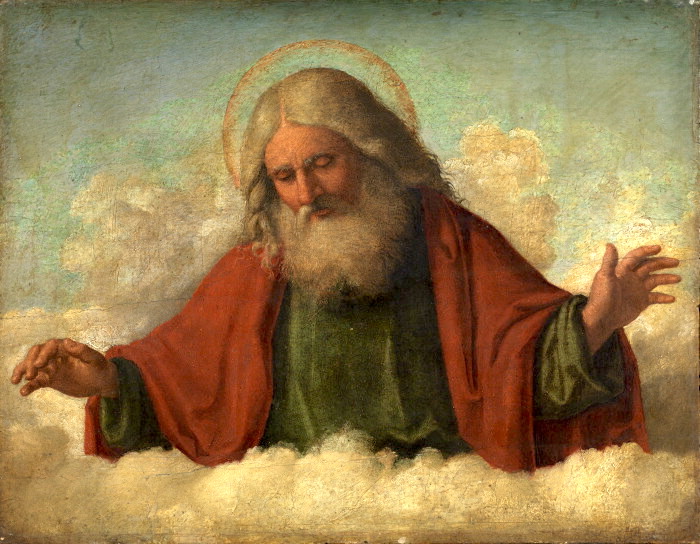
The topic for this semester’s panel is “The Existence of God.” I will be one of the speakers (and my contribution will of course decisively settle the theism vs. atheism debate once and for all! – although in my experience neither side tends to be very fond of my solution). It will be held on Wednesday, October 7th, at 7:00pm Central (8:00 Eastern, 6:00 Pacific). The meeting is free and open to the public; but please register in advance at https://auburn.zoom.us/meeting/register/tZIvce6gqjguGdJC7olVpoP-TnWgaZtUCkKr. After registering, you’ll receive a confirmation email containing information about joining the meeting.
As some of you may have noticed, WordPress has, in its “wisdom,” introduced a new default editing system at its blogs, pretentiously called the “Gutenberg Block Editor.” It’s a flaming piece of shit which adds no value to the platform, subtracts (or hides) valuable functions that were present in the classic editor, is generally glitch-laden, and is extremely difficult to work with. This move is obviously in compliance with the Tech Axiom that if you can make a change to a platform, the change counts as an “improvement” no matter how miserable it makes the actual users of the platform, and how little they wanted it. (And yes, I have a Premium account, so I’m paying for this crap.) Continue reading →
In his paper “Favoring,” Antti Kauppenin seeks to explain normative “reasons” (it being the case that one has reason to do something, an item being a reason for one to do that something) in terms of normative “oughts” (it being the case that one ought to do something). Part of his view, or at least his argument for it, is the idea that normativity comes to accountability. This view, though probably a minority view among meta-normative theorists, has some significant currency in the field. He expresses the view, with respect to the normative ought, as follows: Continue reading →
My two latest Agoric Café videos both feature interviews with faculty here at Auburn.
In the first one, I chat with my philosophy department colleague Kelly Dean Jolley about Jane Austen and J. L. Austin, the veil of perception, Ohio land swindles, the tyranny of nouns, screwball comedies, anti-psychologism, apophatic theology, the arctic perils of SUNY Oswego, the philosophic uses of poetry, Wittgenstein vs. Augustine, 18th-century literary nanotechnology, real love in the spy life, Howard Hawks as an Aristotelean ethicist, the problem of other minds, the Typic of practical reason, Frege’s three principles, religious language and the ineffability of logic, feeling William James’s ‘but’, and Lewis White Beck philosophising with a hammer:
Some viewers of my channel may be dismayed that this episode contains no libertarian, anarchist, or Rand-related content. To them, I say: dear god, there’s more to life than that stuff.
(Though anyone insistent on drawing connections to Rand can likely find a basis for them in the sections of the interview about direct perceptual realism and/or Hawksian eudaimonism.)
(Incidentally, to any Rand fans reading this, I highly recommend Gerald Mast’s book on Hawks:
I’m pretty sure you’ll like it.)
In the second video, I chat with biologist James T. Bradley about the future of, and ethical issues surrounding, biotechnology and nanotechnology; global and civic responsibilities of scientists and of laypeople; intimations of immortality from William Godwin to Ray Kurzweil; the importance of interdisciplinary education, and of instruction in evolutionary biology; the 15th-century (trans)humanism of Giovanni Pico della Mirandola, and the perils of invoking the Pope; Bradley’s three-week plan for solving a pandemic; the potential parallels between central planning for sociopolitical systems and central planning for ecosystems; the cosmological theories of Crosby, Stills, Nash, and Young; that time the National Science Foundation awarded Bradley and myself a $200,000 grant (but we had to spend it all on, like, course stuff); how the universe uses stardust to become self-conscious; and the waning allure of cricket ovaries.
I’m not a big booster of my undergraduate alma mater, Princeton, or a big fan of its current president, Christopher Eisgruber. But when a self-proclaimed “libertarian” academic gleefully defends an absurdly unwarranted federal investigation into the institution, relying on transparently idiotic arguments, one reaches a point of discursive futility: this is not a person worth arguing with, or even all that much worth spitting at.
No one with Brennan’s credentials can be stupid enough to believe the bullshit arguments he’s trundling out at this point. As a friend of mine pointed out, Brennan’s blog posts are not meant to be taken seriously. They’re just the efforts of a hostile well-poisoner working off his animosities in public in the confident belief that he can say anything about anyone with impunity. All I have left to say is: feel free, dude–and feel free to fuck yourself while you’re at it. Continue reading →
Whenever I have to spend a lot of time dealing with lawyers, I find myself thinking about The Merchant of Venice, the best guide to the law (and to lawyers) ever written. Of course, for as long as I’ve been reading it, I’ve encountered interpreters who sing the praises of Portia, the pseudo-lawyer who decides the case at the climax of the play. I guess my attitude toward Portia is a lot like Jan Brady’s attitude toward her older sister Marcia, as depicted in this, the climactic scene in one of the major episodes of the Brady Bunch epic.

 Policy of Truth