“It’s What We Do”: Film Screening and Pot Luck Dinner

For the many, of whom each individual is but an ordinary person, when they meet together may very likely be better than the few good, if regarded not individually but collectively, just as a feast to which many contribute is better than a dinner provided out of a single purse, especially if one of the many is bringing biryani and naan from Nirala’s of Elmwood Park.  –Aristotle, Politics, III.11

Continue reading

Reason Papers Vol. 40:2 Out

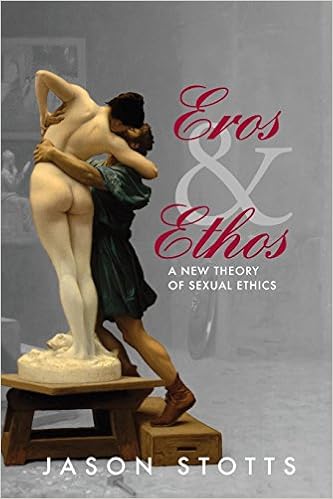
The Winter 2018 issue of Reason Papers is now out, care of Shawn Klein and Carrie-Ann Biondi. Contents include Part II of a symposium on Stoicism, yet another hair-raisingly frightening/deeply counter-intuitive paper by Steve Kershnar, and some book reviews, including a longish one on sexual ethics by my friend Ray Raad.

Stoicism, atrocities, sex: in short, something for everyone. Check it out.

Continue reading

I Won’t Drive The Roundabout

A couple of days ago, my Facebook friend Gary Chartier posted this article from USA Today on increasing speed limits on American highways. As it happens, I’m at work on a paper on a traffic-related blog post I wrote here a few months ago, to the effect that police tailgating ought to be regarded as a form of legal entrapment. To that end, I’ve been reading a lot about cars, roads, road safety, traffic, tailgating, police chases, and entrapment. Research aside, I happen to be an unapologetic traffic-ethics bigot inclined to the view that when it comes to driving, it’s my way or the highway. So naturally, I leapt at the chance to pontificate on Gary’s post.

I think higher speed limits have a paradoxical effect. The higher the speed limit, the greater the generalized fear of driving; the greater the generalized fear, the greater the vigilance with which people drive; the greater the vigilance, the fewer fatal (high speed) accidents. (The general pattern has been statistically demonstrated.) Unfortunately, when there are accidents at that speed, they’re more likely than usual to be fatal. In New Jersey, higher speed limits have led to fewer fatalities. That said, I don’t think higher speed limits are a legitimate way of reducing fatalities; I call it “regulation by terror-induced vigilance.” It’s like reducing crime rates through extremely aggressive methods of deterrence.

Incredibly, Nathan Byrd, another of Gary’s FB friends, had the audacity to question my claims right there on Facebook. Continue reading

Justice as Fairness

I’m wondering what readers think of this case:

A judge has sided with a New Jersey teenager accused of cheating on the ACT exams, saying a clause test-takers must sign giving up their rights to sue the testing company is “unconscionable” and “void as against public policy.”

The ruling from Somerset County Judge Michael Rogers means Readington Township teenager Brendan Clare can seek damages from ACT Inc., the company that runs the test and threatened to invalidate his scores. It also opens the door for teenagers across the country to attempt to sue the testing company citing Rogers’ ruling.

A somewhat more informative article from Inside Higher Ed.

The contract in question strikes me as substantively unfair, but I wonder about the use of unconscionability to void it. For purposes of this post, set aside the possibility of fraud, and focus just on the issue of unconscionability. It seems to me that the use of unconscionability here raises the following problem. Continue reading

Drivin’ and Cryin’: Bumps on the Road to Pot Legalization

I’m all in favor of the decriminalization of marijuana, indeed for the eventual legalization of recreational pot use, but the closer we come to achieving that goal, the greater the number of practical quasi-dilemmas we’ll have to face that we’d never had to consider before. These quasi-dilemmas may not be conclusive considerations against full legalization, but they can’t be minimized, either.

It’s common for advocates of legalization to compare pot with alcohol: if we accept recreational alcohol consumption, why not accept recreational consumption of pot? In many ways (it’s plausibly argued), alcohol is worse than pot. If we overlook the problems with alcohol and allow recreational alcohol consumption anyway, it seems inconsistent to fixate on the similar problems with pot in order to ban the recreational use of pot. Continue reading

Psychotherapy and Chronic Pain: An Interview with Alison Bowles

Here’s an online interview with my wife (and PoT blogger) Alison Bowles, conducted by Raymond Barrett of the Telehealth Certification Institute in Canandaigua, New York. Alison is a psychotherapist in private practice with an on-ground presence in Manhattan, and a developing online practice.

The interview focuses on an under-discussed issue in therapy–therapy with people suffering from chronic pain. We hear so much about the “opioid crisis” that we forget that it’s overshadowedby a long shot–by a chronic pain crisis. There’s also a dangerous trend in mental health of pretending that chronic pain conditions can be managed and resolved by the magic of mindfulness and meditation. Though many studies suggest that such claims are nonsense, that hasn’t stopped the mindfulness gurus from making them: Continue reading

Calls for Papers: ISME, NASSP

Given the interests of PoT readers and bloggers, I thought I’d call attention to this CFP, for what promises to be a knock-out conference at Notre Dame this summer:

https://ethicscenter.nd.edu/research/conference-to-what-end/

MacIntyre is a former mentor and Lear is a personal hero of mine, so I’m hoping to pull something together for this conference, and would love to see some PoT people there as well. Continue reading

The Idea of Public Reason Rejected

From this article in The New York Times. Michael, David, and I were making fun of Rawlsian public reason last night in our weekly philosophy discussion group, but then stuff like this comes down the pike, and you think, “Hey, we’re not denying that Rawls was addressing a real problem…”

The zeal to embody the whole truth in politics is incompatible with an idea of public reason that belongs with democratic citizenship.

–John Rawls, “The Idea of Public Reason Revisited,” Collected Papers, p. 574.

Continue reading

How to Face Down the Secret Service

More or less like this:

https://nypost.com/video/woman-who-posted-about-trump-slams-door-on-secret-service-agent/

And not just the Secret Service, but any law enforcement agency that treats you as these officers treat her.

On the whole, I’d say she gets things just right. Some minor criticisms:

I would not have bothered to ask the agent about any charges the Secret Service might be contemplating; unless they’re formally making a charge, they won’t truthfully tell you what charges they have in mind. In any case, they have the legal authority to lie and bluff about whatever charges they’re contemplating, so there’s no reason to believe anything they tell you before they arrest you. If they have a formal charge to make, they’ll make it if and when they arrest you (or even more precisely, if and when you’re arraigned); otherwise, asking about prospective charges is a waste of time, and a good way of getting needlessly drawn into an unintentionally incriminating conversation with them, which is what they’re here for, and the last thing you want to do. Continue reading

Unreasonable Suspicion

I just called the cops on a guy who drove a van up to my garage, jumped out, took a picture of it, hurriedly jumped back into his van, and drove away with the tires screeching. With full certainty that the motherfucker was casing our house to burglarize it (as Rashida Tlaib might put it), I grabbed my phone and got a picture of the van driving away, doing my best to memorize what I could about it. I told the police dispatcher that the guy was taking a picture of the keypad to my garage.  The cops put out an APB on the guy, and sent an officer to our house. Continue reading