EVS Journal (3): Mr Clean and the Politics of Disinfection

From an article in yesterday’s New York Times, “U.S. Regulators Find More Flaws at Plant Where Doses Were Ruined”:

WASHINGTON — Federal regulators have found serious flaws at the Baltimore plant that had to throw out up to 15 million possibly contaminated doses of Johnson & Johnson’s coronavirus vaccine, casting doubt on further production in the United States of a vaccine that the government once viewed as essential in fighting the pandemic.

The regulators for the Food and Drug Administration said that the company manufacturing the vaccine, Emergent BioSolutions, may have contaminated additional doses at the plant. They said the company failed to fully investigate the contamination, while also finding fault with the plant’s disinfection practices, size and design, handling of raw materials and training of workers.

The F.D.A. has not yet certified the plant, in Baltimore’s Bayview neighborhood, and no doses made there have gone to the public. All the Johnson & Johnson shots that have been administered in the United States have come from overseas.

The report amounted to a harsh rebuke of Emergent, which had long played down setbacks at the factory, and added to problems for Johnson & Johnson, whose vaccine had been seen as a game changer because it requires only one shot, can be produced in mass volume and is easily stored.

Right, “harsh rebuke.” As someone who works in the field–health-care environmental services (EVS), tasked with cleaning and disinfecting health care-related spaces–let me let you in on a little trade secret. If every health-care related facility were put under fine-grained regulatory scrutiny of the kind described in this article, the shortcomings ascribed to this one plant would suddenly become forthcoming just about everywhere you looked.

Continue reading
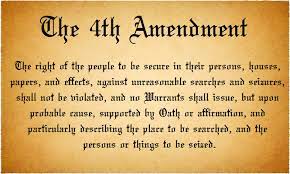

“The Fourth Amendment as a Core Text”

I just learned that a paper of mine was published a few months ago in an online-only format, “The Fourth Amendment as a Core Text: A Pedagogy for the Citizen-Philosopher,” in Liberal Arts Education and the World, ed. Patrick Flynn, Alfred Martin, and Anthony Wisniewski. I submitted it back in 2012 or 2013 (!), so while I still agree with it, it’s an early version of my views. My paper is at p. 139 of the manuscript, which is p. 152 of the PDF. Semi-timely, given the Derek Chauvin verdict.

Here’s a PDF of the whole volume, proceedings of a conference by the Association of Core Texts and Courses (ACTC). I’ve previously posted a version of it on the blog as well (haven’t compared them to see how they line up). To save time and money, ACTC seems to have dispensed with print publication of their proceedings, and gone to online PDFs instead.

Revisiting Hursthouse on the Repentant Racist (2 of 2)

In my last (recent) post on this topic, I argued that it seems absurd to blame people, or pass moral judgments of any kind on them, for what they experience in dreams. It follows that it’s absurd to blame, judge, or morally assess someone for having racist dreams, or generally, vicious dreams. But, I suggested, certain sorts of passing, stream-of-consciousness thoughts seem to bear a closer similarity to dream states than they do to conscious convictions. If so, thoughts of this variety are not a proper subject of moral assessment either, or at least less so, in proportion to their similarity to the relevant features of dreams.

One implication of this claim is that a person who encounters a lot of racist noise in his head, even racist noise voiced in the first person, is not necessarily a racist himself, and not to be judged a racist simply on that evidence–a claim that contradicts not just Hursthouse’s view, but one held by other moral philosophers. A second implication is that insofar as implicit bias/association tests function to detect a propensity to give voice to involuntary, osmotic mental noise, we have (yet another) plausible  explanation for their invalidity and unreliability, and should consider dramatically ratcheting back the use we make of them. Continue reading

Ecce Cuomo

It may seem strange to have so political a reaction to the death of a spouse, but I find myself, in the wake of my wife Alison Bowles’s recent untimely death, seeing the world through her eyes. And she was, if anything, a politically opinionated person whose perspective on the world permanently changed the way I look at it. I’ve certainly done my share of entirely private grieving for her (and have a long way to go), but I can’t help feeling an imperative to preserve what I regard as her distinctive outlook on the world beyond our marriage.

This story in The New York Times about Andrew Cuomo strikes a particular chord.

Continue reading

“If You Can Make It Here…” Thoughts on Life in “The City”

I saw the Op-Ed below in The New York Times the other day, arguing that those who “deserted” New York City during the pandemic, and now wish to return, ought to be “punished” by having to pay a resettlement tax. The author writes as though he suffered some great, distinctive hardship, and/or enacted some great act of social justice or virtue by staying in New York when others left.

I’m not really sure what he’s talking about, or what he thinks he’s talking about. Judging from what he writes, he did nothing of significance but stay in Brooklyn, suffering nothing more significant than what most New Yorkers suffer for living where they do. How it is that departure from such a place should mark one out for punishment is nowhere explained in the article–mostly, I suspect, because there is no explanation to be given. If people followed the author’s “advice,” immigration from the developing world would end tomorrow. We would all stay in the shitholes in which we found ourselves. That the author is content to do so is his problem, no one else’s. Someone ought to tell him.

Continue reading

Alison Bowles (1963-2021), RIP

I’ve revised the biographical blurb for Alison Bowles at PoT’s “About the Blog and Bloggers” page. I apologize to anyone learning belatedly of her tragic death in this fashion. I myself learned of her passing on the morning of March 10, but believe it took place a few days earlier. [I’ve since learned that it likely took place between March 2 and March 4.]

Alison in Alexandria, Virginia, February 2017

Alison Bowles (“ridiculous2017”) was, until her untimely death in March 2021, a licensed mental health counselor in private practice, with offices in Whitehouse Station, New Jersey, and New York City. On moving to Toronto in the summer of 2020, she became a frequent guest on Business Talk Radio, discussing various issues in the theory and practice of mental health counseling. Her first broadcast was on July 6, 2020 and her last was (I believe) on February 19, 2021. She maintained a personal blog housing some of her writing, and in her last days had created a Facebook page where her very last public thoughts may be found. Here’s an interview she did in 2019 on telemental health, and here is a brief biographical statement. (–IK, March 12, 2021).

(PS, July 22, 2021: I intend to write a proper memorial essay at some point in the near future.)

In the Teeth of Tragedy

Having recently experienced a terrible tragedy–the untimely death of my estranged wife by suicide–I can’t suppress a passing literary thought: Is there any major work of tragic literature,  broadly conceived, that is more preposterous, more wildly inapposite to the subject matter, than the Book of Job?

The Book of Job is one of the literary masterpieces of all time, and provides a profound discussion on the suffering of a just man.

No, it fucking isn’t–and no it fucking doesn’t. Continue reading

Racist Dreams: Revisiting Hursthouse on the Repentant Racist (1 of 2)

In a post I wrote here back in 2016, I sketched an idea for a paper (as yet un-written) challenging Rosalind Hursthouse’s views on virtue, moral luck, and racism as expressed in chapter 5 of her book, On Virtue Ethics (2001). Hursthouse’s overall view is that ascriptions of virtue and vice are sensitive to moral luck. In other words, ascriptions to S of virtue or vice–claims of the form “S is virtuous or vicious”–can depend in part on circumstances beyond S’s control. This is as true of ascriptions of racism as of other ascriptions of vice. The implication is that S can truth-aptly be described as a racist even for behavior or traits whose existence is beyond S‘s control.

Consider what Hursthouse calls “the repentant racist,” someone brought up as a racist, and who (for a time) internalizes that racism, but who (over time) comes to see the error of his upbringing, rejects racism, and does his best to rid himself of it. Such a person might, despite his best efforts, continue to have racist thoughts and feelings after regarding himself (and in some sense being) fully repentant or fully reformed. Suppose (ex hypothesi) that his having such thoughts and feelings is entirely out of his control–a deterministic outcome of his upbringing, caused by psychological facts out of his control. Continue reading

Paul Krugman on Masks and Public Urination

I agree with Paul Krugman about masking, but he’s wrong about public urination, and wrong to use the laws against it as an analogue of the laws requiring masking in the COVID-19 pandemic:

Relieving yourself in public is illegal in every state. I assume that few readers are surprised to hear this; I also assume that many readers wonder why I feel the need to bring up this distasteful subject. But bear with me: There’s a moral here, and it’s one that has disturbing implications for our nation’s future.

Although we take these restrictions for granted, they can sometimes be inconvenient, as anyone out and about after having had too many cups of coffee can attest. But the inconvenience is trivial, and the case for such rules is compelling, both in terms of protecting public health and as a way to avoid causing public offense. And as far as I know there aren’t angry political activists, let alone armed protesters, demanding the right to do their business wherever they want.

Laws against public urination do not impose a merely trivial inconvenience. If someone has a medical condition that involves urinary frequency or urgency, and there are no public bathrooms available (as often there aren’t), discreet “public” urination becomes unavoidable. Likewise if someone is homeless. Continue reading

Cancel Neera Tanden

The problem with Neera Tanden is not, as is now widely being asserted by Republicans, that she’s “partisan,” “divisive,” or “mean.” Nor is her great virtue, as a lot of centrist Democrats seem to believe, that she’s some kind of persecuted truth teller. The problem with Neera Tanden is that she’s full of shit–a lying windbag and reckless big mouth who’s mastered the art of invective without being able to argue her way out of a paper bag on any substantive issue.

Continue reading