I’ve been re-reading Nabokov’s Lolita in preparation for a “class” I’m “teaching” on it–more precisely, a seminar I’m leading on it –this October, so you’re periodically going to see some posts here on Lolita amidst the usual cheerful fare on war, ethnic cleansing, and mass deportation. It’s tempting to think that as a “book on pedophilia,” Lolita is continuous with all that, but it is and isn’t. It’s a book about pedophilia, and it isn’t. It serves as a depiction of naked evil (so to speak), and it doesn’t. It’s hard to capture what it is and does except by experiencing it.
At the most basic level, I think of Lolita as a novel about the strained relationship of mind to world under conditions of duress, including the partly self-made duress of bereavement and loss. How does one keep one’s sanity through bereavement and loss? And what happens if one doesn’t? The book’s protagonist, Humbert Humbert, doesn’t, and manages somehow to get lost in the labyrinths of his own bereavement. Mourning, to quote Freud, becomes melancholia, and Humbert’s “infinite melancholy” descends into narcissism, pedophilia, and rape.
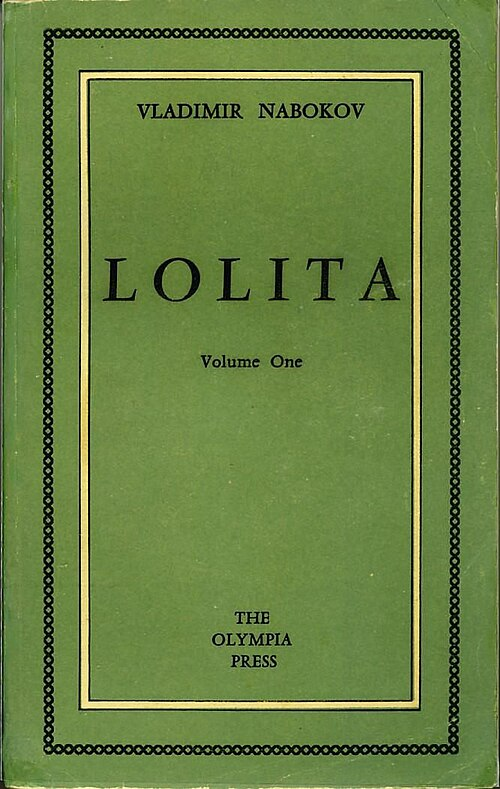
It’s hard to say what Lolita is, but easy to say what it’s not. It’s not a morality play. The tension that makes the novel is less that between good and evil than that between the credible and the incredible: Humbert is sufficiently like us to be relatable, but sufficiently other as to seem a freak. The combination puts us uncomfortably in touch with our own inner freak, a being as proximate and intimate to us as anyone can be, and yet as strange and distant to us another species.
I don’t know if that induces you to want to read the book, or convinces you of the need for headlong flight. I’ve had both reactions to the novel at different times, but the tension between them is what’s continually brought me back to it, and what made teaching it–”Reading Lolita in Lodi” as I used to call it–one of the most successful pedagogical experiences of my teaching career. I used to teach it to art majors in a class on the philosophy of art, originally as an illustration of the Wildean idea that great art can elude ordinary moral judgment, but eventually as an exemplification of great art, full stop. After teaching it a couple of times, it stopped being a prop for some thesis, and simply became the sui generis thing it is.
Here’s the information on the seminar for anyone inclined to join in. I’ll tell you up front that it costs $200 to attend twelve ninety-minute sessions, which is a bargain in one sense, but still a chunk of change in another. I don’t know who would pay $200 to immerse themselves in eighteen hours of literary pedophilia, but you never know. So many freaks out there with money to burn. I hope it’s a comfort to know that there’s freak discussion leader out here happy to burn it with you.


Have you read André Gide’s The Immoralist? And if so, what do you think of it?
LikeLiked by 1 person
I haven’t read it.
LikeLiked by 1 person
Pingback: Notes on Lolita (2) | Policy of Truth