A few years ago I posted my 1992 Ph.D. dissertation on my website; but I was recently asked to post my 1985 undergraduate thesis as well. Happily, this document was one I knew the location of and could easily access and scan (unlike so much of my stuff packed away in boxes).
So here’s a blast from the past about the status of the future – and a glimpse of your humble correspondent at age 21. (I vaguely recall seeing an interview with later Billy Joel looking at footage of early Billy Joel and chuckling, “that young punk!” Yeah, feels kinda like that.)
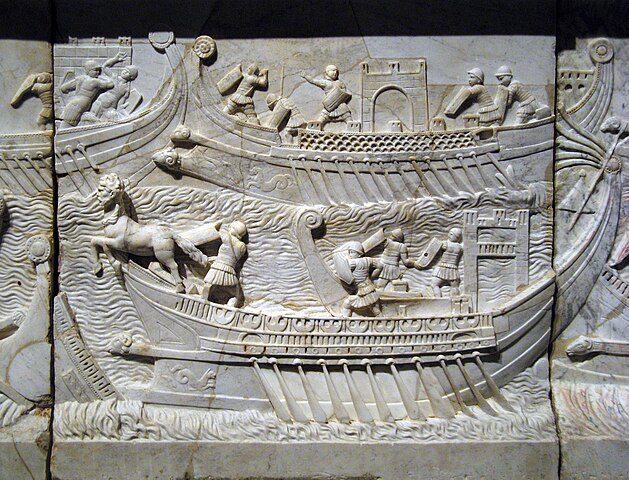
Incidentally, I remember vividly the moment when I was first introduced to the so-called “sea battle problem.” I was already interested in theories of time generally, and Aristotle’s theory of time in particular, but my exploration of the latter had been confined mainly to the Physics and Metaphysics; I hadn’t yet found my way to On Interpretation 9. Well, one day during a school break I was parked at the dock in Hull MA, waiting to pick up my mother from the commuter ferry (we were living in Hull, but she was working in downtown Boston), and while I was waiting for the boat I was reading a green and white paperback anthology titled Problems of Space and Time, edited by J. J. C. Smart, which I’d picked up in some used bookstore in Cambridge. (Alas, there were many more of them then.) The chapter I read on that occasion was Elizabeth Anscombe’s article “Aristotle and the Sea Battle.” I wasn’t convinced by Anscombe’s solution, but I became obsessed with the problem (along with her delightful line “I won’t say,” which has become a perhaps dubious part of my vocabulary). And so here we are. (But those who are hip to the relevant signs and stigmata will also recognise traces of Randian influence throughout.)
I’ve now reread the thesis enough to get a serious nostalgia wave from it, but not enough to judge how far I would still agree with all of it. Bear in mind that this thesis, unlike my later dissertation, was written when I had not yet studied Greek in anything more than the most minimal way; so all my arguments about the details of Aristotle’s wording in various passages would need to be revisited while consulting the Greek texts. Which, ha, not today, mate.
I notice that in the Introduction I describe my method as having “a somewhat dialectical character, weighing reciprocal determinations.” I certainly was starting as I meant to go on! (But y’know, if you’d asked me recently when it was that I first got into the whole reciprocal-determination thing, I would have said the mid-1990s. Obviously not.)


I had forgotten that people wrote on typewriters back then. I didn’t write my first word-processed paper until my freshman year of college in 1987. But I was definitely anomalous. I brought a typewriter rather than a computer to college, but when I got there, I was treated as a Luddite, pathetically out of step with the times. Was your writing a thesis on a typewriter the norm at Harvard in the mid-80s, or was it an anomaly?
I assume that Jennifer Whiting was your advisor? What did she think of it? I hadn’t realized she was on faculty at Harvard in those days. I had initially planned to use my Dissertation Fellowship to study with her in the mid-90s, but changed topic (from Aristotle to foundationalism), and ended up spending the year in almost complete solitude.
LikeLike
1981-85 at Harvard, typewriters were the norm. I had only one friend in college who had a computer (actually a couple of them: an Apple II and a Mac), and he was a computer science major. (Quite a successful one eventually; he would end up designing the original websites for both Barnes & Noble and Kathy Ireland.) The rest of our gang would spend hours in his room playing computer games. Things were starting to change senior year; Kemeny at Dartmouth was buying a Mac for every incoming freshman (we saw some when we visited friends there), and we were all jealous. (By that point I think my mother was using a word processor at work, but not yet a full-on computer.)
Flashback: my first computer use was in high school, though. Hanover NH: a techy friend taught me the basics of BASIC and got us both accounts on the Dartmouth computer, which had two terminals in the high school: no screens, just rolls and rolls of giant green computer paper. We could also use terminals on the Dartmouth campus, a few of which had screens: black with green letters. We didn’t use it for class work, we used it to create a D&D type game that we never finished. Flashback ends.
By the time I got to grad school in 1985, things were changing rapidly; I forget how long I was still stuck using a typewriter there but it wasn’t long. My early papers were done on typewriters. Then we had I guess a PC for a short while (maybe we rented it?); I remember writing a couple of things on WordStar. But soon we’d bought a Mac. Then Cornell inadvertently sabotaged us by arranging a special discount for grad students to purchase a word processing program called WriteNow instead of MacWrite. Problem was, WriteNow, unlike MacWrite, didn’t update and so eventually became unusable. All those documents lost in time, like tears in rain.
Yes, Jennifer Whiting was my advisor; she was one of the “folding chairs,” as they were called. (My other committee members were Don Morrison and Hilary Putnam, but they didn’t get involved until the defense stage.) I don’t know how much she agreed with my thesis, but I guess she liked it enough to play matchmaker between me and Cornell; she’s the main reason that I went there to study with Irwin and Fine, which was certainly the right thing for me at that time. (Incidentally I once noticed a copy of the Dougs’ anthology The Philosophic Thought of Ayn Rand on her desk.) I have a copy of her dissertation Individual Forms in Aristotle — very good.
LikeLike
I may have asked you this before, but did you know Joseph DeFilippo at Cornell? He was an undergraduate student of Terence Irwin’s, then went to Princeton to study with John Cooper, but seems to have held a teaching appointment at Cornell at some point. Now works for the State Council for Higher Education in Virginia:
https://www.schev.edu/about/overview/agency-leadership
Joe happens to be the older brother of my childhood friend Mike (who also happens currently to be my boss). We’ve all known one another for five decades. I wonder if you overlapped with him at all.
LikeLike
The name doesn’t ring a bell, but with my memory these days that proves nothing.
According to the page you linked to, his Cornell degree, like his Princeton degrees, was in Classics, not Philosophy, which makes me somewhat less likely to have known him.
LikeLike