The “Borders” of Gaza

The violence in Gaza is too recent and sparsely reported to permit substantive comment. Having traveled to that “border” last July, however, and spent some time exploring the region around “it,” I would offer the following bit of advice to anyone who wants to follow the news about “it.” First get clear on what “it” is. Then figure out whether the reporting you’re following is as clear as it ought to be on what “the border” is, where “it” is, who is allowed to do what “there,” and how “it” works in practice.

This is the relevant point, as described by B’Tselem:

Israel treats an area inside the Gaza Strip, near the border fence, as its own territory, using it to create a “buffer zone” inside the already narrow Strip. After the second intifada broke out, the military declared a vast area near the Gaza-Israel border, much of it farmland, off-limits to Palestinians. It never officially announced this policy or clarified to the residents which areas exactly were off limits to them, which increases the danger they face.

I highly recommend reading the whole B’Tselem page on Gaza (the source of that excerpt), and indeed, reading as much of their material as possible.  Continue reading

Documenting a Police Detention (2): The Long and Short of It

All history was a palimpsest, scraped clean and reinscribed exactly as often as necessary. In no case would it have been possible, once the deed was done, to prove that any falsification had taken place. –George Orwell, 1984

As readers of this blog know, on November 29, 2017, I was detained and interrogated for several hours by members of the Lodi Police Department and Bergen County Prosecutors Office on suspicion of being an “active shooter.” Though I was not formally charged with a crime, my detention was arguably tantamount to a full arrest: I was involuntarily transported from the original place of detention to a nearby police station, involuntarily held there for a few hours, and involuntarily questioned, despite repeated invocations of my Fifth Amendment right to remain silent. Eventually, I was released without further incident.

A few weeks ago, I sent Open Public Records Act requests to both agencies for documentation of my detention. The Lodi Police Department responded to my request with a 21 page document. The Bergen County Prosecutors Office responded with a one page letter. Both sets of documents are instructive, both for what they say and for what they omit.  Continue reading

Disruptions on Campus: There’s Always an Excuse for Israel

A passage from a blog post by Steve Horwitz at BHL:

Here are a few thoughts for college libertarians who are able to invite speakers to campus and how they might do so in the most productive ways.

Let me start by saying that the sort of interruptions we’ve seen this week with Yaron Brook and Christina Hoff Sommers are utterly unacceptable. Those who disrupt planned presentations with official permission to use space and students expecting a talk should be forcibly removed from the room and subject to the relevant disciplinary consequences. There should be no negotiating with anti-intellectual terrorists. They should feel free to ask questions when the time comes or protest outside the building in ways that do not prevent those who wish to attend from attending. No excuses.

A question for Horwitz et al: what if “those who disrupt planned presentations with official permission to use space” on campus call themselves “the Israel Defense Forces” (IDF) and are sent by something that calls itself the Civil Administration of Judea and Samaria? Should they be “forcibly removed”? Forcibly removing them is what a policy of “no excuses” would really entail. Continue reading

Asma Jahangir, RIP

Just happened on news of the untimely death of Asma Jahangir, the Pakistani human rights activist–a familiar face in Pakistan, but essentially unknown in the United States: telling, somehow, that we all know Malala Yousafzai, the Nobel Prize winner who fled Pakistan, but tend not to know Jahangir, the unsung hero who made the choice to remain. The vocabulary of “heroism” is probably overused, but genuinely applies here.

Pakistan_Obit_Jehangir_14836.jpg-c0b71.jpg (480×319)

The truth is, though I followed Jahangir’s work in a sporadic way, and admired her from afar–in part because a cousin of mine worked for her organization–her death shocks me into the realization of how little I know the details. But I guess it also gives me the impetus to learn. I’ll use this space for the best material I encounter on her life and work.

Treason for the Goose

Isn’t what’s treason for the goose also treason for the gander? I’d have thought so. Maybe that’s why we should avoid making half-baked charges–or half-charges–of treason unless there’s a really good reason for doing so.

As for this…

With the possible exception of an American “levying war” against U.S. troops in a place like Afghanistan, “the biggest-picture takeaway is that there is no treason occurring on any side now,” said Jed Shugerman, a legal historian at Fordham Law School.

Fair enough. But I’d have thought that a good legal historian would enjoy a good hypothetical. For example: if Israel is at war with the Palestinians, and dual national Israeli-Americans join the IDF to shoot at Palestinian-Americans or Americans-in-Palestine, what exactly is the word for that? It’s not treason, I know. It’s not reason, either. But it’s always in season.

I guess there’s a widespread temptation to say “nullum nomen, nullum nominandum” in this case (roughly: “where there is no name, there is nothing to be named”). But maybe there shouldn’t be.

Nervous Shakedown: Scenes from a Police Detention (1)

On the morning of November 29, 2017, I taught my 8:15 am ethics class in Kirby Hall at Felician University’s Lodi campus. Having taught class, I returned to my third-floor office in Kirby around 9:30. At a little after 10 am, I received a call from Dr. Edward Ogle, the University’s Vice President for Academic Affairs (hereafter, “VPAA”). The VPAA asked me to come to his office immediately, as something “urgent” had come up, offering no further elaboration. I told him I was on my way. I put on my coat and took my wallet, leaving my phone in my desk. As I left the building, I was met by the VPAA in the company of two uniformed officers of the Lodi Police Department. The VPAA asked me to accompany him to his office in the company of the officers, and I did.

On reaching his office, we encountered a third uniformed officer, apparently a sergeant, who said: “You’re not under arrest, but you’re being held.” He then read me my rights. I remember his mentioning my right to remain silent, but don’t remember whether he informed me of a right to have an attorney present. He then asked whether I understood my rights. I said I did. He asked me whether I was willing to discuss the matter at hand. “No,” I said. “Well,” he said, “that makes things easier,” walking into a nearby hallway to make a phone call. I heard only one sentence from the sergeant’s end of the call: “Nothing. He hasn’t said anything.” Which was true enough, and stayed that way all afternoon. Continue reading

Football: The Final Frontier

Much of our national life can be defined according to frontier and hinterland attitudes. Take our two national pastimes, football and baseball. Football is a frontier game, because it has to do with the conquest of territory. The aim of the game is to invade the other team’s land and settle there until you’ve crossed the goal line. As on the frontier, time of possession is everything.

Football is a metaphor for land hunger, a ritualized reenactment of the westward movement, going back to colonial times. Look at the names of some of the teams in the NFL, the Patriots, the Redskins, the Cowboys, the Broncos, the Forty-Niners, the Chiefs, the Raiders, the Buffalo Bills, and the Oilers, all names connected with different stages of the frontier epic. Look at the way a first down is measured. Officials bring out the chains, which are a vestigial replica of the surveyors’ chains and a reminder of the men who marked off the wilderness, dividing it into ranges and townships and sections.

On their hundred-yard-long turf-covered universe, football players act out the conquest of the frontier. And just as they fought the taking of their land on the real frontier, Native Americans today protest the appropriation of their past on the football field, in the use of team names like the Redskins and Chiefs, and in the hoopla of fans painting their faces, wearing chicken-feather headdresses, and waving foam-rubber tomahawks. In the game itself there are emulations of Indian customs, such as the huddle, which is a stylized Indian pow-wow, and the gauntlet that each player must run upon entering the stadium.

Football breeds a defiant frontier attitude, because someone is out to get you and you’re not going to let him. As the late linebacker Lyle Alzado once said: “I don’t think there is anyone on earth who can kick my ass.” Another great linebacker, Lawrence Taylor, once said that his purest joy was to hit someone so hard he could see the “snot bubble out of his nose.” And here’s the Chicago Bears coach Mike Ditka defining the frontier ethic as well as the game of football: “It’s people hittin’ each other, that what it’s all about. I’m tired of skill.” Skill gets taken for granted, while there’s a degree of physical punishment reminscent of  life in the wilderness. The limits to that punishment are suggested by some of the penalties, such as “piling on,” “unnecessary roughness,” and my personal favorite, which has a colonial ring in its phrasing, “coming unabated at the quarterback when offsides.”

–Ted Morgan, Wilderness at Dawn: The Settling of the North American Continent (1993), p. 14.

Continue reading

Zyrtec-D and “Express” Consent

So I go to CVS with a stuffy nose, hoping to land something strong to clean it all out–some good shit, like Zyrtec-D. I know I’m going to have to run the regulatory gauntlet, but I need a hit. So I go.

When I get there, there’s a line three deep in front of me, and within minutes, three deep behind. Finally, I get to the counter.

Khawaja: Hi, I need some Zyrtec-D. That’s available behind the counter, right?

Pharmacist: Yes. I need to see your driver’s license.

Khawaja (handing it over): Here.

Pharmacist (scanning it): Thanks. I’ll go get it.

A few minutes pass.

Pharmacist: That’ll be $19.99. But first you’ll need to sign this agreement on the screen. Once you click “agree,” and sign it, you can pay.

I glance at the long agreement on-screen, browse through it without understanding it, look nervously over my shoulder at the line behind me, click “agree,” sign it, and hand over $20.  Continue reading

The Color of Rights: Malheur, Standing Rock, Palestine

About a year and a half ago, having spent a summer in Palestine and a week on Pine Ridge Indian Reservation, I ventured the observation on Facebook that three political disputes I’d “recently encountered” (in a loose sense of “encountered”) struck me as fundamentally similar in nature, and yet attracted fundamentally different constituencies. For brevity’s sake, let’s call them “Malheur,” “Standing Rock,” and “Palestine,” taking those as  shorthand designations for more complex things. Continue reading

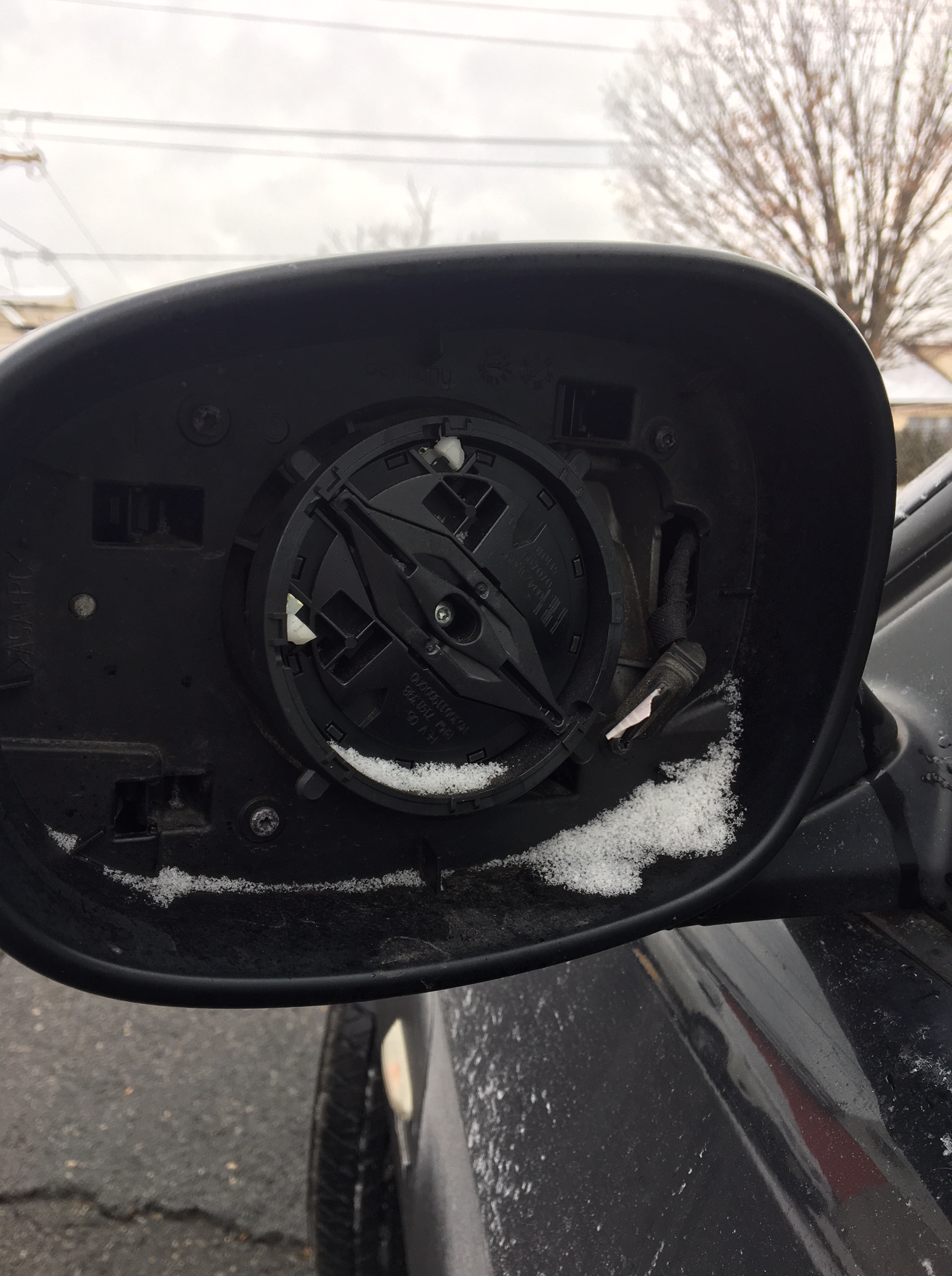
Grand Theft Rear View Mirror

Somebody tried to steal my car the other night in New York City. He (or she, but more likely a he) didn’t manage to pull it off, but having put that much time and energy into the job, I guess he decided to steal my driver’s side rear-view mirror while he was at it.

This gives me a lifetime 0-3 (or maybe 3-0) record on car thefts: 3 attempts to steal cars of mine, all failures. (Well, one of them was my Mom’s car, but I used it to deliver newspapers, so I thought of it as partly mine.)

Actually to be perfectly candid, I once drove by a car-jacking-in-progress, also in New York City, but I don’t know how it turned out: I was looking for parking en route to a Joe Satriani concert, and didn’t pause to see the outcome. (I didn’t call the cops, either; we were already late to the show. So much for the Parable of the Good Samaritan!) Continue reading