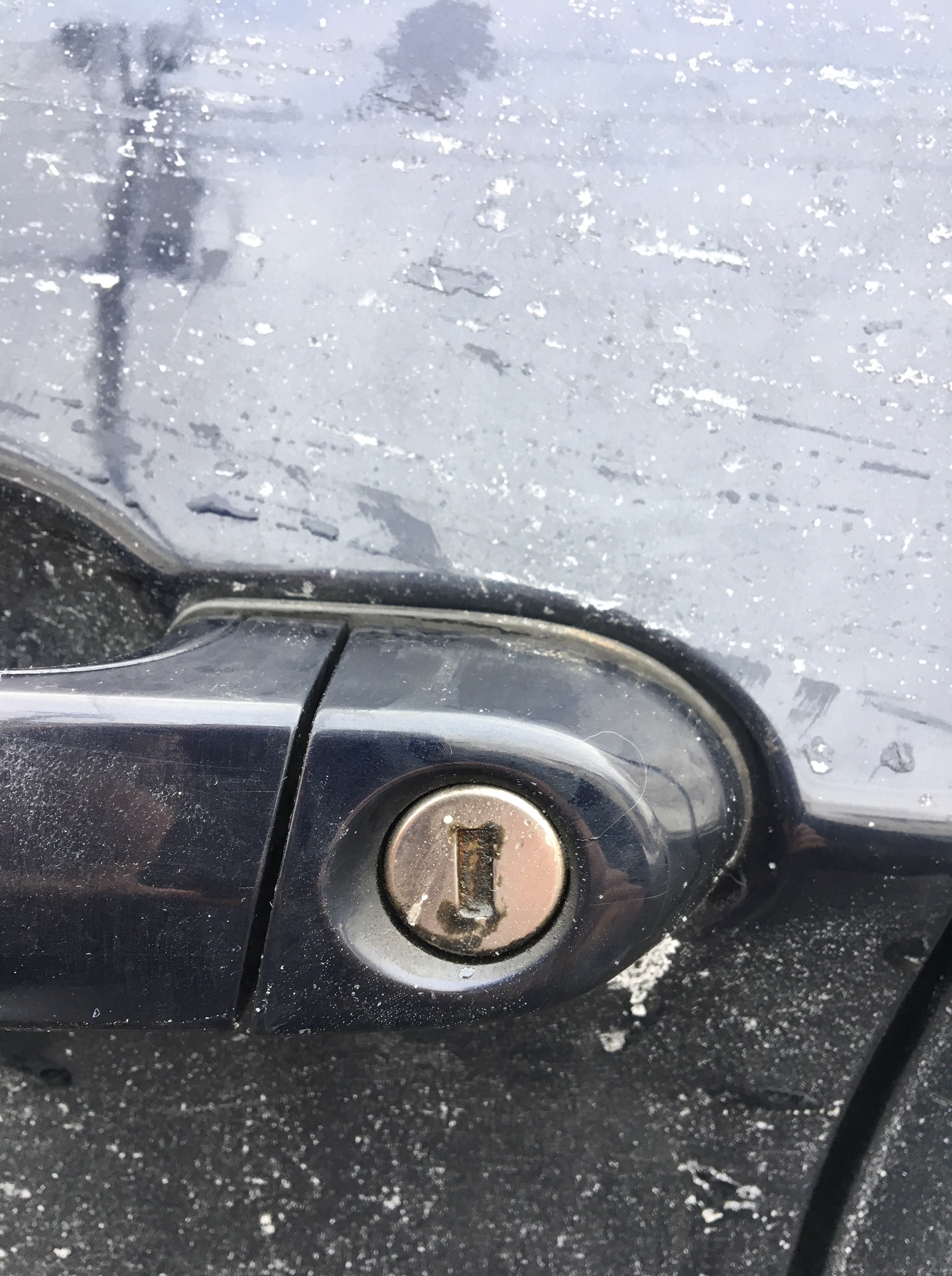
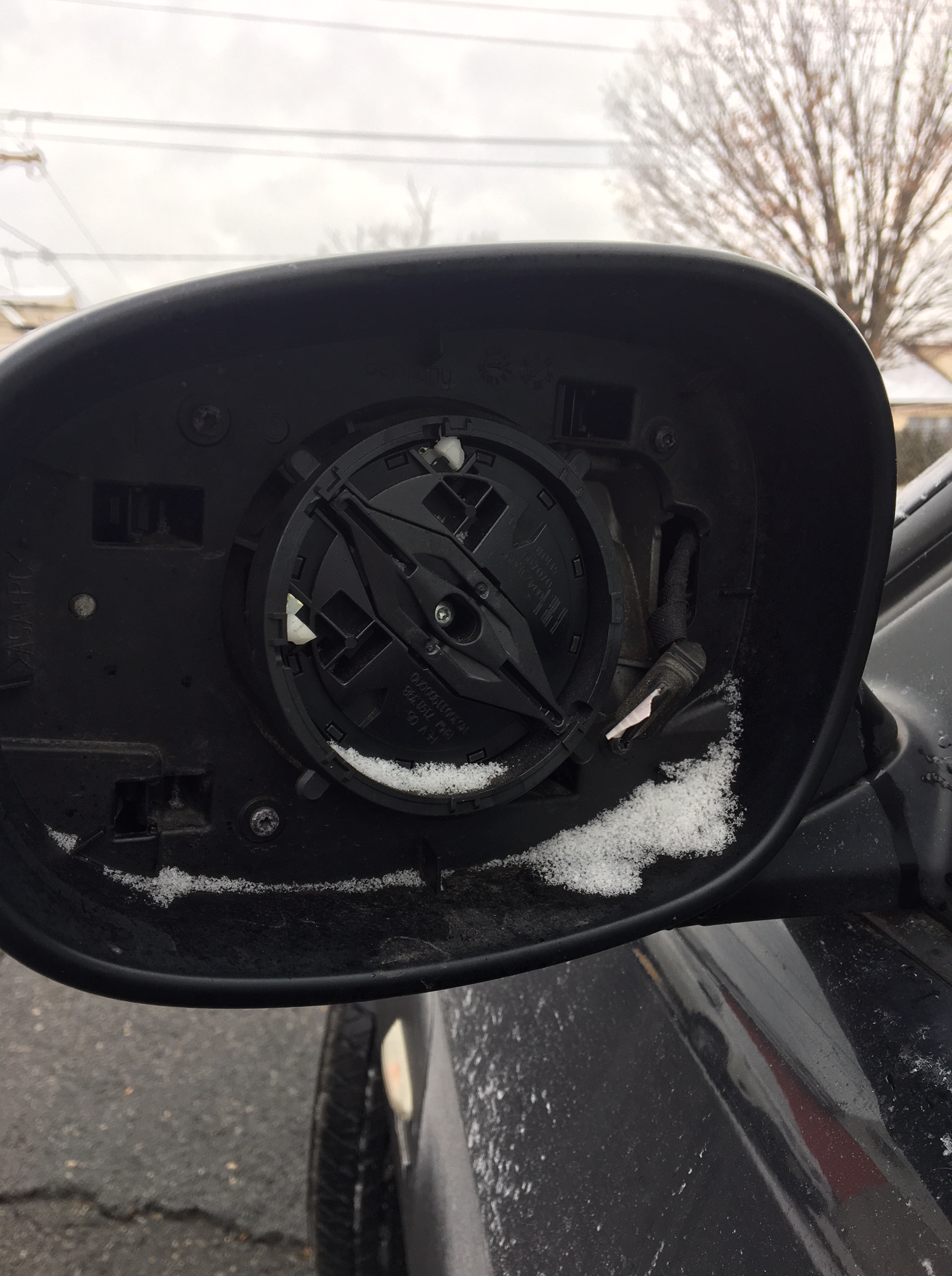
Underexposed

From a letter in today’s New York Times:

To the Editor:

Not to be overlooked in this stunning victory is the role of the investigative reporting done by The Washington Post. Despite constant excoriation by President Trump and the extremist Steve Bannon, the free and fair press exposed an alleged child molester. This played no small part in Roy Moore’s defeat.

The need to vigilantly support truth and accuracy in the media gets stronger every day.

ADAM STOLER, BRONX

Can you really expose an alleged child molester–as opposed to giving exposure to allegations of child molestation? To “expose” something is to reveal what had previously been hidden. But if someone’s status is alleged, what is said about him remains hidden. It makes no sense to say that you’ve exposed the hiddenness of what is hidden. But nonsense has now become par for the course on the subject of allegations.

I’m glad that Roy Moore was defeated. I’m not glad that we seem to have lost even a vestigial sense of the fact that an allegation is an assertion in need of proof, that people are innocent until proven guilty, and that proof is easier in the asserting than in the doing. But apparently we have, and solecisms like “exposed alleged child molester” are the result. The issue here isn’t Roy Moore per se, but the widespread loss of the skepticism required when allegations of wrongdoing are made, whether criminal or otherwise. (Incidentally, I for one wouldn’t celebrate at the thought that the only reason Moore was defeated was that he was alleged to be a child molester. Doesn’t that imply, pathetically, that had no such allegations been made, he would have won?)  Continue reading

A Memo to Friends and Colleagues

I wanted to take a moment to thank the many friends and colleagues, especially those at Felician University, who have expressed their support for me following my police detention of Wednesday, November 29th. I deeply appreciate the support you’ve sent my way. Indeed, my gratitude extends to the many jokes–some of them pretty funny–that have been made at my expense, my personal favorite being someone’s description of my detention as “something out a sitcom co-written by Michel Foucault and Flavor Flav.”

My brother’s idea of “moral support”

For now, suffice it to say that I was involuntarily detained on that date for several hours by the Lodi Police Department and Bergen County Prosecutor’s Office, involuntarily transported to the Lodi police station, held and questioned there, and asked to give consent to search my car and “premises.” Continue reading

Casualty #5: Yasin Hamilton, RIP

A never-ending toll: I didn’t know Yasin Hamilton, but his sister Iteeanah was a student of mine at Felician. Just a sobering reminder of the State of War taking place three or four miles from the suburban placidity of my own existence.

Last night at approximately 7:18 pm. Yasin Hamilton, 26, of Newark was fatally shot in the 900 block of South 18th Street. He was pronounced dead at 7:26 p.m. yesterday.

To repeat something I’ve said before, and will inevitably say again: “Whatever criticisms we have to make of law enforcement–and I have more than my share–the fact remains that law enforcement is the only barrier between us and victimization. Abolitionist fantasies can’t eliminate that fact. Reform is our only hope, and enough work to last a lifetime.” I’m unwilling to tolerate abuses of police power, but always grateful that the power is there.

My condolences to the Hamilton family.


Previous posts on this topic: Tyeshia Obie, Stepha Henry, and Imette St. Guillen; Sarah Butler.

“My Circuits Gleam”: A Fourth Amendment Query

A legal question for Fourth Amendment lawyers out there:

It’s settled law that if you’re in a Terry stop, you have a duty to comply with the orders of the officer who stops you. Likewise, if you receive a summons or citation from court, you’re obliged to respond. Etc.

But suppose that you (somehow) discover a listening/video device planted or inserted in or on an object that would ordinarily be protected by the Fourth Amendment, e.g, your car, your home, your computer, your phone. You surmise that the device was put there by the government in order to spy on you–but can plausibly assert (whether truthfully or not) that you don’t know for sure who put it there. Are you obliged to “comply” with government surveillance by analogy with a Terry stop? In other words, are you obliged to let government surveillance continue without interference after you’ve discovered that it’s taking place? Or can you destroy or disable an A/V device on the grounds that no officer was present to give you an order to comply with anything?

If you do destroy/disable the device, and the device was there through a procedurally correct search warrant, can you be held criminally liable for undermining the government’s attempt to surveil you? There is, after all, no way for the person under surveillance to know that the surveillance in question had the authority of a warrant.

My potentially archaic terminology of a “listening/video device” conjures up Cold War imagery of “bugs,” but I really mean: any discoverable form of electronic surveillance (e.g., a GPS device that you find attached to your car). The issue overlaps with encryption law, but encryption pre-empts surveillance before it takes place, rather than disabling surveillance that’s currently under way–and I’m thinking about the latter. The issue I have in mind strikes me as slightly more analogous to possession of a radar-detector than to the use of encryption, but that analogy breaks down pretty quickly as well.

Hence the question, as it seems a distinctive sort of case. The issue is not addressed in the very basic criminal procedure textbook I use, Matthew Lippman’s Criminal Procedure: the textbook assumption seems to be that electronic surveillance almost always goes undiscovered by the target. (I own the second edition of the book [2013], not the most recent one.)

Analogous issues may seem to arise for physical surveillance, but I don’t think they do: for the most part, if you’re under physical surveillance out in public space, you’re in plain view: you can act as you please (within the normal limits of the law), and so can the government. In that case, you have the right to go out of plain view, in which case they have the right to search or seize you if they have reasonable suspicion that you’re committing a crime. But that’s just a Terry stop, so it raises no new issues.

I’ve been surveilled twice by drone (by Israeli rather than American authorities). I’ve always wondered what would have happened, legally speaking, if I’d found a way to knock the drone out of commission, and pretend that I had no idea who had sent it. Of course, practically speaking, I kind of know what would have happened.

(Thanks to John Semel for the link to the GPS story above, and for some helpful comments on Facebook.)

I Can See Clearly Now, the Waffle Grill Is Gone

In another record, a complainant reported that an officer struck him repeatedly with a waffle grill. The investigator accepted the officer’s version of the facts despite conflicting information in his Force Report and subsequent reports. Although the officer’s report documented only that he had used “hands/fists,” he later reported that he inadvertently struck the complainant on the head with a waffle grill in self-defense. Instead of probing this inconsistency, the IA [Internal Affairs] investigator exonerated the officer and noted that the use of force was “reported and filed with complete transparency.”

Investigation of the Newark Police Department, Report of the U.S. Department of Justice Civil Rights Commission and the U.S. Attorney’s Office, District of New Jersey (July 22, 2014), p. 39.

Covering Jerusalem: A response to Jacques Delacroix

I’d been thinking of writing some free-standing posts on the aftermath of the shooting two weeks ago at Al Aqsa Mosque in Jerusalem (July 14), but haven’t gotten the chance. Meanwhile, here’s a long response I wrote at Notes on Liberty to Jacques Delacroix’s post, “A short note on the riots in Jerusalem.” Scroll down for my comments.

As some of you may know, I spent most of the month of July in Jerusalem and vicinity, and spent a fair bit of time observing the events in question. It’s notable that for Americans, “what happened” can be reduced to a shooting on July 14, an Israeli decision to put metal detectors at the entrance to Al Aqsa Mosque, and rioting by Palestinians. Suffice it to say that in this as in so many matters, there is a large gap between what Americans end up hearing about Israel and Palestine and what actually happens there. But that’s a longer story than I can tell at the moment.

Postscript, August 8, 2017: The discussion continues here.

“We’re Not In Wonderland Anymore, Alice” (Charles Manson)

I’ve contributed to The Health Care Blog a couple of times and follow its posts to stay on top of issues relevant to health care. Dr. Al-Agba wrote this article recently in relation to the recent shooting at Bronx-Lebanon Hospital in the Bronx (see link here). I think Manson was wrong; I think we are, indeed, still in Wonderland as it pertains to mass killings.

Dr. Al-Agba makes the very good (and one might argue rather obvious) point that organizations we work for have an obligation to take threats to our personal safety seriously. Today, if an individual threatens suicide, most people know that such threats should be investigated. Lives have been saved as a result.

Still not so with homicidal threats despite the carnage (and I’ve been maintaining this to anyone who will listen since I studied school shooters in the late 1990s while a student at John Jay College of Criminal Justice; it has been discouraging to know that not many have listened). This is the most pertinent line from Dr. Al-Agba’s article: “After his resignation, Dr. Bello warned former colleagues he would return someday to kill them.” Bronx-Lebanon did what in response to this threat? It’s not clear but so far I have found no evidence to suggest they took any action (i.e., reporting it to police? Seems like that would have been a good place to start).

Dr. David Lazala, who worked with Dr. Bello, described him as “very aggressive, talking loudly, threatening people,” and said that he had been threatened by Dr. Bello via email after Dr. Bello had been terminated. I could not find out if Dr. Lazala told Bronx Lebanon about these threats. But even if he had, consider what Bronx Lebanon would have done after you read about my experiences working as a clinician in New York City since 2003. Continue reading

Felician University Event: “Policing the Police”

For those of you in the area, Felician University’s Committee on Leadership & Social Justice will be sponsoring the fourth and final event in its year-long series on “Race and Criminal Justice in America.” Previous events covered racial profiling in Bloomfield, the ethics and constitutionality of police stops, and community policing in Bergen County.

Our upcoming event is “Policing the Police,” about allegations of police abuses by the Newark Police Department, featuring a public screening of the PBS Frontline documentary of that name, followed by commentary and discussion by Junius Williams, the Newark-based author and activist. I’ll be moderating. (We may have some other speakers, but for now, Mr. Williams is the confirmed speaker.)

The event takes place Thursday evening, April 27, at 6:30 pm, in the Education Commons auditorium on Felician’s Rutherford campus (227 Montross Ave, Rutherford, New Jersey 07070). The event is free and open to the public, and is sponsored by Felician’s Committee on Leadership & Social Justice, its Pre-Law Program, its Department of Criminal Justice, and its UN Fellows Program.

Hope to see some of you there.

Extra reading: Here’s an an article about Newark’s policing problems in The New Yorker by Jelani Cobb, the filmmaker. Here’s the U.S. Justice Dept’s consent decree re the Newark Police Department. Here’s the Department of Justice’s list of special litigation (including consent decrees against law enforcement agencies). The website of Newark’s Independent Monitoring team. Jelani Cobb, again, on the fate of federal consent decrees under the Sessions Justice Department.

Talking Treason

The U.S. Constitution defines “treason” as follows (Article III, Section 3):

Treason against the United States, shall consist only in levying war against them, or in adhering to their enemies, giving them aid and comfort. No person shall be convicted of treason unless on the testimony of two witnesses to the same overt act, or on confession in open court.

It’s not the only possible way of defining treason, but it’s the legally accepted definition of treason in the United States. Treason is a crime, and like all crimes, those accused of it enjoy a presumption of innocence until proven guilty in a court of law. Since it’s a capital crime, punishable in principle by death, the presumption of innocence matters even more than it ordinarily would, not that the presumption is any less applicable to non-capital crimes.* Continue reading

Welcome to The New Normal (“You Gotta Keep ‘Em Separated”) [Updated]

Readers of this blog know that I’ve been running a series of events on law enforcement issues at Felician. Here’s an event I didn’t run:

12:28 pm: Due to the receipt of an alleged, anonymous threat of a shooting on the Rutherford Campus Residence Halls have been secured. -more

12:29 pm: Police and extra security in place. Classes continue, buses run. We’ll keep you apprised. Carry your ID.

2:28 pm:  If you receive any calls from media sources, please refer them to me at my extension that is  listed below.  If you have additional questions or concerns please contact your dean or Vice President.

9:07 pm: Felician took immediate action in consultation with law enforcement. Classes are in session, campus is open.

Oh, but if we were all toting our Glocks to class, this would have worked out perfectly.

What’s that phrase again? “A hostile work environment”? And I thought I left that behind in Abu Dis! Continue reading