“An Enmity to One’s Being”: A Murder in Palestine

Put in mere prose, the event sounds so humdrum and everyday that the reader is apt to let it in through one ear, and let it out the other:

AFTER A TRIAL that lasted nearly four years, Ben Deri, a former member of Israel’s paramilitary border police force, was sentenced to nine months in jail on Wednesday for firing live ammunition through the chest of an unarmed Palestinian protester without having been ordered to do so.

But sometimes, seeing is believing, and sticks with you awhile:

People sometimes complain, justifiably, that video footage of a crime or atrocity distorts the event by truncation: you miss what preceded the footage, and what came after, to fixate unfairly on the slice in between. Harder to make that claim here. Continue reading

Terrorism Justified: A Response to Vicente Medina

[This is a draft of the paper I’ll be presenting this Saturday at the Author Meets Critics session I’m organizing on Vicente Medina’s Terrorism Unjustified: The Use and Misuse of Political Violence, featuring presentations by Theresa Fanelli (Felician), Graham Parsons (West Point), and myself, with a response by Vicente Medina (Seton Hall). Comments welcome. For a link to an earlier discussion of Medina’s book at PoT, go here.]

Terrorism Justified: Comment on Vicente Medina’s Terrorism Unjustified
Author Meets Critics Session
Felician University, Rutherford, New Jersey
April 21, 2018
Irfan Khawaja
Felician University

  1. Introduction

Vicente Medina’s Terrorism Unjustified offers a comprehensive, clear, and thorough critique of terrorism. There’s a sense in which I agree with and greatly admire Medina’s argument, and a sense in which I fundamentally disagree with and reject it. In this paper, I’ll focus on the disagreement, in the hopes that in doing so, the implicit agreement will come out as well.

I begin in Section 2 by making some critical observations on Medina’s definition of “terrorism.” The definition, I suggest, pushes the reader in two different directions—a categorical rejection of terrorism, and a subtly conditional one. On the latter interpretation, terrorism can be justified, but only in situations that Medina regards as extremely implausible and unlikely. In Section 3, I offer an extended thought-experiment, verging on a fable, intended to give plausibility one such situation. In other words, the case I describe is one in which it seems (to me) justifiable to target people that Medina would regard as “innocent noncombatants,” or else to inflict foreseeable harm on them without having to meet a “reasonable doubt” criterion as to their moral status. In Sections 4 and 5, I make explicit what the fable leaves implicit. Continue reading

Documenting a Police Detention (2): The Long and Short of It

All history was a palimpsest, scraped clean and reinscribed exactly as often as necessary. In no case would it have been possible, once the deed was done, to prove that any falsification had taken place. –George Orwell, 1984

As readers of this blog know, on November 29, 2017, I was detained and interrogated for several hours by members of the Lodi Police Department and Bergen County Prosecutors Office on suspicion of being an “active shooter.” Though I was not formally charged with a crime, my detention was arguably tantamount to a full arrest: I was involuntarily transported from the original place of detention to a nearby police station, involuntarily held there for a few hours, and involuntarily questioned, despite repeated invocations of my Fifth Amendment right to remain silent. Eventually, I was released without further incident.

A few weeks ago, I sent Open Public Records Act requests to both agencies for documentation of my detention. The Lodi Police Department responded to my request with a 21 page document. The Bergen County Prosecutors Office responded with a one page letter. Both sets of documents are instructive, both for what they say and for what they omit.  Continue reading

Questions about the Parkland Shooting (3): What If the Educator is the Shooter?

As everybody by now knows, it’s been proposed that we arm teachers–and give them a “bit of a bonus” for standing guard. Less frequently asked question: what if the educator is the shooter?

Yes, the armed teachers are going to be “vetted.” But immigrants are extensively vetted, and we’re deathly afraid of them. If we can’t vet immigrants so as to distinguish the peaceful ones from the budding terrorists, why assume that we can vet teachers so as to distinguish the “good guys” from the would-be “active shooters”? (Never mind the complications if the educator is an immigrant…) Does it take so much of a leap of imagination to imagine a disgruntled teacher or professor using his service weapon to wipe out a classroom of students? If it does, it shouldn’t.  Continue reading

Questions about the Parkland Shooting (2): The Premature Demonization of Scot Peterson

Here’s my second round of generally unasked questions about the Parkland shooting:

What legitimate purpose was served by branding Deputy Sheriff Scot Peterson a coward, thereby inducing his resignation and tarnishing his career, before the investigation into his performance had been completed (in fact, it had barely gotten underway), and (obviously) before all of the relevant facts were in?

I can think of a couple of patently illegitimate purposes:

  1. The demonization of Peterson facilitated some awe-inspiringly gratuitous virtue-signaling, the ne plus ultra of which was Donald Trump’s mind-blowingly idiotic claim (even for him) that he, Trump, would have gone in to confront the shooter with or without a weapon in hand. Unclear what this “act” of bravado would have accomplished, except to have put a bullet in Trump’s brainless head–not a bad outcome, I suppose, but not precisely the intended one. But let’s not stop with Trump: lesser versions of Trump’s grandstanding–or waking dreamwork–have now become ubiquitous. Apparently, we live in a country of bravehearts and tactical experts who know a coward-under-fire when they see one on video, or rather, read about the video on Facebook.
  2. The attacks on Peterson also reinforced the essentially Trumpian ethos of making personnel decisions a matter of mobocratic approbation or disapprobation, a la “The Apprentice.” Professionals are now being fired across the country and across professions (or else being induced to resign their positions), not for demonstrable violations of professionally-relevant standards, but for reasons of PR and image control: what looks bad is bad has become the axiom. The people acting on that axiom are now commonly hailed as “courageous” for firing helpless subordinates without a feasible means of challenging their higher-ups; its victims have become the scapegoats that everybody loves to hate. The inversion of virtue to vice, and subordination of reality to appearance, has become complete.

I’m curious to know whether anyone can adduce good reasons for Peterson’s being treated the way he was. Naturally, the video that depicts Peterson’s supposed delinquency is not being released, because it’s part of an “ongoing” investigation (which didn’t stop the authorities from releasing confidential material on Cruz’s state of mental health). In other words, the video that is generating so much outrage is mostly invisible to the people undergoing the outrage, because the agency in custody of it is engaged in an “investigation” with an outcome they’ve already announced. It all gives new meaning to the old cliche, “Nothing to see here.” Continue reading

Questions About the Parkland Shooting (1): Whatever Happened to Patient Confidentiality?

The Parkland shooting seems to be one of those “tipping point” events that–like Ferguson in the case of the abuse of police power–may well change the trajectory of the debate over guns and gun control in the United States. At this point, it seems premature to come to any definite conclusions, whether about the shooting, or about what follows from its having happened the way it did. What seems more obvious to me is that far too many questions are going unasked. Here’s the first of several posts devoted to questions provoked by the shooting and the response to it–this first one provoked by the ease with which journalists seem to have gotten their hands on psychiatric or quasi-psychiatric reports having to do with the shooter’s state of mental health.

A question for people in social work/law enforcement: is there a legal/ethically legitimate way of getting hold of an adult welfare report by some equivalent of a Department of Children and Families as described in the article linked to just above? Or is journalistic reporting on the Florida DCF report on Nikolas Cruz based on a confidentiality-violative leak? Here’s some typical reporting on the release of the report, which is described as “confidential” in the same breath as it’s described as a matter of public record. Continue reading

Nervous Shakedown: Scenes from a Police Detention (1)

On the morning of November 29, 2017, I taught my 8:15 am ethics class in Kirby Hall at Felician University’s Lodi campus. Having taught class, I returned to my third-floor office in Kirby around 9:30. At a little after 10 am, I received a call from Dr. Edward Ogle, the University’s Vice President for Academic Affairs (hereafter, “VPAA”). The VPAA asked me to come to his office immediately, as something “urgent” had come up, offering no further elaboration. I told him I was on my way. I put on my coat and took my wallet, leaving my phone in my desk. As I left the building, I was met by the VPAA in the company of two uniformed officers of the Lodi Police Department. The VPAA asked me to accompany him to his office in the company of the officers, and I did.

On reaching his office, we encountered a third uniformed officer, apparently a sergeant, who said: “You’re not under arrest, but you’re being held.” He then read me my rights. I remember his mentioning my right to remain silent, but don’t remember whether he informed me of a right to have an attorney present. He then asked whether I understood my rights. I said I did. He asked me whether I was willing to discuss the matter at hand. “No,” I said. “Well,” he said, “that makes things easier,” walking into a nearby hallway to make a phone call. I heard only one sentence from the sergeant’s end of the call: “Nothing. He hasn’t said anything.” Which was true enough, and stayed that way all afternoon. Continue reading

Law Enforcement, Philosophy, and the Ethics of Belief

From an article on the recent “swatting” case in Wichita, Kansas:

The law allows the police to use deadly force when an officer reasonably believes, given the information at the time he pulls the trigger, that his life or someone else’s life is in imminent danger. The Wichita officers had been told, wrongly, that they were encountering an armed hostage-taker who had already killed one person and was threatening to burn the house down.

“Nine-one-one is based on the premise of believing the caller: When you call for help, you’re going to get help,” Chief Livingston said. The prank call, he added, “only heightened the awareness of the officers and, we think, led to this deadly encounter.”

The antinomies of legalistic reason: The first paragraph tells us that the 911 caller made an accusation of criminal activity. But according to one prominent line of legal reasoning, an anonymous telephone-based accusation at best establishes reasonable suspicion of the commission of a crime–and usually requires a “totality of circumstances” test that conjoins the claims made in the call with facts observed or gathered independently of the call (see Lippmann, Criminal Procedure, pp. 107-109, 139-40, 2nd ed.). Continue reading

Grand Theft Rear View Mirror

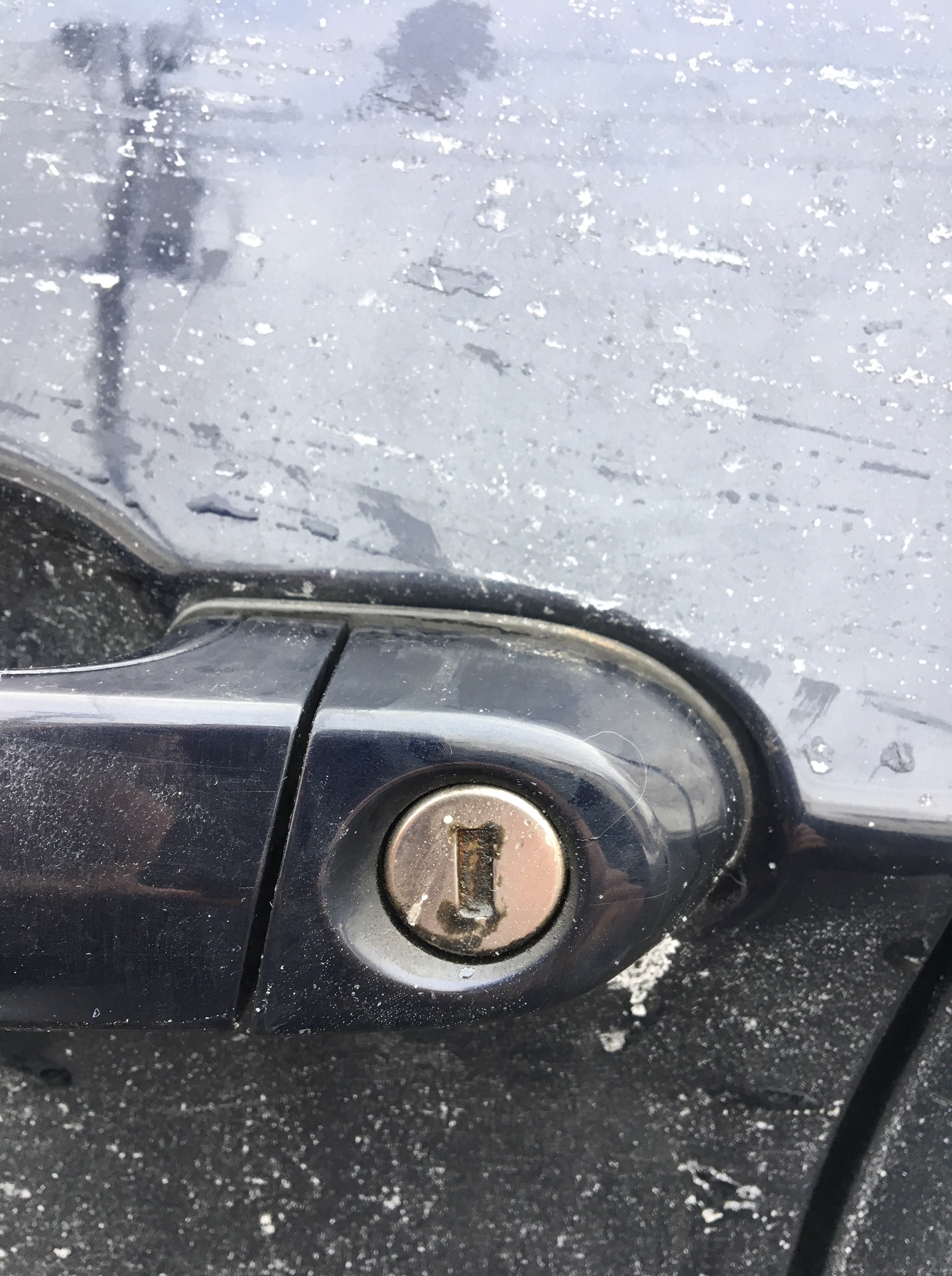
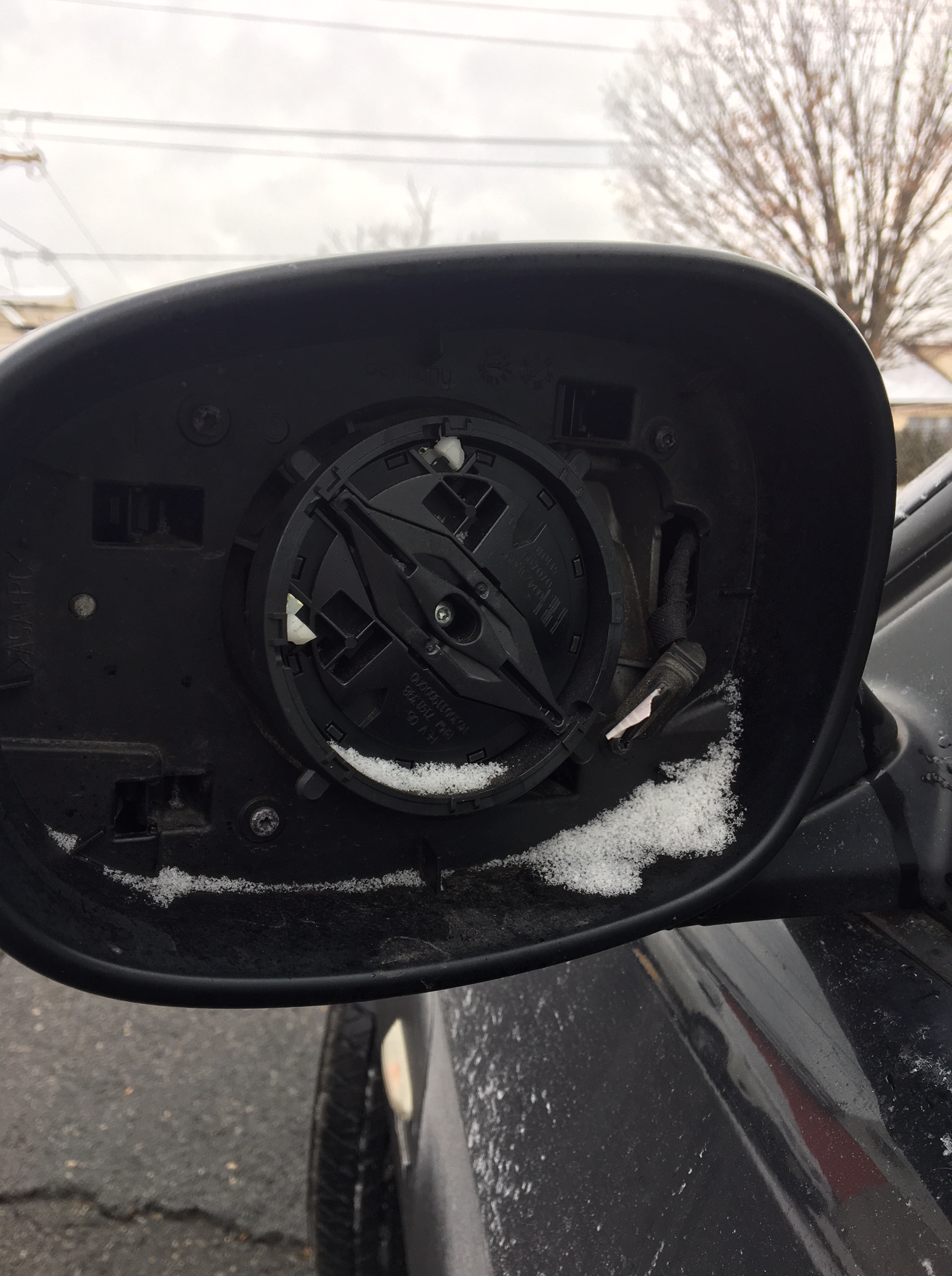
Somebody tried to steal my car the other night in New York City. He (or she, but more likely a he) didn’t manage to pull it off, but having put that much time and energy into the job, I guess he decided to steal my driver’s side rear-view mirror while he was at it.

This gives me a lifetime 0-3 (or maybe 3-0) record on car thefts: 3 attempts to steal cars of mine, all failures. (Well, one of them was my Mom’s car, but I used it to deliver newspapers, so I thought of it as partly mine.)

Actually to be perfectly candid, I once drove by a car-jacking-in-progress, also in New York City, but I don’t know how it turned out: I was looking for parking en route to a Joe Satriani concert, and didn’t pause to see the outcome. (I didn’t call the cops, either; we were already late to the show. So much for the Parable of the Good Samaritan!) Continue reading

Firebrands Unite

From this morning’s New York Times: the print headline reads: “Anti-Muslim Firebrands Are Arrested in Britain.” For what? Well.

Paul Golding, the leader of Britain First, was detained in Belfast, Northern Ireland, the group said, where he was accompanying his deputy, Jayda Fransen, to her court hearing on earlier charges related to using “threatening, abusive, insulting words or behavior” during an anti-Islam speech in August that prosecutors said could qualify as incitement to racial hatred. She has denied the charges.

Shortly after her court appearance, British news media said she was arrested again, this time as part of a police investigation into “an incident at a peace wall” in Belfast on Wednesday.

Earlier, the Police Service of Northern Ireland said on Twitter that detectives investigating speeches made at the Northern Ireland Against Terrorism Rally on Aug. 6 “have arrested a 35-year-old man in the Belfast area today.” The post did not identify Mr. Golding or the offense.

Gee, sounds familiar in a weird, mirror-image kind of way. Naturally, it’s completely unclear what the suspects did or said: the police won’t say, the journalists don’t know, and so, the rest of us are in the dark. “An incident at a peace wall.” What kind of incident? “An incident at a peace wall” almost sounds like a second invasion of Poland. Never mind, though: this sort of opacity is Standard Operating Procedure for the 21st Century Thought Police. And there are people who like it this way. Some even regard themselves as bien pensant liberals. Continue reading