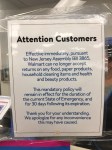
Wal-Mart and Mask Mandates: The Empirical Issues

This gallery is meant to illustrate the issues raised in my discussion with Michael Young over Wal Mart in the post on the Great Barrington Declaration. See the combox of that post for further details. Click the thumbnails of each photo for important empirical findings.

Adventures in Space and Time

Three Agoric Café videos this week! What have you done to deserve such a superfluity of Agoric content? Nothing good, I’ll warrant.

In the main event, I chat with economist and legal scholar David Friedman on free-market anarchism; the Society for Creative Anachronism; tectonic geology; the quasi-anarchic legal systems of medieval Iceland and 18th-century England; being converted to anarchism by Robert Heinlein; how getting a Ph.D. in physics led to being an economist at a law school; the joys of fomenting war and exploiting one’s students; how he repeatedly achieved promotion through violence against his predecessors; how to make medieval armor both for humans and for turnips; how innovations in fireplace design facilitated adultery; and the perils of central planning for wizards.

The Friedman interview is bookended by two other videos of lesser import – this one, in which I show you around my childhood neighbourhood in San Diego (Sunset Cliffs and Ocean Beach, in Point Loma):

and finally this one, in which I share a special message for the New Year:

Galactic Mysteries, Birdheaded Humans, and Mona Lisa’s Mustache

Behold, a new series on indie bookstores in the San Diego area (my hometown)!

In the first episode, I chat with Matthew Berger, new co-owner of Mysterious Galaxy (website; facebook page), a bookstore featuring titles in science fiction, fantasy, mystery, horror, etc., as well as merchandise, podcasts, author events, etc.

In the second episode, I chat with Sean Christopher, founder of LHOOQ Books / Exrealism, a unique bookstore with a once and future San Diego location (though currently located in a renovated armory in Astoria, Oregon). This episode in particular should appeal to anyone with an interest in bookstores, art, literature, etc., even if they have no special interest in San Diego (or Astoria).

By the way, I stripped out the soundtrack from the five-minute video at the end (on renovating the Astoria Armory), in order to avoid a musical copyright claim – but still got hit by a copyright claim for the background music on the 15-second clip at the beginning. So that soundtrack is muted now too.

Value for Value: Helping Out Roderick Long

I’m a little late to the party with this, but better late than never. My friend and fellow PoT blogger Roderick Long has set up a GoFundMe for help with expenses during a particularly difficult time. I’ve cut and pasted the blurb for his GoFundMe page below, and cut and pasted a comment I wrote responding to it in the combox below. I’m elated to see that Roderick  has exceeded his initial $8,000 goal, but see no reason to stop simply for that reason. I was also extremely pleased to see some of my Felician colleagues, like Sherida Yoder, who know Roderick only through PoT or my Facebook posts, kicking in to help. By the by, I’d love to overhear a literary conversation between Roderick and Sherida. Some day, we should all get together and party like it’s 2099.

But for now. please just give what you can. We’ll set up a separate GoFundMe for the Blowout Party for Friends of Roderick Long at a later date, when we’re all rich and famous. Continue reading →

“The Useful Libertarian Idiocy of the Great Barrington Declaration”

Will Wilkinson is the most talented, insightful, and (incidentally) successful writer of the cohort of libertarians to which I once half-belonged back in the 1990s, when I was (sporadically) associated with David Kelley’s Institute for Objectivist Studies and the Institute for Humane Studies at George Mason University. His apostasizing critiques of libertarianism are among the best of their kind. He’s been derided as a mere “centrist,” but that often seems, in libertarian circles, a convenient way of attacking someone whose political views accommodate the actual constraints that arise in political life.

His criticisms in this piece of the so-called Great Barrington Declaration strike me as spot on. And the acid tone he takes is perfectly appropriate to the subject matter. Libertarians will undoubtedly attack him, and try their best to drag some red herrings across the ground, but once the dust clears, I think they’ll be left with a sober reckoning—one they should have made last March, but have yet to make. 

I started a conversation on Will’s piece on my Facebook page, but thought I’d put it here to encourage wider participation (including, perhaps, Will’s). The piece was actually published in late October; I just happened to encounter it a few days ago.

The Great Barrington Declaration itself.

The Pfizer-Biontech Vaccine: Firstcomers and Latecomers

In a paper I’ve mentioned here before, Pierre LeMorvan and Barbara Stock discuss a moral dilemma that arises from the ubiquity, in health care, of what they call “the medical learning curve.” The idea is that neophyte health care workers face a learning curve that puts patients at risk: the earlier I am in my career as a health care worker, the less skilled and knowledgeable I’m apt to be, and the more prone to error. The more error-prone I am, the more likely to impose medically dangerous risks on patients. Since health care workers need to practice their knowledge and skills on patients in order to achieve proficiency, this situation is ineliminable, even with the best supervision by more experienced practitioners. Continue reading →

Hi, and Welcome to Your Den of Thieves Experience!

The New York Times article linked below exemplifies a general pattern that’s played out since the beginning of the COVID pandemic. The pandemic began, and started taking a terrible toll on many people rendered helpless by circumstances beyond their control. Calls for leniency were reasonably enough made to prevent such people from being swallowed alive by those circumstances–eviction halts, rent freezes, mortgage forbearance, changes to grading policies, diminished scrutiny on unemployment and insurance claims, and so on. But that leniency has brought with it huge amounts of moral hazard and other sorts of imprudence and dishonesty, incentivizing almost unimaginable levels of fraud, near fraud, and quasi-fraudulent but morally dubious claims. Until you look, or are personally affected, you’d be amazed by how many people are trying their hardest to exploit the chaos of the moment, or to exploit the noble intentions of this or that benefactor–always easiest when the benefactor has deep pockets, or appears to.

Continue reading →

Carol Welsh: Redefining “Heroic”

My long-time friend Carol Welsh is re-defining the concept of “heroic” later today (I’m writing at 1 am) as she fights a brain tumor growing into her spine. I’ve visited for just three of Carol’s surgeries (the three brain surgeries), but could not be there for the gamma knife surgery, the chemo, the radiation, the respiratory arrests, or the spinal surgeries. Her sisters, her mom, her nearby friends, her health care providers, and her brain tumor support system have been there for everything. They’re re-defining the concept of “heroic,” too, and many other things besides.

Continue reading →

The Book That Should Not Be

Despite being out of academia for several months now, I occasionally get invitations from academic book publishers to review book proposals and book manuscripts in ethics and political philosophy. Here’s a book proposal that somehow found its way to me:

Call “disease moralism” the thesis that disease outbreaks result from people’s moral failures. Disease moralism so defined need not mean that bad behavior magically causes disease, but rather than that morally bad behavior creates the conditions which spread disease. Moralism also usually includes moral prescriptions as solutions for the disease. …

Now we know many diseases are caused by viruses, bacteria, or other microscopic infectious agents. But that does not mean moralism is behind us. Consider the moralism that accompanied the AIDS outbreak in the 1980s. And, of course, we see rampant moralism today regarding COVID-19. Many people say they would be ashamed to admit they were infected, as they expect to be judged and condemned. “Oh, you’re sick? Well, I guess you weren’t being careful. You probably spread it to others, too.”

Now we know. Continue reading →