It’s pretty ancient – I haven’t updated it since I gave it at a memorial panel for James Rachels back in 2004, and there are things I’d like to add – but no time to do that just now.
It’s long been the custom of the Auburn U. Philosophy Club to hold a public meeting at a local coffee house – generally either Mama Mocha’s or the Coffee Cat – where a panel composed of both students and faculty from the department give brief presentations on some philosophical topic of general interest, followed by Q&A.
In light of the Current Unpleasantness, this semester’s panel will be online via Zoom rather than in-person, which will sadly mean no access to the venue’s excellent coffee. But we must soldier on with a decaffeinated, or at least less gloriously caffeinated, version of our usual caffeinated-philosophy event. And the positive side is that folks not physically present in Auburn will be able to attend.
The topic for this semester’s panel is “The Existence of God.” I will be one of the speakers (and my contribution will of course decisively settle the theism vs. atheism debate once and for all! – although in my experience neither side tends to be very fond of my solution). It will be held on Wednesday, October 7th, at 7:00pm Central (8:00 Eastern, 6:00 Pacific). The meeting is free and open to the public; but please register in advance at https://auburn.zoom.us/meeting/register/tZIvce6gqjguGdJC7olVpoP-TnWgaZtUCkKr. After registering, you’ll receive a confirmation email containing information about joining the meeting.
My two latest Agoric Café videos both feature interviews with faculty here at Auburn.
In the first one, I chat with my philosophy department colleague Kelly Dean Jolley about Jane Austen and J. L. Austin, the veil of perception, Ohio land swindles, the tyranny of nouns, screwball comedies, anti-psychologism, apophatic theology, the arctic perils of SUNY Oswego, the philosophic uses of poetry, Wittgenstein vs. Augustine, 18th-century literary nanotechnology, real love in the spy life, Howard Hawks as an Aristotelean ethicist, the problem of other minds, the Typic of practical reason, Frege’s three principles, religious language and the ineffability of logic, feeling William James’s ‘but’, and Lewis White Beck philosophising with a hammer:
Some viewers of my channel may be dismayed that this episode contains no libertarian, anarchist, or Rand-related content. To them, I say: dear god, there’s more to life than that stuff.
(Though anyone insistent on drawing connections to Rand can likely find a basis for them in the sections of the interview about direct perceptual realism and/or Hawksian eudaimonism.)
(Incidentally, to any Rand fans reading this, I highly recommend Gerald Mast’s book on Hawks:
I’m pretty sure you’ll like it.)
In the second video, I chat with biologist James T. Bradley about the future of, and ethical issues surrounding, biotechnology and nanotechnology; global and civic responsibilities of scientists and of laypeople; intimations of immortality from William Godwin to Ray Kurzweil; the importance of interdisciplinary education, and of instruction in evolutionary biology; the 15th-century (trans)humanism of Giovanni Pico della Mirandola, and the perils of invoking the Pope; Bradley’s three-week plan for solving a pandemic; the potential parallels between central planning for sociopolitical systems and central planning for ecosystems; the cosmological theories of Crosby, Stills, Nash, and Young; that time the National Science Foundation awarded Bradley and myself a $200,000 grant (but we had to spend it all on, like, course stuff); how the universe uses stardust to become self-conscious; and the waning allure of cricket ovaries.
In the first one, I chat with philosopher Eric Mack about walking out on Ayn Rand, clashing with Nazi Sikhs in Seneca Falls, libertarian rights theory, Kantian vs. Aristotelean approaches to fixing Randian ethics, Nozickian polymathy, the unselfishness of Samuel Johnson, the ethics of COVID lockdowns, physical distancing in Durango, the CIA as an argument against anarchism, shoving someone in front of a bus as a form of restitution, and the edibility of matter.
In the second video, I chat with philosopher Gary Chartier about Robin Hood, left-wing market anarchism, natural law, free speech and employer power, libertarian secularism, Seventh-day Adventism, religious epistemology, long-arc television, urban fantasy, Lawrence Durrell, Iris Murdoch, Whit Stillman, the evils of giving extra credit and taking attendance, and the attractions of being emperor.
Today I found that my 1992 Ph.D. dissertation, Free Choice and Indeterminism in Aristotle and Later Antiquity, is a free (to those with institutional access) download from UMI, so I decided to make it a free download for everybody.
Reducing and optimising the hell out of it only got it down from around 25 MB to around 18 MB, so I split it into four parts in order to get around the 5 MB maximum upload limit.
I haven’t OCR’d it because UMI has inserted renderable text on every page, which bizarrely blocks Acrobat’s OCR function, and getting around that is more hassle than it’s worth to me right now.
I still agree with what I say here in broad outlines, but not with every detail, and indeed I have a book manuscript, Aristotle on Fate and Freedom, that revises, updates, and supersedes the Aristotle portion of this. (It leaves out the sections on later antiquity.) That is better than this. But that’s not published, and this is, so here ya go.
The main thing I would want to retract today is the snarky remark about Los Angeles in the autobiographical sketch. L.A. is the bee’s knees, man! Not sure what my glitch was. (Of course it was inspired by a similar remark in Isaac Asimov’s bio, but that hardly justifies it.)
Was Ayn Rand a good writer or a bad one? Find out now using this one weird trick!
And in a follow-up to the above video, I talk about what I forgot to mention there, namely how Ayn Rand’s fiction stands in the tradition of Henrik Ibsen’s An Enemy of the People and Edmond Rostand’s Cyrano de Bergerac. With film clips! (Plus the shocking revelation of my shameful drinking problem!!)
NOTE: Because this video contains (fair-use) clips from the 1950 American film Cyrano de Bergerac (which is public-domain in most of the world), it is apparently blocked in France and a number of smaller Francophone countries, most of them French territories. If you’re in one of those countries, well, you still have options; poke around on YouTube for info about tools for unblocking videos like this one. Bonne chance!
You may be asking: why the jump from Episode 7 to Episode 9? What happened to Episode 8? Well, we have ways of dealing with people who ask such questions.
I have three more videos posted on my YouTube channel. The first one focuses on the connection between philosophical thought experiments (from Plato’s Ring of Gyges to Judith Jarvis Thomson’s defense of abortion) and science-fiction (and fantasy) literature.
In the next one, I discuss the distinction between markets and capitalism as drawn in the 1919 textbook THE ABC OF COMMUNISM (written by two Soviet apparatchiks, Nikolai Bukharin and Yevgeny Preobrazhensky), as well as in the Marxist tradition generally, with attention to how Marxism twists itself into a pretzel to avoid endorsing free-market anti-capitalism.
Finally, in my first video interview for my YouTube channel, I chat with philosopher Neera K. Badhwar about backyard buffaloes, wild attack monkeys, Ayn Rand, airline deregulation, eudaimonia and virtue, paternalism and suicide, sociopathic grandmothers, child abuse, Aristotelean business ethics, 19th-century robber barons, charitable Objectivists, friendly Manhattanites, charismatic nationalist leaders, and national health care. In more or less that order.
I just got back from Brunswick GA for a Liberty Fund conference on Frank Knight. I’d never read much of Knight before beyond the risk vs. uncertainty stuff, but his methodological, ethical, and (though he wouldn’t have used the term) praxeological writings turn out to connect nicely with a number of my areas of concern: Plato and Aristotle, Frege and Wittgenstein, Collingwood and Winch, Mises and Hayek.
The conference was at the Jekyll Island Club on Old Plantation Road. It’s like a fusion of the sins of the Hamiltonian and Jeffersonian factions! (And given that Knight taught at Chicago, it seems appropriate that there’s a connection between Jekyll Island and Hyde Park.)
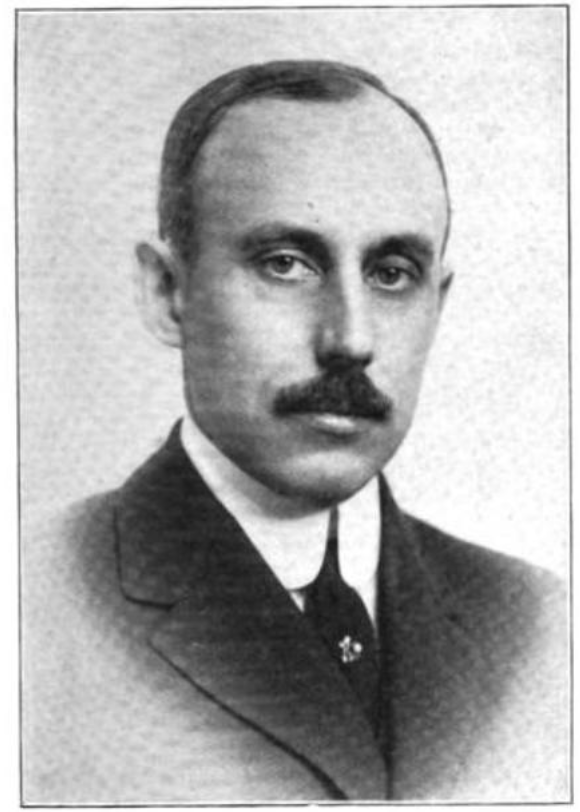
Speaking of Jekyll Island: my grandfather Charles Roderick McKay (1873-1954), although he wasn’t at the famous Jekyll Island meeting, was one of the people involved in setting up the Federal Reserve; he worked with Paul Warburg et al.
From a poverty-stricken childhood in Prince Edward Island, he became a runner for a bank while visiting Chicago relatives with his mother, and eventually worked his way up to the position of Transit Manager for the First National Bank of Chicago, in which position he developed the numerical check-clearing ABA system which would be adopted by the Fed. Once the Fed was established he became Deputy Governor of the Federal Reserve Bank of Chicago, though he was really more of a co-governor; when the various Fed Governors went to DC to meet with FDR, the Chicago gov was the only one who brought his deputy with him.
By way of partial mitigation of his role in the Fed, I note that when the central Fed began artificially lowering interest rates, which on the Austrian analysis was a major cause of the Great Depression, it was in large part thanks to my grandfather that the Chicago branch resisted the policy until finally overridden by the central; and in later retirement he felt betrayed by the direction the Fed had taken. (My grandfather’s economic and political views were broadly speaking “Old Right.” I never met him; he died a decade before I was born.)
I found his photo online in this periodical. From my mother’s stories I gather he was as much fun as he looks.
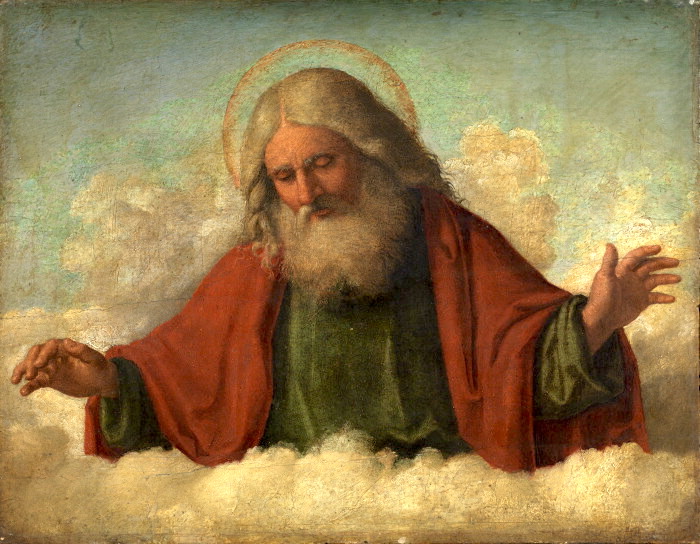 Here’s the long version of the talk I plan to give a short version of at the aforementioned “Existence of God” panel on Wednesday.

 Policy of Truth