This is the first in an ongoing series of interviews I’ll be doing with a variety of activists and practitioners I’ve worked with or met over the years. Emanuelle Sippy was the head of Princeton University’s Alliance of Jewish Progressives during the Gaza Solidarity Encampment of the spring 2024, and both a forceful and articulate presence throughout. My interview with her was conducted May 4, 2025 at Terrace Club, Princeton University.
Q: You were brought up Jewish, the daughter of a Reform rabbi in Kentucky. What was that like? How would you describe the Jewish part of your upbringing, including your education?
I was born in northern California. My dad was working at a synagogue in the Peninsula, and my mom was finishing her PhD in Religious Studies with a focus on South Asian traditions and Jewish tradition. My mom works on religion and religious violence in particular, and my dad was what we might call in shorthand a Social Justice Rabbi. So notions of tikkun olam, repairing the world, and pursuing justice, tzedek tirdof, welcoming the stranger: these were the core teachings of my childhood. My parents brought us to protests at a young age. Also I think one critical part of my upbringing was that in my family Jewish community was very central, Jewish teaching was very central, but my family was always multicultural and interfaith. I have Hindu grandparents, I have Christian cousins, always had queer family members. And all of that informed a view of the world to the effect that yes, my parents were prioritizing Jewish education and Jewish community, but also beyond that.
We lived in Orange County for a few years. My family hated it there [laughs], and then we moved to Minneapolis where I had very formative years. I was there from kindergarten through sixth grade. I went to a pluralistic Jewish school there. Again, those same teachings were very central. One thing I find interesting is that nowadays some of the same teachers who guided me towards social justice work, and saw, even before I could, my interests in that direction–who drew me there or guided me there–are now people who might call me a self-hating Jew, and who might want me excommunicated. So that tension feels resonant.
Another thing from Minneapolis days that’s important, or just related to what I was saying, is that my family lived in a Jewish neighborhood–there is one in Minneapolis–and Jewish neighborhoods are bound with a string, called an eruv, hung on trees and lampposts. My parents thought it perfect for us that the front of our house was within the eruv, and the back of our house was not. And they were always more interested in, more concerned with, transgressions of justice than transgressions of halacha, the intricacies of Jewish law. So growing up in that community was really formative. I had so many sets of second parents, there were so many homes I was welcome in. My best friends all kept shabbat, and we would not use technology on shabbat. We would just walk around and have long meals, and that part of my childhood was really, really beautiful.
When I finished sixth grade, my dad got a job in a synagogue in Lexington, Kentucky, and that was significant for him for a couple of reasons. His dad was the first Jewish department chair of ophthalmology at the University of Kentucky, and my family had roots there. Plus, my dad was born in Lexington, and so it was a kind of homecoming. So my family decided to move there.
My interest in social justice had already been nurtured by these teachers I mentioned from the Jewish school I was attending, and things really clicked for me when I got to Kentucky. I was the first Jewish person, and the first progressive person, the first person identifying as feminist that somebody would meet there, and it forced me to learn how to articulate what these things meant to me and why. That helped me understand why my parents were the way they were, and why transgressions of justice were so important to them.
Trump was elected for the first time when I was in eighth grade. That was really formative. I was going to prep school at the time. I went to prep school for two years in Lexington, and my favorite fact about the school is that ten out of the twelve horses raced in the Kentucky Derby were owned by families in the school. So we’re talking old money, very conservative. I was in class with people who would proudly proclaim that they were descendants of Jefferson Davis. I remember learning the method of Socratic Seminar and I’d be in Socratic Seminars with people who’d be saying, “Discrimination doesn’t exist any more.” So me and the hijabi girl, someone I became very close friends with, would stare at each other and say, “What are these people talking about?”

Q: Did you keep kosher?
I grew up kosher. We had separate sets of dishes, and only ate kosher meat, but I became vegetarian, and at that point would eat vegetarian food that wasn’t strictly kosher. But yes, I grew up keeping kosher, doing all the holidays, and spending a ton of time in Jewish community. So the prep school years and the public school years in Kentucky were both highly formative. I became an organizer there. I started to understand what political work meant. Those years were also really formative for my Jewish identity–formative for both, really, my political identity and my Jewish identity.
Q: How and when did Zionism or Israel-Palestine figure into any of this?
One of my earliest memories…Well, there was a lot of Zionist education at my school, the pluralistic day school in Minneapolis. A lot of it was presented as if it were innocuous, as if it were just in the background. I had Hebrew teachers who were Israeli, and we would always celebrate Israeli Independence Day, and would always mourn on Yom HaZikaron, Israel’s Memorial Day, the day on which Israelis mourn for soldiers who’ve died in war–those holidays were commemorated very explicitly, with ritual, with song, with dance. There were presentations on food–like falafel and pita and hummus–as Israeli, presented as though it was innocuous, not that it is. There was no recognition that it was anything else. All of these things were very much presented as though they were in the background, but they were in the foreground.
As I said, my mom worked on ethno-nationalist violence, and my dad cared about social justice. So even though sometimes the schools and shuls they sent me to had this uncritical approach to Israeli education, what I was getting at home was always more critical. My parents taught me about the occupation, and taught me about the oppression of Palestinians. For my parents, the moment of Rabin and the Oslo Accords, that was a moment that felt like there was hope and possibility. They would talk to me about what it meant to have that, and then have it be lost. So there was a more critical approach at home. Even if it was within the fiction of liberal Zionism, I was being told: “You can critique this, and you can think critically about this.” In Jewish schools, and particularly in progressive Jewish spaces, we’re told to question everything, even to question the existence of God, all of that is fair game. The only exceptions are really Israel and Zionism. But at home that exception didn’t exist. I could still question Israel and Zionism.
In fact, my parents were in their own processes of questioning Israel and Zionism. One of my earliest memories is of my brother questioning on Yom Hashoah, Holocaust Remembrance Day, we had an assembly, and at the end of it, because of these really problematic narratives, they linked the oppression and destruction of the Holocaust to what people call the “Redemption” of the founding of the State of Israel. At the end of that ceremony, we would sing Hatikva, the Israeli national anthem. My brother sat down during Hatikva when he was in seventh grade and I was in fourth grade, and he held up a map of Israel/Palestine that was more accurate than the ones the school provided. I remember it as being an awakening for me. I was really young, and I didn’t really understand why he was doing what he was doing. But over the course of the next few years as I came to understand that, that moment came to epitomize these tensions of having schools that were telling us to question everything but this, and then questioning it in the very space of that Jewish institution, and being told to stand up. As in: you will get suspended for this.
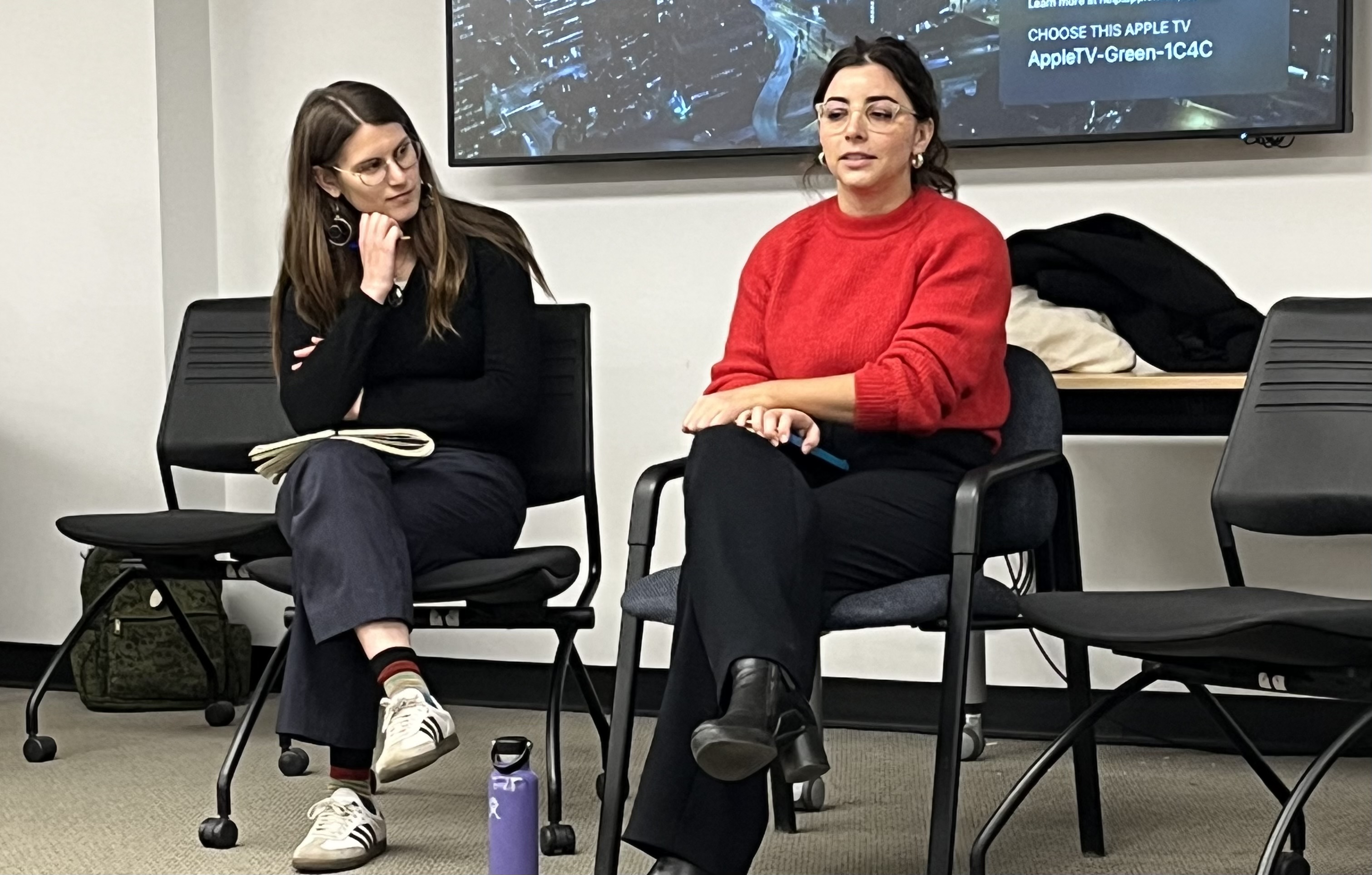
With Simone Zimmerman
Q: Did he get in trouble?
He did. He did get in trouble for it. At the time, as a fourth grader, I thought: You’re just drawing attention to yourself. You’re just my big brother making a scene. But now I’m like Oh my God, you’re an icon. And he taught me so much. So “Israelism” was there. The film “Israelism” depicts the type of world I lived in, though the Zionism was presented as though it was even more innocuous, and so, even more open to criticism than the school Simone Zimmerman attended. I was in these spaces that were very focused on justice, and even willing to talk about the occupation, even Palestinian human rights, just within the framework of the liberal Zionist fiction.
Q: Did you visit Israel/Palestine at all?
In July or August 2019, I visited Israel/Palestine with my family. It was really formative. I went on a tour of Hebron with Breaking the Silence, former IDF soldiers who have now turned against and testified against the war crimes of the IDF. And on their tour I really started to understand why the term ‘apartheid’ might apply here. That was a big conversation at the time, and it became very clear to me as they shared anecdotes about IDF soldiers calling the streets where Palestinians can’t walk “sterile streets,” and talking about what it meant to have these layered apartments and having Israeli settlers and soldiers literally throw trash onto Palestinian homes. Just these quotidian acts of incredible dehumanization that were so baked into everyday life.
So that was really formative, especially my time in Hebron, but going to Bethlehem with Palestinians, and some other moments. Even my time in “Israel proper,” what is currently the State of Israel, for instance at the Western Wall was extremely formative. Being a progressive Jew at the Western Wall, where women are reading Torah, and where women are praying, is an incredibly alienating experience. My time there was not just politically alienating, but religiously alienating. So that trip was very formative.
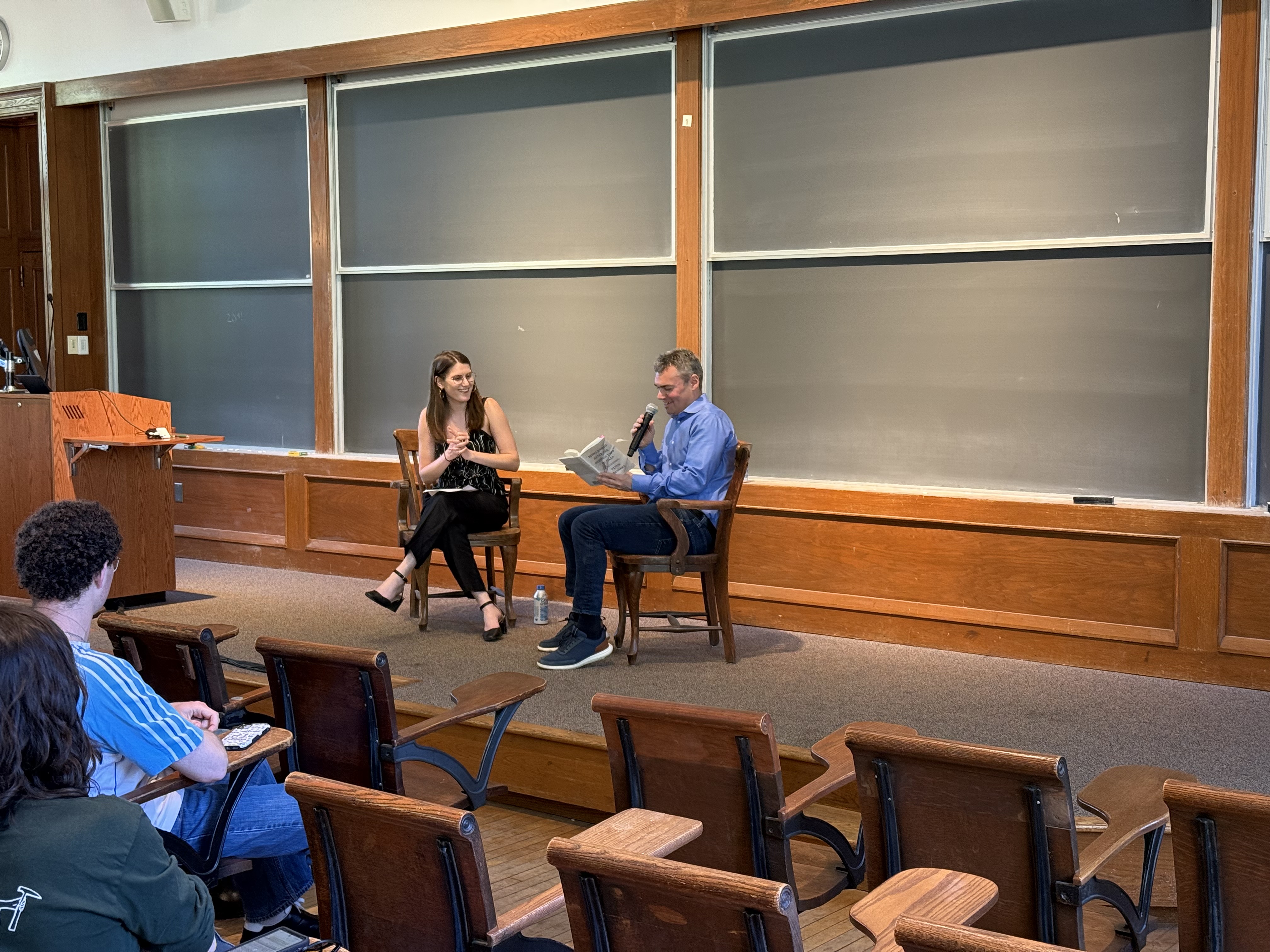
With Peter Beinart
Q: By coincidence I was in and around Bethlehem and Hebron at exactly the same time. It seems unusual for an American Jew to have visited, say, Hebron in the way that you have. Is that correct to say?
Yes. It’s not common, although through the work of groups like Breaking the Silence and Encounter and Extend and even J Street trips, there’s more and more happening to counter the propaganda of Birthright trips and to counter the propaganda of standard Zionist trips. So it’s not common, but luckily it’s happening more and more.
Q: So let’s move to Princeton. You got to Princeton in 2021, is that right?
Yes.
Q: So when did Israel/Palestine first come up for you at Princeton?
Honestly, it was there from the very beginning, even in my decision to go here. I was deciding in the spring 2021 round of violence where I wanted to go to college, and reading a lot of Jewish Currents. The work of Peter Beinart and others in that magazine helped me that spring to let go completely of the idea of liberal Zionism or progressive Zionism–both recognizing it as a fiction and also that it was the end of my identification with that fiction.
So I came here already identifying as very Left, anti-occupation, and I knew that institutional spaces like the CJL would be very difficult. And I also knew that I would not want to entertain Chabad at all–not only their Israel politics but their politics around queerness and gender and a whole host of issues was politically and theologically very difficult. If I was going to engage with institutional Jewish space at all, it was going to be the CJL. In my first year here I was involved in AJP already. It was revamped post-COVID by some upperclassmen who had led it before COVID. So I would attend shabbat dinners with AJP, and I even involved in drafting an Op Ed to The Prince that spring [2022], but that year I was really involved in the CJL. I met a lot of friends there. I was in classes with the rabbi that year. I even interned for one of the CJL’s Jewish Learning Fellowships on Judaism & Restorative Justice.
And I had intense debates with the current Israel Fellow at the time, who was on campus through Hillel International’s partnership with the Jewish Agency for Israel. The job of those in it, who are often former IDF soldiers, is to propagate Zionism on American campuses, and in doing so they completely conflate anti-Zionism with anti-Semitism at the highest levels. I remember having intense conversations with him, and already feeling alienated there, but as a first year, it was also important for me to make friends there. And I’m glad that I did spend that year being involved there and making friends there.
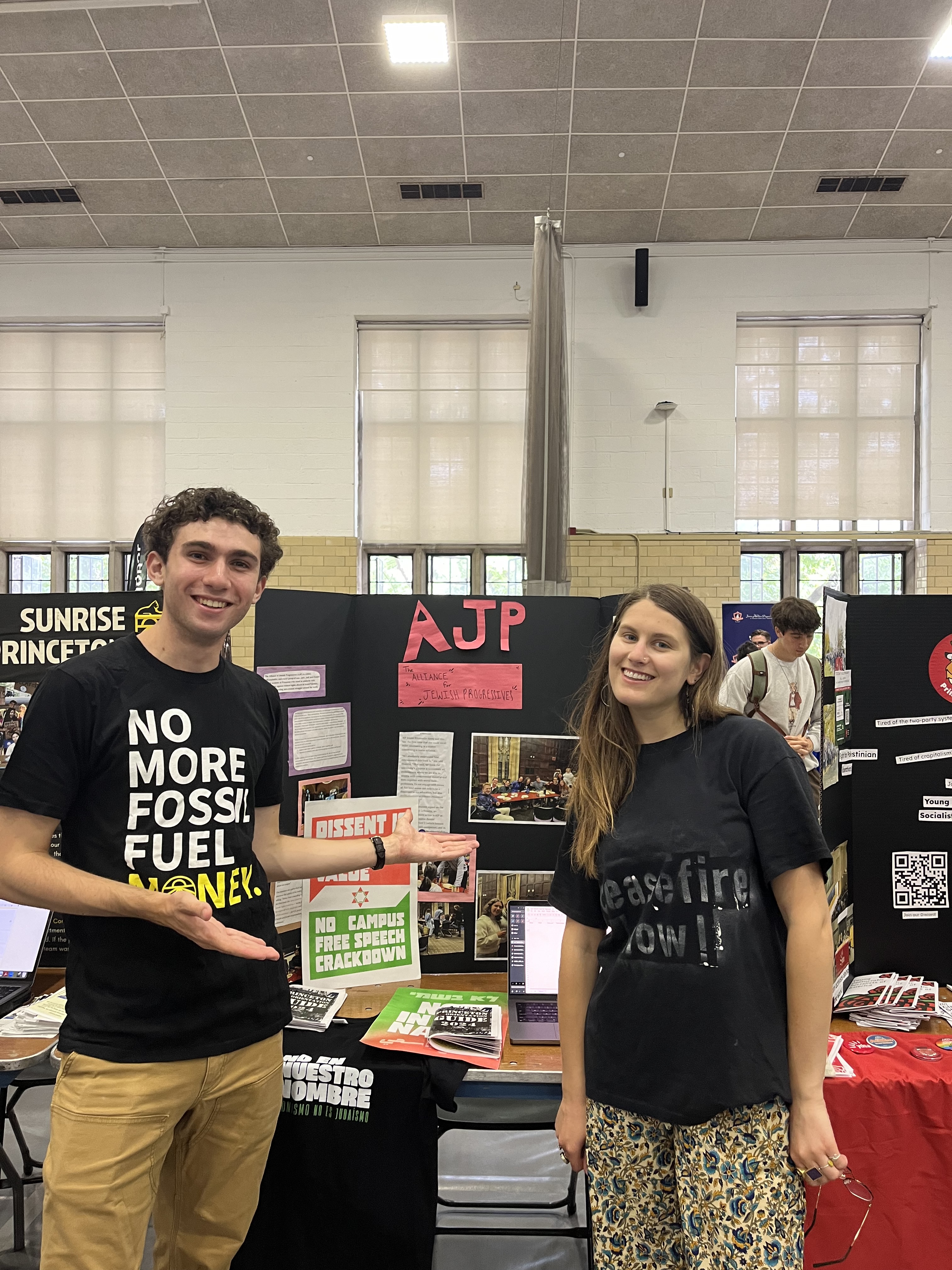
In the fall of my sophomore year [2022], I took over leading AJP. My first really intense moment leading the group was Muhammad El Kurd’s invitation to campus that spring [2023] through the English Department’s Edward Said Memorial Lecture. Every institutional Jewish space on campus was reacting with a complete conflation of anti-Zionism with anti-Semitism, asking for the invitation to be reconsidered, potentially even revoked. Right-wing Jewish students were up in arms, mobilizing around a letter. Rabbi Gil, the Executive Director of the CJL, wrote to Jeff Dolven, then head of the English Department, asking him to reconsider the invitation. If there was going to be a Jewish voice critiquing the behavior of mainstream Jewish institutions, and affirming El Kurd’s right to speak–setting aside the content of his talk, just his right to speak–it was going to be us. So I started to figure out how to do that.
That became a recurring pattern. That August [2023], AJP was the only Jewish group defending Professor Satyel Larson’s right to teach Jasbir Puar’s book, The Right to Maim. Every other mainstream Jewish institution on campus was engaged in a complete conflation of anti-Zionism with anti-Semitism, and an almost complete and utter disregard for academic freedom and free speech.
Things got more intense the fall of my junior year with October 7 and its aftermath. The Jewish Left was in a moment of crisis. We were like, “Has our whole analysis been thrown into crisis?” We all knew people in Israel. Half the world’s Jews live there. I sat in a room with AJP members who spanned the spectrum from those whose loved ones were being called into the IDF as reservists to people whose first cousins were (are) leading conscientious objectors. I have my own family in Modi’in, which is, depending on whom you ask–the UN or the EU–over the Green Line. So we all had these really complex relationships to this place. Most of us had spent at least some time there. Some of us had lived there for long stretches. And I remember distinctly one of my really good friends and AJP leaders saying, “I feel like this is how it must have felt to support the Confederacy.”
At that moment we were all grappling with what it means to feel so connected to this place. We know this place has been so oppressive to and wreaking havoc on Palestinian life for almost a century. And yet it did feel for a second as though our analysis had been thrown into crisis. Did we get it all wrong? But I think then within days it became very clear that we had the support of academics, researchers, and leading human rights organizations. I think back to Jewish Currents’ publishing Raz Segal’s analysis of the Israeli response as a genocide. Within days, Rabbis for Ceasefire had formed and published their founding statement. It happened very quickly. We were able to show up at the first pro-Palestine gatherings in Princeton very quickly saying, “We condemn this. We call for a ceasefire. We support Palestinian liberation. There is no safety for Israelis without safety for Palestinians.”
Q: We condemn ‘this,’ meaning what?
I was talking about our condemnation of the Israeli violence. We were condemning the violence. We were recognizing that it wasn’t a war. One group of people was a hegemonic military power supported by another hegemonic military power, and one was a group of people living in an open air prison.
Q: So talk about the issue of anti-Semitism, at Princeton in particular, since it’s been an underlying issue. There’s been a lot of talk about ‘rampant’ anti-Semitism at Princeton and at other Ivy League institutions. I guess you would be best positioned to know whether such talk is empty talk or if there’s something to it.
Yes. I think talk of ‘rampant anti-Semitism’ is largely rooted in this complete conflation of anti-Zionism with anti-Semitism. There is a broad consensus that Princeton is a safe place for Jews. Students, peers, and Jewish adults to my right, including centrists and those who identify as Zionists–not just progressive Zionists but people who identify as staunch Zionist–would agree. In fact, this administration bends over backwards to make Jewish students comfortable, to accommodate Jewish religious practice, in every way, from literally your first orientation and early move-in (so that you don’t have to move in on shabbat) to all the way through Princeton. There is accommodation and understanding at an institutional level that is unbelievably compassionate and even Orthodox, right-wing students would recognize that.
When we talk about the conflation of anti-Zionism and anti-Semitism, a lot of that gets lost. But the only time I have been made to feel unsafe as a Jew was by attacks by fellow Jews, both via intense hate mail and via a Jumbotron. The one time I was physically attacked was by a right-wing Jew. My right wing peers will recognize this and relate to similar sentiments; even if they disagree with me politically, they acknowledge that this is true. Most students here, especially Zionist students, are not made to feel unsafe in those ways. It’s largely a very safe place for Jews.
Even our institutional leaders, Rabbi Gil, Rabbi Ira, Rabbi Webb, will say how safe this campus is for Jews. It serves their interest to have Jewish students feel safe here, and serves the interests of their donors. It’s a big part of their job to have Jewish students feel safe. So you’ll hear them talk out of both sides of their mouth on this issue, saying on the one hand, how scary and how bad it is that there are pro-Palestinian mobilizations, and how unsafe that is for Jewish students. And then, on so many other occasions, such as when the ADL came out with their Report Card, which originally graded Princeton an F and then bumped it up to a D, they’ll change their story. When the original announcement about the [Trump] cuts came out, within the same day Rabbi Gil came out to profess how safe this campus is for Jews. He’ll conflate anti-Zionism and anti-Semitism to weaponize the issue of Jewish safety. So that’s concerning, and part of AJP’s role in saying things that no other Jewish voice will say, is to talk about that weaponization and conflation, and to talk about what Jewish safety actually is.
Q: So I want to put you in dialogue with Rabbi Steinlauf. On the occasion of the disruption of the Naftali Bennett talk, he had this to say: “Protest is a vital part of free expression, but so is the ability to speak and be heard in turn. Unfortunately, that distinction became even more apparent inside the lecture hall. At one point during the program, a group of individuals stood up and began shouting at the Prime Minister, disrupting the conversation.” How would you respond to his claim that what really should have happened was a respectful listening and Q&A?
Here he is very careful with his language, as he is in other places, about the rights of community members and free expression. But there’s also a double standard here, where free speech and academic freedom are so important to them when they want to invite Bennett, and when they want to invite right-wing Zionists and settlers and people who profess counter-factual Islamophobic rhetoric: Mosab Hassan Yousaf, the so-called Son of Hamas, is an example of this from this past fall. There are countless examples, though. Academic freedom and free speech are not important to them when it relates to Palestinian speech, pro-Palestinian speech, or even when it relates to Jewish pro-Palestinian speech or criticism of Zionism. That double standard is really evident in his rhetoric, and I’ve tracked his letters over the years.
Another thing I find very troubling is a trope of his around “Jewish joy.” Consider that at the Bennett event, when it was disrupted, they sang together and danced together, and they had “Jewish joy.” They want to position Jewish joy as though it was an act of resistance, as though Jews are just another marginalized group. And Jews are a marginalized group. Anti-Semitism is a disgusting form of bigotry, and it is alive and well, especially on the Right. Look at the Proud Boys, look no further than Trump and his administration. And there absolutely is anti-Semitism on the Left. It doesn’t operate there on the levels at which it operates on the Right, but it absolutely exists.
That said, his positioning of Jewish joy I find really problematic. At every turn, “Jewish joy” is a negation of real suffering. The real suffering of Palestinians for one thing, but the real suffering we might say of Israelis, too. His positioning of Zionist Princeton students as an oppressed group fails to look at the real crisis on the ground in Israel/Palestine. What October 7 exposes for me and for so many people on the Jewish Left is not only the depths of Palestinian oppression and violence and genocide and apartheid, but that Israeli Jews will never be safe living in an apartheid regime, either. Of course we know, if we’ve been listening to a single Palestinian voice, even if we’d been reading a single mainstream media outlet, how unsafe and deplorable these conditions are for Palestinians. But further: these conditions are unsafe for Israelis, assuming you give a shit about Israelis, assuming you give a shit about half the world’s Jews, that people like Rabbi Gil profess to care so much about.
If so, his insistence on Jewish joy, and his glorifying Jewish joy not only manifests an oppressive right-wing Zionism and Islamophobia and apartheid and support for an anti-democratic apartheid regime, but it negates true Jewish suffering. It not only negates the suffering of Israelis but it’s oblivious to the dangers of true anti-Semitism. When he weaponizes anti-Semitism, he enables the real thing. If we’re operating under a Trump regime that is defunding institutions of higher education, when, historically, has that ever made Jews safe? How does it make us safe when institutions of higher learning are being attacked and defunded and academic freedom and free speech are being eroded?
His claims around Jewish joy are so concerning, in terms of fighting for any marginalized group, of course Palestinians, but also including the Jewish community he purports to serve.
Q: OK, now I’m going to put you in conversation with Christopher Eisgruber. What do you make of Eisgruber’s refusal to condemn any aspect of Bennett’s speech?
I think Eisgruber is gung-ho on his interpretation of free speech and academic freedom. And of course he’s a scholar of the First Amendment, and that’s informed how our campus has differed from other campuses. Having spent time on other campuses, and having friends who are leaders of the Left on other campuses, I know the situation at Princeton has been meaningfully different, and I’m grateful to him for the way that free speech has applied to the Left, even to chants and groups that have been banned on other campuses. I do acknowledge that.
That said, I think this administration at Princeton has a problem in what constitutes free speech and what constitutes hate speech, and for whom. There are Zionist groups who will make claims about pro-Palestinian speech and chants. We can talk about how well grounded those claims are, but we know that they will be made. And yet for him to fail to acknowledge that someone like Bennett or many of the speakers that have been invited, are not just propagating free speech, but are invoking hate speech, is problematic. I do also believe in free speech, so this is tricky. So there are ways in which Bennett has a right to speak, even someone as horrible as him. But I think the administration faces a problem with respect to what they classify as free speech and what they regard as hate speech.
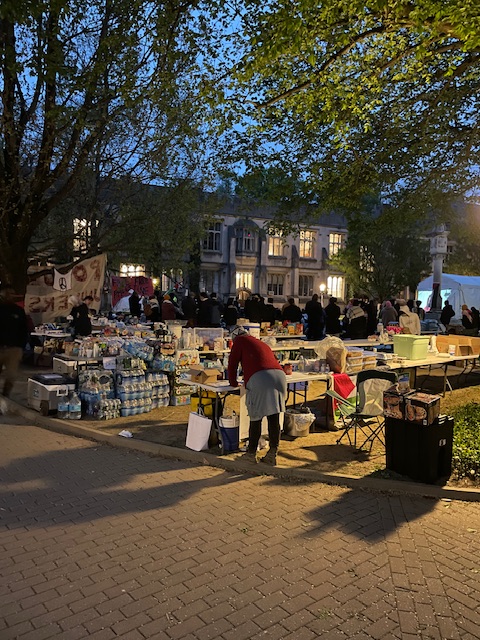
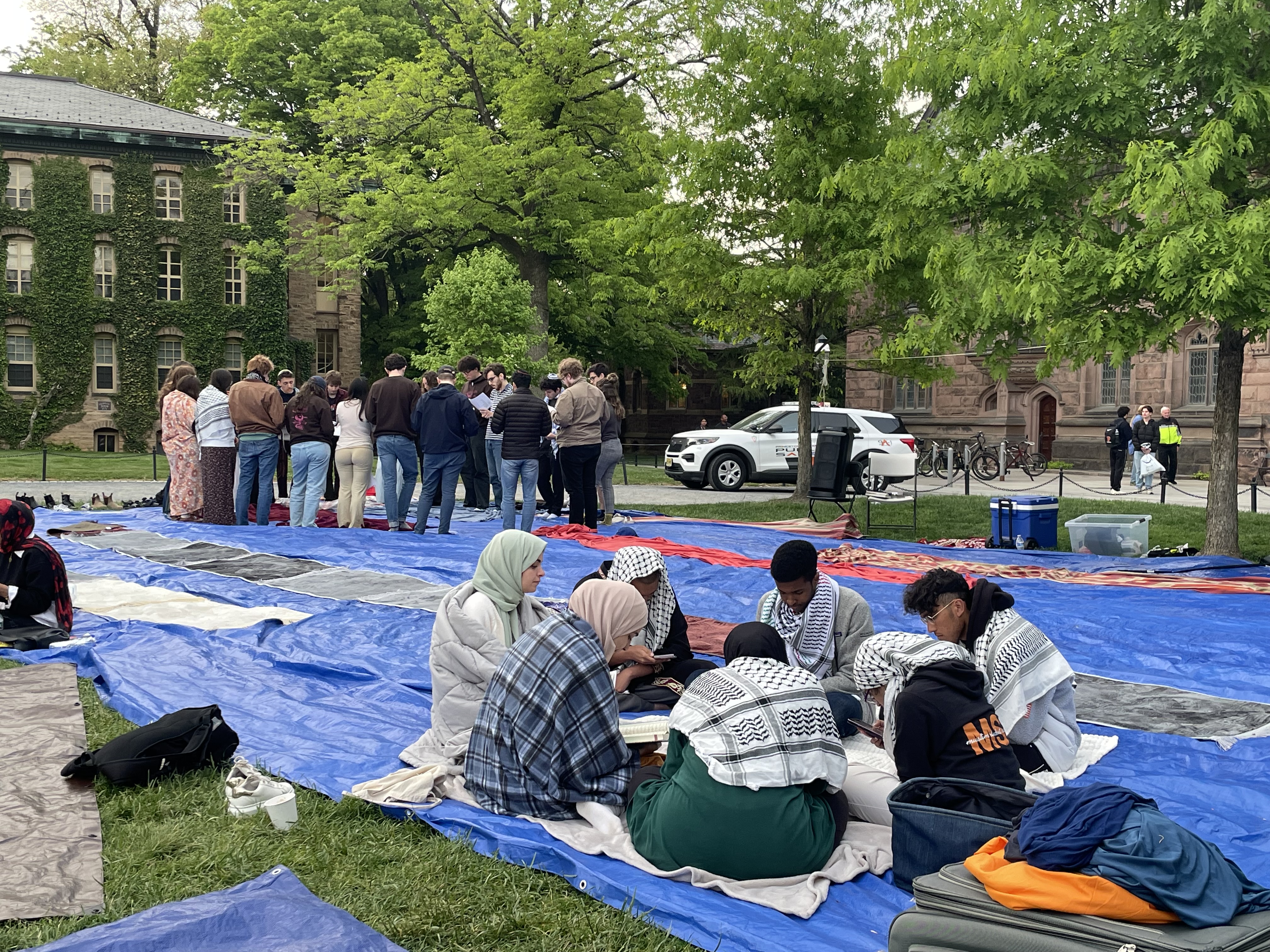
Q: Different topic. You were a prominent voice at Gaza Solidarity Encampment last year. If there’s one thing that you wanted to convey to the public about Gaza Solidarity Encampment, what would it be?
What I would say is that as a Jewish student, there was no greater expression of my safety than the encampment. It was Passover, and a lot of community members, a lot of Muslim moms, literally went out of their way to ensure that Jewish students had kosher food for Passover. They made sure that my presence there and organizing there did not throw a wrench into my ability to observe this holiday. That was so meaningful to me. Praying Kabbalat Shabbat with my Jewish peers, and introducing non-Jewish peers to that service, to the beauty of that ancient liturgy on that lawn–alongside or just after our Muslim peers had prayed–was one of the most affirming things that has happened to me at Princeton. As David, one of the encampment and hunger strike leaders put it, it was a glimpse of the world we want to live in. As Ruth Wilson Gilmore says about abolition, it was not just about destruction, it was not just about wanting Zionism and apartheid and their violence to end. It was about modeling something else. That was the power of the encampment.
I also think the other major takeaway for me is this: as we know, movements are not a monolith. There were factions within the encampment. There were people engaging across differences, who were there not just despite our differences, but hashing things out and through. One particularly powerful moment was when a Palestinian and a Jewish student co-led a discussion about chants.
Beyond the factions within Princeton’s encampment–which is important to recognize–the wider student movement that coalesced around the encampments was multifaceted and complex. Having spent time at the Columbia encampment, and having friends who were leading and experiencing encampments throughout the country, I know that the Princeton encampment was meaningfully different from other ones. Affirming those differences makes the Left and the pro-Palestinian movement stronger, not weaker. What was going to work at Princeton had to differ from what worked elsewhere.
Q: Last question. Talk to me about the future, both yours and AJP’s.
I will be moving to Israel/Palestine in August for the year through a fellowship called Dorot, which supports young people ages 22-30 to be living and working on the ground. And so I’ll be splitting time between language learning, Hebrew and Arabic, Jewish text study, and anti-occupation organizing, and protective presence work in the West Bank, through groups like Achvat Amim, All That’s Left, and Rabbis for Human Rights.
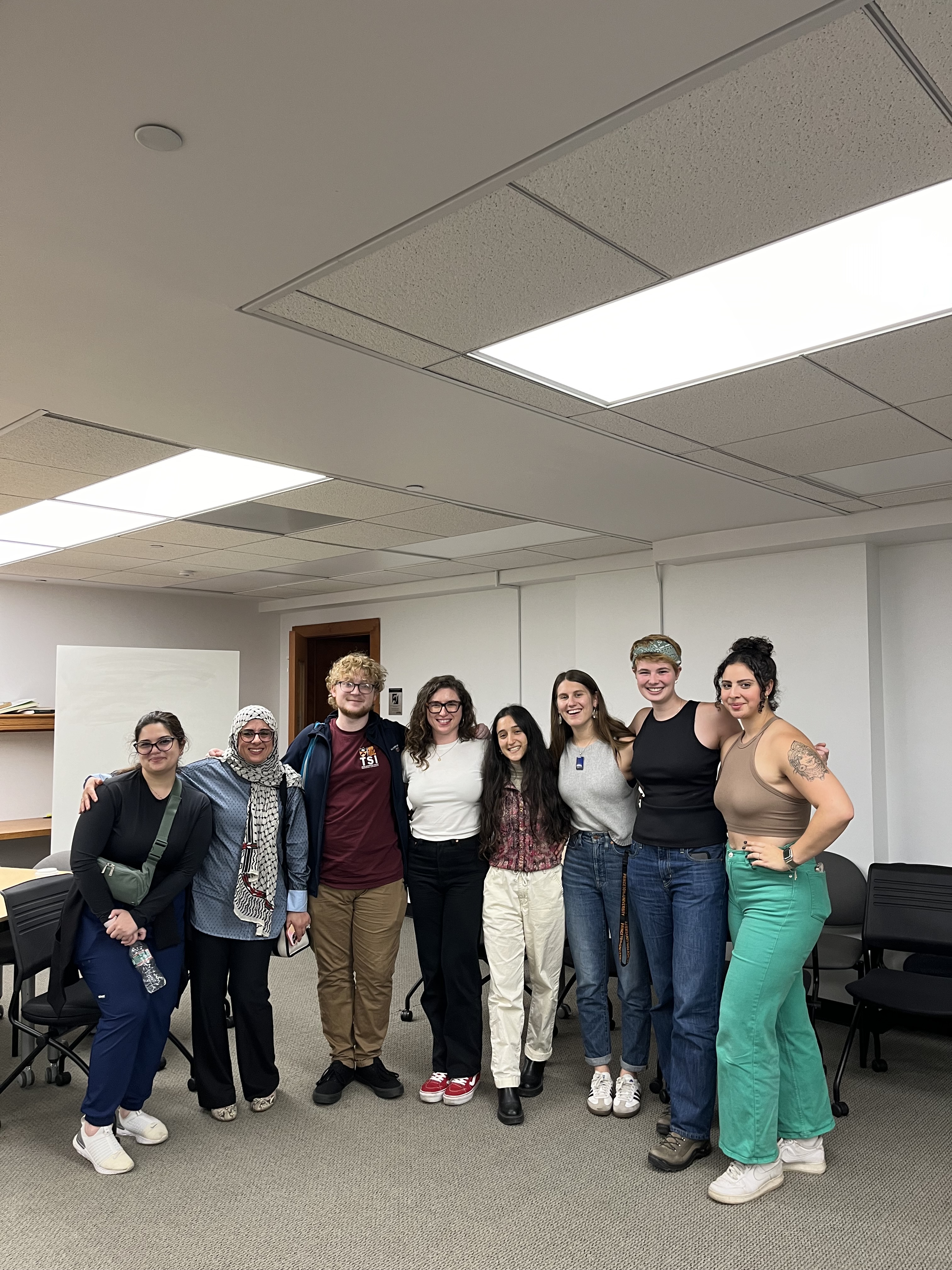
AJP is luckily in the hands of some really incredible leaders, who’ll be working together to keep up a Jewish voice that can call out these moments where other Jewish institution on campus are embracing and celebrating the likes of Bennett–a voice that can engage other Jewish students who might otherwise not engage at all, in ritual observation of shabbat and holidays, that can really most meaningfully engage in solidarity with our Muslim, Arab, and pro-Palestinian community. Not just to have our left-wing Jewish community to be in a silo, but to be in community with others. So they’re going to lead, and I have full faith in them.

Robert Massie at AJP, Rosh Hashana 2025
 Policy of Truth
I can’t believe you interviewed Emanuelle Sippy and didn’t ask her about her most famous invention, the Sippy Cup.
LikeLike
That’s sure to be the topic of my next interview with her. Stay tuned!
LikeLike
Pingback: Statement of Sadaf Jaffer to Montgomery Township Committee | Policy of Truth
Pingback: You Say You Want a Revolution | Policy of Truth