People sometimes complain, with some justification, that the Muslim call to prayer is a theocratic attempt to command airspace for Islam. The equivalent in the American suburbs is the gas-powered leaf-blower, which is just as loud, just as jarring, just as disturbing to peace and quiet, and at least as ubiquitous.

If the call to prayer signals the dominance of Islam, the drone of the leaf blower signals the dominance of lawn-centered affluence. The one form of cacophony says, “God owns your life; stop what you’re doing, and come to prayer.” The other says “We own a big lawn—so big we can’t rake it. Behold as we hire a bunch of landscapers to make 100 decibels of racket to deal with it.”
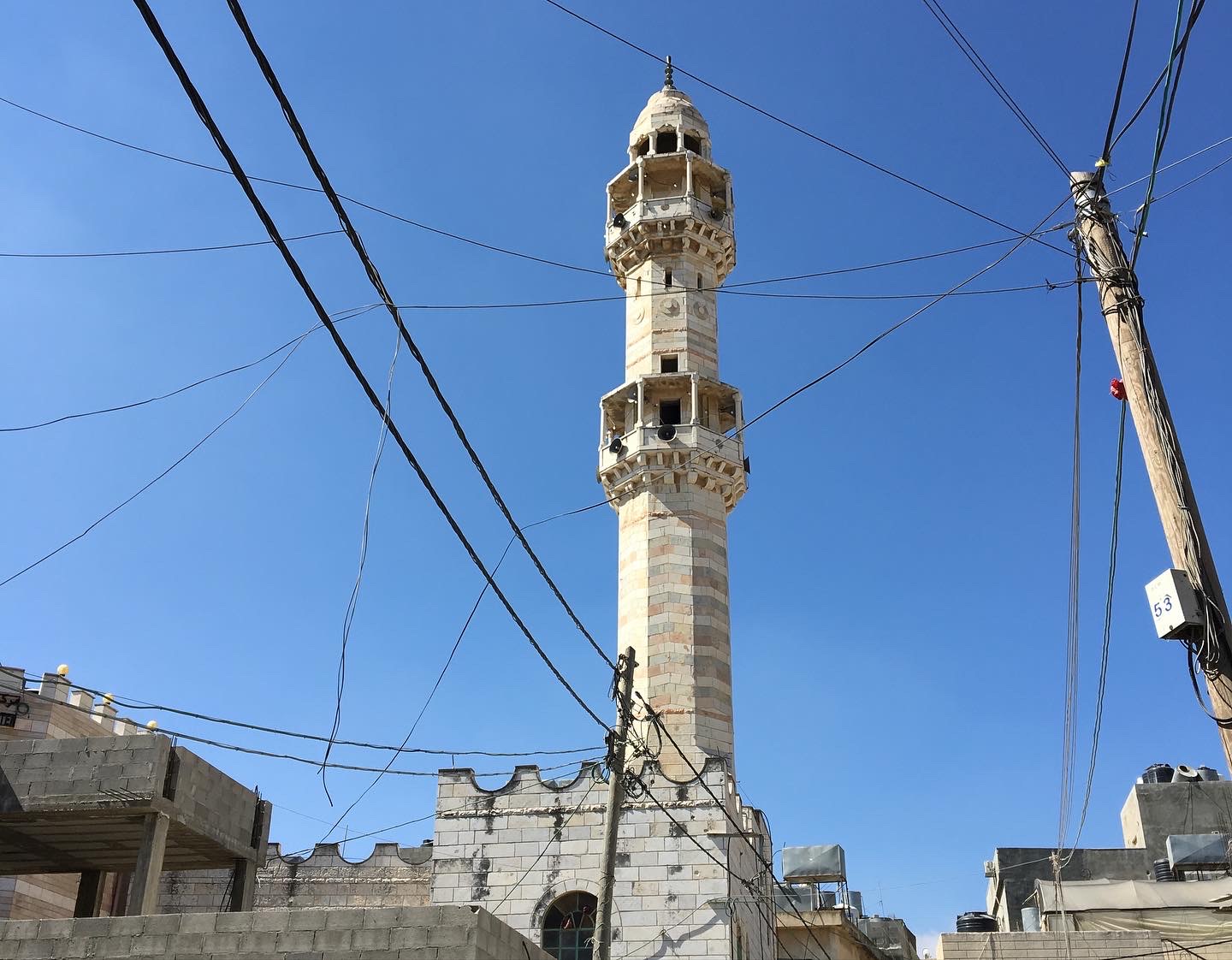
“Silence,” as Rumi said, “is the language of God.” “In silence,” the Benedictines say, “God speaks.” “Be still,” God says in the Psalms, “and know that I am God.” “Stop worrying about your dead fucking leaves,” says an anonymous, martyred saint of recent times, “and try leaving your lawn alone for a change.” Sadly, the holy wisdom of silence seems nowadays to have been lost to us. A just God, one thinks, would intervene to restore it—assuming, of course, he can hear our prayers for the noise.
 Policy of Truth
Not sure why the Muslim call to prayer is any more intrusive than the bells on Christian churches. Though I find both pretty. (Unlike the leafblower.)
“Unholy Choirs of Cacophony” would be a great name for a band though.
LikeLike
The Muslim call to prayer, the adhan, is significantly more intrusive than church bells. As a rule, church bells only sound once or twice on Sunday mornings. The adhan sounds five times a day, every single day without exception, with the first call to prayer taking place before dawn. What this means is that unless you manage to sleep through it, you can’t sleep in without interruption past the pre-dawn hour. The pre-dawn adhan has a special line in it that says, “Prayer is better than sleep”: as-salat khayr-am min-an-naum. That seems gratuitous.
To make things worse, in many Muslim countries, all of the mosques in a given locality will sound the call to prayer simultaneously, with variations of style, key, and even timing. One guy will begin at say, 4:55. The next will begin at 4:56. The next will begin at 4:57, etc. Except that we’re talking about thousands of calls at once. Five times a day, then, it sounds like the apocalypse is here–ten thousand off-key, out of sync calls to prayer sounding “at once.”
In Saudi Arabia, once the call sounds, the religious police roam the streets to ensure that you’ve actually responded (by praying). I mean, it doesn’t get more intrusive.
I once lived in a town, Bloomfield, New Jersey, where the bells of the local Presbyterian church sounded once every quarter hour. I happened to find it aesthetically pleasing, but that’s a matter of taste. Pleasing or not, it’s intrusive. I actually have no aesthetic objection to the Islamic call to prayer, either. But it obviously is there to assert a kind of theocratic control over shared airspace.
Imagine that five times a day, I plugged an electric guitar into a Marshall amplifier stack, and played a very pleasing arpeggio at top volume–the first ten seconds of AC/DC’s “Hell’s Bells,” let’s say. No one would dispute that that’s intrusive. It doesn’t really matter if you change the instrumentation or the music or the deity.
Religious people forget how much slack we cut them. I’m here to remind them. No one in the modern world actually needs to be called to prayer by a bell or a chant. We tolerate their doing so because, well, God matters so much. I mean, he would matter more if he existed. But even if he existed, he’d have to admit that people now own calendars, watches, and alarms, and can use them.
I agree that leaf blowers are aesthetically worse than bells or adhan. But as far as sheer intrusiveness, the leaf blowers are tied with the muezzins.
I borrowed “choirs of cacophony” from Rush’s “Bastille Day”:
Sing, o choirs of cacophony
Money isn’t all that power buys
It may not be July, but decapitation is never far from my mind.
LikeLike
The only Muslim country I’ve been to is Turkey. One could debate whether it counts as a Muslim country, depending on the strictness of definition; but the relevant respect in which it’s Muslim is that one does get the regular call to prayer (though not yet the prayer enforcers — not even under Erdoğan). I didn’t find them cacophonous or intrusive though. But it is possible that e.g. Riyadh is worse than Istanbul in this respect (as perhaps in others!).
LikeLike
Just on time:
https://www.wxyz.com/news/dearborn-residents-complain-about-outdoor-calls-to-prayer-from-mosques-throughout-city
I agree with the complainants. As a non-legal, non-rights-violative issue, I think it’s clear that calls to prayer are intrusive.
Even if the calls don’t violate the local noise ordinance, it’s arguable that they violate rights. Granted, it’s a relatively mild rights violation, and one on par with many others (like leafblowers). Maybe the mosques should pay Nozick-type compensation to nearby homeowners for the right to issue the call.
But the truth is, I find the whole thing gratuitous. Anyone who finds the adhaan pleasant can play it on their own stereo system or headphones. They don’t have to amplify it into public space. Remarkable that they ended the morning call to prayer only after receiving complaints.
I think it’s worth noting that in nearby Hamtramck, they’ve both banned the Pride flag and amended their noise ordinance to allow for public adhaan. I think it’s clear that that combination implies a desire to command airspace in the name of a certain brand of Islam. I re-issue my fatwa for jihad: jihad fi sabil lil-samt. A jihad in the path of silence.
LikeLike