March 2025: Kalven’s Complicit Executioners: A Critique of “Institutional Neutrality”
Last month, I started a series here called “Stirring the POT,” designed to announce forthcoming events and summarize notable recent happenings. In my last installment, I mentioned that I was giving a paper on–a critique of–“institutional neutrality” at the 34th Annual Conference of the Association for Practical and Professional Ethics (APPE) in Norfolk, Virginia. That was fun, so I figured I’d report on what happened.
Institutional neutrality is the idea that universities should refrain from taking official public positions on matters of public controversy. The locus classicus of the view is the so-called Kalven Committee Report issued in 1967 at the University of Chicago under the principal authorship of Harry Kalven, a well-known constitutional scholar. The Kalven Report argues that the core mission of the university is the pursuit of truth, that the pursuit of truth requires the maximization of intellectual diversity, and that the maximization of intellectual diversity is incompatible with an institution’s adoption of an official position on any issue of public controversy.
To elaborate on the last thought: When the university takes an official position on some proposition p, in doing so, it effectively removes all contrary positions from free consideration by others members of the university. The idea here is that the official quality of the university’s speech act infringes on others’ freedom to take positions contrary to the official line. That’s an offense against the maximization of intellectual diversity, itself an offense against the pursuit of truth, itself an offense against the core mission of the university.
The maximization idea involved here could use some further unpacking as well. The idea is that once a university officially asserts that p, no one within the university community is any longer free to assert that ~p. For any set of contested propositions (p or ~p), the elimination from free consideration of any one proposition from the set diminishes the sum total of propositions available for consideration. Doing so violates the imperative to maximize diversity: for any positive integer, x, it’s evident that x > x -1, so that maximization favors the promotion of states of affairs tending to x rather than x -1. In this example, 2 > 1, so the university’s affirmation that p violates the imperative to maximize diversity by a whole proposition. Failure to maximize intellectual diversity, even by one proposition, entails failure to promote truth. Failure to promote truth violates the official mission of the university. No university should ever violate its official mission. Hence no university should ever take any official position on any matter of public controversy. QED. Très élégante!
Except for two modest provisos. Proviso #1 bears on the university’s daily operations, e.g., personnel, scheduling, curricular selection, budgeting, investing, marketing, recruiting, facilities management, enrollment management, accreditation, PR, etc. Such daily operations have to be undertaken from the perspective of organizational self-interest, which obviously is not neutral. So we can’t expect the university to act neutrally when it comes to its daily operations. That’s just unreasonable. We need not expect it to speak neutrally, either. If controversy arises about the university’s daily operations, Proviso #1 says that the university is permitted (though not obligated) to take an official public position on such matters. But, the Report assures us, that kind of thing barely ever happens. Who ever heard of a controversy arising over the daily operations of a university? In America? In 1967?

Proviso #2 bears on matters of institutional self-defense. Suppose that the university comes under attack by some party bent on attacking it. Well, you could hardly expect the university to just sit there, could you? The university has a right of self-defense. Like the conduct of its daily operations, the exercise of institutional self-defense must, once again, be engaged in from a perspective of institutional self-interest. And once again, insitutitonal self-interest is not neutral. So to belabor the obvious, the university is not obligated to act neutrally in this context, nor obligated to speak that way. If controversy arises on this score, Proviso #2 says (again) that the university is permitted (though not obligated) to take an official public position. But once again, the Report assures us, that kind of thing barely ever happens. Who ever heard of a university coming under attack, much less a controversy about it?
I had a very limited time for my presentation, so I presented just one objection to the Kalven Report’s argument from maybe a dozen I’d thought of. You could quarrel with the clarity of the Report’s claims, its equivocations, its indeterminacies, and its begged questions. You could ask whether the argument is really valid as stated, or if valid, whether the premises are true. You could raise any number of objections to the random, ad hoc, frankly surreal quality of the supposed exception clauses to the argument as a whole, or to the report’s studious evasion of the actual concerns of the activists it purports to address, or its strange amnesia about recent American history. But forget all that, or leave it for another time. An argument can be valid, sound, cogent, clear, internally consistent, highly principled, responsive to interlocutors, and sensitive to history and still be radically incomplete: it can omit to discuss some crucial issue so that its failure to do so becomes less a mere lacuna in the argument than a defect that trivializes the exercise as such.

The contested issue here is complicity. Consider some incontestable act of wrongdoing. Now distinguish between the primary and the secondary wrongdoers. Intuitively, the primary wrongdoers are those who perform the wrongful act itself. The secondary wrongdoers are those who assist the primary wrongdoers without literally performing the wrongful act. These secondary wrongdoers might enable the act, increasing the probability of its success. Or they might facilitate the act, such that the subtraction of their contribution would leave the act undone. Or they might condone the act, whether before, during, or after its commission, investing their moral authority in the act and/or its consequences, and/or against the victims. They might do all this intentionally, or knowingly, or by sheer indifference to moral considerations. Call these secondary wrongdoers complicit, where complicity attaches both to individuals and to institutions.
Now imagine that these secondary wrongdoers, not content with their own complicity in wrongdoing, decide to suborn the unwitting contributions of others, entangling these unwitting others in the same scheme of wrongdoing but failing to disclose to anyone what they’re doing–indeed, invoking institutional neutrality to insist that they have no obligation to disclose anything to anyone, ever, indeed have a blanket obligation to conceal.
Isn’t that wrong? It looks like double complicity, complicity in the primary wrongdoing, compounded by the knowing/intended entanglement of unwitting others. If an institution is complicit in this way in some grave injustice, what is the argument to convince us that the supposed duty of institutional neutrality demands–in the name of the pursuit of truth–that a university conceal the internally known facts about its own complicity in evil? How could a supposed duty to “maximize intellectual diversity” in the name of truth not only override a duty to avoid double complicity in evil, but override the duty to tell the truth about it? The question is patently obvious, indeed was explicitly asked by the activists to which the Kalven Report is supposed to be a response. Yet the Report proceeds as though no such issue had any bearing on anything it said.
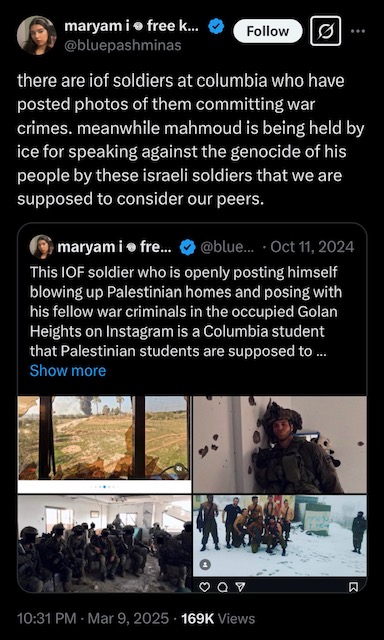
It’s obvious that institutional neutrality functions, in this context, purely as an instrument of evasion. If someone asks the institution about its prima facie complicity in some great evil, all it has to do is invoke “institutional neutrality,” and that invocation magically gets it off the hook. Since accusations of complicity are matters of public controversy, and the institution has a “duty” to avoid making official statements on matters of public controversy, the institution has a “duty” to avoid making official statements even (especially?) about controversies having to do with its own complicity in evil. No part of institutional neutrality directs any institution to stop being complicit in evil. As far as institutional neutrality is concerned, complicity in evil–any evil, regardless of turpitude, scope, or consequences– is merely business as usual. What institutional neutrality proscribes is candor about complicity in evil. Feel free to engage in it, the doctrine says, but keep your mouth severely shut. Because what if, in condemning evil, you infringe the sensibilities of evil-doers who might want to condone it?
Suppose that the University of Auschwitz runs a death camp or two (or three) and has a well-equipped lab where it does experiments, without anesthesia, on live human subjects.* Does institutional neutrality rule that out? No. It just rules out taking an official position on death camps and torture. As long as the University says nothing controversial, institutional neutrality is perfectly compatible with running death camps and torture chambers, at least on the DL. The real problem is taking a stand on the controversies they engender.
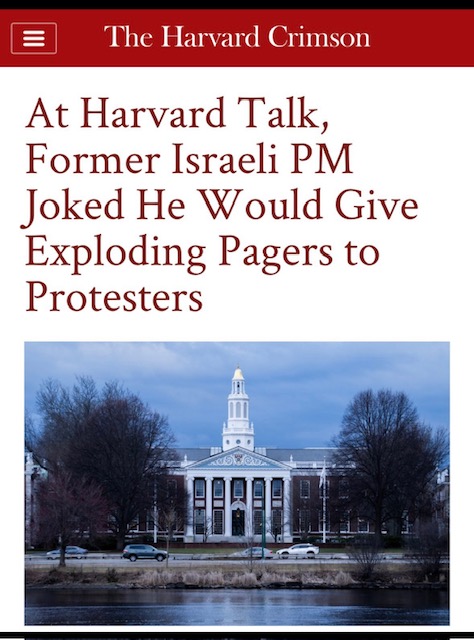
Forget the death camps themselves for a second. Focus on the real issue, from the perspective of adherents of the doctrine: imagine what happens if the university goes out on a limb to condemn death camps in a public way. Think of the sheer sense of terror that would produce on campus. Obviously, the students and faculty in favor of death camps, torture, and genocide might be intimidated about their freedom to defend them. What if it all gave rise to some really mean tweets? And put yourself in Dr. Mengele’s shoes for a minute. Here he is, minding his own business, running his lab, when the Provost starts condemning the experiments he’s running! How’s he supposed to get anything done? What kind of fair debate could be had under such conditions between the exponents of informed consent and those of doing in vivo experiments on people without anesthesia? Or just to be practical for a second, what about those grants from the Third Reich Ministry of Health? Are we saying that the Mengele School of Biomedical Sciences is just supposed to give up on that whole revenue stream? Official public condemnation definitely doesn’t maximize intellectual diversity, that’s for sure.
The same University could run a ROTC program that furnished the officers that put down the Warsaw Ghetto Uprising. If so, institutional neutrality would assert that it’s free to do so as long as it takes no controversial position on the legitimacy of the uprising. As far as the Kalven Report is concerned, there’s nothing controversial or institutionally non-neutral about putting down the Warsaw Ghetto Uprising, or even exterminating everyone in the General Governate of Poland, as long as you maintain a discreet official silence about doing so. The real problem would be making a public statement about the Warsaw Ghetto, not killing the people in it. The first rule of university administration is: you do not talk about university administration.

Now suppose that a bunch of activists take issue with the University, demanding disclosure of its death camp/human experiment activities, and demanding divestment from these activities if it can conclusively be proven that they’re happening. The University ignores the activists at first, so, for greater visibility, the activists break into an administrative building and stage a sit-in. The University now concludes that it’s “under attack,” so it calls the police and has the students arrested.
Is it allowed to issue an official statement about this controversy? Well, of course. Invoking Proviso #2, it spins a pious tale about the need to defend itself against a vicious activist attack on academic freedom. But is it obliged to address the substantive issue of its own complicity in death camps and torture chambers? No. Because institutional neutrality demands that it not take an official position on any matter of public controversy outside of the exception clauses, including complicity in death camps and torture chambers. As far as institutional neutrality is concerned, a sit-in is an attack on the University demanding an all-out police and PR response, but a University’s running a death camp is just business as usual to be concealed in some proprietary set of spreadsheets accessible only to people who know better than to talk about what they know.
All I did in Norfolk was to make these inferences clear, but that seemed to leave my audience shell shocked. That wasn’t my intention–I’m not the one using live ammunition, after all–but I was perfectly happy with it, happier than I’ve been in a long time. They should be shell shocked. The Kalven Committee Report is the ethos of Adolph Eichmann exhumed from the grave and brought to American academic life. Among Eichmann’s last words were: “I hope you will follow me.” It looks like we have.
Institutional neutrality is now being adopted at university after university across the country. The doctrine is widely seen as the principal guarantor of academic freedom at a time when academic freedom is under attack. And yet, in sixty years, almost no one has looked beneath its supposedly anodyne exterior to grasp the twisted reality concealed beneath. This is a doctrine that tells universities to do what they want, as long as they shut up about it. It’s a doctrine that tells them to attack those who demand answers about institutional wrongdoing, treating the questioners as the proverbial “barbarians at the gates.”** It’s a doctrine ready-made for a society of genocidaires who describe the desire for evasion as “freedom,” and describe the desire for accountability as “terrorism.” Institutional neutrality is an instrument of gaslighting for professional gaslighters. And little by little, that’s how it’s being used.
Speaking of gaslighting, later that day, I attended the conference’s first plenary session, “Ethics and Technology in National Security.” The session featured a bunch of military officers with impeccable academic credentials discussing various uses of AI in the American military. The first speaker was a general in the US Army. “I don’t want to talk about killer robots,” he said with a disarming smile. The participants then spent the rest of the ninety minutes at their disposal cheerfully discussing the various ways in which we can use AI to kill people, all of it immaculately humane and miraculously to the credit of the Armed Forces of these United States.

Many topics came up in the session, but three were conspicuously absent: first, why it’s necessary to spend so much time and energy killing people around the world; second, whether it can be avoided; and third, what role the US military has recently played, with and without AI, in the mass murder of thousands of civilians in Gaza, Lebanon, Syria, Iraq, and Yemen. Ukraine come up several times. So did Afghanistan. But not Gaza, and none of the rest. It’s worth noting that both the session and the conference itself were sponsored by Northrup Grumman, which specializes in, yes, using AI to kill people. Welcome to woke academia, and to “neutral” business as usual.
The next day, I attended a concurrent session on academic ethics featuring an individual I knew from back in the day when we were both grad students in philosophy. Let’s call him “Nick.” Evidently, Nick had gotten his degree, then gotten a faculty position, but had gone on to become a university administrator at a prominent university. I recognized him, but he seems not to have recognized me. His talk was about leadership ethics, that is, the ethics of leading a university from an administrative position. Part of Nick’s point was that leadership requires a certain Machiavellian resort to amorality. Among the tools in the toolkit of the university administrator, he told us with disarming candor, was the willingness to “obfuscate” (his word) when the occasion called for it. Also to manipulate, conceal, evade, and–he seemed to be hinting–plain old lie, when the occasion called for that.

I decided to follow up in the Q&A. I told Nick I was grateful for his talk, since I’d spent the better part of a decade fruitlessly accusing university administrators of obfuscation, and had gotten nowhere for it–or rather, gotten thrown out of my academic position for it. Meanwhile, in this case, I hadn’t even managed to make an accusation at all, and here I’d gotten an unsolicited confession for free.
Which was gratifying, but: what justification was there for obfuscating the truth? Didn’t obfuscation entail a deliberate intention to deceive? And didn’t such an intention flatly contradict the academic values enshrined in the Mission Statements and Strategic Plans of so many universities, and so many accreditation agencies, and so many defenders of so many glowing academic ideals–ideals invoked to hire, fire, promote, demote, increase some budgets, slash others, install some programs, destroy others, invest in this great idea or in that, embark on this quest or that? Higher education, they keep telling us, is about the pursuit of truth. But how is obfuscation consistent with the pursuit of truth?
Nick chuckled a bit at the apparent sincerity and intensity of my question, then told me that obfuscation was just part of the job description of a university administrator–the core mission, if you will. It was “naive” to think otherwise. “Sometimes, you’re forced to be dishonest,” he said, and laughed. The session was just about to end. “What a terrible note to end on,” he said, ruefully. On the contrary, I rejoined. I couldn’t have come up with a better ending if I’d tried.
Institutions that profess “neutrality.” Administrators that practice obfuscation. A whole academic enterprise cheerfully, unapologetically underwritten by the military-industrial complex. A military-industrial complex in overdrive, with the chattering ethicists happily on board. Ask yourself where you think this is headed.
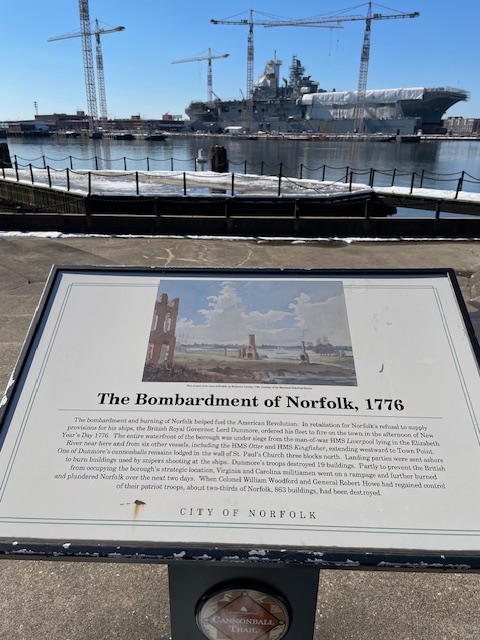
I called my paper “Kalven’s Complicit Executioners,” in self-conscious allusion to Daniel Goldhagen’s Hitler’s Willing Executioners. If you find that inflammatory or unfair, feel free to read the Kalven Committee Report, then come back and school me on the right inferences to make about it. But as far as I’m concerned, American higher education is paving the way for a fascist dictatorship–not a woke dictatorship of the Left, but a jackbooted, violence-worshipping dictatorship of the Right. And if you think that business-as-usual or institutional neutrality is going to get us through this shit, let me tell you, straight up, that you’re badly deceived. Where there’s no resistance, there’s a vacuum, and as nature is said to “abhor a vacuum,” fascism fills them up.
Institutional neutrality is the moral vacuum left by people who talk a big game about “the mission of the university,” but have no idea what that means. They’re about to learn, the hard way, that people who stand for nothing count for nothing. The question is who or what is left standing after that.
*I don’t mean to imply that doing such experiments on non-human subjects would be acceptable, but simply that doing them on human subjects is obviously not acceptable.
**This phrase involves its own form of historical gaslighting. Strictly speaking, “barbarians at the gates” refers to the fall of the Western Roman Empire to the Germanic tribes that opposed it, the assumption being that the Empire was self-evidently superior to a bunch of Germanic “barbarians,” and ought therefore to enjoy a moral presumption, 1,500 years after the fact, from us. Yet the Zealots and Sicarii played an analogous role in the history of the same empire, and no one refers to them as “barbarians,” or to Masada or the Bar Kokhba Revolt as cases of “barbarians on a hill,” or “barbarians at the gates,” or anything of the sort. In the case of the Huns, we’re expected to side with Rome against its opponents; in the case of the Jews, we’re expected to side with Jewish nationalists against Roman emperors. It’s interesting that the implicit estimate of the empire involved is so unstable. In the one case, Rome is presumptively superior to its “barbaric” opponents; in the other, Rome is the paradigmatic expression of tyranny and evil, and its Jewish opponents are paradigms of martyrdom and sainthood to be celebrated for millennia. But the same empire is involved in both cases. For a useful discussion, see Martin Goodman, Rome and Jerusalem: The Clash of Ancient Civilizations.
The general account of complicity I describe here is heavily indebted to Gregory Mellema’s Complicity and Moral Accountability, though he’s not responsible for anything I say in the post. Thanks to Susan Gordon for the constant, almost superhuman outpouring of information she posts on Facebook (I owe the first four images to her), and to both Hilary Persky and Kate Herrick, for functioning as my ever-ready sounding boards. Thanks also to my audience at APPE/Norfolk, and particularly to Ethan Davis and Sally Moore, for pressing me on a number of points.
 Policy of Truth
Pingback: Death Camps and Torture Chambers | Policy of Truth
Pingback: We Won’t Stop | Policy of Truth
Pingback: Heterodox Academy 2025 | Policy of Truth
Pingback: Stirring the POT (3) | Policy of Truth
Pingback: From Diversity to Neutrality: Rebutting the “Key Move” | Policy of Truth
Pingback: War Is Peace | Policy of Truth
Pingback: Target Practice | Policy of Truth