They say, you know when you know
So let’s face it, you had me at hello
Hesitation never helps
How could this be anything, anything else?
–Elvis, in a slightly different context
Are we living under fascism? Are we on our way to it? It’s natural to ask these questions, but hard to answer them, mostly because it’s hard to know what they’re asking. To know whether we’re living under or en route to fascism, we need a workable definition of “fascism,” but strangely enough, decades after the defeat of the worst of the fascist regimes of the twentieth century, that’s what we seem to lack. We know that fascism was defeated, but still don’t know what it was. In what follows, I simply want to canvass some of the problems involved in answering my opening question, not so much to provide a conclusive answer to it, as to figure out why it’s so hard to come up with one.
At first glance, the problem we face would seem to have an obvious solution. You want to know whether we’re living under fascism? Look up the term “fascism,” then compare what it says to what can be observed of the regime we currently inhabit. If there’s sufficient similarity, we’re living under fascism. If not, not. To the extent that there’s insufficient similarity, maybe we’re en route to it.
The preceding inquiry presupposes at least three things:
- A usable definition of “fascism.”
- The capacity to apply it to current circumstances.
- A workable conception of “sufficient similarity.”.
Unfortunately, most discourse on fascism seems to stall at step (1). I won’t clot this post with examples, but on the whole, if you look at current definitions of “fascism,” I think you’ll find them notably unhelpful. Most of them lack the textbook basics of a good definition. They lack a genus and differentia. They’re either too broad or too narrow or both. They fail to identify the essential features of the thing being defined. They’re circular. They’re phrased in negative terms. They’re unclear, overly long, and unwieldy.
To make things worse, there’s a semi-consensus in our intellectual culture to the effect that definitions are kid stuff, pointless and passé. We get this view from Wittgenstein, who’s credited with saying that definition is a pointless task, because the things we want to define defy our every effort to define them. We are, at best, fated to finding family resemblances between things, resemblances so varied and complex as to defy the demands of a formal definition. Dictionary definitions, we’re told, are worthless, and non-dictionary definitions too dictionary-like to get around that stricture. Between bad definitions and the refusal to define, I guess we’re out of semantic luck. Nobody ever seems to know what anybody’s talking about.
But I don’t mean to be glib, because I happen to think “fascism” is particularly hard to define. I’ve come up with seven reasons why, maybe because fascism is a lucky topic, and seven is a lucky number. But feel free to pile on.
What makes “fascism” so hard to define? One problem is its connection to nationalism. In general, people want to distinguish fascism, an ideology of the Right, from state socialism and communism, ideologies of the Left. Both sets of ideologies are supposed to involve unhealthy attachments to some key idee fixe. For socialism and communism this is class. For fascism, it’s the nation or ethno-nation. Class is Left, ethno-nation is Right. So fascism becomes a deviant, manic, psychotic form of nationalism or ethno-nationalism as per Hitler and Mussolini, as distinguished from the deviant, manic, psychotic attachments to class supposedly characteristic of Soviet socialism or Maoist China.
This helps a little, but not that much. If we define fascism by way of an unhealthy attachment to ethno-nationalism, how do we define ethno-nationalism? Is fascism just a synonym for ethnocracy? In that case, Israel and Pakistan turn out to be fascist regimes, not that you’re supposed to say that out loud.
In any case, we’re now playing a game of semantic buck-passing: from fascism we pass the buck to ethno-nationalism, but when it comes to ethno-nationalism, we run out of semantic cash. Fascism, remember, is something we want to attack. But if fascism is connected to ethno-nationalism, then we have to attack that. But then it looks like we have to attack a real sacred cow (if you’ll pardon the expression), ethnicity. If you attack ethno-nationalism, it almost looks like you have to attack identity politics in the bargain. But then, wouldn’t you have to attack DEI, as well? That seems odd: fascism is a right-wing idea, and DEI is left. If fascism is connected to ethnicity, and DEI is the political expression of ethnic identity politics, we seem to be reaching the bizarre conclusion that DEI is fascist, and that Trump and Musk are Antifa. From semantic buck passing, we’ve crashed into total batshit confusion. No wonder “fascism” is hard to define.
The bank balance isn’t exactly zero, though. Ethno-nationalism implies an ethno-nation and an enemy out-cast, ethnically defined. The nation, to use Benedict Anderson’s apt phrase, is an “imagined community,” and so by implication are the ethno-nation’s enemy outcasts. So ethnicity and nation end up being collective confabulations. And fascism is a particularly extreme instance of this collective confabulation.
This is both helpful and a wash. Helpful because it seems right: where you have fascism you have ethnic fixations, even if the converse may not hold. But frustrating because collecive confabulations are hard to define. If ethno-nationality is a matter of imagined community, we seem to be in the realm of myth and fantasy. But since myths and fantasies are protean and varied, they end up being essentially indefinable; to the extent that our definition of fascism depends on them, the same thing applies to it. So the buck-passing endeavor both helps and doesn’t, which is always the big problem with definitions of “fascism.” It doesn’t really give us a definition of fascism, but helps explain why it’s hard to come up with one.
A second problem is fascism’s connection to totalitarianism. Most (though not all) political theorists seem to hold that if a regime is fascist, it’s ipso facto totalitarian. That’s why fascism is as bad a thing as it’s thought to be. Totalitarianism is really bad, so if fascism is an instance of it, totalitarian badness seeps into fascism. Whereas if fascism wasn’t totalitarian, it wouldn’t seem so bad.
The problem, however, is that some regimes seem fascist, but arguably aren’t totalitarian, whether in theory or in practice–Franco’s Spain being a paradigm example.
Logically, we’re left with a a bunch of possibilities here, hard to sort through and resolve. You come upon a regime, X, that seems fascist. If it’s fascist, it’s supposed to be totalitarian, except that X isn’t. Now what? Maybe…
- It’s fascist, but contrary to all appearances, it really is totalitarian. You got the last part wrong, but the original if-then formula was right.
- It’s neither fascist nor totalitarian. You got both halves wrong, but the original if-then was right.
- It’s fascist, but not totalitarian. You got both things right, but the original if-then formula was wrong.
It’s easy to get lost in the thickets of this dispute and never emerge–as the Franco example (among others) makes clear. If you multiply the logical possibilities by the number of contested cases, you quickly reach the fabled point of conceptual unmanageability, i.e., the point at which people give up on the idea that there’s any way to figure out what’s going on.
The crux of the preceding problem is the desire to preserve the distinction between authoritarianism and totalitarianism, a thesis notoriously with the late Jeane Kirkpatrick, but generally accepted. Both totalitarian and authoritarian regimes are illiberal and undemocratic; both systematically violate liberal rights and democratic norms. But they do so in qualitatively different ways. Authoritarian regimes issue rigid rights-violating edicts, but in a targeted, “traditional” way that affects the lives and freedom of certain well-specified demographics regarded as problematically subversive, while leaving most of the rest of population (and most of the rest of life), unaffected. You can go about your business in an authoritarian regime, as long as you know your place and keep to it. By contrast, totalitarian regimes seek to control the whole population in every aspect of life, often by invoking some revolutionary ideology. There’s no way to go about your business under totalitarianism. Your business is state business. Your life belongs to the state.
The distinction will be vivid to anyone who’s spent time in each kind of regime, as I have. There’s no way to deny its validity, at least in theory. In theory, at least, the distinction implies that totalitarianism is worse than authoritarianism. And that’s why people are wary of it: it seems to rationalize authoritarianism by suggesting that it’s not so bad.
That’s in theory. In practice, the distinction doesn’t have quite the implications it might be thought to have. At first glance, it seems “obvious” that totalitarianism is worse than authoritarianism: they differ by degree of control they exercise over their populations. But that’s not obvious, even if we take the distinction at face value.
Suppose we compare a highly effective, highly brutal authoritarian regime with a somewhat ineffective totalitarian one. The authoritarian regime, let’s say, actually succeeds at targeting a certain population–killing, torturing, imprisoning, deporting and expropriating them, but leaving the rest of the population alone. The totalitarian regime aspires to control the lives of the whole population, and claims to, but ends up doing more talking than actual repression. Which regime is worse, and for whom? It’s no longer obvious.
If you’re the target of the authoritarian regime, you might intelligibly flee to a nearby totalitarian regime, and end up better off than you were. If you were terrorized by the aspirations of the totalitarian regime, but confident that the authoritarian regime would be uninterested in you, you might do the reverse. Now suppose that the average person under the authoritarian regime is dirt poor, whereas the average person under the totalitarian one is rich. If so, the totalitarian regime might end up being a popular vacation spot. But if so, how bad could it be? Now suppose the reverse. That, too, is possible. The lesson here is that one word isn’t going to tell you everything you need to know about life under a certain regime.
Apply this back to fascism. Some fascist regimes may be brutal authoritarianisms. Others may be ineffective totalitarianisms. Suppose we insist that all fascist regimes are totalitarian. In that case, the brutal authoritarian fascisms will fall out of the equation. And yet they may belong in it. Now suppose we deny that fascism is always totalitarian. That makes it sound as though fascism isn’t all that bad. But that’s a mistake: from the perspective of their intended victims, brutal authoritarianisms can be a lot worse than ineffective totalitarianisms. It’s easier to grasp these facts in the abstract than to remember them in polemics about fascism. But maybe we should try.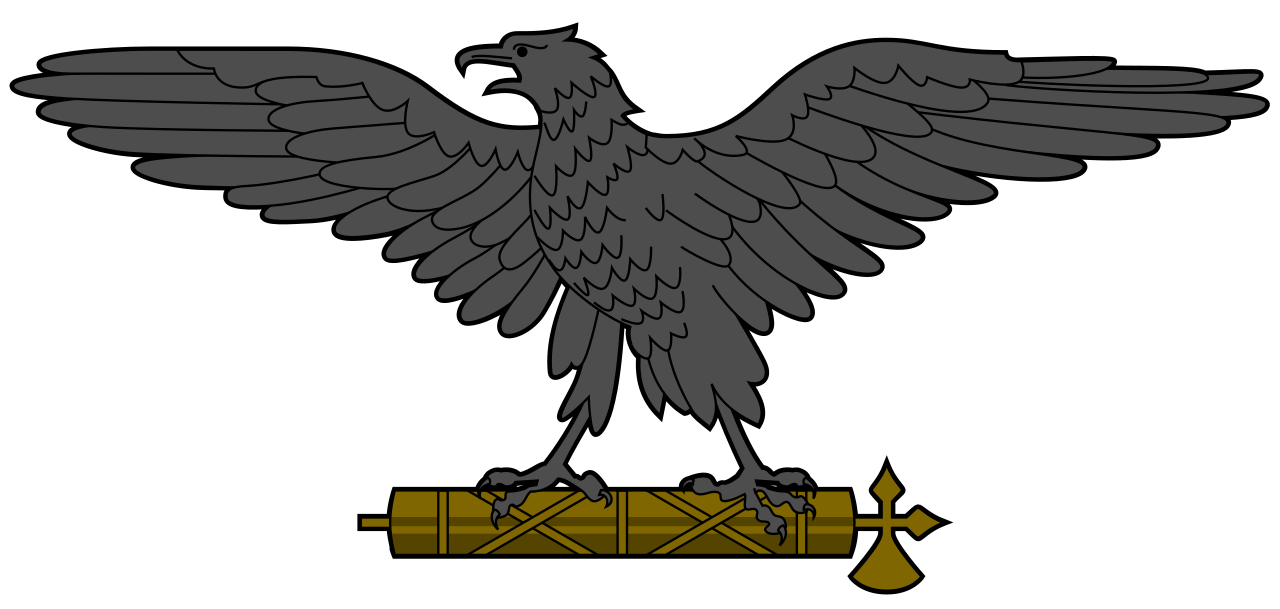
Eagle with fasces: Italian fascist symbol
A third problem is that we have a plethora of terms for deviant regimes, gotten from a variety of different contexts and disciplines, but don’t know how they relate to predications of fascism. Take “imperialism,” “dictatorship,” “autocracy,’ “oligarchy,” “broligarchy,” “theocracy,” “tyranny,” “slaveocracy,” “serfdom,” “feudalism,” “apartheid,” “Jim Crow,” “ethnocracy,” “failed state,” “police state,” “illiberal democracy,” “gangster regime,” and “anarchy” in the pejorative sense that applies to places like Haiti or Somalia. If I predicate one of these of a regime, X, what are the rules of inference that govern predications to X of exemplifying “fascism”? Can a regime simultaneously exemplify, say, oligarchy and fascism, or must it be one or the other? It would be a useful exercise to work out all of the permutations of all of these concepts, and figure out how the rules of inference work for every permutation. But to my knowledge, no one has ever done this, and if they have, it’s buried in some random-ass journal somewhere that no normal person has ever read.
The preceding problem is related to the common complaint that “fascism” is a historically bounded term that can’t be applied without anachronism to regimes other than, say, Hitler’s and Mussolini’s (or maybe Franco’s, Salazar’s, and Pinochet’s, and maybe Idi Amin’s and Zia ul Haq’s, and maybe the Lebanese Phalangists, and maybe…) Though historians are often the loudest about saying this, it’s actually not clear whether fascism is as historically bounded as they say, or whether the appearance of historical boundedness just represents a discipline-wide failure of imagination. Maybe “fascism” is as historically bounded as they say, or maybe historians and political scientists have simply failed to clarify how it applies across space and time.
Either way, I guess, we face a problem. Imagine playing a game in which you draw a card from a deck, each one of which names an illiberal regime. The object of the game is to declare the regime on the card “fascist” or not. Start with ancient civilizations like the Indus Valley Civilization, the Mayans, the Mesopotamians, and the Egyptians, and work your way forward to the present. Would this game extend the scope of your knowledge of “fascism,” or would it merely collapse into a charade of ahistorical nonsense? It’s not clear. It’s tempting to say that Sparta was a fascist regime, but also tempting to deny that Thucydides could have been a historian of fascism. One thing seems totally plausible, the other totally absurd. We can’t say both, but it’s not clear which to say.
A fourth problem is that we associate fascism with the state, but can easily imagine a regime in which the state outsources fascist activities to the private sector. Imagine a regime in which fascist law enforcement is taken up by private militias. Or imagine one in which censorship is undertaken by nominally consensual means via private corporations. Or imagine both things happening at once.
Aristotle had a famous six-way taxonomy of correct and deviant regimes. The correct regimes were kingship, aristocracy, and polity. Each correct regime corresponded to a deviant version, tyranny, oligarchy, and democracy. Since six regimes weren’t enough, we then got the idea of the “mixed” regime that combined a bit of one regime and a bit of another.
So try this on for size. Conventionally, we speak of the current American regime as a republic. But what is it in Aristotelian terms? Some might call it a democracy, others an oligarchy. But I’d call it a weirdly mixed regime: a democratic union of mini-oligarchies. Remember that for Aristotle, a democracy is a deviant, dysfunctional regime. So a democratic union of mini-oligarchies is a loose, semi-anarchistic (by which I mean increasingly lawless) confederation of mini-oligarchies, where by “mini-oligarchy,” what I mean is a corporation. What you have under this arrangement is a set of mini-oligarchies, each in a loose, semi-governed federation with all the others, all of it united under a regime that treats law enforcement as a private fiefdom, and has started to privatize law enforcement by detaching it from the rule of law. Now suppose for a moment that this arrangement–a mixed regime of lawless mini-oligarchies–is compatible with fascism.
If you fixate on the fact that corporations operate by consent, you get the apparently nonsensical conclusion that we have all “consented” to fascism. But if you focus on the asymmetrical bargaining power that corporations have to coerce consent, then the fascist character of the arrangement starts to seem pretty obvious–even ingenious. Who ever thought that fascism could successfully be legitimized through the consent of the governed?
Noam Chomsky did. But Chomsky is now regarded as a marginal figure from a bygone age. Nowadays, talk of “manufactured consent” marks the speaker out as a “tankie,” a shill for Putin, a Hamas-supporter, and a crank, rather than a sophisticated political thinker. If it’s sophisticated to ditch Chomsky, it gets harder to apply his insights. So don’t be surprised if many people find it laughably counter-intuitive that fascism could be legitimized through manufactured consent.
But counter-intuitive or not, it’s possible. And if so, you can see why it’s so hard to define “fascism.” If a fascist regime outsources its fascist functions to the corporate sector, which is thought to operate by consent, fascism seems to be something we all want–the very opposite of the totalitarian nightmare it’s supposed to be.
A fifth problem is developmental. A regime doesn’t just wake up one day and become fascist. The turn to fascism is a non-linear process of decline that’s likely to be decades or generations in the making. So while the difference between being under fascism and being en route to it is important, a regime can be en route to fascism, have no options for exiting, but not yet be there. In cases like that, if we ask whether the regime is fascist, the answer will be a misleading “no” that conceals the fact that it’s becoming fascist. On no occasion when the question is asked will it be true that the regime exemplifies the criteria for fascism. But if there are no exit ramps away from the final destination, each “no” will mislead as to the direction of travel, rendering the answers irrelevant.
A sixth problem is what I call the one-strike rule. Take a regime that is in all respects a marvel of sweetness and light. Now imagine that one day, it just happens to commit genocide, or happens to engage in an act of ethnic cleansing, or happens to open a couple of concentration camps, or happens to abduct a couple thousand people, tortures some, kills others, and leaves the rest to rot. What we have here is an apparently legitimate regime that’s lapsed into unmistakably fascist behavior. But it’s a lapse, not a habit.
Consider a parallel from interpersonal ethics. A spouse who cheats just once in a marriage is often thought “unfaithful.” A spouse who beats their partner just once is often thought “abusive.” A person who commits robbery just once is thought a “robber,” a single rape makes you a “rapist,” a single terrorist act makes you a “terrorist,” and using the “n-word” just once is enough to mark you as a “racist” for life. What about regimes? Does one genocide turn a regime into a genocidal regime, and by implication fascist? How about ethnic cleansing, or mass abduction? Adoption of this rule would hugely simplify the task of identifying fascist states, but would also multiply them far beyond conventional bounds (hardly a conclusive objection).
There’s a choice to be made there, but lots of disincentives to making it. Just as it’s demoralizing to discover that every other marriage or family is abusive, or every nth woman the victim of rape, it’s demoralizing to discover that every other regime is fascist, and every nth one has committed the most mind-blowing atrocities. I hate to break the news, but life is a scandal.
A seventh problem is that it’s a general truth that unjust regimes lie, conceal, penalize dissent, reward bootlicking, encourage chaos and confusion, and engage in censorship. Under conditions of this sort, it becomes difficult to figure out what’s going on around you, much less to work through complex conceptual issues of the sort I’ve been discussing here. If you’re in such a regime, you may find that it penalizes or censors candid discussion, denies doing so, and lies about or conceals the facts that would decide all of the relevant questions. If so, good luck.
Have I answered my opening question? No. But I didn’t intend to. What I hope to have done is to explain why it’s gone unanswered. We don’t know whether we’ve descended into fascism because we mostly don’t know how to define “fascism.” We don’t know how to define it because we’re either insufficiently motivated to come up with a definition, or face so many semantic complications that we either can’t solve them or don’t want to. The complications themselves involve real difficulties, but not impossibilities. They’re partly a matter of conceptual clarity, partly a matter of empirical integration, and partly a matter of seeing the forest for the trees.
Meanwhile, there’s a sense in which it doesn’t matter that much whether we’re entering fascism or some other fucked up sort of regime. Either you get that the moment demands resistance, or you don’t. If you wait to be convinced that fascism is really here, or it’s really fascism that’s here, what exactly are you going to do when the conclusive proof finally makes it to your inbox? If the answer so far has been nothing, the answer then is likely to be the same. If you feel free to wait that long to act, feeling free is all you’ll have.
This post is influenced in some vague, indirect way by Suzanne Schneider’s “Why the Broligarchs Are Even Worse than the Robber Barons,” which I highly recommend.
 Policy of Truth
I’m happy enough to identify specific actions and policies that deviate from broadly liberal values and standards and just call them anti-liberal or authoritarian (and hence wrong or unjust). I’m unsure how important it is to characterize an entire political regime as fascist (or for that matter socialist).
I suppose one might say that ‘fascism’ (and other regime-characterizing descriptors such as ‘socialism’) indicate certain attitudes, ideas or theories (perhaps historically and circumstantially bound) that tend to be used to justify anti-liberal policies and actions (or this or that sort of anti-liberal policy or action). I’m just not sure that this explanatory promise is very well realized by most contemporary uses of ‘fascism’ (and the same for ‘socialism’ and ‘communism’).
I think these terms (as well as ‘racism’) have come to be used in a not-cognitively-rigorous way in contemporary political “debate” (or more accurately political power struggles) to get what one wants or to help one’s side win: if you get such labels to stick, you really put your opponents on their back feet. This way of doing things destroys clear thinking and undermines the prospects for sensible, reality-based consensus across differing priority-orderings of political values, obligations, etc.
LikeLike
Well, it’s important to characterize an entire regime if you want to talk about the regime as a whole, and we sometimes do. There are, after all, paradigm cases of fascist regimes, and we would suffer cognitive or explanatory loss if we dispensed with our overall characterization of them, and insisted on micro-level descriptions of discrete policies. “And then the Third Reich did this, and then it did that, and then it did that, and then…” Something is gained by saying that it did those things in virtue of being fascist. And that’s how historians in fact write about the Third Reich.
The distinction between totalitarianism and authoritarianism is a real and useful one, and captures something real about the experience of in living in one or the other. There’s a big difference between living in Saudi Arabia vs living in, say, Pakistan, even under the military dictatorship.
I agree that “fascism” is often used in a non-rigorous way (in fact, that’s partly my point). But getting the label to stick is a double-edged sword. Yes, it can subvert good reasoning. But it can also just clarify things. If you really are descending into fascism, then the fundamental political divide is the distinction between those in favor of fascism and those against. In that case, there are no prospects for consensus across priority-orderings that cut across those distinctions. Those “prospects” are not prospects at all, but a set of distractions and illusions. If I’m an anti-fascist fighting a fascist regime, then every “reaching across the aisle” to my fascist colleagues is just a dilution of my anti-fascist campaign.
Of course, if I’m not, then not. But that only underscores the need to figure out whether one is, which presupposes some account of the regime as such.
LikeLike
I don’t really disagree with any of that. And of course ‘fascist’ is an appropriate descriptor for the Third Reich, but here the term is used in a narrow, historical sense (there was a literal movement). In order to get the same explanatory “oomph” in present-day use, we would need to do something like isolate the fundamental characteristics of the historically, narrowly fascist regimes and then use the term to refer to any present-day regime that was similar-enough. I don’t think this is impossible, but I suspect that the term, as presently used in political discourse, has a primarily pejorative function (and this mucks up any cognitive function that might be salvaged). I’d suggest a different or new term. I think ‘authoritarian’ works pretty well. It does not do the precise cognitive work I was suggesting, but I think it hits on what is normatively important, on (much or most of) what made literal fascism so bad.
LikeLike
I can’t dispute the first part of your comment, but I think “authoritarian” has problems you’re missing. Your comment is driven by the thought that the condemnatory character of “fascism” cancels out its cognitive function. But we could equally say that the complacency-inducing character of “authoritarianism” does the same thing, just in the reverse direction.
This tendency comes out very clearly, basically by intention, in Kirkpatrick’s “Dictatorship and Double Standards,” which institutionalized the authoritarian/totalitarian distinction. The explicit point of the paper was to distinguish the one from other, but the obvious implication was to convey the thought that authoritarian regimes are the historic norm, hence, not that big a deal. Yes, they violate rights, but not in any ideologically revolutionary way. Authoritarianism on this view is really just an expression of traditional authority. It’s what happens when Daddy becomes a political leader. He means well, but he fucks you up. Then he mellows. He’s doing it, however misguidedly, for your protection. And his targets are Troublemakers.
The complacency-inducing feature of this view is obvious. While rough around the edges, Daddy’s not really a Bad Guy. Just mind your business, keep your head down, and you’ll be fine.
The problem is, this story gives a totalitarian all the cover he wants–to get away with anything he wants. Suppose that you’re in a regime that has totalitarian aspirations. The regime is not going to achieve them overnight. It took the Third Reich six years of full power before it could take advantage of an event like Kristallnacht, and a decade before it could get the Holocaust off the ground. A proto-fascist regime will have to pass through an authoritarian phase. During that time, problem 5 from my post will arise. If you keep insisting that the regime is “authoritarian,” you’ll miss the direction of travel. That’s exactly what it wants you to do.
Trump’s critics did that, by the way–by their own admission. Back in 2017, these critics were telling us to stop hyperventilating and freaking out. Calm down! It’s not such a big deal.
https://www.nytimes.com/2017/08/11/opinion/sunday/trump-hysteria-democracy-tyranny.html
Now those same exact people profess to be surprised that Trump has taken a “big and flagrant step toward fascism.”
https://www.nytimes.com/2025/03/10/opinion/the-problem-at-the-heart-of-trumps-university-crackdown.html
Did Trump just take a first step toward fascism, or is that where he was headed the whole time? Or was that where our whole regime was headed all along? If you’re taken by surprise by Trump, I would say, there was something wrong with your estimation of him. But few of these anti-alarmists are going to admit to that.
This “first step” was not first at all, and not purely Republican, either. It’s represents the direction of travel of American politics, built up over decades. Trump is not governing by arbitrary military edict. He’s exploiting legislative opportunities that were there all along. Liberals who are acting as though Trump is making shit up out of the blue are badly deceived. He’s not. He’s cashing in on the bipartisan weapons that these pious people have left around, too pious to use them, but not smart enough to grasp that someone might.
If a legal resident–Mahmoud Khalil–can be arrested, transported 1,000 miles, deprived of counsel, and threatened with deportation without any intelligible charge or showing of evidence, it can happen to anyone. The “charge” against him is being vaguely aligned with Hamas and doing stuff that someone could conceivably call anti-Semitic. Well, I could as easily be arrested for that as him. And if it doesn’t matter that he’s a legal resident, why would it matter that I’m a citizen?
The authoritarian playbook is to devise a shitlist of Troublemakers, and assuage fears by saying, “Just make sure you’re not on this list, and you’ll be fine.” But what list? There is no list, and there are no criteria for being on it.
The invocation of this shitlist is just there to give everyone an incentive to police their own speech acts and play it safe. That’s a hallmark of totalitarianism. And I can guarantee you that it’s starting to infect everyone in this country. But it’s exactly what an aspiring totalitarian needs–the prior self-abnegation of dissent.
“Authoritarian” would be fine if we had a list, criteria were involved, and we could trust the regime to adhere to them, however illiberal. But is that true? No. None of it is true. What Trump is employing are the methods of Joseph McCarthy, except that Trump is not the junior Senator from Wisconsin. He’s president. And he doesn’t just have Roy Cohn at his side. He has the whole government and half the population.
It seems to me, though, that when you have a regime that declares a desire to deport 11 million people, to empty Gaza of inhabitants, to kill all of its inhabitants, to annex Canada, Greenland, and Panama, to make peace in Ukraine by looting it–while valorizing its own attempted insurrection, pardoning the guilty, and generally inducing a state of chaos and confusion, you’ve got more than ordinary authoritarianism on your hands. You’ve got a superpower state out of control, in the hands of a bunch of sociopaths. Is it fascism right now? Debatable. Are we headed there? I think so.
LikeLike
I don’t think there are any substantive cognitive flaws in ‘authoritarian’. Sure, one might miss out on or gloss over particularly bad forms of authoritarianism (like totalitarianism or something like fascism). So don’t do that! Or one might err in demoting the badness of authoritarian regimes by way of comparison to the worse form or by way of failing to see the badness of authoritarian-to-something-worse causal tendencies. Don’t do that, either! These problems are incidental to a term that, unlike ‘fascism’, does not have essential features that drive it toward gunking things up cognitively…
One could predict that many Western democratic regimes would lose legitimacy and experience some sort of authoritarian backlash (premised on achieving things that “really matter,” as against the bland, faceless procedures and bureaucracy — and ascendant educated-class progressive ideology — of the modern, Western democratic state). Though the response here is to something real and bad, it is also super-dangerous. What we should want out of it is a long-term corrective effect that makes democracy better. I’m not sure we are going to get that from Trump and his aftermath, but we could. It all depends on the reaction to the present reactive moment. Looking backward a bit, the bipartisan Electoral Count Reform Act of 2022 was heartening. Presently, I think quite a lot depends on the Supreme Court and the Democrats squaring their ideological and electoral circles to get to a viable political coalition that is more centrist. So far, so good with the Supreme Court (though the bigger battles are still to come). I thought Elissa Slotkin’s response to Trump’s recent Congressional address was quite good.
(Also, from a more politically neutral standpoint, what Congress does to push back against a permanently more-powerful Executive that is accepted to take many more “just how the law is executed and how the bureaucracy is run is determined by me” perogatives than in the past will be important as well. For better or worse, I think that an Executive transformed in this way will be one of Trump’s lasting legacies.)
LikeLike
As a semantic matter, the problems with “authoritarianism” and “fascism” are exactly the same: there’s no difference there at all. Neither has a precise definition; both involve family resemblances, and both are exemplified in paradigm cases. In general, when we predicate either concept of something, we have paradigm cases in mind, “measure” the distance from the paradigm to the target case, and then make reflective-equilibrium-like judgments about what to say.
The problems for both arise when it comes to applying them to real-live cases. There’s a moralistic tendency to over-ascribe fascism to cases that fall short of it, but there’s a complacent tendency to under-ascribe fascism to cases that are either there or on the way there. Both tendencies stem from features of the concept. People over-ascribe “fascism” because they want to condemn. But they over-ascribe “authoritarianism” because they’re gullible or in denial. Neither error is intrinsic to the semantic content of the concept. The problems are psychological and/or pragmatic. But they can’t be dismissed in either case. They’re equally real and equally problematic in both cases.
The Nazis had not proposed, as of 1933, to annex or occupy three sovereign countries (Canada, Greenland, Panama), to drive out the entire population of a fourth (Gaza), and to annihilate that last population on behalf of a country (Israel) that had violated a ceasefire 250 times in three months. Trump’s ultimatum to Hamas is literally this: “Ignore Israel’s violations of the ceasefire they signed in December and release the “hostages” in violation of that ceasefire (but adhere to it yourself)–or else we will exterminate everyone in Gaza beyond what we’ve already done.” As of 1933, you couldn’t even accuse the Nazis of doing any of that. (I put “hostage” in scare quotes because it’s obvious that many of the people held by Hamas are not hostages at all. They’re soldiers who were enforcing a blockade, and are therefore ordinary prisoners of war.)
It’s taken for granted that the Nazis were fascists in 1933. No one thinks that you had to wait until 1939, or 1942, or whatever, before you’re allowed to call the Nazis “fascists.” Meanwhile, the United States has done all of the things I just mentioned in the first fifty days of the Trump Administration.
To call this “authoritarian,” you’d have to think that there’s no cognitive loss in equating credible threats of conquest, annexation, ethnic cleansing and genocide with, say, the worst behavior of authoritarian regimes like the Dominican Republic, Jamaica, Poland, or Jordan. But none of those countries is credibly threatening to do any of that, and none of them has done it in decades. We are. The term “authoritarianism” glosses over that difference. In order to use it in this case, you have to minimize what Trump is actually saying, and dismiss the actions he’s actually taking, so as to make the overall picture consistent with what ordinary authoritarian regimes generally do. But it’s not consistent. An ordinary authoritarian regime purchases stability at the price of rights violations. It doesn’t threaten to uproot a population of 2 million people abroad, build a theme park on their homes, maybe commit genocide against them while he’s at it, then announce a desire to annex three other countries just for fun, and deport 11 million people here at home, too.
It would be credible to call Trump “authoritarian” if you could somehow ignore all of the preceding, and imagine him enacting some high-handed policy that bypassed Congress but promised us prosperity through radical deregulation. Well, he’s not doing that, either. He’s telling us that a recession is the price of a radical reconstruction of “our country.”
https://www.nytimes.com/2025/03/11/business/economy/trump-stock-market-economy.html?searchResultPosition=8
Authoritarians are supposed to be hidebound traditionalists who crave order and stability. This isn’t that.
With RFK as Secretary of Health and Human Services, I don’t think it’s an exaggeration (at all) to say that Trump is engaged in biological warfare against the population of the United States.
https://www.nytimes.com/interactive/2025/health/measles-outbreak-map.html
My cousin is the health minister for the province of Punjab in Pakistan. The province of Punjab is the epitome of a traditional “authoritarian” regime–generations of heavy-handed, ethnically based, rights-flouting rule in the name of traditional values–but they wouldn’t dream of subjecting their own population to a contagious disease. But ours is doing just that. The least you can say is that if both regimes are “authoritarianism,” the term involves a lot of package-dealing.
LikeLike
I’m not a linguist, but it does seem that pejorative function (as a matter of use/meaning) can overtake cognitive function, rendering a term cognitively defective in a particular way. Does ‘asshole’ have much in the way of public, descriptive content? Some, but we don’t expect much from that term cognitively. We should expect as much/little from ‘racism’ and ‘fascism’. As I’ve described things, the flaw here is essential to present use/meaning and I think that is right (we seem to just flatly, intuitively disagree on this point; but I suspect we are both at least a bit out of our depth!).
One might (though I don’t really think this is widespread) use ‘authoritarian’ primarily to downplay regimes that are or might be worse than merely authoritarian. I suppose if we did that enough, we would get problems similar to those with ‘fascism’ or ‘racism’ (at a certain point, idiosyncratic use becomes the expected use, something like that). Stipulative definitions for terms like ‘racism’ and ‘fascism’ are fine (though even here I prefer more specific terms like ‘racialist’, ‘race-based chauvinism or hatred’, ‘authoritarian ethnic nationalism’, ‘totalitarian ethnic nationalism’, etc.).
I have little doubt that there is some bare-bones public descriptive/cognitive element to salvage from ‘fascist’ (as from ‘racism’, as from ‘asshole’). The general form might be something like this: tendency of a governmental regime to do these and those bad (or super-bad) things publicly justified by reference to half-assed, quasi-mythological nationalism’. Something like that is not merely stipulative and it distinguishes the right-wing thing from the left wing thing, which is important. But it might well not have that much explanatory power (again, compare to ‘asshole’, which also certainly has some salvageable public cognitive content).
LikeLike
The claim that “racism” lacks public descriptive content just seems to me a reductio. Wikipedia gives a perfectly good definition:
As a phenomenon, racism has now been exhaustively documented and catalogued, and thousands (maybe millions) of unimpeachably rigorous pages have been written about its explanatory power in history. To say (for instance) that Atlantic slavery was rationalized by racism is a truism of the sort we justifiably teach grade school children. But that’s just one example from hundreds.
To literally subtract “racism” from discourse because it’s pejorative seems like the semantic equivalent of an own goal. You might as well subtract “murder” and “rape” from the criminal code on the ground that accusations of murder and rape are pejorative. They’re all pejorative terms because the things they describe deserve to be thought and spoken of pejoratively.
It doesn’t help to change the terminology. The reason why “racialism” doesn’t have the same sting as “racism” is that it’s a neologism no one uses. If “racialism” had come into use to describe the same things as “racism,” it would have the same pejorative sting as “racism,” and people with worries like yours would be out looking for replacements for it. But there’s no good reason to start looking in the first place. If you’re dealing with something heinous, you have to start by admitting that it is heinous, and react appropriately.
The same thing is true of “fascism.” There’s no way to deny that there’s a qualitative difference between different bad political regimes, and that we need (and have!) a terminology to capture this. It’s flatly incoherent to say “We need to be driven exclusively by cognitive, not emotive considerations. And that’s why we’re going to group modern-day Jamaica with Mussolini’s Italy. Because describing Mussolini’s regime as ‘fascist’ has no publicly descriptive content, whereas grouping both under ‘authoritarianism’ preserves the objectivity of our concepts.” It doesn’t. It just ignores or downgrades all of the undeniable differences between the two regimes, then settles on the generic similarity between them. The whole procedure presupposes that we’re so labile that we can’t handle a concept that distinguishes fascist Italy from modern-day Jamaica. Then how do we manage to distinguish murder from assault?
Though it’s the least important issue here, I don’t even agree with your analysis of “asshole.” People often use the word “asshole” entirely without heat to describe a certain kind of person. Being-an-asshole is a kind of rudeness driven by a sense of entitlement. It’s fairly easy to pick out paradigm cases, and most people know exactly what’s meant. If you line up managers or executives at work, it’s easy to pick out the assholes from the rest. If you survey drivers on a busy street or highway, it’s likewise easy. Or people in a restaurant or airport, or people with a public persona, etc. Aaron James famously came up with a worked-out theory of assholes.
https://philosophersmag.com/the-meaning-of-asshole/
In terms of public presentation, no one could reasonably deny that Michael Rapaport or Kanye West are assholes, or reasonably assert that Keanu Reaves, Anne Hathaway, or Betty White are. Even if the public presentation turned out to be misleading, we would still know how to apply the term itself. And that’s all we need.
LikeLike
Michael–
Your view that the Trump regime is “authoritarian” rather than fascist seems to be catching fire. I see it everywhere now. I probably should have mentioned this in the post, but one of the main defenders of the view is on the Left–the philosopher Ben Burgis, who’s been defending it now for several years. His latest:
https://www.everydayanalysis.co.uk/post/trump-not-fascist-but-dangerously-authoritarian
I haven’t yet gotten a chance to read that last piece, but one obvious logical point occurred to me that seems worth bringing up.
One problem with the whole authoritarianism vs. fascism/totalitarianism debate is that we seem to have lost any sense of genus-species hierarchies. On one possible view, “authoritarianism” and “totalitarianism” are contrary species of a common genus, call it “tyranny.” On another possible view, “authoritarianism” is the genus of which “totalitarianism” is one species.
Both views are out there, but each has very different logical implications. The first view implies that if regime X is authoritarian, it is not totalitarian. Hence, if fascism is itself a species of totalitarianism, X is not fascist.
The second view implies that every regime that is totalitarian is by definition also authoritarian. Hence if fascism is a species of totalitarianism, fascism is a sub-species of authoritarianism. It’s a question what the other species and sub-species are.
At a bare minimum, we have to distinguish between these two views. But ideally, we have to come up with the underlying rationale for each view, and decide between them. We can’t employ both views without lapsing into equivocation and confusion.
Whichever we choose, I would lay down three adequacy conditions on a definition:
–Any definition has to preserve the distinction between regimes that merely monopolize the political system to push some agenda through it, and regimes that violate rights systematically and on a large scale.
–Any definition has to preserve the distinction between a regime that violates the rights of a small, identifiable set of “subversives,” confining its violations to a relatively small scale, and one that has designs, in principle, on a large set of people with no clear limit set on who is a target. There is a distinction between a regime that resorts to extrajudicial measures, even in a routine way, but only at the level of abuses of ordinary criminal and civil law practiced on an identifiable set of “subversives,” and a regime engaged in large-scale acts of killing, expulsion, mass imprisonment, torture, and expropriation.
–Any definition has to be able to account for the reality of as-yet unrealized potentialities. There is a difference between a regime that is not fascist and one that is not yet fascist but en route. Any definition that treats potentiality as non-existent is defective. It’s like a view of disease that says that a person isn’t sick until we see symptoms.
LikeLiked by 1 person
Isn’t ‘racism’ often used today to refer to things like: (a) ethnic animus that is not particularly based on inherited traits, (b) stereotypes, speech-acts, etc. that (at least putatively) function to keep down members of historically oppressed racial or ethnic groups, (c) institutional (and also sometimes individual) beliefs, attitudes and practices that have discriminatory effect (on historically oppressed racial or ethnic groups)? Failure, in particular, to distinguish problematic (or abhorrent) attitudes from undesirable discriminatory effects (of attitudes, behaviors, institutions, etc.) seems cognitively confused. But this seems to be part of the dominant usage of the term. Maybe we just differ in our intuitions about usage here. (I don’t think that the restriction of application to historically oppressed racial or ethnic groups has reached the point of dominant use.)
Certainly at a trivial, merely-disjunctive level, the two things here are also some one more general thing (roughly: racial animus or racially discriminatory effect). But we should want to tie these two things together in some way, perhaps with an empirically-informed, functional definition. I think this can and should be done (a different, quite-worthwhile discussion).
That is all fine and well for the theorist and one could even use the term ‘racism’ to refer to this more-general disjunctive (but not merely disjunctive) thing. But in the rough-and-tumble of ethical and political discussion and dispute, I don’t think we stay clear on these somewhat-subtle differences in meaning. And there is the following incentive not to: by failing to clearly make the distinction, one can construe undesirable outcomes that have non-obvious or unclear or puzzling upshots concerning who or what is to be condemned (racially discriminatory effect) as things that are obviously highly worthy of condemnation (race-based animus and inferiorizing belief and actions motivated by this). Roughly, from the standpoint of moral dispute: if I can get the ‘racism’ tag to apply to something sort-kinda similar to the core, racial-animus thing, I win the argument. That’s my story about how and why the dominant use of ‘racism’ has become confused.
There is, I think, a similar story to tell about ‘fascism’ as it is used in political debate today, though different specific (and more or more clearly condemnation-worthy or condemnation-generating) and general (but less or less clearly condemnation-worthy or condemnation-generating) features are confused. There is a similar moralizing and argument-winning incentive to the use of the term without clearly distinguishing distinct meanings. If you want to avoid confusion — and stay out of the game of illicitly-manufactured condemnation-consensus — use terms like ‘nationalism-justified authoritarianism’. And then a consensus of condemnation can be earned. (If the aim is solidarity or advocacy or the like, then maybe some important sacrifice in accuracy is worth it for the cause…)
(I don’t really mind the definition of racism in the narrow, racial- or ethnic-inferiorizing sense that you cite, Irfan. I’d stress animus rather than inferiorizing belief as the functionally most central thing in the noxious mindset, though I think both are present in paradigm cases. And I’d strike the inherited trait element (replacing it with the identifying trait being something sufficiently beyond the control of the person, whether genetic or cultural) because that does a better job of covering all the cases of dominantly-ethnic hatred and inferiorizing that we should want to cover. I agree with (what is now) common usage that (very narrowly) ethnic and (very narrowly) racial hatred and inferiorizing are birds of a feather. And so I don’t have any objection to using ‘racism’ to refer to the more-ethnicity-centered awful attitudes as well as the more-race-centered awful attitudes. This pretty-recent change in dominant use or meaning is cognitive progress.)
LikeLike
This is a cheap shot, but very hard to resist:
News from Punjab: https://tribune.com.pk/story/2530157/anti-rape-crisis-cell-inaugurated
News from Washington, DC: https://www.npr.org/sections/shots-health-news/2025/02/07/nx-s1-5290088/cdc-funding-delays-rape-crisis-centers
LikeLike
I wanted to reproduce a debate on this from Facebook, just so that it’s easier to locate. Anthony Gregory was referring to Jim Crow:
AG: “I think calling these monstrous policies fascism stretches the definition of fascism beyond its usefulness. They were Stalinist or theocratic either. Comparably terrible in distinct ways.”
I had asked why he thought this, and what his definition of fascism was. He responded:
AG: “I’m not sure of a fixed definition but I’d say my take is a mix of Paxton and the idea of populist nationalism, economic collectivism, charismatic leader with personality cult, promises of cultural redemption against grievances of international alienation, a politics of ethnic or racial purity, and a dialectic between an authoritarian central state and grassroots insurgent violence. I wouldn’t call anything pre-industrial fascist, so would definitely historicize. Trumpism isn’t pure fascism but might come as close to being a variant as is possible in American traditions. Its fusion with rightwing libertarianism makes it both more and less insidious.”
“Paxton” refers to Robert Paxton, whose definition of “fascism,” though very popular, is one of the ones I was criticizing in the opening of my post.
https://en.wikipedia.org/wiki/Robert_Paxton#:~:text=Fascism%20may%20be%20defined%20as,uneasy%20but%20effective%20collaboration%20with
Gregory’s claim that he “wouldn’t call anything pre-industrial fascist,” is common, but not obvious to me in two different respects. It’s not obvious why we should accept that, though I suppose the reason is that fascism presupposes the reach and power of a modern state. But it’s not obvious where “industrialization” begins. As far as I can see, all of Jim Crow took place in industrial society (1876-1964 or so). So Gregory and I agree in our estimate of Trump, but disagree on historical applications.
LikeLike
A different part of the same discussion, above. My comment:
IK: “Jim Crow was contemporary with the Indian Wars, which themselves were the finishing touches on the earlier policy of Indian Removal. Indian Removal was ethno-national ethnic cleansing, and it supplied the historical inspiration, in part, for the Third Reich, and many other fascist regimes. Unless we insist on historicizing “fascism,” it seems reasonable to call the practitioners of Indian Removal fascists. It’s worth noting that we don’t historicize “communism.” Plato’s Republic is described as defending communism. There is a literature of sorts on whether Sparta was fascist.”
AG: “I think we should historicize communism and fascism. Or at least distinguish Leninist communism from communism in the abstract. Jim Crow statutes really took off after Wounded Knee. I understand the eugenic connection. But things like ethnic cleansing and slavery long predate what I’d call fascism ( or liberalism or capitalism). I’d say the violent redeemer southern governments after Reconstruction, reinforced by populist racial terror, were close to what I’d call fascism.”
I think Gregory is oscillating back and forth between a historicist and non-historicist conception of “fascism.” If we distinguish “communism in the abstract” from Leninist communism, the first concept is not historicist. So if we do the same with fascism, our generic conception of fascism is similarly non-historicist.
Anyway, if the violent redeemer governments were nearly fascist, I don’t see why Indian Removal was not. Indian Removal had a more explicitly industrial rationale than Jim Crow. Indian Removal dates roughly from 1845 to 1893, part of which overlaps with Jim Crow, and all of which involved conflict with an industrializing state. It seems mistaken to call a policy of ethnic cleansing and extermination merely authoritarian. That seems to push us to totalitarianism as a characterization, and from there to fascism. I guess Gregory can be read as saying that we need a more fine grained taxonomy. But the taxonomy has to answer to the question: what kind of regime pursues ethnic cleansing and extermination as an intrinsic part of its economic policy? And “fascist” seems a reasonable answer.
LikeLike
Pingback: The Fascist Regime | Policy of Truth