As usual in American politics, everyone’s talking the Hegseth and the Houthis story to death, but almost no one’s focused on the right part of it. The story, of course, is that Hegseth and Co had planned to bomb Yemen, and did. They discussed their war plans on the Signal app, but accidentally put Jeffrey Goldberg, the editor of The Atlantic, on the chat. That was a gigantic breach of protocol, but Hegseth et al didn’t notice Goldberg’s presence. A big national controversy has now arisen about what to do. Investigate Hegseth? Force him to resign? Prosecute him? Continue reading
Tag Archives: politics
Gaza: Tod Macht Frei
Some friends of mine associated with Jewish Voice for Peace of North Jersey (along with Peace Action and Pax Christi) have taken out a paid ad in the Star-Ledger this morning (Newark, New Jersey), condemning Israel’s violation of the ceasefire agreement signed January 17th (see below, under the fold). You might not, by reading legacy (“mainstream”) media, have grasped the blatantly obvious fact that Israel had violated the ceasefire, but if you hadn’t, here’s a primer by Jonah Valdez at The Intercept. Continue reading
In Defense of Mahmoud Khalil
Letter from a Palestinian Political Prisoner in Louisiana March 18, 2025
My name is Mahmoud Khalil and I am a political prisoner. I am writing to you from a detention facility in Louisiana where I wake to cold mornings and spend long days bearing witness to the quiet injustices underway against a great many people precluded from the protections of the law. Continue reading
Let Them Eat Each Other
A couple of weeks ago, I wrote a post here called “Academic Hiring and Genocide,” in which I argued that genocidaires should, at the very least, be excluded from academic life, but ideally should be excluded from gainful employment itself. Whatever anyone thought of the argument, readers might have wondered about its practical relevance. “So Khawaja’s calling for the on-campus cancellation of ‘genocidaires’. Interesting vendetta, but how many genocidaires are there, anyway? And how many are actively seeking employment right now, including academic employment?” The New York Times reports that the “Defense Department [Is] to Cut Over 5,000” workers due to the Musk-Trump rampage against the “Deep State.” Could I possibly have meant them? Take a wild guess. Continue reading
Stirring the POT (1)
February 2025
Here’s a bunch of announcements I’ve been meaning to post for awhile. Going forward, I’m going to try to post a collection of these each month, ideally toward the beginning of the month. Yet another New Year’s Resolution for 2025–let’s see how long it lasts. I’ve already missed January! Continue reading
The “Ceasefire” Fraud
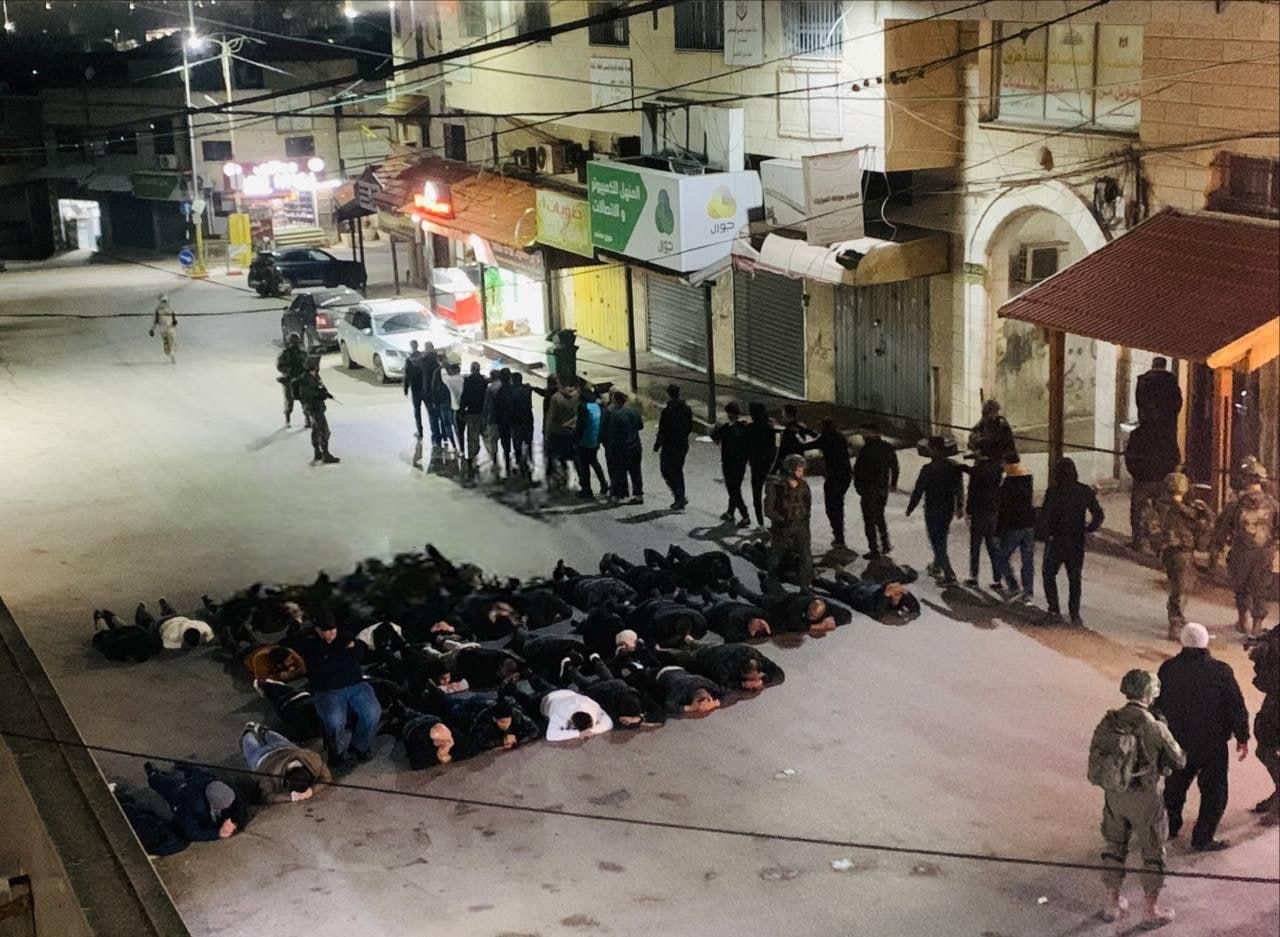
This is what the vaunted “ceasefire” actually looks like in the West Bank: disarm the population, box them in, round them up, incarcerate them en masse. The occupation has quietly swept dozens into jail, and settlers have set fire to the village of Sinjil. Not a shot fired, though.
Continue readingEngels on Social Murder
“Social murder” is a form of homicide that takes place through relatively invisible social processes involving collective rather than individual responsibility. The concept is controversial because it attributes murder to “society” while relying on an unconventional conception of murder: society intends murder, and society kills, where society is identified with a ruling class that controls the political system. What’s controversial here is that social murder kills mostly by omission rather than commission, and is perpetrated by a class rather than by individuals. Both assumptions flout the conventional understanding of the intentionality and causality of murder. Continue reading
Divestment at Yale
Well, they say it’s kinda frightenin’
How this younger generation swings
You know it’s more than just some new sensation
Well, the kid is into losin’ sleep
And he don’t come home for half the week
You know it’s more than just an aggravation
–Van Halen, “And the Cradle Will Rock…”
Yale Daily News, December 8:
Yale students overwhelmingly pass divestment referendum
Continue readingThe Yale College Council announced today that the student body has passed the divestment referendum by a large margin.
Divestment at Princeton
Princeton’s Silence Is Our Weapon
I’m happy to report that Princeton University’s undergraduate student Referendum #5 has passed by a margin of 68% to 32%. A referendum has to win at least 65% of the vote to pass, so this one did. The referendum calls on the University to disclose and divest all direct and indirect holdings in companies involved in weapons development, manufacturing, or trade, giving first priority to disclosing and divesting direct holdings in Boeing, Lockheed Martin, Northrop Grumman, RTX (formerly Raytheon), and General Dynamics, weapons manufacturers with documented ties to human rights violations. It also calls on the university to increase communication and accountability on socially responsible investments with the student body and campus community. Continue reading
Pete Hegseth is (Half) Right
Everywhere one looks, commentators are aghast at Pete Hegseth, Donald Trump’s choice for Secretary of Defense. But as usual when it comes to defense matters, everyone is wasting their energies on the wrong questions. Hegseth has become notorious for his view that women should not play combat roles in the US military. This pointless red herring has now become the centerpiece of opposition to him. How could he believe such a thing? How could he say it? What kind of cretin rejects the universal belief that women should serve in combat roles in the US military? Continue reading
 Policy of Truth