Documenting a Police Detention (2): The Long and Short of It

All history was a palimpsest, scraped clean and reinscribed exactly as often as necessary. In no case would it have been possible, once the deed was done, to prove that any falsification had taken place. –George Orwell, 1984

As readers of this blog know, on November 29, 2017, I was detained and interrogated for several hours by members of the Lodi Police Department and Bergen County Prosecutors Office on suspicion of being an “active shooter.” Though I was not formally charged with a crime, my detention was arguably tantamount to a full arrest: I was involuntarily transported from the original place of detention to a nearby police station, involuntarily held there for a few hours, and involuntarily questioned, despite repeated invocations of my Fifth Amendment right to remain silent. Eventually, I was released without further incident.

A few weeks ago, I sent Open Public Records Act requests to both agencies for documentation of my detention. The Lodi Police Department responded to my request with a 21 page document. The Bergen County Prosecutors Office responded with a one page letter. Both sets of documents are instructive, both for what they say and for what they omit.  Continue reading
Waco Revisited

Since the topic du jour is guns and shootings, it’s serendipitous that Paramount has recently been airing a mini-series called, “Waco.” I haven’t seen it myself (I guess I’d need to acquire a TV), but hope to do so in the near future. Meanwhile, I thought readers might be interested in Reason Papers’s July 2014 symposium, “Waco: Twenty Years Later.” Technically, I suppose, the symposium came out twenty-one years after the fact, as for a variety of reasons we were unable to publish it on time in 2013.

Symposium: Waco Twenty Years Later

I tried to invite commentators representing a relatively wide spectrum of views, in order to put the Waco controversy in its widest possible context. In retrospect, I wish I had invited (or successfully invited) a larger number and more diverse set of participants.  Continue reading

Questions about the Parkland Shooting (3): What If the Educator is the Shooter?

As everybody by now knows, it’s been proposed that we arm teachers–and give them a “bit of a bonus” for standing guard. Less frequently asked question: what if the educator is the shooter?

Yes, the armed teachers are going to be “vetted.” But immigrants are extensively vetted, and we’re deathly afraid of them. If we can’t vet immigrants so as to distinguish the peaceful ones from the budding terrorists, why assume that we can vet teachers so as to distinguish the “good guys” from the would-be “active shooters”? (Never mind the complications if the educator is an immigrant…) Does it take so much of a leap of imagination to imagine a disgruntled teacher or professor using his service weapon to wipe out a classroom of students? If it does, it shouldn’t.  Continue reading

Questions about the Parkland Shooting (2): The Premature Demonization of Scot Peterson

Here’s my second round of generally unasked questions about the Parkland shooting:

What legitimate purpose was served by branding Deputy Sheriff Scot Peterson a coward, thereby inducing his resignation and tarnishing his career, before the investigation into his performance had been completed (in fact, it had barely gotten underway), and (obviously) before all of the relevant facts were in?

I can think of a couple of patently illegitimate purposes:

  1. The demonization of Peterson facilitated some awe-inspiringly gratuitous virtue-signaling, the ne plus ultra of which was Donald Trump’s mind-blowingly idiotic claim (even for him) that he, Trump, would have gone in to confront the shooter with or without a weapon in hand. Unclear what this “act” of bravado would have accomplished, except to have put a bullet in Trump’s brainless head–not a bad outcome, I suppose, but not precisely the intended one. But let’s not stop with Trump: lesser versions of Trump’s grandstanding–or waking dreamwork–have now become ubiquitous. Apparently, we live in a country of bravehearts and tactical experts who know a coward-under-fire when they see one on video, or rather, read about the video on Facebook.
  2. The attacks on Peterson also reinforced the essentially Trumpian ethos of making personnel decisions a matter of mobocratic approbation or disapprobation, a la “The Apprentice.” Professionals are now being fired across the country and across professions (or else being induced to resign their positions), not for demonstrable violations of professionally-relevant standards, but for reasons of PR and image control: what looks bad is bad has become the axiom. The people acting on that axiom are now commonly hailed as “courageous” for firing helpless subordinates without a feasible means of challenging their higher-ups; its victims have become the scapegoats that everybody loves to hate. The inversion of virtue to vice, and subordination of reality to appearance, has become complete.

I’m curious to know whether anyone can adduce good reasons for Peterson’s being treated the way he was. Naturally, the video that depicts Peterson’s supposed delinquency is not being released, because it’s part of an “ongoing” investigation (which didn’t stop the authorities from releasing confidential material on Cruz’s state of mental health). In other words, the video that is generating so much outrage is mostly invisible to the people undergoing the outrage, because the agency in custody of it is engaged in an “investigation” with an outcome they’ve already announced. It all gives new meaning to the old cliche, “Nothing to see here.” Continue reading

Nervous Shakedown: Scenes from a Police Detention (1)

On the morning of November 29, 2017, I taught my 8:15 am ethics class in Kirby Hall at Felician University’s Lodi campus. Having taught class, I returned to my third-floor office in Kirby around 9:30. At a little after 10 am, I received a call from Dr. Edward Ogle, the University’s Vice President for Academic Affairs (hereafter, “VPAA”). The VPAA asked me to come to his office immediately, as something “urgent” had come up, offering no further elaboration. I told him I was on my way. I put on my coat and took my wallet, leaving my phone in my desk. As I left the building, I was met by the VPAA in the company of two uniformed officers of the Lodi Police Department. The VPAA asked me to accompany him to his office in the company of the officers, and I did.

On reaching his office, we encountered a third uniformed officer, apparently a sergeant, who said: “You’re not under arrest, but you’re being held.” He then read me my rights. I remember his mentioning my right to remain silent, but don’t remember whether he informed me of a right to have an attorney present. He then asked whether I understood my rights. I said I did. He asked me whether I was willing to discuss the matter at hand. “No,” I said. “Well,” he said, “that makes things easier,” walking into a nearby hallway to make a phone call. I heard only one sentence from the sergeant’s end of the call: “Nothing. He hasn’t said anything.” Which was true enough, and stayed that way all afternoon. Continue reading

Law Enforcement, Philosophy, and the Ethics of Belief

From an article on the recent “swatting” case in Wichita, Kansas:

The law allows the police to use deadly force when an officer reasonably believes, given the information at the time he pulls the trigger, that his life or someone else’s life is in imminent danger. The Wichita officers had been told, wrongly, that they were encountering an armed hostage-taker who had already killed one person and was threatening to burn the house down.

“Nine-one-one is based on the premise of believing the caller: When you call for help, you’re going to get help,” Chief Livingston said. The prank call, he added, “only heightened the awareness of the officers and, we think, led to this deadly encounter.”

The antinomies of legalistic reason: The first paragraph tells us that the 911 caller made an accusation of criminal activity. But according to one prominent line of legal reasoning, an anonymous telephone-based accusation at best establishes reasonable suspicion of the commission of a crime–and usually requires a “totality of circumstances” test that conjoins the claims made in the call with facts observed or gathered independently of the call (see Lippmann, Criminal Procedure, pp. 107-109, 139-40, 2nd ed.). Continue reading

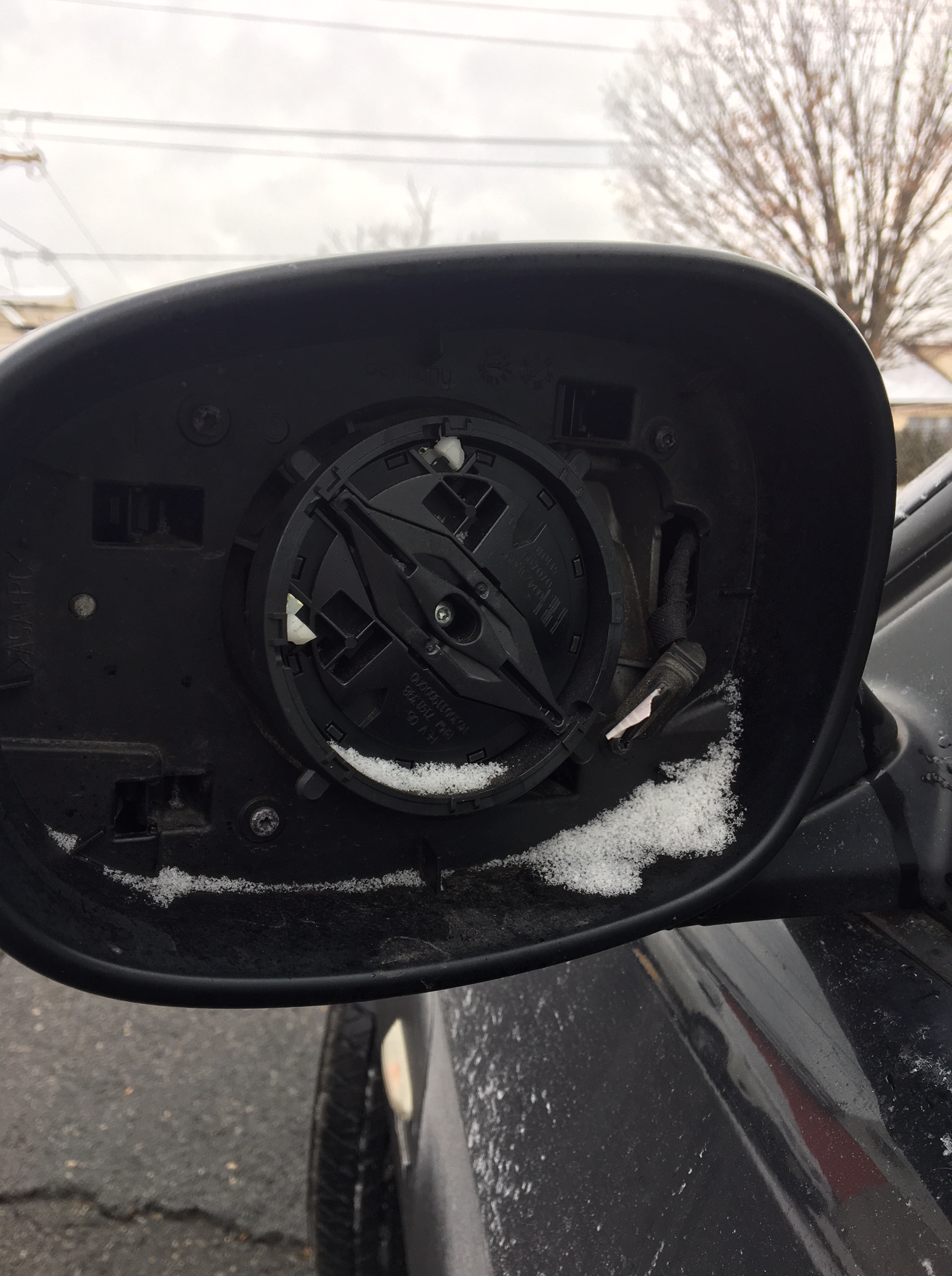
Grand Theft Rear View Mirror

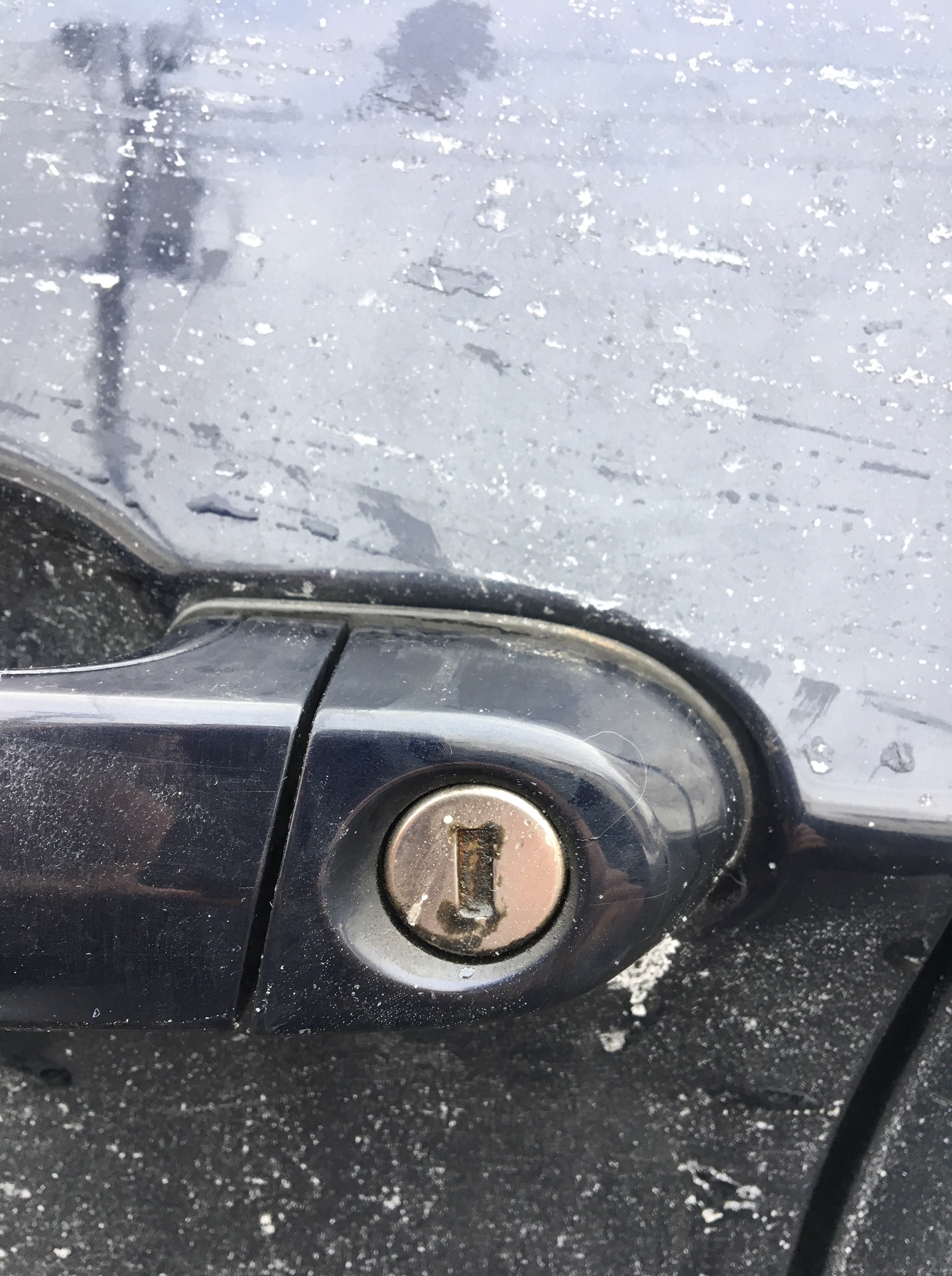
Somebody tried to steal my car the other night in New York City. He (or she, but more likely a he) didn’t manage to pull it off, but having put that much time and energy into the job, I guess he decided to steal my driver’s side rear-view mirror while he was at it.

This gives me a lifetime 0-3 (or maybe 3-0) record on car thefts: 3 attempts to steal cars of mine, all failures. (Well, one of them was my Mom’s car, but I used it to deliver newspapers, so I thought of it as partly mine.)

Actually to be perfectly candid, I once drove by a car-jacking-in-progress, also in New York City, but I don’t know how it turned out: I was looking for parking en route to a Joe Satriani concert, and didn’t pause to see the outcome. (I didn’t call the cops, either; we were already late to the show. So much for the Parable of the Good Samaritan!) Continue reading

Congratulations to Gurbir Grewal

Congratulations to Bergen County Prosecutor Gurbir Grewal for his nomination to the position of Attorney General of New Jersey by Governor-Elect Phil Murphy.

I got to know Gurbir last year when he spoke at the series on “Race and Criminal Justice in America” that I organized at Felician University; I was deeply impressed then, and remain impressed now, at his capacity to walk the fine line between prosecutorial toughness about enforcing the law, and moral sensitivity to considerations of justice. It’s a tough balancing act, but I sleep better at night knowing that someone knows how to pull it off. Because I certainly don’t.

Gurbir Grewal speaking at Felician University, December 5, 2017

Continue reading

A Memo to Friends and Colleagues

I wanted to take a moment to thank the many friends and colleagues, especially those at Felician University, who have expressed their support for me following my police detention of Wednesday, November 29th. I deeply appreciate the support you’ve sent my way. Indeed, my gratitude extends to the many jokes–some of them pretty funny–that have been made at my expense, my personal favorite being someone’s description of my detention as “something out a sitcom co-written by Michel Foucault and Flavor Flav.”

My brother’s idea of “moral support”

For now, suffice it to say that I was involuntarily detained on that date for several hours by the Lodi Police Department and Bergen County Prosecutor’s Office, involuntarily transported to the Lodi police station, held and questioned there, and asked to give consent to search my car and “premises.” Continue reading

Casualty #5: Yasin Hamilton, RIP

A never-ending toll: I didn’t know Yasin Hamilton, but his sister Iteeanah was a student of mine at Felician. Just a sobering reminder of the State of War taking place three or four miles from the suburban placidity of my own existence.

Last night at approximately 7:18 pm. Yasin Hamilton, 26, of Newark was fatally shot in the 900 block of South 18th Street. He was pronounced dead at 7:26 p.m. yesterday.

To repeat something I’ve said before, and will inevitably say again: “Whatever criticisms we have to make of law enforcement–and I have more than my share–the fact remains that law enforcement is the only barrier between us and victimization. Abolitionist fantasies can’t eliminate that fact. Reform is our only hope, and enough work to last a lifetime.” I’m unwilling to tolerate abuses of police power, but always grateful that the power is there.

My condolences to the Hamilton family.


Previous posts on this topic: Tyeshia Obie, Stepha Henry, and Imette St. Guillen; Sarah Butler.