About a year and a half ago, having spent a summer in Palestine and a week on Pine Ridge Indian Reservation, I ventured the observation on Facebook that three political disputes I’d “recently encountered” (in a loose sense of “encountered”) struck me as fundamentally similar in nature, and yet attracted fundamentally different constituencies. For brevity’s sake, let’s call them “Malheur,” “Standing Rock,” and “Palestine,” taking those as shorthand designations for more complex things. Continue reading
Heading Out to the Highway (with David Brooks)
The ethics of driving is a topic dear to my heart, having lost my two closest childhood friends (and the wife of one of those friends, who was also a friend) to traffic accidents, and living as I do in north Jersey, where every day’s commute is a near-death experience. I hate cars, I hate driving, and above all, I hate driving in New Jersey, so I’m always open to anyone who’s willing to trash the way “we” drive, ascribe it to “our” moral failings, and demand that “we” do better. (I hijacked a presentation on the Aristotelian virtue of eubolia at the Felician Ethics Conference this past fall to insist that in the modern world, eubolia is a virtue best exemplified by virtuous drivers.)
This anti-driving (or anti-bad-driving, or anti-ubiquitously-bad-driving) attitude competes with another downer sentiment of mine: I can’t stand David Brooks. Just to be clear: I can’t fucking stand David Brooks.
So I opened up this morning’s New York Times, turned to the Op-Ed page, and faced a bit of a dilemma. Here was David Brooks trashing the way “we” drive, describing Jersey drivers as people who “treat driving as if it were foreplay to genocide,” acknowledging that “driving means making a thousand small decisions” (internalized eubolia, anyone?), and getting a few things right. But like so many so-called dilemmas, this one wasn’t an instance of that fabled entity, the irresolvable ontologically-based moral dilemma, and collapsed before long. Because as per usual, Brooks managed to snatch polemical failure from the jaws of success, re-confirming my hate for everything he writes. Continue reading
Law Enforcement, Philosophy, and the Ethics of Belief
From an article on the recent “swatting” case in Wichita, Kansas:
The law allows the police to use deadly force when an officer reasonably believes, given the information at the time he pulls the trigger, that his life or someone else’s life is in imminent danger. The Wichita officers had been told, wrongly, that they were encountering an armed hostage-taker who had already killed one person and was threatening to burn the house down.
“Nine-one-one is based on the premise of believing the caller: When you call for help, you’re going to get help,” Chief Livingston said. The prank call, he added, “only heightened the awareness of the officers and, we think, led to this deadly encounter.”
The antinomies of legalistic reason: The first paragraph tells us that the 911 caller made an accusation of criminal activity. But according to one prominent line of legal reasoning, an anonymous telephone-based accusation at best establishes reasonable suspicion of the commission of a crime–and usually requires a “totality of circumstances” test that conjoins the claims made in the call with facts observed or gathered independently of the call (see Lippmann, Criminal Procedure, pp. 107-109, 139-40, 2nd ed.). Continue reading
Fernando Teson: “Almost Everyone Has By Now Accepted the Two-State Solution”
Remember this gem from Fernando Teson, Tobias Simon Eminent Scholar at Florida State University’s College of Law?
Almost everyone has by now accepted the two-state solution for the Israeli-Palestinian dispute.
What a difference a few years makes, right? From “almost everyone has by now accepted” to “almost no one of consequence now accepts” in two short years. A fine day’s work. Almost makes you wonder what kind of knowledge the original claim was based on.
JERUSALEM — An emboldened Israeli right wing is moving quickly in the new year to make it far more difficult to create a Palestinian state, signaling its intention to doom hopes for a two-state solution to the conflict.
The actions have come on multiple fronts, as Prime Minister Benjamin Netanyahu’s party for the first time has urged the annexation of Jewish settlements in the West Bank, and the nation’s top legal officers pressed to extend Israeli law into occupied territory.
In addition, the Israeli Parliament, after a late-night debate, voted early Tuesday to enact stiff new obstacles to any potential land-for-peace deal involving Jerusalem, while abandoning at the last minute a measure that would have eased the way to rid the city of several overwhelmingly Palestinian neighborhoods.
Coming on the heels of President Trump’s recognition of Jerusalem as Israel’s capital in defiance of decades-old United States policy and international consensus, the moves showed that the Israeli right senses a new opening to pursue its goal of a single state from the Jordan River to the Mediterranean.
“We are telling the world that it doesn’t matter what the nations of the world say,” Public Security Minister Gilad Erdan told more than 1,000 members of Likud’s central committee on Sunday. “The time has come to express our biblical right to the land.”
If you think my title is in bad taste, what do you think of the calm serenity of Teson’s unretracted expression of blank ignorance masquerading as impartial, scholarly expertise? I guess there’s always the standard-issue Bleeding Heart Libertarian expedient of re-writing the original post and pretending not to have said what you did say.
No one has ever accused me of being calm, serene, impartial, scholarly, or an expert of any kind. But you’d be hard pressed to argue that I was wrong.
Closer to the Heart
In the Greektown area of Detroit in the vicinity of my office, I often pass homeless people— prone on the sidewalk in tattered, filthy sleeping bags, surrounded by refuse, or unkempt and begging for change. A week before Christmas the temperatures started heading down below 32°F (0°C), and were predicted to go far lower. Late one afternoon, I passed by an older black man in a wheelchair. I only glimpsed the lower half of his face. He had parked over a sidewalk manhole cover emitting a small blast of moist warmer air. Although he wore a seemingly decent quality blue nylon-shell jacket, he was hunched over, shivering a little.
A couple of days later, I visited a Salvation Army store. I bought as many comforters as I could stuff into my cart. My idea was to take them downtown and give them to the shivering homeless out on the sidewalks. It was only after I got them home that I realized I could only carry one at a time as they are large and bulky. Solution? Space-saver bags! (The ones you remove the air from with your vacuum.) The next day I purchased six from Meijer and went about trying to stuff the first comforter into a bag. Ugh. The comforter was too big and the bag would not seal. So back out I went, to Target this time. They had ZipLock “Jumbo” bags. The bigger comforters fit inside! Continue reading
Grand Theft Rear View Mirror
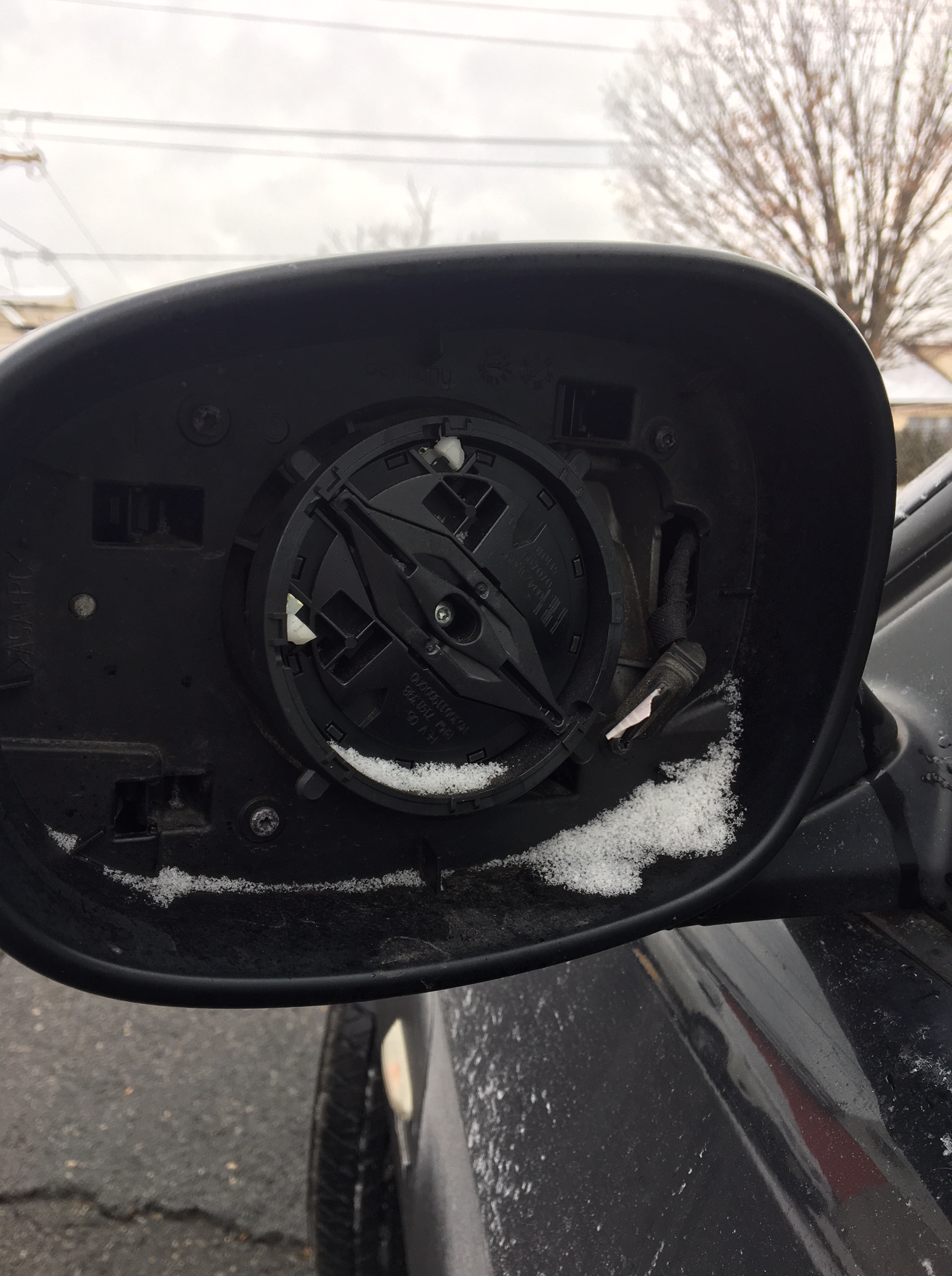
Somebody tried to steal my car the other night in New York City. He (or she, but more likely a he) didn’t manage to pull it off, but having put that much time and energy into the job, I guess he decided to steal my driver’s side rear-view mirror while he was at it.
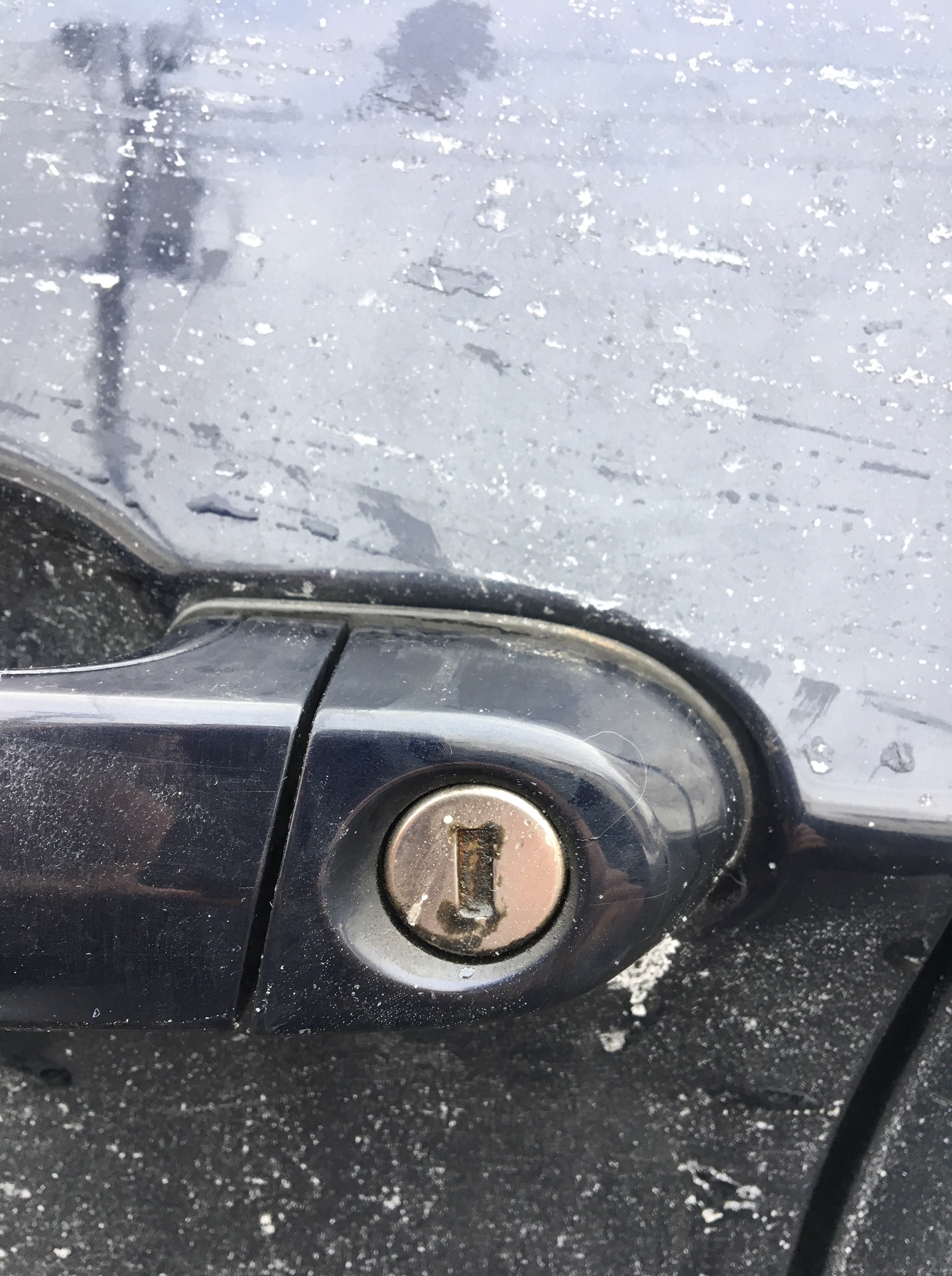
This gives me a lifetime 0-3 (or maybe 3-0) record on car thefts: 3 attempts to steal cars of mine, all failures. (Well, one of them was my Mom’s car, but I used it to deliver newspapers, so I thought of it as partly mine.)
Actually to be perfectly candid, I once drove by a car-jacking-in-progress, also in New York City, but I don’t know how it turned out: I was looking for parking en route to a Joe Satriani concert, and didn’t pause to see the outcome. (I didn’t call the cops, either; we were already late to the show. So much for the Parable of the Good Samaritan!) Continue reading
How Not to Cover Coverage
From an article in yesterday’s New York Times, about the closing of the enrollment period for Obamacare health insurance policies in New Jersey. The couple, Ana Gonzalez and Celso Morales, had earlier been described as coming to a health center in Plainfield, New Jersey in order to “sign up for a subsidized health plan.”
Ms. Gonzalez and Mr. Morales, who moved to New Jersey from Puerto Rico, came to sign up for coverage on the advice of one of his co-workers after Mr. Morales was told he has diabetes. The couple — she is 54 and he is 58 — qualified for Medicaid in Puerto Rico, but in New Jersey, their income is too high. They earn about $35,000 a year between her job at Target and his work laying stones for a construction company. With the Affordable Care Act tax credit, they will pay just under $200 a month to cover the two of them, a sum that seemed to please Ms. Gonzalez.
How useful is this information if we don’t know how high their deductible is or what their coverage is like? No middle- or upper-middle class person that I know would be content to know that their health insurance premium was $200/month without knowing anything else about their policy or coverage. But for some reason, seasoned reporters for The New York Times seem to think that we’re to judge this couple’s insurance situation knowing just that. Continue reading
Firebrands Unite
From this morning’s New York Times: the print headline reads: “Anti-Muslim Firebrands Are Arrested in Britain.” For what? Well.
Paul Golding, the leader of Britain First, was detained in Belfast, Northern Ireland, the group said, where he was accompanying his deputy, Jayda Fransen, to her court hearing on earlier charges related to using “threatening, abusive, insulting words or behavior” during an anti-Islam speech in August that prosecutors said could qualify as incitement to racial hatred. She has denied the charges.
Shortly after her court appearance, British news media said she was arrested again, this time as part of a police investigation into “an incident at a peace wall” in Belfast on Wednesday.
Earlier, the Police Service of Northern Ireland said on Twitter that detectives investigating speeches made at the Northern Ireland Against Terrorism Rally on Aug. 6 “have arrested a 35-year-old man in the Belfast area today.” The post did not identify Mr. Golding or the offense.
Gee, sounds familiar in a weird, mirror-image kind of way. Naturally, it’s completely unclear what the suspects did or said: the police won’t say, the journalists don’t know, and so, the rest of us are in the dark. “An incident at a peace wall.” What kind of incident? “An incident at a peace wall” almost sounds like a second invasion of Poland. Never mind, though: this sort of opacity is Standard Operating Procedure for the 21st Century Thought Police. And there are people who like it this way. Some even regard themselves as bien pensant liberals. Continue reading
Underexposed
From a letter in today’s New York Times:
To the Editor:
Not to be overlooked in this stunning victory is the role of the investigative reporting done by The Washington Post. Despite constant excoriation by President Trump and the extremist Steve Bannon, the free and fair press exposed an alleged child molester. This played no small part in Roy Moore’s defeat.
The need to vigilantly support truth and accuracy in the media gets stronger every day.
ADAM STOLER, BRONX
Can you really expose an alleged child molester–as opposed to giving exposure to allegations of child molestation? To “expose” something is to reveal what had previously been hidden. But if someone’s status is alleged, what is said about him remains hidden. It makes no sense to say that you’ve exposed the hiddenness of what is hidden. But nonsense has now become par for the course on the subject of allegations.
I’m glad that Roy Moore was defeated. I’m not glad that we seem to have lost even a vestigial sense of the fact that an allegation is an assertion in need of proof, that people are innocent until proven guilty, and that proof is easier in the asserting than in the doing. But apparently we have, and solecisms like “exposed alleged child molester” are the result. The issue here isn’t Roy Moore per se, but the widespread loss of the skepticism required when allegations of wrongdoing are made, whether criminal or otherwise. (Incidentally, I for one wouldn’t celebrate at the thought that the only reason Moore was defeated was that he was alleged to be a child molester. Doesn’t that imply, pathetically, that had no such allegations been made, he would have won?) Continue reading
Congratulations to Gurbir Grewal
Congratulations to Bergen County Prosecutor Gurbir Grewal for his nomination to the position of Attorney General of New Jersey by Governor-Elect Phil Murphy.
I got to know Gurbir last year when he spoke at the series on “Race and Criminal Justice in America” that I organized at Felician University; I was deeply impressed then, and remain impressed now, at his capacity to walk the fine line between prosecutorial toughness about enforcing the law, and moral sensitivity to considerations of justice. It’s a tough balancing act, but I sleep better at night knowing that someone knows how to pull it off. Because I certainly don’t.

Gurbir Grewal speaking at Felician University, December 5, 2017
 Policy of Truth