Limits in Chicago!

In addition to its usual Eastern symposium, the Molinari Society will be holding its first-ever Central Symposium in conjunction with the Central Division of the American Philosophical Association in Chicago, 18-21 February 2026.

Here’s the schedule info:

Molinari Society symposium: The Limits of Markets

G10E. Thursday, 19 February 2026, 7:00-9:50pm [that’s how long we have the room for; we’re unlikely to run that long], Palmer House Hilton, 17 E. Monroe St., Chicago IL 60603, room TBA.

chair: Roderick T. Long (Auburn University)

speakers:
James Stacey Taylor (The College of New Jersey) and Amy E. White (Ohio University), “Why Some Things Should (Typically) Not Be For Sale”

commentators:
Jason Lee Byas (Georgetown Institute for the Study of Markets and Ethics)
Ryan Davis (Brigham Young University)

Anarchy in Baltimore!

EDITED to change the order of presenters:

The Molinari Society will be holding its mostly-annual Eastern Symposium in conjunction with the Eastern Division of the American Philosophical Association in Baltimore, 7-10 January 2026.

Our symposium comprises two back-to-back sessions on Wednesday afternoon (both in the same room, we hope!). Here’s the schedule info:

Molinari Society symposium: Topics in Radical Liberalism

Session 1:
G2D. Wednesday, 7 December, 2:00-3:50 p.m., Baltimore Marriott Waterfront, 700 Aliceanna St., Baltimore MD 21202.

chair: Roderick T. Long (Auburn University)

speakers:
Irfan Khawaja (Independent Scholar), “Academia’s Complicit Executioners: A Critique of the Kalven Committee Report”
Zachary Woodman (Western Michigan University), “Extended Cognition as Property Acquisition”

Session 2:
G3D. Wednesday, 7 December, 4:00-5:50 p.m., Baltimore Marriott Waterfront, 700 Aliceanna St., Baltimore MD 21202.

chair: Roderick T. Long (Auburn University)

speakers:
Cory Massimino (Center for a Stateless Society), “A Liberal Socialism Must Also Be Left Market Anarchist”
Jason Lee Byas (Georgetown Institute for the Study of Markets and Ethics) “Distributed Justice: Can We Make Sense of Justice Outside the State?”

Thierry Rides Again

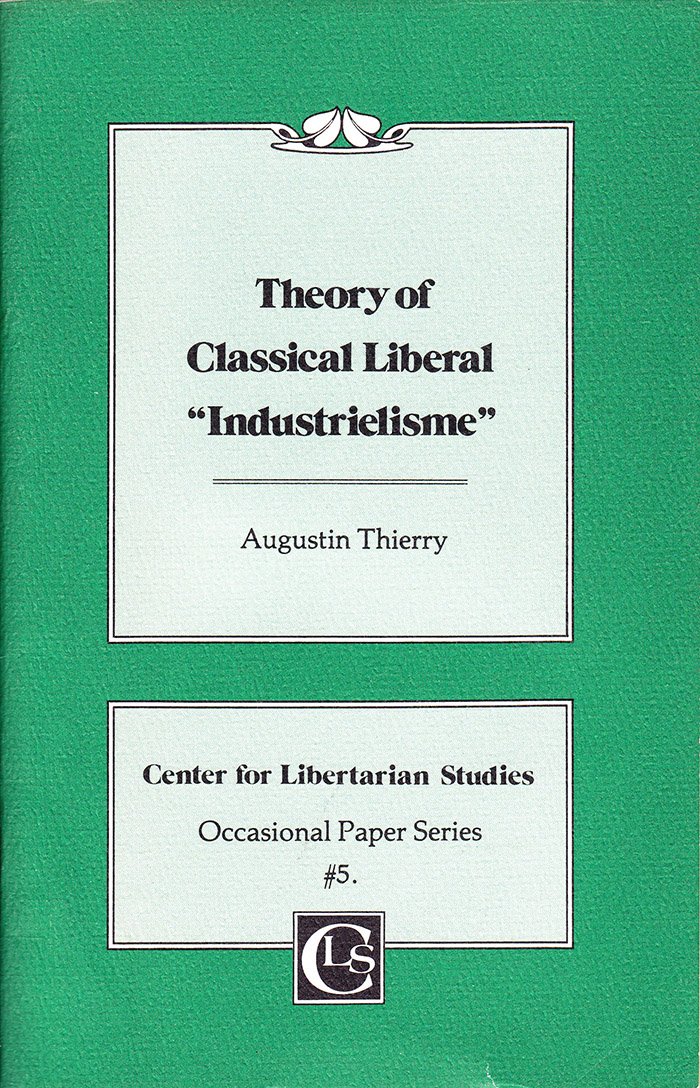
With Mark Weinburg’s kind permission, I have posted on the Molinari site his hard-to-find 1977-78 translation of Augustin Thierry’s 1818 review of Destutt de Tracy’s 1806 commentary on Montesquieu’s 1748 Spirit of the Laws

Tracy was a philosopher and free-market economist, and a friend of Thomas Jefferson (who translated and published several of Tracy’s writings, including the one Thierry is discussing here).  Thierry, primarily a historian, was one of the radical liberal triumvirate who (along with Charles Comte and Charles Dunoyer) developed an important version of liberal class theory in their journal Le Censeur Européen; Karl Marx would later refer to Thierry as “the father of the ‘class struggle’ in French historiography.”  Montesquieu was a massively influential social and legal theorist, broadly liberal but not quite radical enough for Tracy and Thierry.  Like many of Thierry’s book reviews, this one is in large part a springboard for Thierry to talk (particularly in the second half – which Weinburg makes the first half) about his own developing views in ways that don’t necessarily have all that much to do with either Tracy or Montesquieu.

This piece is especially famous for Thierry’s inspiring (but, in the event, unduly optimistic) prediction of what the coming century would bring:

“Federations will replace states.  The despotism of men and of the law will be replaced by the loose but indissoluble bonds of interest.  The inclination towards government, the first passion of the human race, will yield to the free community, the real need of civilized men.  The era of empires has ended.  The era of association is beginning.”

I am working on my own translation of Thierry’s article (as part of an exciting larger project about which you will learn more later), but in the meantime, enjoy!

Epistolary Sprouts in Brussels

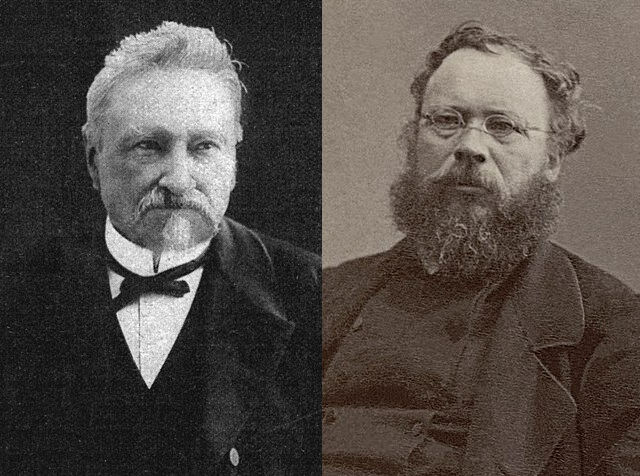
The glorious ongoing Institut Coppet online collection of Gustave de Molinari’s Complete Works has brought to light some correspondence between Molinari and Proudhon from their years of Brussels exile during Napoléon III’s regime in France.  The letters are few in number and are not ideologically substantive, but they are nonetheless interesting.  So I’ve translated them.  Enjoy! 

Molinari East and West

Lo, I have information about both the Eastern and Pacific meetings of the Molinari Society for 2025.  (Irfan has already previously posted some info about his presentation at the Eastern.)

Eastern meeting, NYC, January 2025:

The Molinari Society will be holding its mostly-annual Eastern Symposium in conjunction with the Eastern Division of the American Philosophical Association in New York City, 8-11 January 2025.

Here’s the schedule info:

Molinari Society symposium:  False Alternatives in the Politics of Knowledge

G3A. Wednesday, 8 December, 4:00-5:50 p.m., Sheraton Times Square, 811 7th Ave. & W. 53rd St., New York NY  10019, room TBA.

chair:
Roderick T. Long (Auburn University)

speakers:
Irfan Khawaja (Independent Scholar), “Pedagogy Under Occupation: Between Indoctrination and False Neutrality”
Cory Massimino (Center for a Stateless Society), “Between Convergence and Conspiracy”

commentator:
Roderick T. Long (Auburn University)

Frequent Molinari panelist Jason Lee Byas will also be presenting elsewhere on the program on “The Vocabulary of Society: Feasibility and Fit in Expressive Arguments” (10G, Friday 10 December, 9:00-10:50 a.m.).

Pacific meeting, SF, April 2025:

The Molinari Society will be holding its mostly-annual Pacific Symposium in conjunction with the Pacific Division of the American Philosophical Association in San Francisco, 16-20 April 2025.

Here’s the schedule info:

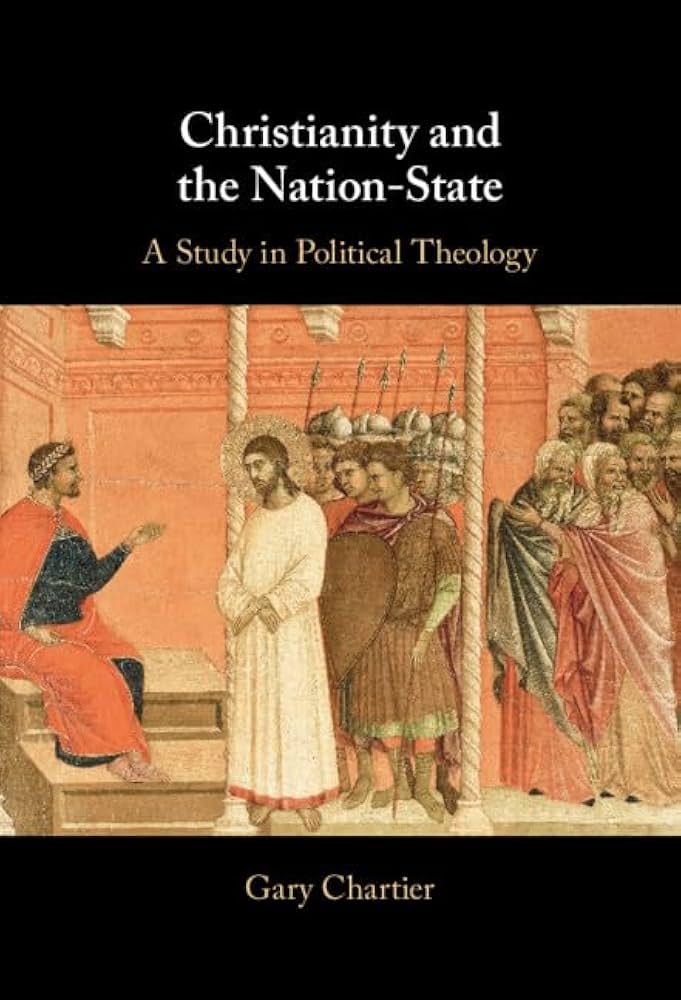
Molinari Society symposium: Author Meets Critics: Gary Chartier, Christianity and the Nation-State: A Study in Political Theology

G1H.  Wednesday, 16 April 2025, 6:00-8:00 p.m., Westin St. Francis Hotel, 335 Powell St. [unless a labour dispute forces a change of venue], San Francisco CA  94102, room TBA.

chair:
Roderick T. Long (Auburn University)

author:
Gary Chartier (La Sierra University)

critics:
David VanDrunen (Westminster Seminary California)
Mary Doak (University of San Diego)
Irfan Khawaja (Independent Scholar)

Be there or B2!

Whether, How, and Why I Plan to Vote

To the best of my recollection, I haven’t voted since 2004. I’d been a reliable LP voter since 1988, but the LP’s nomination of Bob Barr and Wayne Allyn Root in 2008 soured me on the LP; and though the LP has had better candidates since (particularly in 2020 with Jo Jorgensen), by the time those campaigns came around I was no longer enamoured of electoral politics and was committed to non-electoral strategies for political and social change. (I even have a video on my YouTube channel from 2020 that blathers on for a mind-numbing 45 minutes about my non-voting policy; I’m not sure why I needed more than ten.) I expect I’ll most likely continue to be a non-voter in future elections. But I’m planning to vote in this one – though perhaps not for the reasons you may imagine.

Continue reading

Days of Future Past:  Another One from the Vaults

A few years ago I posted my 1992 Ph.D. dissertation on my website; but I was recently asked to post my 1985 undergraduate thesis as well.  Happily, this document was one I knew the location of and could easily access and scan (unlike so much of my stuff packed away in boxes). 

So here’s a blast from the past about the status of the future – and a glimpse of your humble correspondent at age 21.  (I vaguely recall seeing an interview with later Billy Joel looking at footage of early Billy Joel and chuckling, “that young punk!”  Yeah, feels kinda like that.)

“WITH PARTICULARS THAT ARE GOING TO BE IT IS DIFFERENT”:
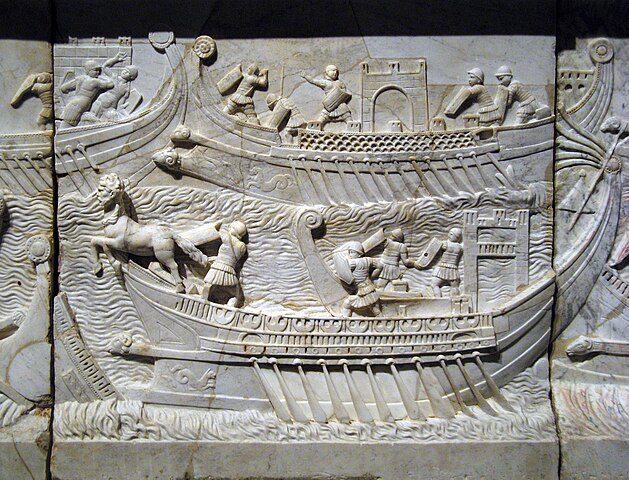
Aristotle and the Problem of Future Contingents

Incidentally, I remember vividly the moment when I was first introduced to the so-called “sea battle problem.”  I was already interested in theories of time generally, and Aristotle’s theory of time in particular, but my exploration of the latter had been confined mainly to the Physics and Metaphysics; I hadn’t yet found my way to On Interpretation 9.  Well, one day during a school break I was parked at the dock in Hull MA, waiting to pick up my mother from the commuter ferry (we were living in Hull, but she was working in downtown Boston), and while I was waiting for the boat I was reading a green and white paperback anthology titled Problems of Space and Time, edited by J. J. C. Smart, which I’d picked up in some used bookstore in Cambridge.  (Alas, there were many more of them then.)  The chapter I read on that occasion was Elizabeth Anscombe’s article “Aristotle and the Sea Battle.”  I wasn’t convinced by Anscombe’s solution, but I became obsessed with the problem (along with her delightful line “I won’t say,” which has become a perhaps dubious part of my vocabulary).   And so here we are.  (But those who are hip to the relevant signs and stigmata will also recognise traces of Randian influence throughout.)

I’ve now reread the thesis enough to get a serious nostalgia wave from it, but not enough to judge how far I would still agree with all of it.  Bear in mind that this thesis, unlike my later dissertation, was written when I had not yet studied Greek in anything more than the most minimal way; so all my arguments about the details of Aristotle’s wording in various passages would need to be revisited while consulting the Greek texts.  Which, ha, not today, mate.

I notice that in the Introduction I describe my method as having “a somewhat dialectical character, weighing reciprocal determinations.”  I certainly was starting as I meant to go on!  (But y’know, if you’d asked me recently when it was that I first got into the whole reciprocal-determination thing, I would have said the mid-1990s.  Obviously not.)

From the Molinari Vaults

To my surprise I discover that I never uploaded the PDFs to the articles in the 2nd issue (2019!) of the Molinari Review. I’d intended to have an interval between print publication and web publication in order to incentivise people to buy the print edition, but I hadn’t intended to have a five-year interval. I thought I remembered posting the PDFs a while ago, but apparently my memory befoozled me. (Well, the past few years have been … complicated.)

mr-f19-coverOkay, so I’ve uploaded them now. Thus if you’re one of those penurious souls who never purchased the hard copy, you can now read the articles for free! Check out Jason Lee Byas defending market anarchism vis-à-vis communist anarchism; Joseph R. Stromberg defending Gabriel Kolko’s account of the role of big business in setting up the regulatory state; Thomas Lafayette Bateman III and Walter E. Block on the political implications of the free will debate; an exchange between Jan Narveson and James P. Sterba over whether a commitment to welfare rights follows from libertarian premises; and an exchange among Gus diZerega, Chris Matthew Sciabarra, and your humble correspondent on the merits and demerits of libertarianism in general and Ayn Rand in particular.

All this Molinari goodness is available via this link.

By the way, the 3rd issue (which will feature, inter alia, a reply to Stromberg from Robert Bradley Jr. and Roger Donway, along with Stromberg’s counter-reply) has been nearly ready to go for a while now; I just haven’t found the time to put the damn thing together. Maybe this summer? (It’d be nice if the 3rd installment of the Molinari Review could appear before the still-longer-awaited 3rd volume of Harlan Ellison’s Dangerous Visions anthology, due out this fall. People have been waiting for that sucker since 1973.)

Where Ignorant Armies

I was once parodied on a YouTube video (by whom I don’t recall) as holding that “people who are right and people who are wrong are basically saying the same thing.”  While I obviously wouldn’t endorse the claim in the form stated, the line does insightfully capture something about my approach – a suspicion of stark oppositions.   Suspicion, not invariable rejection: sometimes one side of an opposition is just completely and uninterestingly wrong.  But I’m regularly finding my way to angles from which supposedly stark oppositions can be seen as complicated or subverted by unexpected affinities – which is why, e.g., I was never fully satisfied, even at the height of my Randian period, with the cops-and-robbers approach to intellectual history that prevails in Randian (and not only Randian) circles, consigning all of e.g. Plato’s or Augustine’s or Hume’s or Kant’s or Hegel’s or Marx’s or Heidegger’s or Rawls’s writings to the Dustbin of Total and Irredeemable Worthlessness, rather than approaching them with the expectation that they might have something valuable to teach.

Hence my tendency to question such oppositions as libertarianism versus social justice, analytic versus continental, social anarchism versus anarcho-capitalism, deontology versus teleology, eastern versus western thought, theism versus atheism, Hayekianism versus Rothbardianism, and most recently, Randian discipline versus Kerouacian spontaneity.  (And no, it’s not a rejection of the law of non-contradiction to question whether positions presented as mutually contradictory really are so.)

One of the most important pieces of advice I would give to young scholars beginning their intellectual journeys is not to structure their conceptual landscape so as to close themselves off from the opportunity to learn from both sides of supposedly unbridgeable gaps.