Adventures in Classist Self-Pity
Stephen Schreiber is the Vice Chair of the Zoning Board of Adjustment in Princeton, New Jersey. A zoning board of adjustment is a local government body that interprets and applies zoning laws, granting variances to existing law, and making special exceptions in certain cases. Schreiber has a remarkable letter in the September 16 issue of Town Topics, ostensibly on what he regards as the issue of over-development in town, but with the larger aim of proving that Princeton is a special place that ought to be regarded as immune to the imperatives of economic growth, development, and by implication, affordable housing.
Here’s a key passage:
We have been surviving pretty well with limited growth for over 250 years. We used to embrace open space, but now we are told we should be building homes with limited zoning codes, we should be building ADUs in our backyards that in many cases look like trailer parks. We are told that zoning codes should be changed so taller apartments and houses should be built, that zoning rules should be thrown out to allow covering Princeton in concrete. We are not like other communities in New Jersey or the rest of the country. As a letter writer a couple of weeks ago said, show us the data [Mailbox, September 2].
Of particular interest is the reference to “trailer parks” in the second sentence. An “ADU,” mentioned in that sentence, is an Accessory Dwelling Unit, a self-sufficient dwelling located on the same lot as a primary residence. I lived in one for several years in Glen Ridge, New Jersey, a place I couldn’t otherwise afford but for the ADU. (I was eventually priced out of Glen Ridge and obliged to move despite the ADU).
I don’t own a car, so I walk everywhere I go in Princeton. I commute five or six days a week to work by train, so I walk around five miles a day through town to get to the train station. I think it’s safe to say that I’ve walked the length of just about every street in Princeton, and am familiar with many if not most of the ADUs in town.
As someone rendered homeless in late 2021, and who’s avoided homelessness since then by sheer reliance on charity, I’m gratified to know that Princeton has ADUs, and has its share of intelligent advocates for them. That said, I know of no ADU in Princeton, or set of them, that looks much like a “trailer park.” The closest approximation are the 1930s-vintage affordable housing units on Franklin Ave, but those aren’t ADUs, and don’t look like a trailer park. So Mr Schreiber’s claim is an enigma.
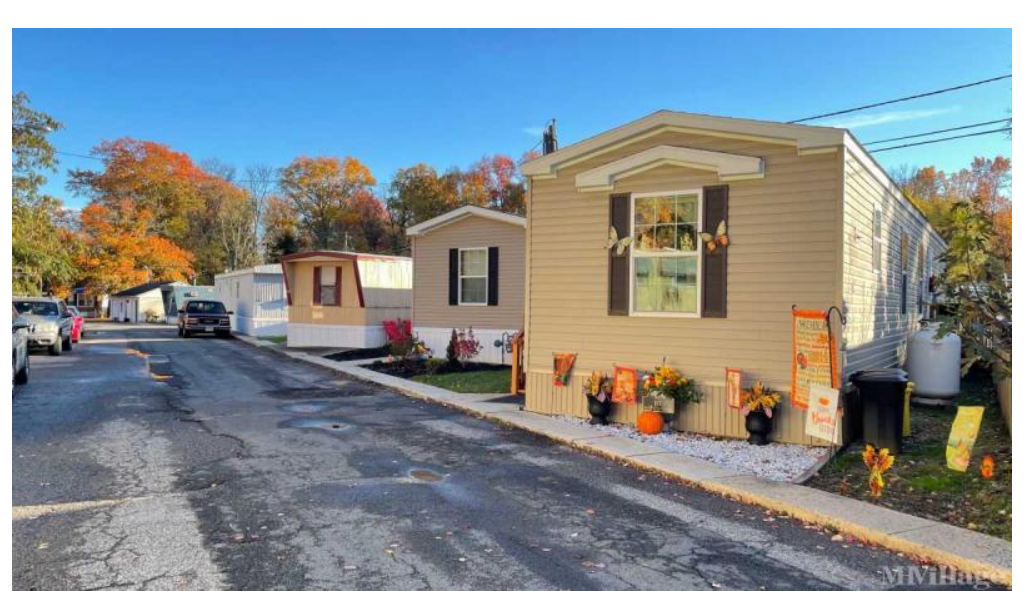
A trailer park
In the spirit of Mr Schreiber’s own remark, then, I’d like to see “the data.” Where are these trailer park-like ADUs in Princeton? Unlike Mr Schreiber, I ask the question less out of derision for trailer parks or ADUs (or trailer-like ADUs) than from self-interest: if the price and location are right, I’d love to move into one. And if there are enough of them, I’d like to move my homeless friends into them, as well. There’s no shortage of homeless people in Princeton, more literally homeless than I am–living in train stations, or entirely out on the street. Few of them can afford homes on Prospect Street, where Mr Schreiber lives. They need other options.
This brings me to my second topic. Mr Schreiber assumes that “trailer park” is a term of derision. Why is that? Trailer parks serve a noble function: they provide low-cost housing by taking up minimal space. The average trailer may not have the aesthetic grandeur of the nicest homes on Prospect Street, but doesn’t pretend to, and more to the point, can’t afford to. It’s unclear, then, why Mr Schreiber feels free to spill such bilge on them. We can’t all live in mansions.
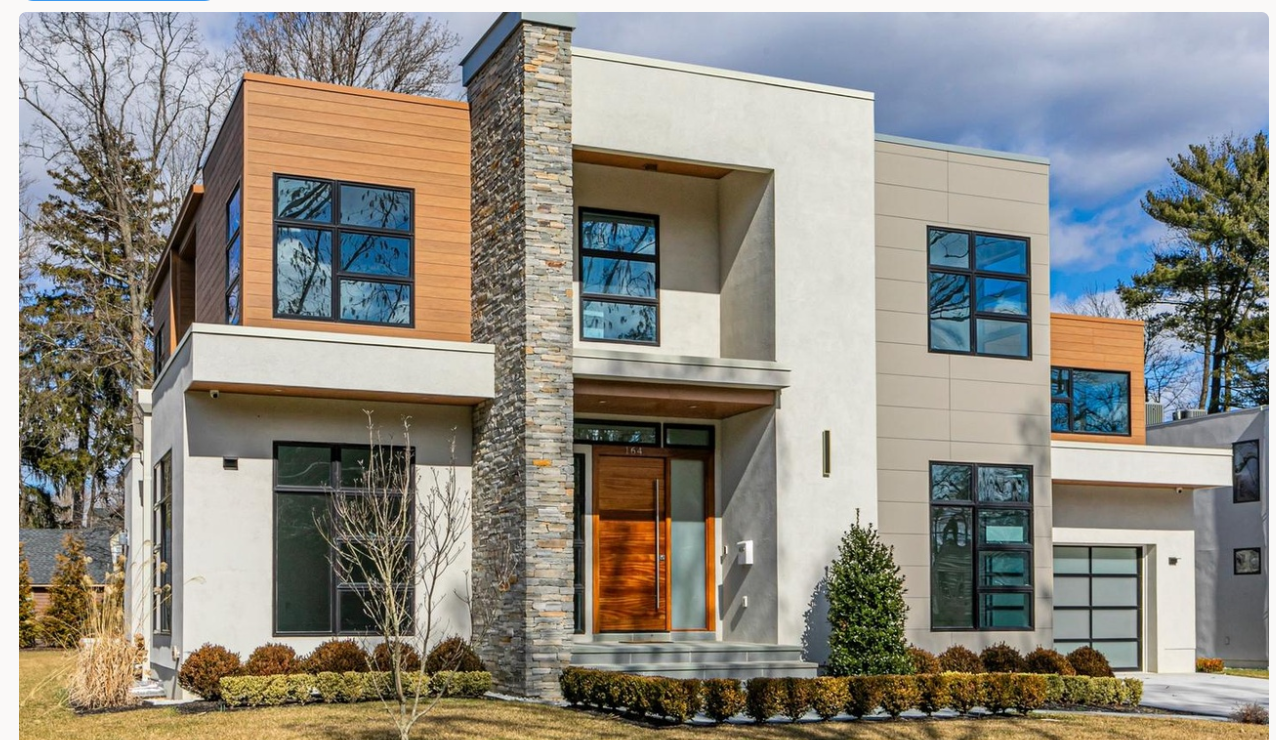
Nice place ya got there: 164 Prospect, Princeton. Valuation: $4.4M
Mr Schreiber claims that “we have been surviving pretty well with limited growth over 250 years.” I don’t think so. Average life expectancy in 1776, 250 years ago, was somewhere between 35 and 40. Average life expectancy today in the U.S. is about twice that. In other words, the “we” who have “been surviving pretty well” applies only, if at all, to those who managed to survive a full human lifespan across the years he mentions. Too many didn’t to make Mr Schreiber’s claim particularly meaningful.
You can’t have “survived pretty well” if you die prematurely for lack of the economic development to sustain you, something true of hundreds of millions of people since 1776. You can’t survive all that well today for lack of the affordable housing to house you, something true of roughly 13,000-14,000 people right now in New Jersey. There’s a crisis of homelessness right now in New Jersey–painfully visible in Newark, Elizabeth, New Brunswick, and Trenton, but also visible in Princeton–and a widely-acknowledged housing deficit. It seems problematic to have to belabor such facts to an educated adult, and worse to have to belabor them to the Vice Chair of the Board of Zoning Adjustment in a town as “special” as Princeton. But it would also be problematic to leave them unsaid.
Mr Schreiber’s remarks come on the heels of similarly ill-informed claims by other people on this topic. A case in point is Princeton University historian Sean Wilentz. From a much-discussed piece in NJ.com (for useful contrasts, here’s The Nation and here’s The Washington Post):
Wilentz strolls down Nassau Street, offering a guided tour of his neighborhood. He drops words like “demagogic” in casual conversation and points out that a Revolutionary War cannonball imprint hides behind the ivy on Nassau Hall.
Wilentz stops for a moment as we pass a Lululemon, a CVS and an Hermès store tucked on a side street and filled with thousand-dollar handbags.
Disdain is visible in his piercing blue eyes.
When he arrived in Princeton in 1979, it felt like a small town — a butcher, a supermarket, a hardware store, all in downtown, all within walking distance. But that’s all gone.
“You can’t live on pills, tacos, bubble tea and $30,000 handbags,” said Wilentz, a Princeton professor for more than 45 years who has been nominated for two Grammys for his commentary on American music. “The shops don’t serve the needs of the community.”
I’m not certain why “disdain is visible” in Professor Wilentz’s “piercing blue eyes.” Is he as much of a stranger to wealth as he suggests here? I doubt it.
In any case, the economic claims he makes here are remarkably ill-informed, the kind of thing you would say if you had zero acquaintance with the relevant facts, but felt the need to sound clever. Is it really true that the shops in Princeton don’t serve the community? Granted, you can’t live on bubble tea or hand bags, in Princeton or anywhere else, but tacos, a form of food, and pills, a form of medication, are in fact necessities of life. You can eat the former in the interests of hunger-satisfaction, and take the latter when afflicted with illness. Both are available in Princeton.
Anyone who’s walked up Witherspoon St before 7 am, as I do every day, will have seen day laborers getting tacos and similar fare from the stores there, waiting for the start of the workday. I wonder if Professor Wilentz is at all familiar with Lupita’s, Molisana, Hunan, La Mexicana, or Chapin. I’ve never seen him there, but those are the places where the poorest people in Princeton get food. CVS is where they get their prescriptions filled. It is a fact that poor people sometimes have health problems. So it’s not clear why Professor Wilentz regards his allusion to tacos and pills as the gotcha he takes it to be, or why he thinks that the sale of expensive handbags in one place proves that no one shops for food or medicine anywhere else.
Indeed, as someone who—unlike Professor Wilentz–lives on charity, lacks the means either to rent or buy a home anywhere in New Jersey, can’t afford a car, and generally struggles to get by, I find it somewhat easier to live in Princeton than I have in many other places in New Jersey (including West Orange, Glen Ridge, Montclair, Bloomfield, West Amwell, Whitehouse Station, and even Orange, East Orange, Irvington, and Newark). If you really want a miserable place to live, try North Plainfield. If you want to see a dogmatic wall of hostility to the very idea of affordable housing, try Ridgewood or West Orange.
That, in fact, is why I live primarily in Princeton. Princeton contains most of the necessities of life, all within walking or biking distance: food, drink, health care, social services, cultural amenities, recreation, a well-stocked library, and employment. It even has a healthy modicum of free or subsidized transportation options, and whatever its flaws, has a basically responsive municipal government. What it lacks is affordable housing, the very thing that Wilentz so conspicuously opposes, whatever contrary conceits about it he claims to have.
And conceits are what they are. When you insist that affordable housing not be built, when you act as though certain neighborhoods enjoy special immunities against housing development (e.g., your own), when the only concession you offer to affordable housing consists of constant litigation and NIMBY-type objections applicable to any conceivable project (see p. 17 of this), the objective fact is that you oppose affordable housing. It doesn’t matter who you know, who you’re related to, or what plaudits you’ve earned on totally unrelated matters. The hard, obvious fact of your opposition stares everyone in the face—everyone, I suppose, except you.
At a certain point, wild, callous, irresponsible talk about housing ceases to be a matter of amusement and starts to become offensive. When people who have no idea how the real world works take to mass media to put their ignorance on display, one cringes at first for them, but then starts to wonder. Most people over-estimate what they know and what they don’t, but it takes a certain cultivated talent to go out of one’s way to make this fact public. Both Schreiber and Wilentz deserve prizes for the expression of this talent. Rarely have people who know so little insisted on claiming to know so much. But grandstanding is not evidence of knowledge, and gaslighting is not evidence of intelligence. Just the contrary.
It would be hard to describe me as a blind supporter of Princeton’s Municipal Council, but I’m grateful to it for what strikes me as its conscientious commitment to the cause of affordable housing. Mia Sacks and Leighton Newlin in particular deserve praise for their contributions, as does (presumptively) incoming Councilperson Marina Rubina for the work she’s done in a private capacity. I would also single out State Senator Andrew Zwicker and his Chief of Staff Kayleigh Lavornia, with whom I’ve corresponded extensively over the years on housing issues. In mentioning these people, I don’t mean to derogate from anyone else’s contributions. I just happen to know that these individuals understand that affordable housing is a moral imperative, not a luxury, that it requires difficult trade-offs, and that it can’t be realized by the self-pitying descent into classism, nostalgia, and fantasy-thought represented by Stephen Schreiber and Sean Wilentz.
Schreiber owes Princeton an apology for and retraction of his “trailer park” comment. Beyond that, it’s not clear to me that Princeton is well served by his presence on the Zoning Board of Adjustment, or his position on it as Vice Chair. I’m not sure what’s to be gained from the presence of someone on the Board as far out of touch with reality as he seems to be. Of the many “adjustments” to be made on zoning matters in this town, Mr Schreiber’s absence from the Board, or at least as Vice Chair, might be a good place to end up. In lieu of that, some acknowledgement of the total inappropriateness of the trailer park comment seems like a good place to begin.
 Policy of Truth