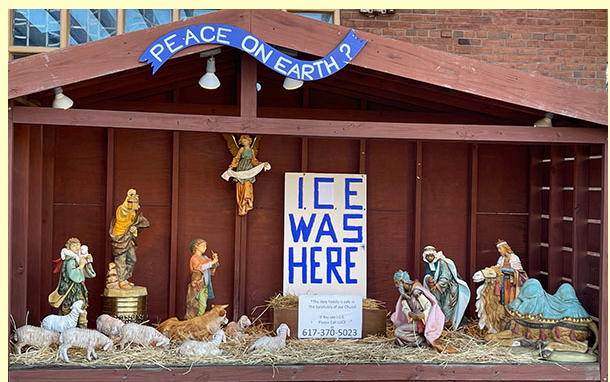
Here’s a parlor game anyone can play. Familiarize yourself with the controversy about the “ICE manger” at St Susanna’s Church in Dedham, Massachusetts. Then get into an argument about it with any specifically Christian critic of the parish and/or apologist for ICE. Then count how many minutes it takes before they sacrifice both Baby Jesus and the Holy Family to Herod, Caesar, and the Roman Empire. In my experience, it takes about two.
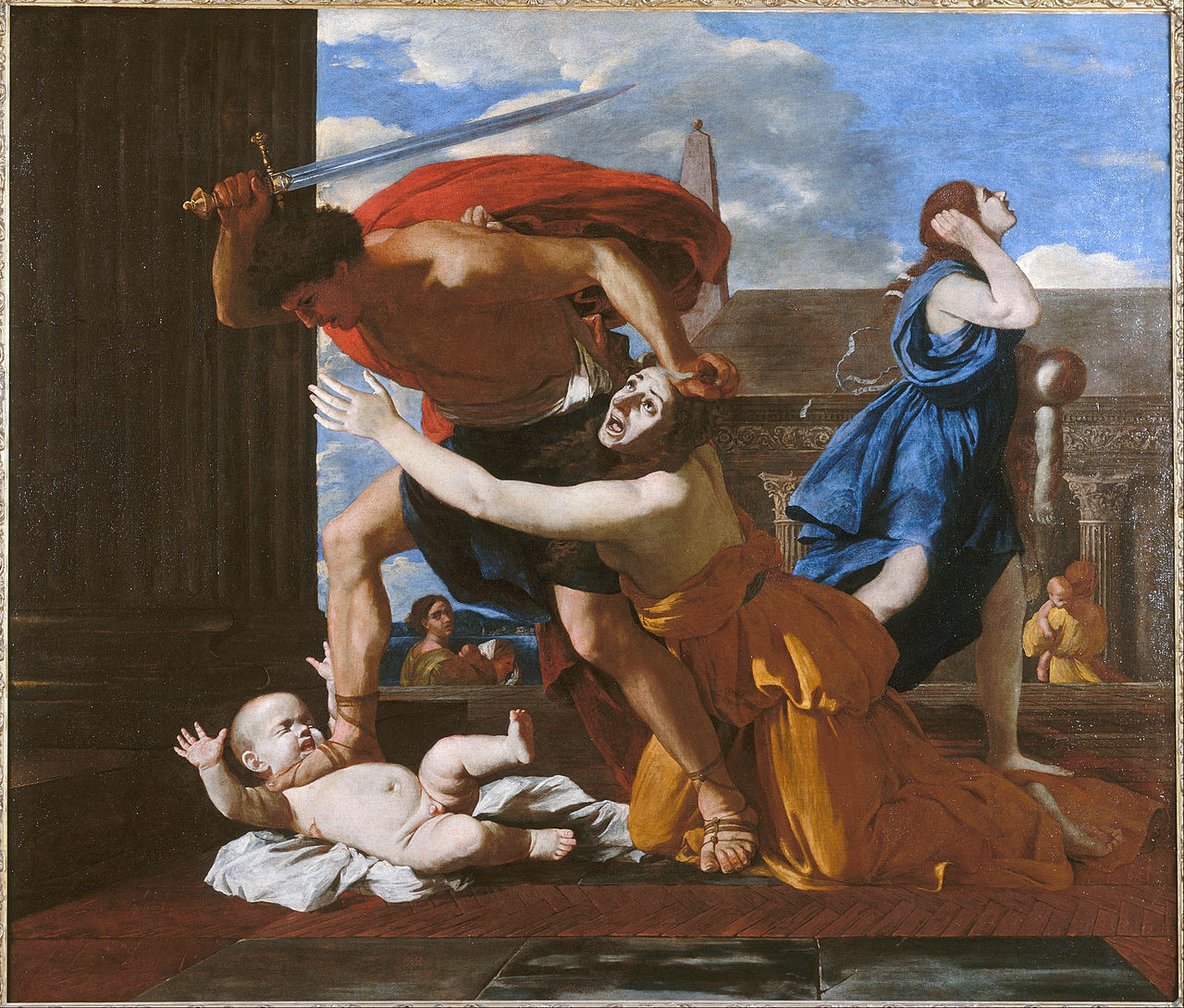
It wasn’t until I played this game myself that I came to realize how many American “Christians” are blankly ignorant of Herod’s edict to kill the infant males of Bethlehem, have no idea what to make of it once you tell them, have heard of but never given a second’s thought to the rationale behind the Holy Family’s flight to Egypt, couldn’t bear to think of the Holy Family as migrants or refugees, and reflexively think of Jesus & Co primarily as a bunch of law-abiding Romans. Thank Jupiter, they’ll tell you, that Joseph and Mary’s flight to Egypt took place within (as they see it) the national borders of the nation-state of Rome. Because that proves that they didn’t break any laws. In other words, the Holy Family was holy because they were legal.
The contested scene, St Susanna’s, Dedham, Massachusetts
Legality is a holy fetish with this crowd, just as it was with the adherents of Jim Crow, apartheid, Nazism, Stalinism, slavery, and imperialism. There’s no higher moral imperative in their ontology than blind adherence to the laws of a duly constituted empire, even when it comes to Jesus, Joseph, and Mary. You really have to talk to some of them to hear the desperate lengths to which they’ll go to insist that Jesus, Joseph, and Mary were moral innocents because they were compliant, adherent, docile citizens of Rome. Didn’t Joseph travel back to Bethlehem to be counted by the Roman census and pay his taxes? Isn’t the fundamental message of the Gospels that when Caesar tells you to jump, you ask how high?
But, you might ask, wasn’t the Crucifixion an expression of Roman law? Surely the veneration of rule-worshipping legalism should stop there? No, comes the answer. It’s the Jews who were responsible for the Crucifixion, and well, hate to say it (the answer continues), but the Jews were a lawless mob. You can’t blame the legally upright Romans for that. Whether consciously or not, Judas Iscariot becomes the hero of the Gospels on this view: yes he betrayed Jesus, but at least he cooperated with the cops. Didn’t just cooperate with them, actually, but called them. “If you see something, say something.” And what better proof of the moral probity of Roman law enforcement can there be than Jesus’s refusal to resist arrest in Gethsemane? Would the Scriptures have been fulfilled if the Son of Man had declined to cooperate?
There’s no way to put an exact number on it, but I think this holds for an alarming number of American Christians: if you push them on the relationship between Jesus’s ministry and the Roman Empire, what emerges from the conversation is not a devotee of the Gospels, but an apologist for Caesar–one only too happy to cook up a Jesus-sized excuse for Roman atrocities so as to turn them into God-sized excuses for American ones.
It didn’t start in America, of course. “England and Ireland are not what they once were,” Cardinal Newman writes, “but Rome is where it was” (John Henry Newman, The Idea of a University, I.7). For so many Christians, whether Catholic or Protestant, Rome remains where it’s at. “Let every soul be subject unto the higher powers,” St Paul famously writes in his letter to the Romans. “For there is no power but of God: the powers that be are ordained of God. Whosoever therefore resisteth the power, resisteth the ordinance of God: and they that resist shall receive to themselves damnation” (Romans, 13:1-3). It’s a much contested passage, at least among scholars, but I guess their contestations have yet to reach MAGA ears. Meanwhile, out here in the fallen world, vox Trump, vox dei prevails. It sounds like a joke, until ICE shows up.
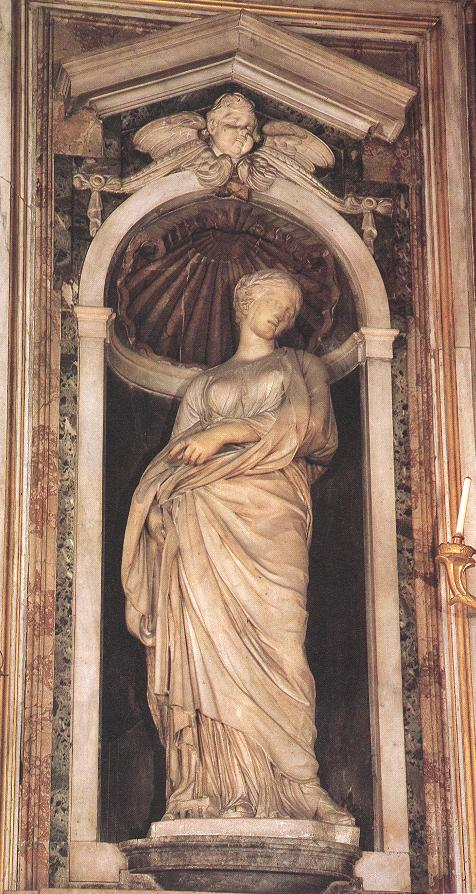
Francois Dequesnoy’s St Susanna, Basilica de Loreto, Rome (1629)
This is the local Archbishop’s idea of an argument against St Susanna’s manger scene:
“The people of God have the right to expect that, when they come to church, they will encounter genuine opportunities for prayer and Catholic worship — not divisive political messaging. The Church’s norms prohibit the use of sacred objects for any purpose other than the devotion of God’s people. This includes images of the Christ Child in the manger, which are to be used solely to foster faith and devotion,” said Terrence Donilon, a spokesman for the Archdiocese of Boston, by email.
Sed contra: We all have the right to expect better argument from the Catholic Church than this. And respondeo: The manger scene deprives no one of a genuine opportunity for prayer or Catholic worship. Neither political messaging nor even divisive political messaging constitute a deprivation: the message in question prescribes justice, and justice is a virtue. A form of worship incompatible with the practice or expression of justice is not worth practicing. If a particular parishioner finds himself discomfited by the manger scene, that’s too bad, but if so, the best advice to give him is to practice some self-command and get a hold of himself. In any case, since there’s no incompatibility between justice and worship, there’s no clear sense in which the use of the objects in the manger is for a purpose “other than the devotion of God’s people.” God’s people should be able to behold a just God through the expression of human justice. If not, the Archbishop should explain why.
If he can’t explain why, maybe it’s time for Catholics to stop complaining about the anti-Catholic character of the culture that surrounds them. If he is typical of the hierarchy of the Catholic Church, anti-Catholicism is a virtue we should all be proud to practice.
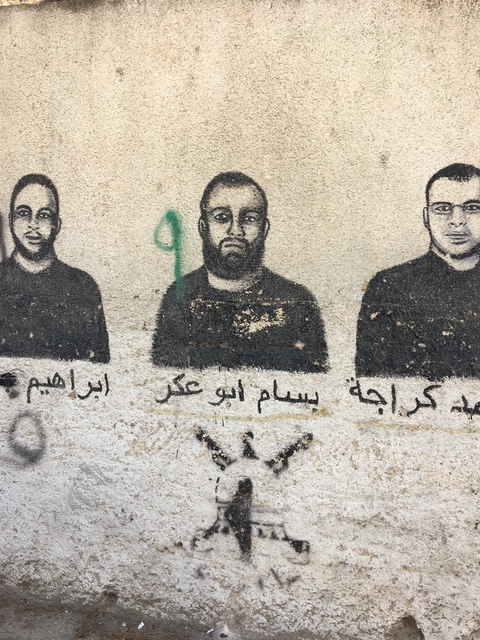
Bethlehem today: Bassam Abu ‘Akr and martyrs, summer 2019
It’s gratifying to learn in this context that the Catholic Church in North America is dying a slow death. Mass attendance is declining, as is the percentage of people raised as Catholics who still identify with it. Before you’re tempted to feel sorry for Sancta Mater Ecclesia, remember who you’re dealing with. The people who spent decades protecting pedophiles and gutting abortion rights are now telling us that the faithful should refrain from mixing faith and politics, because doing so upends the exclusive devotion they owe to God. Right, but being molested or forced to give birth don’t.
Jesus walked the Via Dolorosa. Paul hoofed it up and down Asia Minor for God. Christians the world over have faced persecution for their faith–stoning, starvation, wild animals, torture–and been martyred for it. Meanwhile, the average American Catholic (at least on the Archbishop’s telling) is so discomfited by visible criticism of ICE that he’s rendered incapable by the mere sight of it of true devotion to Father, Son, and Holy Spirit. These be the Christians. A Church this weak, hypocritical, and immoral deserves to be put out of its own misery, as well as the misery it’s foisted on millions of people for thousands of years.
Bethlehem today: nisa’a min ajl al hurriyah, women of freedom (summer 2019)
The “deepest necessities” of the Church, Nietzsche writes, “range it against any effort to abolish distress; it lives by distress; it creates distress to make itself immortal….” (Nietzsche, The Antichrist, 62). It’s an unkind explanation, but hardly an inaccurate one. It takes a real fetishist of distress to take umbrage at criticism of ICE. It’s too bad that Hell is a fiction, because Hell was practically invented for this crew–a “humanitarian” Church that spends its time defending fascists, and a lawless band of thugs that postures as a law enforcement agency. But we can take solace in the fact that in a different sense, every day is Judgment Day on this planet: every day is a day on which we can pass judgment on those who invite it.
Gateway to Aida Refugee Camp, Bethlehem (summer 2019)
We may not have a physical Hell in which to put them, but we can, like Dante, consign them both, ICE and the Catholic hierarchy, to an Inferno of the imagination. I’ll readily grant that doing so won’t hurt them. It’s good enough that it delights us. And good enough that it expresses a truth that they can neither alter nor deny: Hell may not be the place they land, but Hell is where they belong. Even the godless among us can pray for that, because even the godless among us do.



 Policy of Truth