“Starve away.”–Randy Fine
“We must be able to will that a maxim of our action become a universal law: this is the canon of moral appraisal of action in general.” —Immanuel Kant
“The Jews, unable to leave the City, were deprived of all hope of survival. The famine became more intense and devoured whole houses and families. The roofs were covered with women and babies too weak to stand, the streets full of old men already dead. Young men and boys, swollen with hunger, haunted the squares like ghosts and fell wherever faintness overcame them. To bury their kinfolk was beyond the strength of the sick, and those who were fit shirked the task because of the number of the dead and uncertainty about their own fate; for many while burying others fell dead themselves, and many set out for their graves before their hour struck.”
“In their misery no weeping or lamentation was heard; hunger stifled emotion; with dry eyes and grinning mouths those who were slow to die watched those whose end came sooner. Deep silence enfolded the City, and a darkness burdened with death. Worse still were the bandits, who broke into the houses of the dead like tomb-robbers, stripped the bodies, snatching off their wrappings, and then came out laughing. They tried the points of the swords on the corpses, and even transfixed some of those who lay helpless but still alive, to test the steel. But if any begged for a swordthrust to end their sufferings, they contemptuously left them to die of hunger. Everyone as he breathed his last fixed his eyes on the Sanctuary, turning his back on the partisans he was leaving alive. The latter at first ordered the dead to be buried at public expense as they could not bear the stench; later, when this proved impossible, they threw them from the walls into the valleys. When in the course of his rounds Titus saw these choked with dead, and a putrid stream trickling from under the decomposing bodies, he groaned, and uplifting his hands called God to witness that this was not his doing.”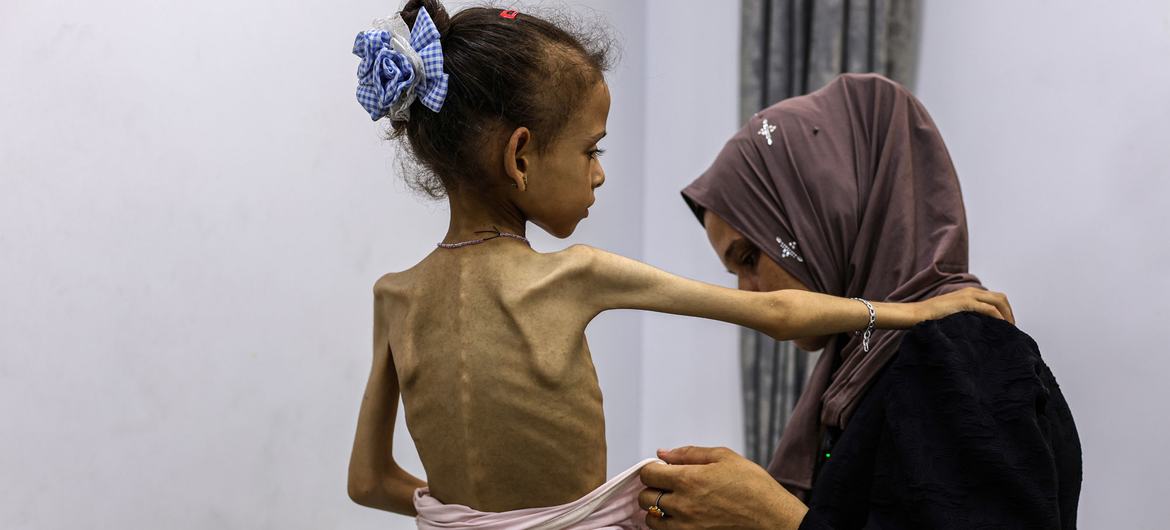
“While such were the conditions in the City, the Romans were exuberant, for none of the partisans sallied out now that they too were despondent and hungry. There was an abundance of corn and other necessities from Syria and the neighbouring provinces, and the soldiers delighted to stand near the wall and display their ample supplies of food, by their own abundance inflaming the hunger of the enemy. But when suffering made the partisans no more ready to submit, Titus took pity on the remnant of the people, and in his anxiety to rescue the survivors began constructing platforms, though it was difficult to get timber. Round the City it had all been cut down for the previous works, and the soldiers had to collect new supplies from more than ten miles away. Concentrating on Antonia, they raised platforms in four sections, much bigger than the earlier ones. Caesar made the round of the legions, speeding the work and showing the bandits [meaning, the Jewish militants] they were in his hands. But they alone seemed to have lost all sense of remorse, and making a division between soul and body acted as if neither belonged to them. For their souls were as insensitive to suffering as their bodies were to pain–they tore the carcase of the nation with their fangs, and filled the prisons with the defenceless.”
–Flavius Josephus on the siege of Jerusalem by Rome, 70 AD, Bellum Judaica, V.521 (The Jewish War, ch. 19, pp. 331-32), tr. Williamson/Smallwood
A friend who read this post asked for some historical background. The quoted passage comes from Flavius Josephus’s chronicle of the First Jewish-Roman War of 66-74 AD. The background is this: Judea, corresponding roughly to Palestine, was ruled by the Jewish Hasmonean dynasty until the first century BC, when it fell to the Roman Republic. About a century later, under Nero, Jewish nationalist unrest provoked an uprising–an intifada–against Rome.
Eventually, Vespasian became emperor, and resolved with his son Titus to quell the intifada. After invading Galilee in the north, Vespasian captured Josephus, a Jewish priest and military leader stationed there; Josephus went on to chronicle the war in the text we now call The Jewish War–not always reliably, or from an ideological straightforward perspective. Though a Jew himself and obviously sympathetic to the Jews, Josephus was frequently accused by his fellow Jews of opportunism and treason. There’s some truth to the accusation, as his writing often betrays a pro-Roman and pro-imperial bias.
The Roman invasion of the Galilee created a refugee crisis that sent thousands of Jewish refugees to Jerusalem. In the resulting chaos, Jerusalem underwent a kind of small-scale civil war involving a moderate faction inclined to appeasing the Romans, and a militant faction inclined to provoking war with them. The infighting between these two groups continued until Titus’s troops reached Jerusalem itself in 70 AD.
Upon reaching Jerusalem, Titus besieged the city, producing the famine described in the quoted passage. The passage describes both the famine itself as well as the dissolution of Jewish society that took place as a result, which involved a descent into a sort of collective suicide. Naturally, Titus, on observing the scene from afar, absolved himself and Rome of all responsibility for the consequences of the siege he himself had imposed. The blame, he implies, fell on the “Zealot” terrorists who had provoked Rome into so brutal a response. Neither Titus nor Josephus are ever recorded as asking why Rome was in Palestine in the first place–why Rome was entitled to invade Palestine, to occupy it, to govern it, or to impose a siege on Jerusalem and create a famine there. All of that was taken for granted. What mattered was that the Jewish “terrorists” (as modern translators call them) had to be punished, and Roman hegemony upheld.
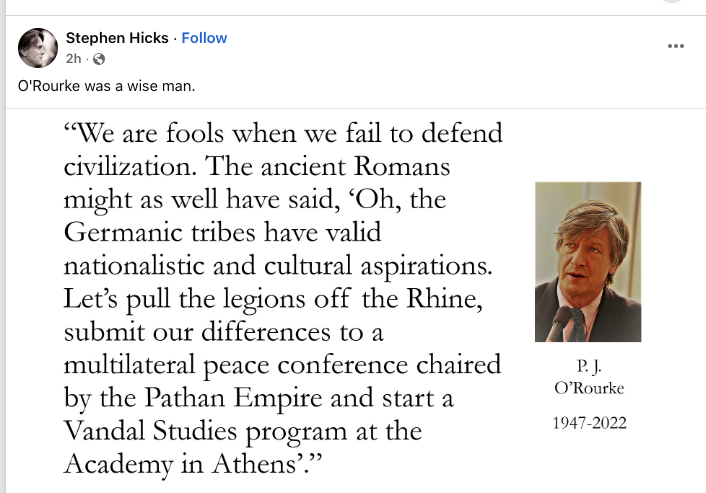
As we read from the passage, the Roman soldiers, themselves flush with supplies, taunted the starving Jews by displaying the plenty they enjoyed. Titus, however, moved either by pity or the imperatives of PR, decided to enact some equivalent of a Jerusalem Humanitarian Foundation operation for the starving hordes. It’s not clear what this operation actually did of a humanitarian nature: it seems to have been plagued by logistical difficulties, including the difficulty posed by starving Jewish “bandits” stealing the aid. That said, Titus clearly succeeded in his central aim, namely, convincing a Jewish propagandist, Josephus, to blame a bunch of Jewish “terrorists” for the famine he, Titus, had engineered–all for the greater glory of Rome. Jerusalem fell soon after (70 AD), followed by Masada a few years later (73 AD).
Palestine was then ruled by Rome until the Kitos War (116-118 AD) followed by the Second (or Third) Jewish-Roman War, itself provoked by the Bar Kokhba Revolt (132-136 AD). “The revolt was ultimately crushed by the Romans, resulting in the near-depopulation of Judea through mass killings, widespread enslavement, and the displacement of much of the Jewish population.” Sound familiar?
To be completely explicit: the juxtaposition of the epigraphs from Randy Fine and Immanuel Kant is meant to suggest that Israel’s contemporary defenders are, whatever their intentions, committed to the destruction of the Jews themselves. Had their “maxims been universalized”—applied in consistency to all relevantly similar cases—those maxims would have led to or rationalized Titus’s near destruction of the Jews of Jerusalem. When Randy Fine says “starve away,” his claim entails not just that contemporary Gazans should starve, but that the Jews of Jerusalem should have starved. Had they all done so, the Jewish people would almost have been exterminated altogether. What people like Fine crave is not Jewish security, but destruction as such. They’re little more than power-lusting sociopaths, heir to Herod, Nero, Vespasian, and Titus, and deserve the fate of at least one of those on that list.
 Policy of Truth
Pingback: Iran and the Perpetuity of Empire | Policy of Truth