James Stacey Taylor on Planning Boards and Property Rights

James Stacey Taylor has a short, thoughtful response at BHL to an earlier post of mine here at PoT,which was itself a response to something he had written at BHL. I’ll respond here at PoT when I get the chance.

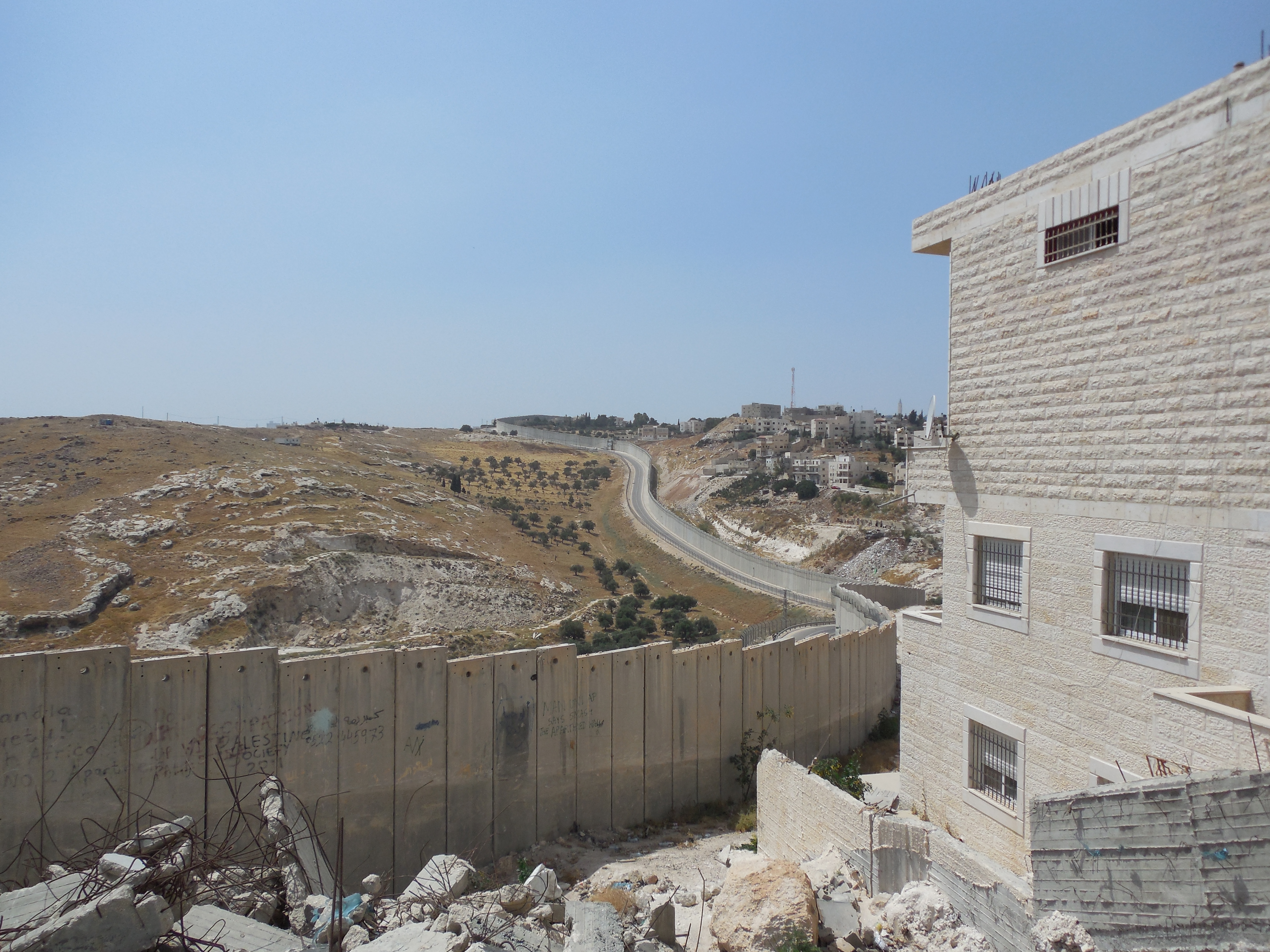
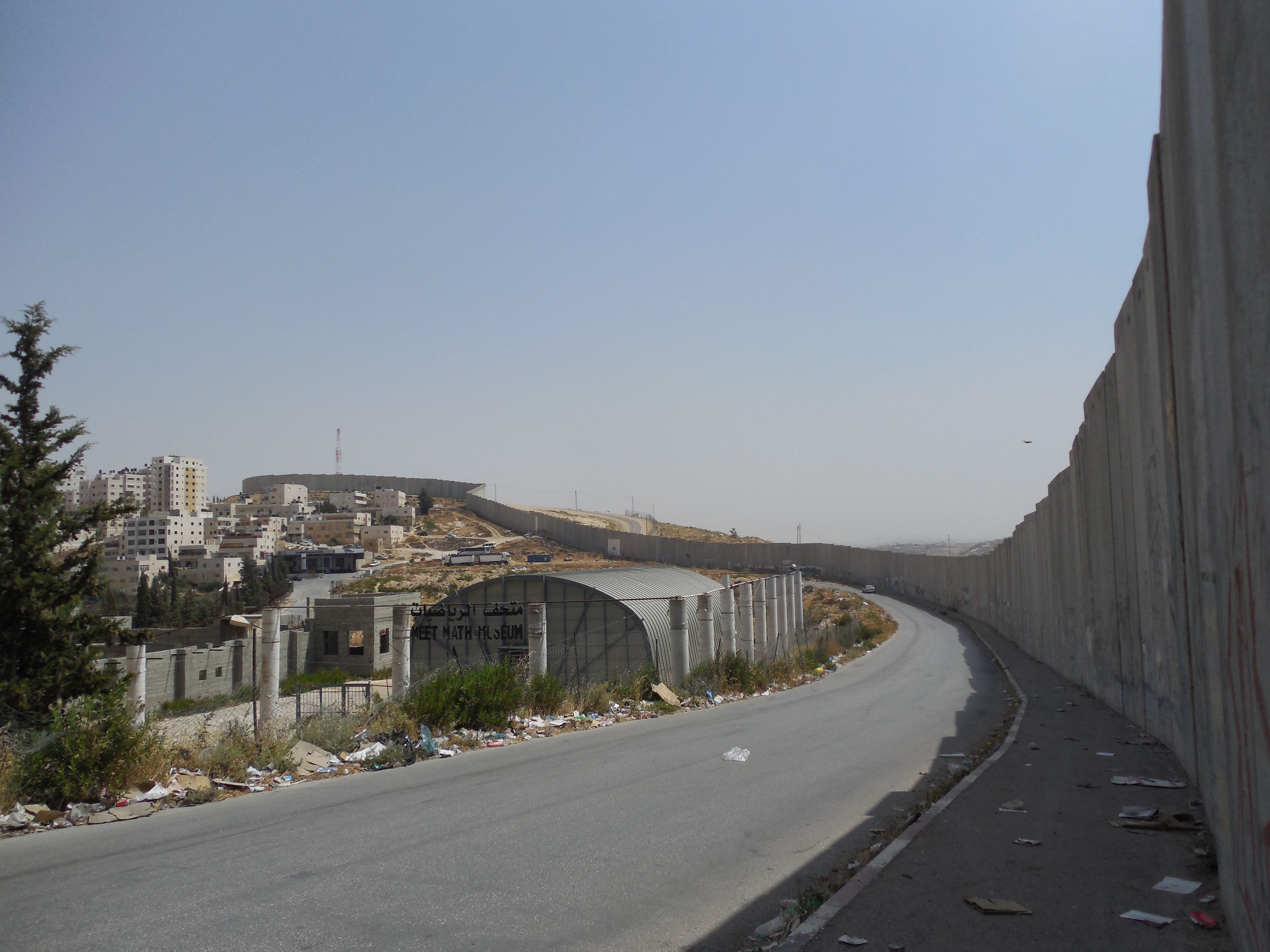
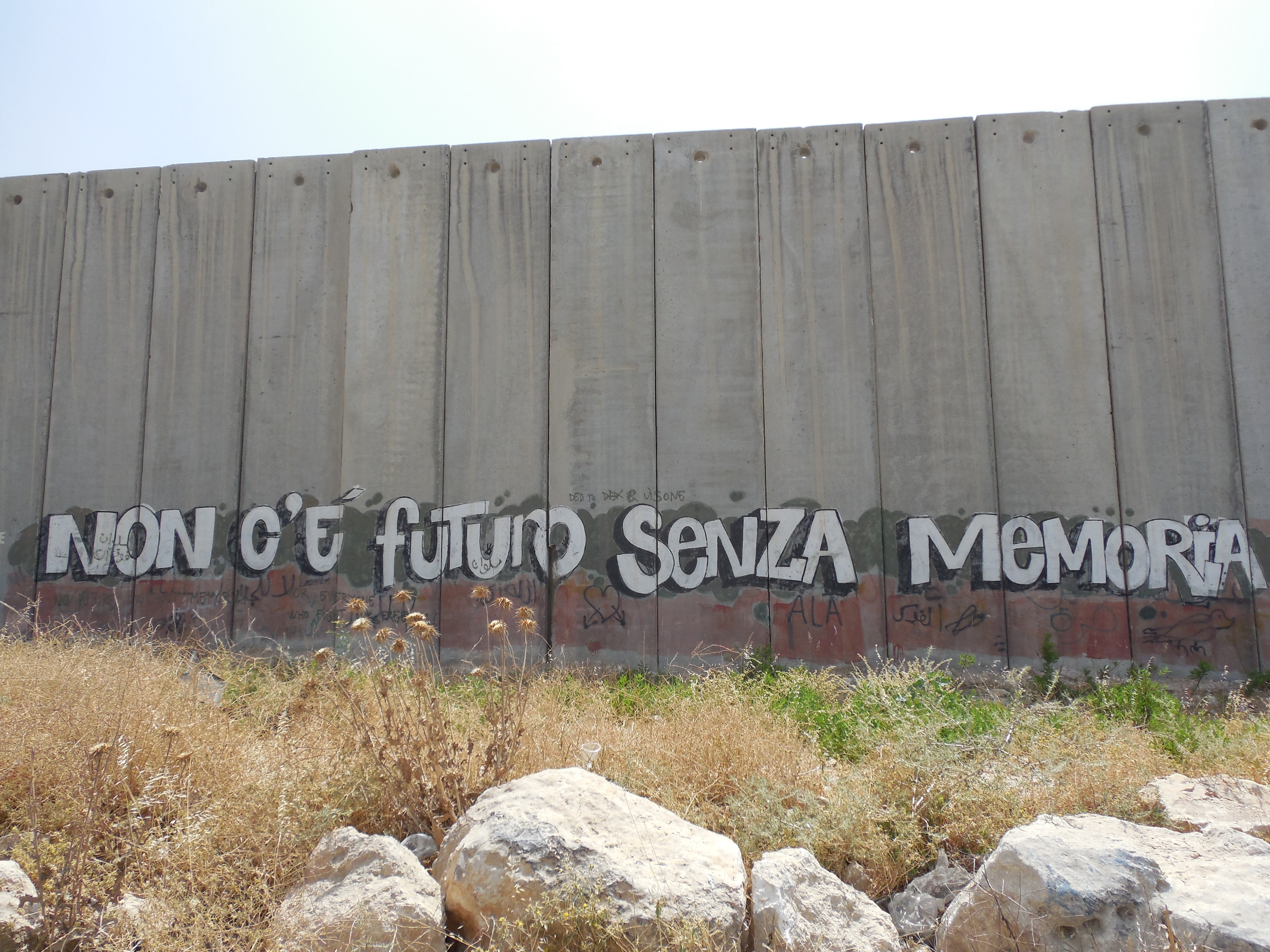
My thoughts on the subject of property and planning are somewhat in flux, as I try to process the implications of some planning- and property-relevant phenomena I’ve seen while traveling–in Pakistan in 2012, in Nicaragua last year, and most intensely of all, here in Israel and Palestine, where I am right now. I’m also trying to anticipate and think through issues I expect to encounter on an upcoming trip to Pine Ridge Indian Reservation in South Dakota this fall.

It’s an enormously complex task to get straight on all of that, especially if one approaches it from the direction of the libertarian literature on property rights. On the one hand, there’s a mismatch between that literature and the facts I’m trying to conceptualize. On the other hand, theorists more directly interested in places like Managua, the West Bank, or Pine Ridge make assumptions about property that I don’t share. So my brain is on overdrive, and hasn’t reached the terminus of the inquiry.

I suspect that I subscribe to a weaker, or at least less expansive conception of property rights than most libertarians do; what I’m working on is how exactly to distinguish the view I hold from pragmatic/progressivist conceptions of property and planning on the liberal left. I think there’s a distinction to be drawn, but I haven’t worked through all of the relevant complexity. I’ll comment when I’ve worked more of it out than I so far have. I’m grateful to Taylor for giving me the incentive to clarify my thoughts.

Postscript: I guess it’s a bit misleading to say that I’ll “respond” to Taylor when I get a chance, since Taylor and I are basically agreeing. What I meant was that I’ll offer some substantive reflections in response when I get a chance.

The only comment I’d make right now, based on a small handful of early comments at BHL, is that Taylor’s critics (and by implication mine) are begging the question against both of us by making tacit but wide-ranging assumptions about the nature of property rights. I won’t speak for Taylor, but I don’t see any intrinsic reason why the existence of planning boards must violate property rights. Property rights could, after all, themselves be sensitive to the need for (government) planning. Libertarians could insist on strong (probably deontic) conceptions of property rights that function as bulwarks against any and all forms of government “interference” (aka “regulation”), but I’m not aware of a successful defense of such a conception of property rights, and don’t find the idea plausible (or even coherent).

Postscript, June 27, 2015: This lecture by Rick Porter of Georgia Tech’s School of Building Construction is a nice primer on zoning and planning in the U.S. from a generally Objectivist/libertarian perspective, from the 2013 Atlas Society Conference; it helpfully reveals both the strengths and weaknesses of that (type of) position.

The lecture starts out well enough, discussing the legitimate basis of zoning in the need for rights-based protections (first 25 minutes or so), but then gets side-tracked in that favorite Randian pastime, the accumulation of ideological horror stories (25-35 minutes). I don’t disagree with what he says there, but it’s a missed opportunity for discussing the real underlying issues in a sustained way.

He ends, unfortunately, with a descent into Randian-libertarian utopianism, suggesting that if we privatize all infrastructure and convert zoning restrictions into private deed restrictions, our problems are resolved. But what goes undiscussed, despite the quick reference to Locke, is the fine-grained content of private property rights: what is it that you own when you own something, like a piece of real estate? Is your ownership right so strong that it precludes zoning laws that prevent your imposing boundary-crossing externalities on others? He’s essentially asked that question around 54:00, but either concedes the legitimacy of zoning in his answer, or appeals to “the market” in a way that doesn’t really answer the question asked (his answer swings between those two claims).

Porter objects to zoning law as “pre-emptive,” but so are the laws of assault and self-defense against assault in the criminal code: an assault is a threat of imminent harm that doesn’t require physical contact, and a right of self-defense gives the victim the right to retaliate before contact is made (and physical harm inflicted), precisely so as to avoid the harms in question. I think the analogy carries over to rights-violative externalities and zoning. The end of the lecture seems to concede that zoning has a legitimate purpose, if properly conceived, but the claim isn’t really developed in the lecture.

That said, I think the lecture is well worth watching, if only for making explicit the facts that need to be dealt with as a preface to a sustained inquiry into the topic.

Here’s the 2014 follow up lecture. I’m “bookmarking” it here for relevance; I haven’t watched it yet.

Postscript, June 28, 2015: Last postscript for now: It belatedly occurs to me that Ronald Coase’s “The Problem of Social Cost,” Journal of Law and Economics III (October 1960) is the classic discussion of this topic, and well worth reading (or re-reading). Here’s a summary.

That said, I reject virtually every major assumption Coase makes in the article, even when I incidentally end up agreeing with this or that claim in it. Coase’s thesis (it’s not really a “theorem”) is often regarded as a critique of the legitimacy of rights-based planning, zoning, and regulation, but I don’t think it succeeds as one, and don’t think Coase thought it did, either. Robert Nozick’s discussion of “Prohibition, Compensation, and Risk” (chapter 4 of Anarchy, State, and Utopia) is in effect a philosopher’s attempt to improve on Coase, but I don’t think it succeeds, either. Nor, as I say in a different post, do I find Hayek’s arguments against “planning” coherent.

Given that, I’ve never quite understood the intensity and scope of the libertarian-Objectivist animus for “regulation.” The animus seems to stand or fall with the idea that all government regulation violates a ban on first-uses of force, but even apart from the conspicuous lack of an argument for the ban, along with the absence of an argument for its application to all government regulation, the principle needs more explication than it’s ever gotten: in order to grasp what the principle says, we need to know what counts as a first use of force, and the principle itself doesn’t tell us.

In any case, it’s not at all obvious to me that regulations designed to thwart (what their architects regard as) first-uses of force must themselves always be first-uses of force. They could be just what their architects say they are: non-rights-violative regulations designed to thwart rights violations. The examples Coase cites in his paper make clear that there is no shortage of potential candidates for regulation in the name of rights. If you reject his analysis, as I do, at least some of those potential candidates become actual ones, and ought to be regulated.

(The preceding comments may well have re-invented the wheel. See Matt Zwolinski’s excellent discussion of the same issues in “Libertarianism and Pollution,” in the Routledge Companion to Environmental Ethics. Differences of detail aside, I basically agree with the approach he takes.)

Postcards from Abu Dis (6): Lost and Found in Translation

My political philosophy class is now deep into Book I of Aristotle’s Politics. Aristotle is tough going in any language, but he’s a linguistic obstacle course if you’re going from Attic Greek to English to Arabic and back again. Every technical word in the Aristotelian lexicon requires a special explanation that threatens to run aground on the reefs of some linguistic-conceptual-cultural misunderstanding.

Just consider the first passage of the text:

Since we see that every city (polis) is some some sort of partnership (koinonia), and that every partnership is constituted for the sake of some good (for everyone does everything for the sake of what is held to be good), it is clear that all partnerships aim at some good, and that the partnership that is most authoritative (kurios) of all and embraces all the others does so particularly, and aims at the most authoritative good of all. This is what is called the city or the political partnership. (1252a1-5, tr. Carnes Lord)

Since every what is some sort of what, and is what for the sake of some good, what is it that’s supposed to be clear?

Mission Nearly Impossible: Try explaining this, one clause at a time, in English via Arabic translation to 30 hungry, dehydrated, and nicotine/caffeine-deprived students fasting for Ramadan. Then listen to the Arabic translation via your weak, misremembered college Arabic of thirty years ago in search of any red flags in the translation, and hope you can catch them without losing your place or pushing your translators over the edge.

So: Is our students learning? Na’am, inshallah (“yes, if God wills it”)

I have two translators in the room, Sinan and Hadi, each of whom helps the other when one of them has trouble. They’ve have used the Arabic medina for “polis/city,” jamia for “koinonia/partnership,” and the adjectival form of “hukm” for “kurios/authoritative.” To add to the complexity, I prefer “association” to Carnes Lord’s use of “partnership.”

Sahih? (“Got that?”)

We spent most of the class explicating the Aristotelian idea of the polis/city, which had to be distinguished from “nation” (dawla), “country” (balad), “state” (also dawla), and “empire” (imbira’turia, obviously just an Arabization of “empire”). To avoid confusion, I decided to avoid “city-state” (medinat ad-daula) for polis, and decided to stick with “city,” adding a special explanation to the effect that an Aristotelian “city” isn’t a city in the modern sense–or even a city in the Palestinian sense. Medinat ad-daula is an intelligible phrase in Arabic, but I’m inclined to think that it would sound to students’ ears like an unintelligible paradox, prompting the predictable question:

Professor, how can a city be a state?

Well, it can’t, but “city-state” is not meant to suggest that a polis is a species of state; “city-state” is a term of art, and we already have too many of those floating around.

There is no easy way (that I know of) for distinguishing nations from states in Arabic (the same word translates both words), so it’s easy on purely linguistic grounds for Arabic speakers to think that every nation either is or requires a state, and vice versa.

Interestingly, I have a hunch that the average educated American–who has a working knowledge of American history but lacks a working knowledge of non-American nationalisms–might also have trouble seeing the distinction between “nation” and “state.” But I think that the latter difficulty arises from totally different sources than the Arabic-speakers’ difficulty. Both Arabs and Americans identify “nation” with “state,” but each has different conceptions of both concepts. In other words, they agree in identifying them, but disagree about what they’re identifying.

For Arabs, I think a “nation” is an ethnicity, and every ethnicity requires (or has the right to) a state. For Americans, by contrast, “nation” is to be identified with “state,” simply because the two words are synonyms; neither “nation” nor “state” is to be identified with any given ethnicity. Despite Woodrow Wilson’s inclusion of self-determination in the Fourteen Points, Americans have trouble grasping, much less sympathizing with, the idea of ethno-national self-determination. It sounds unAmerican. (Strictly speaking, the phrase “self-determination” doesn’t appear in the Fourteen Points, but a commitment to national self-determination is implicit in the second paragraph of the document.)

After giving what I think is the standard account of the nature of the polis in Aristotle, we talked about its possible exemplifications or approximations in the modern world.

To focus the conversation, I described the U.S. today as a counter-exemplification of the Aristotelian polis: in other words, I suggested that the U.S. provides a good (democratic) contrast to what Aristotle took the polis to be. In the U.S., we prize the freedom to do as we please with lives that we regard as essentially our own; we resent the idea that the nation has, or can dictate a single purpose to us, and have a very thin conception of “the common good” in the form of “the public interest,” which is sometimes (but pretty rarely) invoked to justify this or that policy, and plays little role in everyday political thought, discourse, or practice. Is that a controversial thing to say? Maybe, but it seems fairly obvious to me.

There didn’t turn out to be any literal exemplifications of the polis in the modern world. Among the closer approximations I came up with–and I know this is controversial–were Israel and Pakistan. Granted, both Israel and Pakistan are states, and as I’ve already said, the polis is not a state at all but a city. Further, being states, both Israel and Pakistan are much bigger than the political unit that Aristotle had in mind in his account of the polis. Given all of that, both Israel and Pakistan are obliged to rely on the use of force in a way that I don’t think is characteristic of an Aristotelian polis; put another way, each achieves an approximation (or illusion?) of being an Aristotelian koinonia by using the instrument of law to enforce a common conception of virtue in the service of a common good. Those are, I realize, large differences that distinguish both Israel and Pakistan from the Aristotelian polis.

But I still think that there’s something to the comparison. My point was that Israel and Pakistan each self-consciously conceives of itself as a political koinonia–a political association–with a common end, and a substantive conception of the common good. Citizenship in both countries is defined by allegiance to this robust conception (or supposedly robust conception) of the common good–the conception being supplied in the Israeli case by the idea of a Jewish State, and in the Pakistani case by the idea of an Islamic one. Each regime has a conception of virtue and the common good that it tries to inculcate through a public system of education, with the aim of getting citizens to identify their good with the state by identifying with its conception of virtue. And each is unapologetic about relying on the state to do so.

I have a feeling that my students were a little perturbed at hearing Aristotle compared with Israeli Zionism in one breath, and Israeli Zionism compared with Pakistani nationalism in the next. When I taught in Pakistan in 2012, students there were equally perturbed when I compared Pakistan with Israel. I guess all that’s left is to teach the same material in Israel, and I’ll have covered all of the relevant national bases.

Anyway, that’s when I decided to drop the real bomb. Neither Israel nor Pakistan is a good approximation of a polis, I suggested; they’re both too big and diverse to fit the bill. And both face the problem of how to deal with minority populations–a problem with no analogue in the case of an Aristotelian polis.

If you really want a good approximation of this polis, I suggested, you need to think smaller, and think of something closer by. I asked them if they could figure out what I meant. “Palestine?” someone asked. “No,” I said. “Just think of an Orthodox Israeli settlement.”

For a second, the class looked at me in blank incomprehension. But then, I think, they got it. I won’t elaborate, but I actually think that that comparison really does work: at some level, Israeli settlements really are like Aristotelian poleis. The biggest problem with the comparison is that the West Bank settlements are tied to Israel, which is a nation-state, and Israel is itself supported by the United States, which is a nation-state verging on an empire. But if you abstract the normative ideal of a Jewish settlement from its practical or logistical ties to Israel and the U.S., I’d say that settlements–which have a municipal governing structure–are a contemporary approximation of the Aristotelian polis. 

Incidentally, when I was a graduate student at Notre Dame, Alasdair MacIntyre used to use the example of the New England Town System as a “modern” approximation to the polis, but I no longer remember whether he was making a historical point about the structure of that system in colonial times, or making reference to the version of the system that exists today.

An unexpected linguistic stumbling block: At one point, I made passing reference to the “conceptual connection” between one thing and another, and both translators were momentarily stumped. It belatedly occurred to me that “conceptual connection” is a metaphor–possibly a dead metaphor, but still, idiomatically speaking a metaphor for purposes of translation. If you put the English word “connection” into Google’s translation device, you get 17 possibilities in Arabic, ranging over personal connections, computer-related connections, connections involving transportation hubs, and so on. If you put in “conceptual connection,” you get ittisal al maffahimi.

It sounds pretty impressive, but is it the right translation? Allah hu’ alim. God only knows. Let’s hope God’s Arabic is better than mine.

Postscript: An interesting paper I happened to encounter on this topic, Marco Allegra, “Citizenship in Palestine: A Fractured Geography,” Citizenship Studies 13:6 (2009).

On a more polemical note, consider Amos Oz’s claims, as described in a piece by Zachary Lockman:

Oz, in his wartime article for the New York Times, goes on at length about the romantic, idealistic and humanitarian character of the early Zionist settlers. They were pragmatic, politically aware, supremely self-analytical and egalitarian all at once, these men and women who by day drained the swamps of Palestine (to cite a popular Zionist image) and by night argued about social, political and ethical issues. The pre-state Jewish yishuv was not entirely idyllic, to be sure; there were some conflicts between the Labor Zionist leadership and the right-wing dissidents led by Begin. Despite this, Oz asserts, in many respects Israel was by 1948 “on its way to becoming a twentieth-century version of an Aristotelian Greek polis, characterized by the highest degree of individual involvement in public affairs.”

The Oz piece is Amos Oz, “Has Israel Altered Its Visions,” New York Times Magazine, July 11, 1982. For some reason, I haven’t been able to locate it in the Times’s archive.

Postcards from Abu Dis (2): Pedagogy Under Occupation

My political philosophy class here at Al Quds University has met either once or twice so far, depending on how you count. I’m told that 19 students are enrolled, but only one showed up on the first day, so I didn’t really teach that much. Four students showed up for class two, so we had a full class. I’m told that this pattern of attendance (or non-attendance) is a bit of a tradition in this neck of the woods: things start slowly at first, and then, little by little, build to a pedagogical crescendo. It’s the reverse of the pattern I’m used to at Felician, where everyone on the roster shows up on the first day of class, but fewer and fewer show up as the term wears on, so that by the last day, you’re lucky if anyone shows up–and at some level, they’re lucky if you do.

There’s a sense in which what I’m doing here at Al Quds is pedagogically controversial and a departure from my usual approach to teaching. Without literally engaging in advocacy in the classroom, I’m taking an overtly political approach to how I’m framing the class. I am, in effect, unapologetically teaching not political philosophy per se, but “Political Philosophy (and the Occupation).” Though it’s not what I would do in the average American classroom, I’d like to think that it could bear scrutiny by observers from back home. So I thought I’d say a bit about it, and invite some scrutiny.

There’s no way to teach political philosophy from a literally neutral perspective. You can’t successfully teach, say, Plato’s Republic or Hobbes’s Leviathan simply by showing up in the classroom, knowing nothing about the interests or psychology of your students, and “covering the material.” That’s a recipe for pedagogical failure. It may work in other disciplines, but it can’t work in philosophy. The problem with it is that philosophical “material” is too open-ended and protean to be approached in this way. There’s no single, standardized “right way” to teach a philosophical text. There are too many choices to be made–regarding translation, selections, questions to be pursued and not pursued–and too many legitimate ways of making them. Choices of that kind are dictated in part by the audience you want to reach, and what you want to achieve with them.

thesea

Suppose you decided to teach Plato’s Republic, and “simply” wanted to “cover the arguments,” whether in the sense of merely summarizing them, or summarizing them, laying them out in deductive fashion, and testing each of them sequentially for validity and soundness. I suppose you could do that, and at some level, anyone would have to do a bit of it. But you couldn’t leave things there. The “material” you’d ideally want to cover is not reducible to a summary of the arguments in “the” text, or even reducible to a summary plus a sequential set of tests of the soundness of each argument (assuming that that’s even possible, and waiving questions about how to individuate the arguments in the text). At a minimum, what you’d need in addition to all of that is analysis of the contested concepts of each of the premises of every major argument–and not just a straight “conceptual analysis” as analytic philosophers often use that phrase, but a sort of dialectical and rhetorical analysis that takes stock of what those concepts mean to your students both cognitively and emotionally.

Putting things slightly differently: if you want the material to sink in—in any sense of “sink in”—you have to ask how it connects with the beliefs, desires, habits, practices, preoccupations, etc. (call it the ‘context’) that the students bring to the text. How do they conceptualize “justice,” “friendship,” “harm,” “advantage,” “promises,” “debt,” and so on? If you ignore that personal context, the class will backfire: the text becomes a series of alien and alienating abstractions without connection to the students’ experiences. That’s what makes teaching both challenging and enjoyable, and somewhat analogous to psychotherapy. Whether you’re teaching philosophy or engaging in therapy, you can’t waltz in, hit your “audience” with a Power Point presentation and waltz out. You have to interact with themgoing back and forth between the text and the context they bring to it, until each thing manages actively to illuminate the other. (By the way, this is why online teaching will never become a literal substitute for on-the-ground teaching in philosophy.)

wall1

The issue becomes particularly acute when you’re teaching a dialogue like the Republic: dialogues are stories, and readers either relate or don’t relate to a story.There is no successful way to teach “the arguments” of Plato’s Republic while ignoring how students relate to Socrates, Glaucon, Polemarchus, and Thrasymachus as characters. You might as well read The Brothers Karamazov “for the arguments” while ignoring the brothers.

In fact, the dialogue form is what makes Plato’s Republic such a hard but great text to teach. What would make Aristotle, Machiavelli, Hobbes, Locke, and Mill easier to teach would be some way of presenting them in dialogue form. But that, of course, is what a class on such texts has to become. What Socrates says to those characters in the Republic is informed by his knowledge of their personalities, and the same thing has to be true of a successful instructor teaching Aristotle and the rest. Absurd and presumptuous as it may sound, once you teach Plato’s Republic, and move on to the rest of the class, you the instructor have to play Socrates to the Glaucons, Adeimantuses, Polemarchuses, and Thrasymachuses in your classroom–but on Aristotelian, Machiavellian, Hobbesian (etc.) material. The classroom has to become an extended dialogue.

wall2

As an American, 99.99% of the teaching I’ve ever done has been done in the United States. Even there, regional and institutional differences have always necessitated adjustments to my pedagogical methods. I saw this with blinding clarity one semester when I happened simultaneously to be adjuncting at Princeton University, The College of New Jersey, and Mercer County Community College—three institutions within a few miles of each other, but that may as well have been located in different galaxies. Princeton is an Ivy League university, TCNJ is a small state college, and MCCC is a two-year county college devoted to remedial work.

I’ll admit that I had a few Stand-and-Deliver-type fantasies about teaching my MCCC students by exactly the same standards and methods as my Princeton students, but mercifully, those plans didn’t get past the fantasy stage. The differences between Princeton and MCCC students, learning philosophy within five miles of one another on different sides of Route 1, are a blog post in themselves, but suffice it to say that they demanded drastically different pedagogical treatment. I didn’t happen to teach the same class at both places, but if I had, they’d have to be taught in radically different sorts of ways. And what applies to two or three different schools in Mercer County a fortiori applies to a school thousands of miles away in the Jerusalem Governorate. It makes no sense to teach Palestinians philosophy the way I teach it to Americans.

wall4

In general, the American students I’ve taught—twenty-one years’ worth of students at seven institutions in three states—are politically disengaged. They’re preoccupied with personal concerns and personal pleasures that push political concerns to the side: clubbing, drinking, drugs, sex, sports, shopping, and parties on the frivolous end; friends, family, romantic relationships, career choices, money, logistical worries (e.g., transportation, child care, etc.), and medical-mental health issues at the more serious end. Military veterans aside, the political world doesn’t interest them, and to put the point somewhat uncharitably, they rarely have anything of interest to say about it, either. The political issues that concern them are hyperlocal issues of direct consequence to them, e.g., the rules and regulations governing student loans. (It seems to me characteristically New Jersey-esque to think that defaulting on one’s college loans is a significant form of political protest. But I’ve complained about this attitude too recently to spend time on it now.)

The sort of issue that consistently makes its way to the front page of The New York Times strikes most of my students as distant, abstract, and ultimately meaningless. Take the headlines above the fold in today’s edition of the Times (meaning the June 9 edition): “Justices Reject Passport Law on Jerusalem”; “A Raid on ISIS Yields a Trove of Intelligence”; “Evangelicals Open Door to Debate on Gay Rights”; “A Rare Gambit Seeking Justice for a Shot Boy.” I can just hear my students asking:  What does any of that have to do with my life?

It’s tempting to respond that while the details of these stories aren’t directly related to their lives, surely justice, rights, intelligence and passports/constitutionalism are relevant. Isn’t that enough to get students engaged with politics? The answer is “no.” The response presupposes a concern with principle and a degree of empathy for others that isn’t always there (=usually isn’t there), and can’t easily be taught, if it can be taught at all, at least in a classroom (cf. Plato’s Meno).

In my experience, not even crime and race relations are an exception to the general rule of political disengagement, at least not in suburban New Jersey. The events of the last year–Ferguson, Cleveland, etc.–haven’t really changed anything. After all, race relations on campus (my campus) are generally good, and a black guy is president: that tends to be good enough to preserve the equilibrium of complacency. As far as my students are concerned, Ferguson, Cleveland, and even Staten Island may as well be foreign countries. So the pedagogical task in the American context is to find a way to make the political personal–to make it matter to students in a personal way.

Here in Palestine, the situation is just the reverse: the political is already personal; the (merely) personal is relatively unimportant. More specifically, for the Palestinian students I’ve met, occupation is their preoccupation. Like anyone, they may well be preoccupied, more remotely, with personal concerns and pleasures (hookahs, cigarettes, coffee, hanging out in cafes), but the burning issue that concerns them is life under Israeli military occupation. What they need (as I see it) is a means of standing back and taking a broader perspective on things than the daily grinding outrage they feel about the situation they’re in. That said, one can’t expect them simply to ditch the outrage and theorize in the abstract.

There’s a balance to be struck here, and it’s a hard balance to find. From experience, I’ve decided this time to push things in the politically engaged direction after having made the mistake last time I was here of pitching things in an overly abstract way. When I lectured here two years ago on Locke, I’d intended to give a relatively uncontroversial overview of themes in Locke’s political philosophy, along with a sketch of Locke’s relevance, at a very high level of abstraction, to the Israel-Palestine dispute. That first lecture (of three) didn’t go well, and its failure was a valuable learning experience for me. (I learned quickly enough to make the second and third lectures more successful, but they were on different topics anyway.) I still don’t think I said anything false, but much of what I said was irrelevant to the audience I was facing. And it’s not that I knew nothing about my audience’s concerns; I knew that they were living under a military occupation and resented it. But I had misjudged the degree and intensity of that resentment. I also knew less than I thought I did about the occupation itself.

Psychologically, I came to realize, my Palestinian audience simply could not focus on Locke qua Locke, abstracting entirely from Locke’s relevance to the occupation. My Locke lecture was, for them, like an outlandish two-hour thought-experiment offered for reflection to people in prison. “You keep talking about rights,” I remember one guy saying. “But we don’t have any of these rights.” And not having them became an insuperable barrier to hearing what I had to say about Locke. It wasn’t, strictly speaking, an objection to anything I had said. I hadn’t after all said that they had the rights Locke says we have. The objection was that in jumping straight into Lockean theory, I had made demands of them that flouted their experience.

wall5

Pedagogically, one has to make a choice here that one doesn’t, I think, have to make back home. If I’m going to get students here to open up psychological space for theorizing, I can either motivate that theorizing as a good thing in general, or as a good thing as a form of resistance to the occupation. And I’ve decided to go with the latter. I don’t see the point in pretending that I’m neutral on that subject, or even that the purpose of the class is neutral with respect to it. I’m not neutral, and neither is the class. The occupation is unjust. The class is a form of resistance to it. Enough divides me from these students as it is, even in the context of that agreement, to justify using the agreement to forge a common bond, and letting it promote classroom rapport. I’m teaching here to help them think their way out of the occupation, insofar as that can be done.

I’m teaching Plato tomorrow, but I think the point can more easily be conveyed by thinking about Locke. In teaching Locke here last time, I realized that one can’t teach Locke in Palestine by putting the text of the Second Treatise at the forefront and keeping the occupation on the backburner. One has to bring Locke to the occupation, and vice versa. To give a sense of what I mean, imagine a hypothetical class or set of classes on the first five chapters of Locke’s Second Treatise, as follows.

The class begins with Locke’s account and definition of “political power” in ST I.3. The definition seems straightforward enough; I don’t recall any of my teachers or interlocutors spending much time on it. But the details of the definition have a certain subtle significance in a Palestinian context, as applied to the Oslo definitions of Areas A, B, and C in the West Bank. Who (it’s worth asking) has Lockean “political power” in each place under that arrangement–Israel or the Palestinian Authority? That way of asking the question turns out to be both illuminating and disorienting. On a conventional view, the Palestinians rule Area A, there’s joint rule in Area B, and the Israelis rule Area C.* But that’s not the question. The question is: Who has Lockean political power over the West Bank? And the answer is that the Israelis do. That’s why the tripartite division of the West Bank doesn’t change the fact that the West Bank remains as occupied as it ever was: it remains occupied by Israeli political power in the specifically Lockean sense, not the conventional one, something worth bearing in mind when one faces someone who insists that the West Bank is “no longer occupied.”

Move to book II of the ST, which discusses Locke’s conception of the State of Nature. Most of PoT’s readers can probably recite some version of an undergraduate lecture on this topic: “A Lockean State of Nature is a hypothetical state of affairs in which persons exist with rights of freedom and equality, but without a common political power.” The sticking point is “hypothetical.” Yes, that’s what the words say, but what is a State of Nature really like? Nozick is somewhat helpful in clarifying this a bit:

To understand precisely what civil government remedies, we must do more than repeat Locke’s list of the inconveniencies of the state of nature. We also must consider what arrangements might be made within a state of nature to deal with these inconveniences…Only after the full resources of the state of nature are brought into play…will we be in a position to see how serious are the inconveniences that yet remain to be remedied by the state, and to estimate whether the remedy is worse than the disease. (Anarchy, State, and Utopia, pp. 10-11).

At this point, however, Nozick offers a very abstract (some would say implausible, fantastic, and rationalistic) account of protective associations, dominant protective associations, invisible hand explanations, and the task of backing into the state. It’s intended as a just-so story, but it sort of seems like a fairy story.

But there’s another way, a more concrete way, to see how serious are the inconveniences of life without a state. Go to a place that doesn’t have a state and take a look around. For instance, go to Area B in the West Bank and ask: is Area B a Lockean State of Nature? What inconveniences arise from the absence of a state here? What improvements, if any, would be made if a state could be brought into existence? What kind of state would improve things, and how? Your answers may not generalize to every State of Nature, but they may tell you something that you won’t get by reflecting from your armchair (a la Nozick) on Proudhon, Schelling, Rothbard, and Boulding. (Incidentally, go back and re-read p. 4 of Anarchy on this very under-remarked issue–how exactly do we conceptualize the State of Nature–and the question turns out to be both central to Nozick’s conception of political philosophy, and totally unresolved. But that’s a topic for a different post.)

Move now to book III of the Second Treatise, on the State of War. It might be valuable to apply a similar approach to this topic as to the last one. We can all read Locke’s definition of the State of War without any trouble, but how does it apply to particular cases? For instance: is the Palestinian Authority in a (Lockean) State of War vis-à-vis Hamas and/or Israel right now? Can the Palestinians be in a State of War vis-à-vis the Israelis if Abu Mazen (Mahmoud Abbas) has sworn off “armed struggle” as a means of dealing with the occupation? Can a State of War obtain between two parties, like the PA and Hamas, that have formed an alliance with one another, albeit in a state of nature? Questions like that give Locke a poignancy in the Palestinian context he wouldn’t otherwise have had.

Book IV of the Second Treatise discusses slavery: some sensitive topics come up here. On Locke’s view, slavery is “the State of War continued, between a lawful conqueror and a captive” (ST IV.24.16ff). Does that mean that the Israeli occupation is a form of slavery in Locke’s sense? Arguably, it does. Though Locke is famous for the view that suicide is morally impermissible (since we’re all God’s property, ST II.6.19), he leaves the door open for suicide under slavery (ST, II.23.13) while “resisting the will of [one’s] master.” But if you can commit suicide under slavery as a form of resistance to your master, can you kill your master while you’re at it? If the occupation turns out to be a form of Lockean slavery, that gives Locke a closer kinship to Hamas and Islamic Jihad than anyone might have expected, a thought that seems to have escaped most academic interpreters of Locke I’ve read.

Finally, consider Locke on property, with an explicit view to the implications of his views on property disputes in Israel and the West Bank (ST V). Here’s a short laundry list of questions that occur within the first few paragraphs of Locke’s discussion:

  • If, as Locke tells us, we’re to rely on reason and revelation for our account of property (ST V.25.5), does that mean that Islamic sharia is a legitimate source of norms regarding property rights? Sectarian prejudices aside, why wouldn’t it be?
  • While we’re on the topic: Is Locke pro-Palestinian or pro-Zionist or neither? Is Locke’s labor-based conception of property an implicit defense of the Palestinians’ natural right to stay on the land in defiance of legal processes that evict them, or is just a set of anachronistic apologetics for Labor Zionism?
  • According to Locke, initial appropriation of land proscribes wasting it, demands its improvement, and requires leaving ‘enough and as good’ for others (ST V.31-33). The model Locke seems to have in mind is agriculture—even more specifically, the English enclosure movement. But how does that relate, if at all, to nomadic Arab Bedouins in Israel/Palestine?
  • According to Locke, God gave the use of the land to “the industrious and rational” (ST V.34.5). Do Bedouins qualify as “industrious and rational” in the relevant sense? Or is Israel right to think that they’re neither: that nomadism wastes land, environmentally degrades it, and uses too much space, so that there’s a justification for expropriating Bedouins by force and putting them in settled and civilized housing projects?

That’s just a hypothetical set of classes on Locke. I doubt even the most proficient instructor could do more than scratch the surface of the issues I’ve mentioned in an actual class. But what’s true of Locke ends up being true across the board. To teach Plato, Aristotle, Machiavelli (etc.) in Palestine, you have to ‘Palestinianize’ those texts. I don’t mean, of course, that you read them for things that aren’t in them. I mean that you have read them for what’s in them in relation to the context that surrounds you, where the context picks out features of the text or approaches to the text you might not otherwise have focused on.

The irony is that doing so makes these texts both easier and more difficult to teach at the same time, but in different respects. Easier because it gives them a concentrated focus that they would otherwise lack. More difficult because one rarely reads them in this way back home, and the task of integrating theory and practice is a difficult one where an outsider like me is forced to do a fair share of groping in the dark.

I told my students the other day that life under occupation gave them an advantage that few people have, and that as students of political philosophy, they ought to be grateful for it.

That got their attention. One of them asked me (with all due respect) what the hell I was talking about. I told her (them) that the advantage in question was epistemic: few people in the world live under military occupation, from which it follows that few people know what it’s like to live under one. Arguably, that goes for most philosophers, including most (though not all of) the philosophers we’re about to read in the course. Plato, Aristotle, Hobbes, and Mill didn’t (as far as I know) live under occupation-like conditions, though arguably, Machiavelli, Locke, and Marx did.

Since (I suggested) Palestinians can’t wish the occupation away, they might as well capitalize on whatever features of it can be put to their advantage. Political philosophy gives its devotees a perspective on their immediate political situation that facilitates a comprehension that they might not otherwise have had. But it works the other way around as well: ‘naïve’ readers may well have something to teach the giants of philosophy what they would never have thought of on their own.

That, at any rate, is my bet. I’m curious to see if I win it.

*Thanks to Kate Herrick for spotting a typo in the original version of this sentence.
Rethinking Rights (and Freedom): A Series

I’ve decided to start what I envision as an ongoing series of posts here at PoT, called “Rethinking Rights.” A couple of posts have already implicitly discussed the topic: Though I focused on the “traffic ethics” angle at the time, part of the point of last summer’s series on honking at a dangerous intersection was to re-think how the concept of rights applies to noise-based nuisances. Rethinking rights is also related to Gordon Barnes’s post on the freedom fetish, and to my posts on self-defense and local government, among others. Though I meant it as a joke, my recent post on noisy neighbors was arguably on the same topic. There are probably some others as well. Since rights and freedom/liberty are on some accounts closely related concepts, feel free to regard the series as in principle extending to the topic of freedom/liberty as well. (I just happen to know a PoT reader chomping at the bit to become a PoT blogger and write on that topic.)

While any authorized PoT blogger can contribute to the series (and any approved commentator can comment on it), my own personal motivation for rethinking rights is that I find the issue overridingly important, but find myself dissatisfied by the conceptions of rights I’ve encountered in the philosophical literature and in ordinary discourse. The Objectivist conception of rights strikes me as either too narrow or ultimately indeterminate. The libertarian conception is on some accounts even narrower, but also problematically deontic. (Yes, I regard a commitment to deontology as a problem.) The standard left-liberal conception, which (on some accounts) includes a strong version of positive rights, and (on others) includes “collective” rights to ethno-national self-determination, strikes me as too broad, and problematically collectivist. (Yes, “collectivism” is a problem, too.) More radical conceptions of rights, which confer rights on embryos, fetuses, non-human animals, and non-living things, strike me as much too broad. Conceptions of rights drawn in positivist fashion directly from blackletter law strike me as arbitrary and insufficiently focused on moral essentials.

And yet I don’t want to let go of rights-talk, either: I don’t, for instance, buy the Benthamite, Burkean, Marxist, or MacIntyrean rejections of the concept of rights. I don’t even buy communitarian claims about the supposed excesses of rights talk. I’m convinced that there’s an account of rights “out there” that avoids the pitfalls of the existing accounts while bypassing the objections of rights-skeptics. It just needs to be worked out in an explicit way. (On PoT.)

My aim in the series (which need not be the aim of any other contributor) is to (begin to) work out a conception of rights that’s broader and more determinate than the Objectivist/libertarian conception, narrower than the left-liberal conception, and more focused on specifically moral essentials than the sort of account you’d get by perusing a standard textbook of criminal, tort, or business law. A further constraint on the theory is that it has to cohere with a recognizably Aristotelian conception of human flourishing and moral virtue. An aspiration of the series is to think about topics, or spheres of life, that go relatively (or completely) undiscussed in the Anglo-American analytic literature.

I don’t imagine that I can work out a theory of rights in a series of blog posts, even a few years’ worth of them. My aim is a bit more modest: to rebut some defective ideas; to sketch some promising new lines of thought; to uncover previously hidden areas of inquiry worth probing; and so on.

I have a first post in mind, which I’ll post sometime this weekend–most likely after I announce the publication of the new issue of Reason Papers (Spring 2015, volume 37.1).

From Assurance Contracts to “Compulsory” Voting

Jason Brennan has a series of posts up at BHL on compulsory voting. One of his arguments against compulsory voting is what he calls the Assurance Argument:

The Assurance Argument

  1. Low turnout occurs because citizens lack assurance other similar citizens will vote.

  2. Compulsory voting solves this assurance problem.

  3. If 1 and 2, then compulsory voting is justified.

  4. Therefore, compulsory voting is justified.

I’ve sketched a version of the Assurance Argument here at PoT that’s immune to Brennan’s criticisms. It doesn’t exactly correspond to Brennan’s version of the Assurance Argument above, but I think it’s close enough in form to be worth discussing in the same breath.

I have yet to set it out formally, but my version of the Assurance Argument turns on the idea of an assurance contract to vote. The basic idea is this: Take a context in which low voter turnout is a bad thing you justifiably want to remedy. Find a population apt to vote in a single direction as a unified voting bloc. Make sure that what they’re voting for not only promotes their interests, but in doing so, promotes the common good. Then come up with a mechanism for generating and enforcing an assurance contract that gets that population to vote the relevant way. If you work with the right population, pursue the right aims, and fashion the right contract, my view is that you can generate a binding obligation to vote in the population, and in doing so, solve the assurance problem that Brennan treats as essentially insuperable.

Given the preceding context,  premise (1) of Brennan’s version is fine as is, but the rest has to be modified as follows: In premise (2), substitute “an assurance contract” for “compulsory voting.” In (3) and (4), substitute “enforced contract remedies” for “compulsory voting” (and change the grammar). With that in place, you have a version of the Assurance Argument that comes as close as possible to an argument for “compulsory voting” without quite crossing the line into literal compulsion. 

The general idea is that in any political context in which you can induce people to form an assurance contract to vote, you can “compel” them to vote, or else exact a penalty for failure to vote. That sounds implausible if you’re talking about American elections, but there are other contexts in which it’s feasible.

During the intifadas, Palestinian politics involved mass action where compliance was universally expected, and non-compliance was severely penalized (sometimes by death). The point is that in cases like this, we’re talking about a political culture that involves a strongly solidaristic ethic, where structures are in place for mass collective action.

Imagine that West Bank Palestinians somehow acquired the right to vote in Israeli elections (or East Jerusalemite Palestinians just decided to exercise their pre-existing right to vote), and that the mass action in question turned from coercive uprising-related activity to electoral politics. My claim is: If you can induce near-compliance with the dictates of an uprising (as you can), you can induce explicit consensual compliance with an assurance contract involving a promise to vote in an election. If you can do that, you can compel compliance with the contract.

More specifically: Imagine an electronic caucus–like a MOOC–in which everyone in a given population is expected, due to social pressure, to log on and decide on a course of electoral action. Everyone who logs on then becomes part of a (potential) assurance contract. The numbers are tallied, and if they’re sufficient to tip the election, the contract is considered valid, and people are expected to vote accordingly. If not, the caucus dissolves. (In other words, what I’m calling a caucus really has the function of a caucus plus a census plus an assurance contract.)

Suppose that the numbers are there to tip the election. Then everyone is expected to vote as specified in the contract. Suppose that the contract calls for x votes for a certain candidate/slate/policy. If x votes show up in the election results, fine. But if fewer do, it follows that there were free riders who reneged on the contract. In that case, it becomes a matter of finding out who they are, so as to exact a penalty for non-compliance. Now suppose that the balloting is open, not secret. If so, then if (say) Khawaja failed to vote for the agreed-to candidate, and there’s no secret ballot, someone will squeal on him when the Free Rider Commission makes its inquiry. Under such conditions, I suspect that there will be very few free riders.

If you can pull all that off, you can “compel” votes that tip the scales of the election. The obstacles to pulling it off are psychological rather than conceptual. If the right psychological dispositions were in place–if Palestinians regarded elections the way they regard uprisings, and the Israelis allowed them to organize politically, and allowed them to vote, etc.–you could generate an electoral assurance contract mechanism involving (a) numbers large enough to affect an election but (b) small enough to organize and hold compliant to the terms of the contract. This only seems implausible to Americans because we live in a huge, highly impersonal, individualistic, diverse, and cosmopolitan society where such a contract seems like a mere thought experiment. If you live in a smaller scale society with a different political ethos, however, it’s within the realm of nomological possibility.

The point I’m making isn’t so much about Israelis and Palestinians as about assurance contracts and elections. Even if the preceding doesn’t literally apply to the Palestinian case, my point is, if you can find a case that satisfies the description I’ve just given, you can run some version of an assurance argument on it. It’s an empirical question whether you can generate or discover such a case. I’m not a political scientist, and don’t know the literature very well, but as an armchair consideration, I don’t find my empirical assumptions implausible, and they merely have to be possible to get the argument off the ground. Maybe Brennan discusses the relevant empirical issues somewhere (he’s written a great deal that I haven’t read), but he doesn’t do so in The Ethics of Voting or in “The Right to a Competent Electorate,” which I have read.

There are lots of details to work out here, but once you grasp the principle involved, the sketchiness of the proposal is not an objection to the basic idea. At any rate, my argument is immune to what Brennan calls the Burden of Proof and the Worse Government arguments.

Here’s the Burden of Proof Argument:

The Burden of Proof Argument

  1. Because compulsory voting is compulsory, it is presumed unjust in the absence of a compelling justification.

  2. A large number of purported arguments for compulsory voting fail.

  3. There are no remaining plausible arguments that we know of.

  4. If 1-3, then, probably, compulsory voting is unjust.

  5. Therefore, probably, compulsory voting is unjust.

As a response to my argument, the BP argument fails at premise (1): premise (1) doesn’t apply to my argument because unlike compulsory voting in the literal sense, there’s no initiatory compulsion involved in my assurance contract idea, and no special burden of proof is required to hold someone to a contract to which they’re explicitly a party.

Here’s the Worse Government Argument:

 The Worse Government Argument

  1. The typical and median citizen who abstains (under voluntary voting) is moreignorant, misinformed, and irrational about politics than the typical and median citizen who votes.

  2. If so, then if we force everyone to vote, the electorate as a whole will then become more ignorant, misinformed, and irrational about politics. Both the median and modal voter will be more ignorant, misinformed, and irrational about politics.

  3. If so, in light of the influence voters have on policy, then compulsory voting will lead [to] at least slightly more incompetent and lower quality government,

  4. It is (at least presumptively) unjust to impose more incompetent and lower quality government.

  5. Therefore, compulsory voting is (at least presumptively) unjust.

This argument fails at premise (1) as well. As far as I can tell, premise (1) implicitly makes a claim about the median American voter. But I’m not talking about American voters; I’m talking about non-American ones. Unless the claims of (1) generalize to the voters I have in mind, the WG argument involves an ignoratio elenchi against my proposal.

If anyone can cite studies that show that, say, Israeli Arab voters are misinformed, ignorant, or irrational when they vote for the United Arab List, I’d like to see it. If anyone can cite studies that show that East Jerusalemite Palestinians would be misinformed, ignorant, or irrational to vote for (candidates that favor) more housing permits, I’d like to see that, too. But I’m skeptical.

*I changed the title of the post after posting.

CFP: Lockean Libertarianism

Roderick Long has a CFP up at his website for a workshop on Lockean Libertarianism at MANCEPT, to be held this September at the University of Manchester in the UK. I’ve heard great things about MANCEPT, and encourage interested others to submit abstracts to it. Details at Austro-Athenian Empire, via the preceding link.

Here’s the abstract for a paper I have in mind. The title alludes to the story of Jeptha and the Ammonites from the Book of Judges in the Hebrew Bible, which Locke mentions at the end of the third chapter of the Second Treatise. Comments welcome, including bibliographical suggestions, especially comments about work that’s relevant to the project but that I seem to have missed.

Israel and Ammon: Toward a Neo-Lockean Historiography of the Land Question in Palestine, 1917-1929

Locke’s theory of property rights finds its way into four distinct literatures:

(1) Philosophers and political theorists have assessed Locke’s arguments for validity, soundness, and cogency.

(2) Historians have situated Locke’s arguments within the broader, mostly Euro-American contexts in which it fits (e.g., Western political thought, Anglo-American political history, etc.)

(3) Libertarian theorists have tried to integrate neo-Lockean insights into contemporary libertarian theory, and/or tried to apply these insights to relatively contemporary policy issues, typically within a First World context.

(4) A relatively small minority of writers has discussed the bearing of Lockean theories of property on issues of rectificatory justice—some to defend Lockean theory, others to criticize it.

Call (1)-(4) as the Locke literature. Almost none of this literature discusses the topic of contemporary (i.e., twentieth and twenty-first century) land disputes in Israel-Palestine.

The historiography of Zionist-Palestinian land disputes may usefully be divided into three categories:

(5) Zionist partisans hope to produce a historiography of Zionist-Palestinian land disputes that vindicates the Zionist project in historic Palestine.

(6) Anti-Zionist partisans hope to produce a historiography of the same land disputes that de-legitimizes the Zionist project in historic Palestine.

(7) Historiographical neutralists aim to offer what they take to be an ideologically neutral account of the relevant history.

Call (5)-(7) the historiographical literature. For a variety of reasons worth exploring, both Zionist and anti-Zionist partisans regard Lockean theories of property as subversive of their ideological aims. Meanwhile, neutralists regard the adoption of any abstract theory, whether Lockean or otherwise, as subversive of the objectivity required for the historiographical enterprise.

In “Israel and Ammon,” I suggest that a neo-Lockean approach to the history of land disputes in Palestine offers a useful corrective to the problematic assumptions of both the Locke and the historiographical literatures. For purposes of the paper, I rely on the account of Zionist-Palestinian land disputes in Kenneth Stein’s landmark book, The Land Question in Palestine, 1917-1939, narrowing my focus to the years 1917 and 1929. Though Stein—in my terminology, a historiographical neutralist–doesn’t mention Locke, Locke’s theory is obviously relevant to the material he very lucidly presents.

Reading Stein via Locke (and vice versa) is therefore a useful dialectical exercise. By doing so, we come to see the extent to which the historiographical literature—including its putatively neutralist practitioners–relies on controversial normative assumptions about property; we’re also forced to confront the ahistoricity and ethnocentricity of the Locke literature as currently written, as well as its relative inapplicability to real-life situations. Both sets of problems, I suggest, need correction.

More generally, I conclude that Lockean ideas are of crucial relevance to historiography, but only in a modified form that facilitates their application to such issues. The abstract, ahistorical, and culturally bound features of the Locke literature need to be revised in the direction of general applicability; the normative (or anti-normative) assumptions of the historiographical literature need to be challenged outright. So conceived, a neo-Lockean historiography affords us a more integrated account of the relation between theory and practice, and yields valuable insights for Locke scholarship, political philosophy, and historiography.

Postscript: Here’s a related conversation taking place at Notes on Liberty, via Matthew Strebe.

Cops, settlers, and stones in Wadi an-Nasara

Philosophers–at least contemporary philosophers in the analytic tradition–love thought-experiments. I have no in-principle objection to the use of well-constructed thought-experiments, but on the whole find them mis- and overused in contemporary philosophy. (For a good discussion of what’s wrong with a lot of thought-experiments, I’d recommend reading the first chapter of Kathleen Wilkes’s Real People: Personal Identity without Thought-Experiments.) In any case, there’s something to be said for thinking about ethics and politics from an “ecological,” “in vivo,” or “naturalistic” perspective. And thanks to the wonders of You Tube, that’s now a possibility.

In that spirit, here’s an 8 minute, 42 second video of a street scene–prima facie, a crime, or series of them–in Wadi an-Nasara, near Hebron in the West Bank. It was filmed as part of the Israeli human rights group B’Tselem’s “Camera Project.” Most of the relevant action takes place in the first four minutes of the video. Take a look if you’ve got a few minutes to spare. I’m curious what viewers regard as the right inference to make from what happens in the video.

Here are some candidate inferences, but feel free to supply your own in the combox.

(1) There’s no way to make any morally significant inferences from a video like this, depicting a single out-of-context event. Any inferences would be arbitrary and pointless.

(2) The only morally significant inference to draw is that bad things happen everywhere, including in Hebron.

(3) Nothing of great moral significance happens in this video. Kids act like kids, adults act like kids, and then the cops show up and stand around a bit. Nobody is hurt. Not exactly a man-bites-dog story.

(4) The video is yet more proof that we need to abolish the state, and with it, the state-based institutions of the police and the military. Events like those depicted in the video are distinctive to states. Abolish the relevant states and things would have turned out differently. Private security providers would done better.

(5a) The video is yet more proof of the evils of the Israeli occupation of the West Bank. End the occupation, and events like this will stop happening.

(5b) Claim (5a) doesn’t go far enough. It’s all true, but it needs to be conjoined with a determinate plan of action, like BDS.

(6a) The video is yet more proof of the need for a specifically Palestinian state. In a Palestinian state, the settler thugs would have been apprehended, rather than being allowed to drive away.

(6b) Claim (6a) is true, and vindicates the Palestinians’ current drive toward statehood.

(7a) The video is yet more proof of the need for Israel to annex the West Bank and put the Palestinians in their place. The whole thing began when Palestinian youths threw stones at the settlers.

(7b) The video is yet more proof of the need for Israel to annex the West Bank and give the Palestinians some form of citizenship. Palestinians with de jure equality would have better access to justice than Palestinians without it.

(7c) Claim (7b) is true but doesn’t go far enough. What the video shows is that Palestinians and Israelis need a single ethnically integrated security force under the rule of law in a single state where both Palestinians and Israelis have equal rights, and where those rights are enforced under institutions that actively encourage equality.

(8) The video is cause for despair. It shows that the two sides are mired in perpetual conflict, and that nothing can change that. Prepare for more, and prepare for worse.

Go ahead. I’m still mulling over my answer.

P.S., Here’s some explanatory text from the original site to make the action in the video a bit more intelligible:

On 4 Dec. 2014 two settlers were driving near Wadi a-Nasara checkpoint when a Palestinian youth threw stones at them. They got out of the car and attempted pursuit. Footage by a B’Tselem camera volunteer shows that when the pursuit proved unsuccessful, they vandalized nearby Palestinian property. Police and soldiers who arrived at the scene did not detain the two and allowed them to leave unhindered. This incident is part of the reality of live [life] in Hebron, with the military and the police standing by as settlers take the law into their own hands.
December 2014
Filmed by:

Suzan Jabber

Happy 2015, and some odds and ends

Happy 2015. As is probably obvious, I’ve taken a bit of a break from blogging for the past few weeks, but I’m back now, with blogging on the brain. I have yet to complete December’s series on the psychiatric medications symposium at Felician, so I’m hoping to do that over the next few weeks. I never quite finished last July’s envisioned series on “honking go at a dangerous intersection,” so hopefully I’ll get to that as well. I have plenty more to say about emergencies as I finish a paper on that, and about egoism and virtue ethics as I finish a paper on that. I’m in the midst of revamping three courses–Ethics, Aesthetics, and International Relations–so I’ll be road-testing some of that material here. And I’m supervising two senior theses this spring on closely related topics–Hobbesian egoism and BDSM–so I’ll be musing about that, too. But for now, just some odds and ends.

(1) Best argument against libertarianism. I think of myself as a kind of fellow-traveler of libertarianism, but I’m decidedly not a libertarian myself, whether of the left-libertarian or BHL variety, or of any other kind. Over at BHL, Kevin Vallier asks readers for what they regard as “the best argument against libertarianism,” listing two himself, and promising to offer five more in the future. I won’t reproduce it here, but argument (2) on his list is what he calls “non-moralized notions of coercion.”

Vallier’s argument (2) corresponds in a rough way to my own argument against libertarianism, but I’d put the point somewhat differently than he does. As I see it, moralized conceptions of freedom are the only defensible ones out there. Moralized conceptions of freedom, in turn, entail moralized conceptions of coercion. But moralized conceptions of both freedom and coercion are more complicated than libertarians (or Objectivists) seem to realize. They’re more complicated to explicate, more complicated to justify, and have more messy and complex practical implications than polemical advocates of “the free market” seem to grasp. They don’t lead in any straightforward way (or in some cases lead at all) to the policy implications favored by free market think-tanks like, say, the Cato Institute. More fundamentally, I think they lead to a different set of normative priorities than those that occupy the thinking of most libertarians. But unpacking the preceding set of thoughts is a complex task for another day.

Anyway, here’s my contribution to the BHL discussion (the linked article is behind the paywall of Cambridge Journals Online):

The best argument against libertarianism is (2), and the best version of (2) that I’ve seen is David Kelley’s “Life, Liberty, and Property,” Social Philosophy and Policy, vol 1 (1984). I think it’s a shame that Kelley’s article has only been cited 14 times in more than three decades. It ought to be much more widely known and discussed. It deals with the views of Nozick, Mack, and Steiner, and in doing so, anticipates many ideas now associated with BHL, decades before BHL came into existence.

Kelley’s argument is too complex to summarize here; I’ll just say that I highly recommend the article. As I write, the discussion at BHL has gotten up to 168 comments, but as usual with BHL’s combox, much of the commentary consists of pointless thread-hijackings. I’d be interested to hear what PoT readers think, whether about Vallier’s question, Kelley’s arguments, or anything related.

(2) Murty Classical Library OnlineThe New York Times reports that Harvard University Press has just initiated a series, the Murty Classical Library Online, devoted to classical Indian literature. Its

first five dual-language volumes will be released next week, [and] will include not only Sanskrit texts but also works in Bangla, Hindi, Kannada, Marathi, Persian, Prakrit, Tamil, Telugu, Urdu and other languages. Projected to reach some 500 books over the next century, the series is to encompass poetry and prose, history and philosophy, Buddhist and Muslim texts as well as Hindu ones, and familiar works alongside those that have been all but unavailable to nonspecialists.

The Murty will offer “something the world had never seen before, and something that India had never seen before: a series of reliable, accessible, accurate and beautiful books that really open up India’s precolonial past,” said Sheldon Pollock, a professor of South Asian studies at Columbia University and the library’s general editor.

That may not mean much to most people, but I personally find it difficult to contain my elation at the news. My own desire for the consumption of Urdu literature far outstrips my capacity to read it, to say nothing of my desire to read, say, Persian, Hindi, or Sanskrit literature. I suspect that there are many other people in my position, whether of South Asian background or otherwise. Happily, I suspect that many more people will now come to find themselves in that position, and will have the Murty Classical Library to “blame” for it.

The creation of the Murty library has in effect opened up a new world for many of us, and in reflecting on that fact, I couldn’t help comparing it favorably with the preposterous techno-fantasies valorized by people like Elon Musk, of colonizing new worlds on other planets, like Mars. The truth is that we have yet to discover the riches of the world we currently inhabit: in that respect, it’s telling that the Murty initiative is being conceived as a century-long project; it’ll take a century just to translate and digitize India’s literature (if “digitization” remains the relevant term for whatever technology exists in 2115). Who knows how long it will take to absorb and understand it? (Incidentally, it’s also telling that the Indian government was willing to spend $74 million to send a spaceship to Mars but couldn’t spare $5 million to digitize and publish the riches of its own national literature.) The series has been endowed by Rohan Murty, “son of the Indian technology billionaire N.R. Narayana Murthy.” Love it or hate it, I think one has to chalk this particular success up to capitalism and the institution of inheritance. There’s also a strange but delicious irony in the fact that we owe the existence of this series to the civilization that gave us Macaulay’s Minute.

(3) From Walden to Wild. Kate Herrick and I happened to see the film “Wild” on New Year’s Day, which I highly recommend to all and sundry. The film is based on the recent book of the same name by Cheryl Strayed, and Kate (who’s reading the book) tells me that the film is essentially faithful to it.

Three interrelated thoughts occurred to me while watching it. One was that the profundity of the film was of a sort that one rarely–if ever–finds in the professional academic literature on moral philosophy. The second was that I couldn’t help thinking that the film was, in a weird way, a twenty-first century version of Thoreau’s Walden. And the third was how unlike the professional philosophical literature Walden is.

We must learn to reawaken and keep ourselves awake, not by mechanical aids, but by an infinite expectation of the dawn, which does not forsake us in our soundest sleep. I know of no more encouraging fact than the unquestionable ability of man to elevate his life by a conscious endeavor. …To affect the quality of the day, that is the highest of the arts. Every man is tasked to make his life, even in its details, worth of the contemplation of his most elevated and critical hour. If we refused, or rather used up, such paltry information as we get, the oracles would distinctly inform us how this might be done.

I went to the woods because I wished to live deliberately, to front only the essential facts of life, and see if I could not learn what it had to teach, and not, when I came to die, discover that I had not lived.

Talk about New Year’s Resolutions. That’s from “Where I Lived, What I Lived For” in Walden. I don’t mean this as an accusation, only as a musing: in reading Thoreau today for the first time in years, I found myself wondering why it is that the professional literature spends so much more energy discussing Hume’s worry that the sun may not come up tomorrow, than on Thoreau’s insistence that it will.

(4) Rock or Bust. Despite my animosity for Ambien, I wouldn’t go as far as Thoreau. As denizens of the twenty-first century, we all know that we can no longer do without mechanical aids, whether to keep ourselves awake or put ourselves to sleep. If you need a mechanical aid of the first variety, my suggestion is to go out and get AC/DC’s new album, “Rock or Bust.” In my opinion, it’s a worthy successor to “Back In Black,” and a fitting capstone to their illustrious career.

In three decades of listening to, playing, and having arguments about them, I’ve heard all the “sophisticated” sub-musicological criticisms of AC/DC: “it all sounds the same”; every song is in the key of A major; every riff is based on “A,” “D,” and “G”; every solo is a variation on the A major pentatonic scale; the bass guitar just pumps out a steady stream of eighth notes (mostly A’s); the drumming sounds like a drum machine hooked up to a metronome set at 120; the vocals are indistinguishable from screaming; the lyrics are juvenile. But all those criticisms just raise the obvious question: how can something so (putatively) stupid sound so fucking good? I don’t know. I just know that it does.

Anyway, welcome to 2015, everyone. Turn the amps up high. Rock or bust.

James Stacey Taylor on local government

I highly recommend reading this blog post by James Stacey Taylor at BHL on local government. I couldn’t agree more with Taylor’s central claim–that local government matters, and that anyone interested in politics should spend some time observing or participating in it. But I think I disagree with the specifically libertarian inference Taylor draws from the experience he describes with the Hopewell, New Jersey Planning Board. (I spent a decade living in the same general vicinity as Taylor, and like him, used to teach at The College of New Jersey. So I have a first-hand sense of the issue he’s describing.)

Taylor seems to infer from his experience that we ought to have less local government rather than more. I agree that when it comes to Planning Boards, we ought to limit their powers. I also agree that local government ought to be more evidence-based and transparent. But I don’t think the general lesson–less government–is the right one.

For one thing, I don’t think Taylor’s experience is really unique to local government. You find the same sort of behavior everywhere, including in the “organic, voluntary” activity he favors. Just imagine that the patch of land he describes was handed over to private developers without the intermediate step of having to pass through the Planning Board. Is there any reason to believe that developers wouldn’t have wanted to create a mini-city in the middle of what is now an open field? If there’s money to be made, they’d do it, and as for unintended consequences, if they could shift the costs to someone else, they’d ignore them and insist on the privacy of their non-existent data.

You might say, “They shouldn’t be allowed to shift the costs to someone else.” Correct. But that requires extensive government enforcement of laws that demand the internalization of externalities. Put it this way: would Taylor advocate the outright abolition of local Planning Boards? Having spent a fair bit of time observing them (in New Jersey), I would say “no.” They need to be put in their place, not abolished.

Second, I wonder whether Taylor would agree that in many cases, the unregulated parts of our lives could use more regulation. Regional differences may be at work here. Taylor lives in west-central New Jersey. I live in northeastern New Jersey. Patterns of life are quite different in the two places. But consider aspects of life that a northeastern Jerseyite would want regulated more tightly by government.

My first pick is traffic. I’ll just assert the proposition: we need more, and stricter, enforcement of traffic laws. We need to force people to slow down, to get off their cell phones while driving, to yield at yield signs, to stop at stop signs (or lights),  to use their turn signals before they turn, to pay tolls, and not to honk their horns for purely expressive reasons.

Second pick: noise ordinances. Most towns have noise ordinances on the books, but many towns treat their noise ordinance as though enforcement of it were a frill or luxury. I see violation of a noise ordinance as a rights-violation fully on par with battery. Just imagine living next to a construction site and being woken up every damn morning by construction activity that’s begun before it’s legally permitted to begin (or that continues well into the night). Or imagine living next to a golf course where the landscapers habitually start work–with mowers and blowers–at 4:45 am, three hours before it’s legally allowed. You call the police and they act as though they have better things to do than enforce the law. My inference: we need more government.

Incidentally, it’s an interesting thing how one is to enforce noise-related violations within a private contract. Right now, my upstairs neighbors are making enough noise to wake the dead. That violates the lease agreement we’ve all signed with the landlord, which involves a promise to one another to keep the noise down. But how do I get that “legally enforceable” promise legally enforced? I could go to the landlord. He’ll ignore me. I don’t have standing to take my neighbors to landlord-tenant court. I’m not a landlord. But the lease’s being violated is a clear-cut rights violation. It’s a breach of contract. What’s happens to rights violations like this? The answer is that in the name of less intrusive government, they go unenforced. But the result is a diminution in some people’s quality of life. (Lovers of quiet are, to paraphrase Ayn Rand, America’s most persecuted minority.)

Third, idiosyncratic example: parking. For most of my adult life, I’ve lived in apartments where parking was tight. In one case, I rented a garage on the rental property so as to guarantee having a spot. In other cases, there was assigned parking. What do you do if someone parks his car in front of your garage (ignoring the NO PARKING sign as though it wasn’t there), or parks in your assigned spot (and you’re not willing to park in someone else’s)? If you complain to your landlord, you’ll be told, reasonably enough, to call the police. But if you call the police, the bizarre answer you will get in New Jersey is: “Sorry, we can’t do anything about it. You’re on private property.”

Pause on the absurdity of that answer. If someone were breaking in to your apartment, and you called 911, it would make no sense for the police to say, “Sorry, we can’t do anything about it. The break-in is taking place on private property.” But I’ve repeatedly had the “sorry, can’t help you” experience when I’ve called the police re parking. As it happens, the police’s “sorry, can’t help you” response involves a misstatement of state law (I’ll spare you the details*), but the fact remains that as written, state law is simply too weak on this issue. It puts too much of the onus on the victim of the rights violation to rectify the situation and not enough on the person who’s blocking one’s garage or parked in one’s assigned spot. Again, my inference: we need more, activist government in the name of rights enforcement.

I would defy any anarcho-capitalist to produce the non-governmental version of the resolution of disputes of the preceding variety. I had the opportunity to see what such attempts at “resolution” might look like when I spent time in the West Bank city of Bethany, which effectively lacks a government. (Officially, it is in Area B under the Oslo Accords, under joint Israel-Palestinian control. But de facto, it lacks a government.) Bethany is practically a controlled science experiment in anarchy. Suffice it to say that things really didn’t turn out the way anarcho-capitalists claim they will. Bethany is a case of “the Wild West” in the Near East–or maybe the Wild West in the Wild West Bank. (Incidentally, I don’t mean to be saddling Taylor with anarcho-capitalism. I have no idea what his views are on that. I just mean to be saddling anarcho-capitalists with Bethany. And yes, it’s that Bethany, the one where Jesus was buried. Burying him was one of the things that the Romans “did for us,” by the way. I’m not sure Jesus would have been buried under anarcho-capitalism.**)

Give me long enough, and I could extend this list pretty much indefinitely.

Anyway, I’m grateful to Taylor for a thoughtful post which broaches some interesting and important issues.

*Postscript, added later: The link in the text goes to the section of New Jersey’s state code governing private property and non-consensual towing. But here is the written response I got from the local Police Department after complaining about their refusal to tow vehicles that were blocking my egress from my garage.

The area of the garages at [name of apartment complex] are private property. The owners of the property basically give authority to building management to maintain the lands. If management feels a vehicle is parked on their property (that does not belong or parked improperly) [they] will call the Police. The Police will issue a summons (management will be called to court as a witness/complainant). The Police cannot tow the vehicle, because it is on private property. Management actually calls for the tow truck. The main road of the complex is considered quasi-public. In this area, the Police can summons and tow.

It’s worth wondering how any of this convoluted legal analysis is supposed to help someone whose garage is blocked but needs to get the car out of it to go to work. I ended up taking a taxi to and from work at a cost of over $100. That happened several times before I made my complaint to the police. In fairness to my local PD, they’ve been pretty responsive about other things, including my insistence that they paint a stop line at an ambiguous intersection so that it was crystal-clear where to stop. From an email to me from the local police chief: “Stop line placed on Watchung roadway. —Chief Goul.” Thanks, Chief.

**Postscript, added later: On second thought, the last two sentences before the asterisk are ridiculous assertions which I’ll leave in the text but now disown. Tradition has it that Jesus was buried by Joseph of Arimethea, who wasn’t in any relevant sense a Roman. I only wrote what I wrote as an excuse to throw Monty Python into the mix, but it’s totally inaccurate and potentially offensive–to Christians, anarcho-capitalists, and above all Christian anarcho-capitalists–so I hereby repent and take it back. I concede: Jesus might well have been buried (and for that matter, crucified) under anarcho-capitalism.

CFP: Ninth Annual Felician Conference on Ethics and Political Philosophy

CALL FOR PAPERS

 The ninth annual Felician Conference on Ethics and Political Philosophy will be held at the Rutherford Campus of Felician College
223 Montross Ave
Rutherford, NJ 07070
on Saturday, April 25, 2015, 9 am – 6 pm

 Plenary Speaker:

James Stacey Taylor (The College of New Jersey)

“Markets in Political Votes: A Moral Defense”

 Submissions on any topic in moral and political philosophy are welcome, not exceeding 25 minutes’ presentation time (approximately 3,000 words). Please send submissions via email in format suitable for blind review by March 1, 2015 to: felicianethicsconference at gmail.com

Submissions are invited for a special session on topics at the intersection of ethics, counseling psychology, and psychiatry.

If you have any questions, please contact Irfan Khawaja, khawajai at felician dot edu. For more information, go to the website of the Felician Institute for Ethics and Public Affairs.