A Rabbi’s Zig-Zag Learning Curve on Israel/Palestine

I’m sure readers of this blog get sick of my posts on Israel and Palestine, if only from overexposure to a single, somewhat bludgeoning point of view. So here, for a change of pace, is a link to a blog post by Rabbi Maurice Harris, the rabbi of String of Pearls, the Reconstructionist synagogue that I attend. This post of his, “My Israel/Palestine Learning Curve Is a Zig Zag,” reminds me a bit of Robert Nozick’s account of the “zig zag of politics,” and of Chris Sciabarra’s “dialectical libertarianism.” Here’s the first paragraph or so:

I am the child of a family of Moroccan Jewish refugees who found refuge in Israel. My mom was 16 on the day in 1956 when her entire life in Morocco abruptly ended — the day that her father was tipped off by an Arab friend that he was marked for death by the Moroccan liberation fighters (who were trying to oust their French colonizers) because he was discovered to have assisted other Jews to emigrate to Israel. She and her many siblings and their parents packed what they could take with them in suitcases and left their home in the middle of the night, taking their place in steerage on a ship loaded with livestock and other Jewish refugees. They headed to a refugee camp near the southern French coast, penniless and waiting to figure out their future.

Israel gave them that future.

You can read the rest here. Continue reading
Sleepwalking Through Affirmation Culture

For years now, we’ve heard a hue and cry over “woke cancel culture.” There are, no doubt, many subtleties, twists, and turns involved in this controversy, all worth discussing. But it’s clarifying to ask whether there are sufficient conditions for cancellation. Should nothing ever be canceled? Or are there some things, sometimes, somewhere, under some circumstances however carefully defined and delimited, that should be canceled? We have, I think, now reached the reductio ad absurdum of the “never cancel” position in the debate over Bezalel Smotrich’s forthcoming trip to the United States. Continue reading

Flying the Friendly Skies with Josh

Am currently sitting behind Rep. Josh Gottheimer (D-NJ) on a United Airlines flight from Chicago to Newark. So tempted to strike up a conversation from the seat behind him about his blind support for Israel, and his similar blindness to the injustice of the Israeli occupation. What do you think about recent events in Jenin and Nablus, Congressman? Or shall I go first?

But I don’t want to be “that guy.” I also don’t feel like getting arrested today.

I note in passing that Rep. Gottheimer was late to the flight, but was permitted to cut the line and board before everyone else. Not sure why politicians deserve this special treatment, but ours is not to wonder why. Ours is to take our seats and sigh.

Anyway, back to reading Gerald Gaus’s Tyranny of the Ideal. Not much of a tyranny as tyrannies go, but easier to engage with right now than Josh Gottheimer.

Zionism and Double Standards

Some interesting double-standards exposed, from a piece by Mitchell Plitnick at Mondoweiss, “International leaders push social media companies to ban anti-Zionist speech”:

The international effort to criminalize criticism of Israel is hitting new strides. Bringing the weight of numerous Western governments, the so-called Interparliamentary Task Force to Combat Online Antisemitism has renewed efforts to label criticism of Israel as antisemitism and to thereby enable online censorship of any such criticism. 

On Monday, the co-chairs of the Task Force—Rep. Debbie Wasserman-Schultz (D-FL) of the United States,  Canadian Member of Parliament Anthony Housefather, and former Israeli Knesset Member Michal Cotler-Wunsh sent letters to the heads of Meta (owner of Facebook and Instagram), Twitter, YouTube, and TikTok calling on them to redouble efforts to combat online antisemitism. …

In the letter, the parliamentarians urged the companies to include “Zionism as a protected characteristic/identity” and “commit to a specific, consistent policy for removing content and users who deny the Holocaust or call for violence against Jews, Israelis, or Zionists.”

This short passage highlights three double standards involved in American discussions of Zionism. Continue reading

Jenin: Collating the Wages of Death

The steady habit of correcting and completing his own opinion by collating it with those of others, so far from causing doubt and hesitation in carrying it into practice, is the only stable foundation for a just reliance on it: for being cognisant of all that can, at least obviously, be said against him, and having taken up his position against all gainsayers…he has a right to think his judgment better than that of any person, or any multitude, who have not gone through a similar process.

–J.S. Mill, On Liberty

In my last two posts, I’ve been discussing the rising tensions in Jerusalem and the West Bank. Events are taking place too quickly for me literally to blog them as they happen, so if you’re after a real-time chronicle, or event-by-event commentary, you’ll be disappointed. That’s not something you’ll find here, at least in my posts. Continue reading

Jenin Under Attack

I’ve been receiving videos from Palestinian friends, of Israeli military actions taking place, not just in Jenin, but across the length and breadth of the West Bank. I so far have seen no indication from the mainstream American press that Israeli military occupations have extended beyond Jenin. But while nine Palestinians were killed in Jenin, one was killed in Ar-Ram (so Israeli military actions are obviously not confined to Jenin). Since then, there have been two widely-reported Palestinian attacks on Israeli targets as well, one in the settlement of Neve Yaakov, the other in a location that The New York Times vaguely describes as being “near a settlement in East Jerusalem.” Continue reading

“A” Is for Occupation

In a post I wrote back in 2020 explaining the A-B-C system that structures the Israeli occupation of Palestine, I described Area A, the area supposedly under Palestinian control, as follows: 

Area A covers Palestinian urban centers, supposedly under full Palestinian control, both “civil” and “security” related…Area A is under “full” Palestinian control–except when Israeli military forces enter such an Area, as they often do, in which case “full” control becomes non-control for the duration.

Current events in Jenin illustrate this. Jenin is squarely in Area A. Area A is under full Palestinian control. But at the moment, Jenin is precisely not under Palestinian control. Apparently, some control is fuller than others.  Continue reading

Two Jews, Two Views

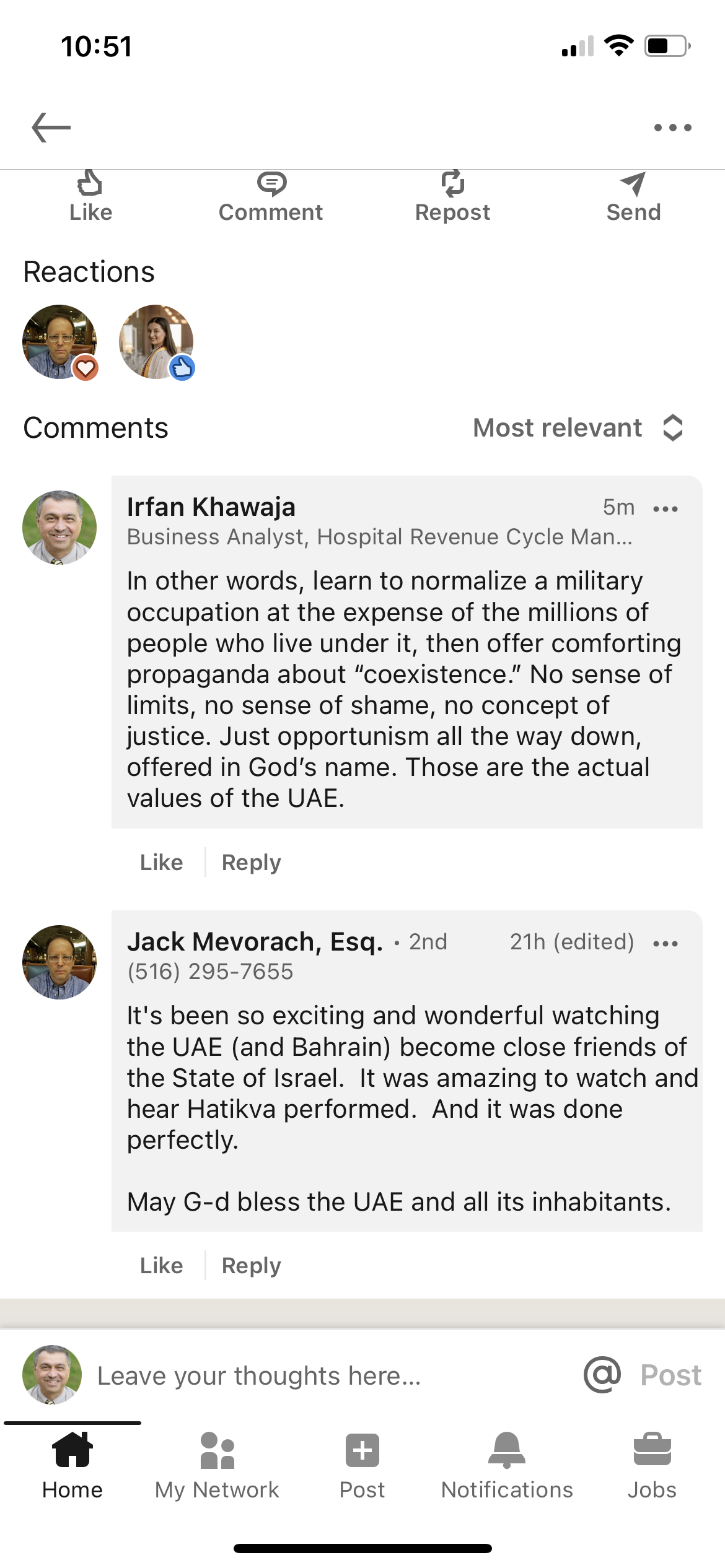
Am I really Jewish? Or just Jew-ish? I guess you’d have to ask your rabbi. Or mine.

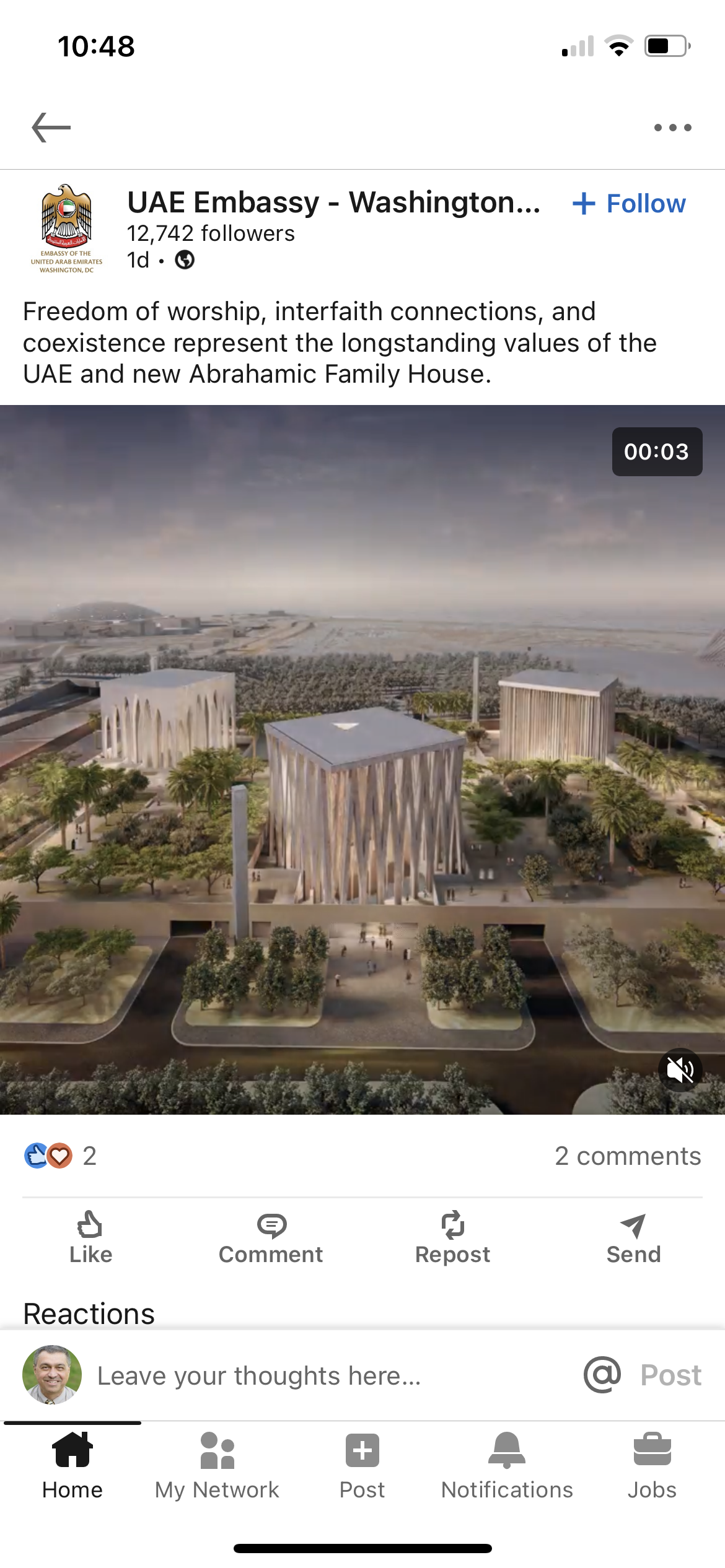
This is from LinkedIn, in case you’re wondering. I agree, it’s probably not career-enhancing.

As for musical performances “amazing to watch and hear,” call me when the Emiratis sing “Kol Nidre.”

“The Settlers”: Voices from the Holy Land Film Salon

I’m pleased to announce that this Sunday, Nov. 13th at 3 pm ET, Voices from the Holy Land, in conjunction with Jewish Voice for Peace-Chicago and Tzedek-Chicago, will be hosting a salon-style discussion of the documentary film “The Settlers.” It’s a public event, but requires free registration. The idea is to watch the film on one’s own time prior to the event, and then attend the discussion, featuring two veteran commentators, filmmaker Shimon Dotan and Rabbi Yaakov Shapiro, with moderator Lara Friedman. Here’s a link to the meeting registration, as well as to the film.

THE SETTLERS is the first comprehensive look at Israel’s continued construction of settlements in the West Bank, which is at the heart of the Israeli-Palestinian conflict. Radicals, idealists, messianic fanatics, true believers and political opportunists, living on the fault lines of an age-old conflict, come face-to-face with history. Today, the settlers threaten to destroy what little peace remains in the Middle East.

Continue reading