The three photos you see here depict Princeton University’s Veteran’s Day ceremony, held yesterday in the University chapel. Pause to reflect on its meaning. Here are the essentials.
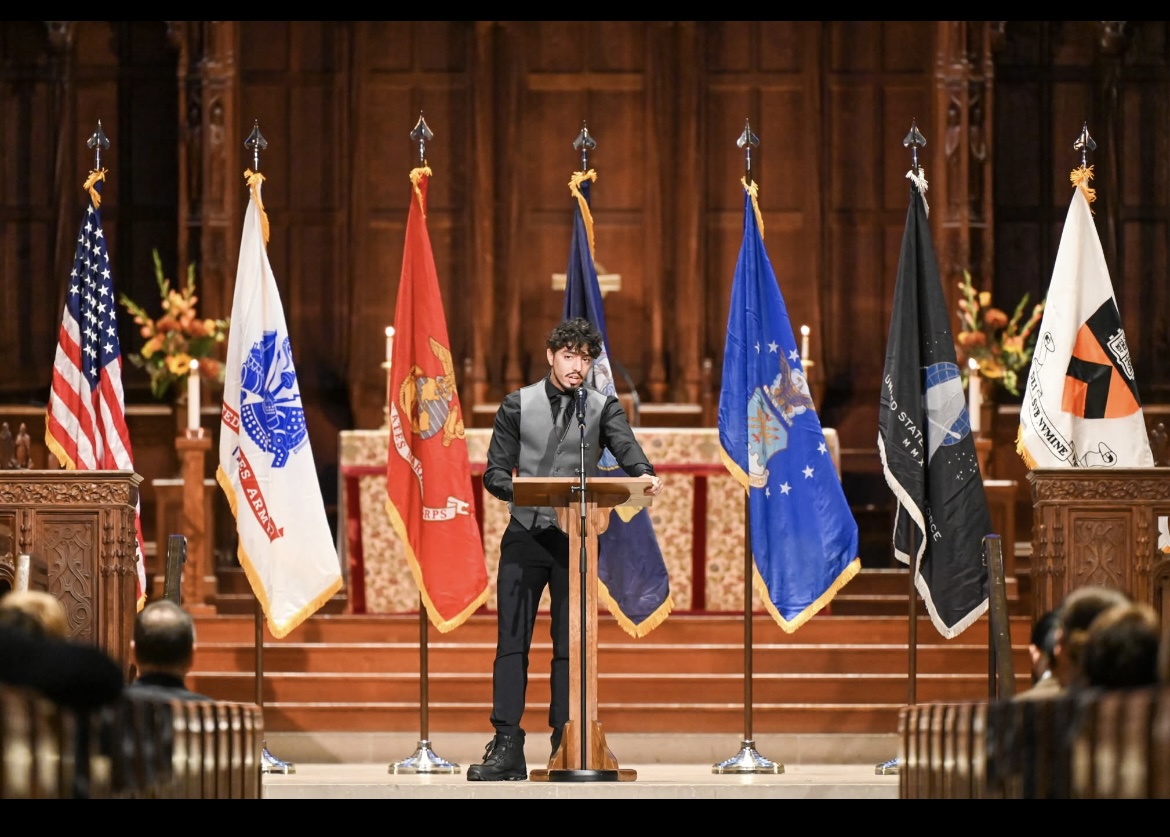
- Military life is baked into university life at Princeton. The two are inextricable.
- Whatever its claims about “institutional restraint,” the message here is loud and clear: military values are to be valorized, with the full institutional endorsement of the university.
- All of the empty talk about how Islamic terrorists use civilian infrastructure as “human shields” is confession rather than accusation: it’s obvious from these three photos alone that Princeton University ubiquitously embeds military infrastructure within a putatively civilian environment. If the soldiers shown here were ever a target for enemy attack, the university, including the chapel, would be one, too. It’s worth asking whether any such enemy exists right now, and what practical implications that might have.
- The next time someone tells you that Islam is an inherently violent religion, ask yourself why the university felt the need to stage this military photo op in a Presbyterian chapel with all of the trappings of religiosity interwoven with all of the trappings of militarism. What God do these people worship? My best bet is that they’re polytheists, but that their primary deity is the State.
- The same mayor of Princeton who delivered sanctimonious lectures this summer to the effect that it was beyond the purview of a town council to pass a municipal resolution in support of the Immigrant Trust Act is depicted just below, as mayor, singing the praises of the United States Armed Forces. In other words, the welfare of the town’s migrant population is beyond the purview of the town council, but the glories of the nation’s armed forces are within the purview of the town’s mayor. If only he showed as much enthusiasm for the rights of the living as he does the prerogative to inflict mass death.

“What are these churches now,” Nietzsche asked in anguish, “but the tombs and sepulchres of God?” Forget God. Houses of worship today are mostly the tombs and sepulchres of ordinary decency, places less of conventional religious observance than of the sabbath ritual of a death cult. It flatters a religion of this kind to call it the opiate of the masses. It’s really just the hallucinogen of an elite. It’s too bad that so many of these people are high on their own supply, but a lot worse that the rest of us have to put up with them.
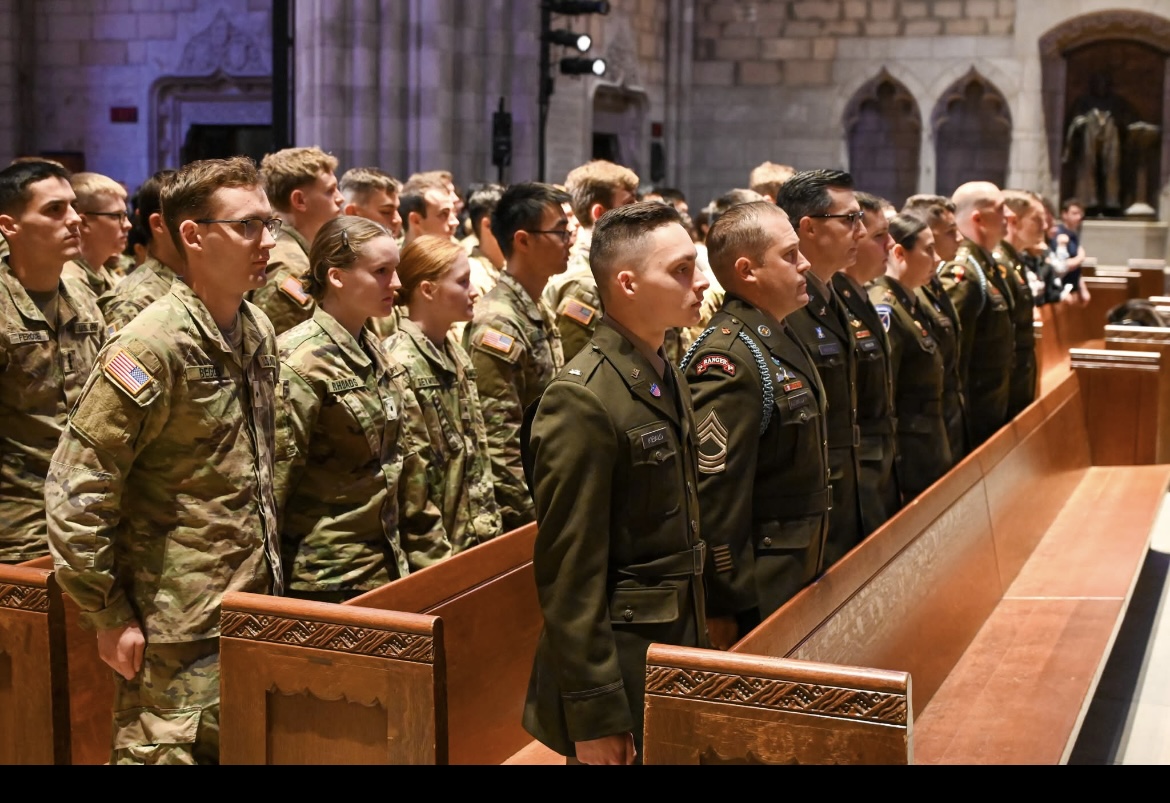
These students evince no awareness that they’ve sold themselves, body and soul, to a sadistic slavemaster, addicted to genocide, addicted to war, addicted to defeat, and addicted to death. The saddest fact about the picture is not the solemnity with which they face this farcical affair. It’s that no one at Princeton will tell them what they most need to know about their current predicament: that it’s a trap, and that they need to find their way out. The problem, of course, is that Princeton holds the key to the trap. It has no incentive to let the victims out, or to enlighten them as to the need for escape. It can only rely on their brainless devotion and hope to perpetuate it. By the time most of them figure things out, it’ll be too late. We can only pray that future generations figure things out before then.
 Policy of Truth
Pingback: “When the World Breaks” | Policy of Truth